
Looking for a fair way to run your gaming tournament? Most players face a common problem: traditional knockout brackets eliminate half the participants too quickly, while round-robin formats take forever to complete.
The Swiss format solves both issues perfectly.
This format lets every player compete in multiple rounds without getting knocked out early.
You’ll face opponents with similar win records, making each match competitive and meaningful. Plus, you can determine a winner in just a few rounds.
In this blog, I’ll break down how the Swiss tournament format works. You’ll learn the rules, pairing methods, and why it’s become so popular in chess, card games, and esports.
A Brief History of the Swiss System
The Swiss tournament started in Switzerland back in the 1890s. Dr. Julius Müller created it for chess tournaments in Zurich.
Before this system existed, chess players had two bad options. Knockout tournaments sent people home after one loss. Round-robin events required everyone to play everyone else, which took weeks to finish.
Müller wanted something better. His new format allows players to remain in the competition regardless of how many losses they have. Everyone got to play a set number of rounds.
Winners faced winners, and players with losses faced each other.
The system caught on fast. By the early 1900s, chess clubs across Europe adopted it.
Today, you’ll find it everywhere. Card game championships use it. Esports tournaments rely on it. Even board game cafes run their events this way.
What is the Swiss Tournament Format and How Does it Work
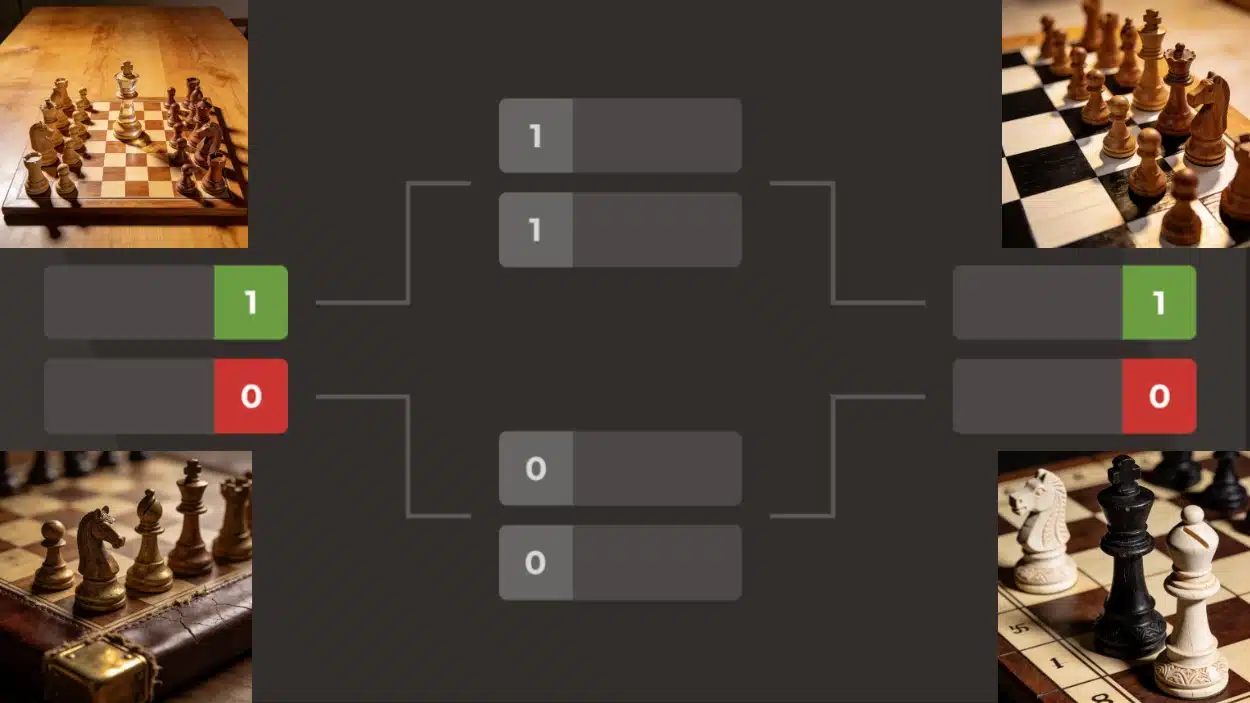
The Swiss tournament is a middle ground between knockout and round-robin systems. It gives everyone multiple games while keeping the total rounds manageable.
Let me break down how it actually works.
Basic Structure
The format runs for a predetermined number of rounds. You don’t get eliminated after losses. Instead, the tournament pairs you with opponents who have similar records.
Here’s what happens:
- Win two games? You face someone else with two wins
- Lost three times? You play another player with three losses
- This keeps matches competitive throughout the event
Pairing System
Round one uses random pairings. After that, things get interesting. The system groups players by their scores. Winners play winners. Players with one loss face each other.
The pairing method follows these rules:
- Match you with someone you haven’t played before
- Balance colors in chess or sides in other games
- Keep score groups fair and equal
Determining the Winner
The player with the most wins after all rounds takes first place. Ties happen sometimes.
Organizers use tiebreaker methods to resolve them.
Common tiebreakers include the strength of your opponents, total points scored, or head-to-head results. Most tournaments announce their tiebreaker rules before starting.
This way, everyone knows what to expect.
Key Rules and Variations
This tournament format follows core principles, but organizers can adjust certain rules as needed.
Here are the key rules and common variations you’ll encounter.
1. Number of Rounds
Most tournaments use a formula to determine the number of rounds. For smaller events, you’ll play about log₂(n) rounds, where n is the number of players. A 32-player tournament typically runs 5 rounds.
Larger events might add extra rounds.
2. Point System
Win a match, and you get 1 point. Lose, and you get 0. Some tournaments award 0.5 points for draws or ties. Card games sometimes use different scoring based on match results.
3. Bye Rounds
Odd numbers create a problem. One player has no opponent. That player receives a bye and gets a free win for that round. You can only receive one bye per tournament.
4. Pairing Methods
Different systems exist for pairing players. The most common ones are the Dutch system and the Monrad system. They both pair based on scores, but handle tiebreaks differently.
5. Accelerated Pairings
Some large tournaments use accelerated pairings in early rounds. This helps separate the top players more quickly and reduces the total number of rounds required.
Benefits of the Swiss Tournament Format
This tournament format offers several advantages over other competition structures. That’s why so many organizers prefer it.
Here’s why this format works so well.
No Early Eliminations: Players stay in the competition regardless of losses. Everyone gets to play all scheduled rounds and enjoy the full event experience.
Fair Matchmaking: You face opponents with similar skill levels. Winners play winners, creating balanced and competitive matches throughout.
Time Efficient: Tournaments finish in fewer rounds than round-robin formats. A 64-player event needs only 6-7 rounds instead of 63.
Cost-Effective: Organizers save money on venue rentals and staffing. Shorter tournaments mean lower operational costs for everyone involved.
Skill-Based Rankings: Your final placement reflects your actual performance. Beating stronger opponents improves your standing through tiebreaker systems.
Flexible Participation: Late entries can join after round one in some formats. Players can also drop out without affecting the overall tournament structure.
Beginner Friendly: New players don’t face top competitors right away. After initial losses, you’ll match with others at your level.
Swiss vs. Other Formats – Quick Comparison
Different tournament formats serve different purposes. Let me show you how the Swiss system compares to other popular options.
| Format | Elimination | Total Rounds | Best For |
|---|---|---|---|
| Swiss | No elimination | 5-7 rounds for most events | Balanced competition with limited time |
| Single Knockout | Lose once, you’re out | log₂(n) rounds | Quick tournaments, clear winners |
| Double Knockout | Lose twice, you’re out | More rounds than a single | Second chances without too much time |
| Round-Robin | No elimination | Every player faces everyone | Small groups, thorough results |
| Ladder | No elimination | Ongoing challenges | Continuous competition over weeks |
Wrapping it Up
The Swiss tournament format gives you the best of both worlds. You get to play multiple rounds without worrying about early knockouts. Your matches stay competitive because you face players at your skill level.
I’ve shown you how it works, from basic pairings to tiebreaker rules. Now it’s your turn to try it out.
Planning a tournament? Consider using this format. Playing in one soon? You now know what to expect and how to prepare.
Got questions about running a Swiss event? Drop them in the comments below. I’d love to hear about your tournament experiences, too.