Avatar: Frontiers of Pandora reviews can feel confusing when one critic praises the world, and another calls the game repetitive.
You may see scores ranging from low to high and wonder whether the game is worth your time today.
The split makes more sense when you see what each reviewer cared about most, from visuals to story and mission design.
I will explain Avatar: Frontiers of Pandora reviews, critic scores, major strengths, weak spots, updates, DLC, and whether it is worth playing now.
You will also see why Game Pass and post-launch changes make the current verdict differ from the one on launch day.
Before judging the scores, let us first understand why critics looked at the same game and reached such different answers.
What Critics Actually Said, And Why the Scores Are So Far Apart?
Avatar: Frontiers of Pandora launched in December 2023 to a split critical response, not a bad one. Once you understand what drove the divergence, it makes complete sense.
When I first scanned the scores, I assumed I’d missed something, a bug, a controversy. A 5.8 from Xbox Tavern next to a 9/10 from TheSixthAxis isn’t normal noise.
That spread usually signals a broken product. Neither was true here. The game wasn’t panned. It was caught in a genuine philosophical disagreement about what open-world games should prioritize.
How Did Critics Split on What They Were Actually Reviewing?
The more I read through the reviews, the more I noticed something: nobody was grading the same thing. The divergence maps onto one question: what were you actually scoring?
| Outlet | Score | Primary Weight | Verdict Tone |
|---|---|---|---|
| TheSixthAxis | 9/10 | World immersion, visual craft | Enthusiastic recommend |
| GameSpot | 8/10 | Movement, minimalist UI | Positive with caveats |
| Game Informer | 7.75/10 | Mixed, world vs. loop | Measured, balanced |
| IGN | 7/10 | Traversal, ecosystem design | Positive with caveats |
| GamesRadar+ | 3.5/5 | Familiar structure, polish | Solid, unsurprising |
| Xbox Tavern | 5.8/10 | Mission design, narrative depth | Disappointed, critical |
Critics who weighed world immersion and traversal, IGN, GameSpot, and TheSixthAxis among them, came away genuinely impressed.
Critics who weighed mission design and narrative, Xbox Tavern included, found a repetitive loop with weak AI and forgettable story beats.
What struck me was how rarely reviewers acknowledged that split. IGN and Xbox Tavern could have been reviewing two separate games, and neither piece made it clear why their scores landed so far apart.
The Metacritic aggregate, which sits in the low-to-mid 70s, flattens all of that into one number. For most games, that’s fine. For this one, it actively hides the only information that actually matters for your decision.
The philosophical divide underneath the scores is real: some critics believe a stunning world is enough to carry an open-world game.
Others believe the loop has to earn the world. I’ve sat with both positions, and I think both are defensible.
Why Has Post-Launch Reassessment Shifted Slightly More Positively?
The 2023 scores were formed under launch conditions, at full price, with no DLC, and expectations shaped by James Cameron’s franchise weight.
- Game Pass availability changed the value equation. Players arriving at zero marginal cost brought adjusted expectations and, by most accounts, left more satisfied.
- “From the Ashes” DLC drove a visible return wave through early 2026. Reddit and community activity picked up noticeably, and the tone was warmer than launch discourse.
- Returning players consistently report the same pattern. They bounced at launch, came back later, and found it clicked once they stopped expecting something it wasn’t built to be.
I’ve watched this same trajectory play out with other Ubisoft titles. The launch window is rarely the best time to form a permanent opinion on their open-world games.
The base game’s OpenCritic standing hasn’t really moved since 2023. It still sits in the “Fair” tier, with roughly half of critics recommending it. What has moved is the story around that number.
“From the Ashes” earned its own “strong” rating on OpenCritic when it launched, well ahead of the base game’s rating.
And on Metacritic, player reviews for the base game average around 8.2 out of 10, a full two points above the critic score.
That gap between what critics scored and what players kept saying is the real headline the launch discourse buried.
Where the Game Genuinely Excels: Visuals, Traversal, and World Craft
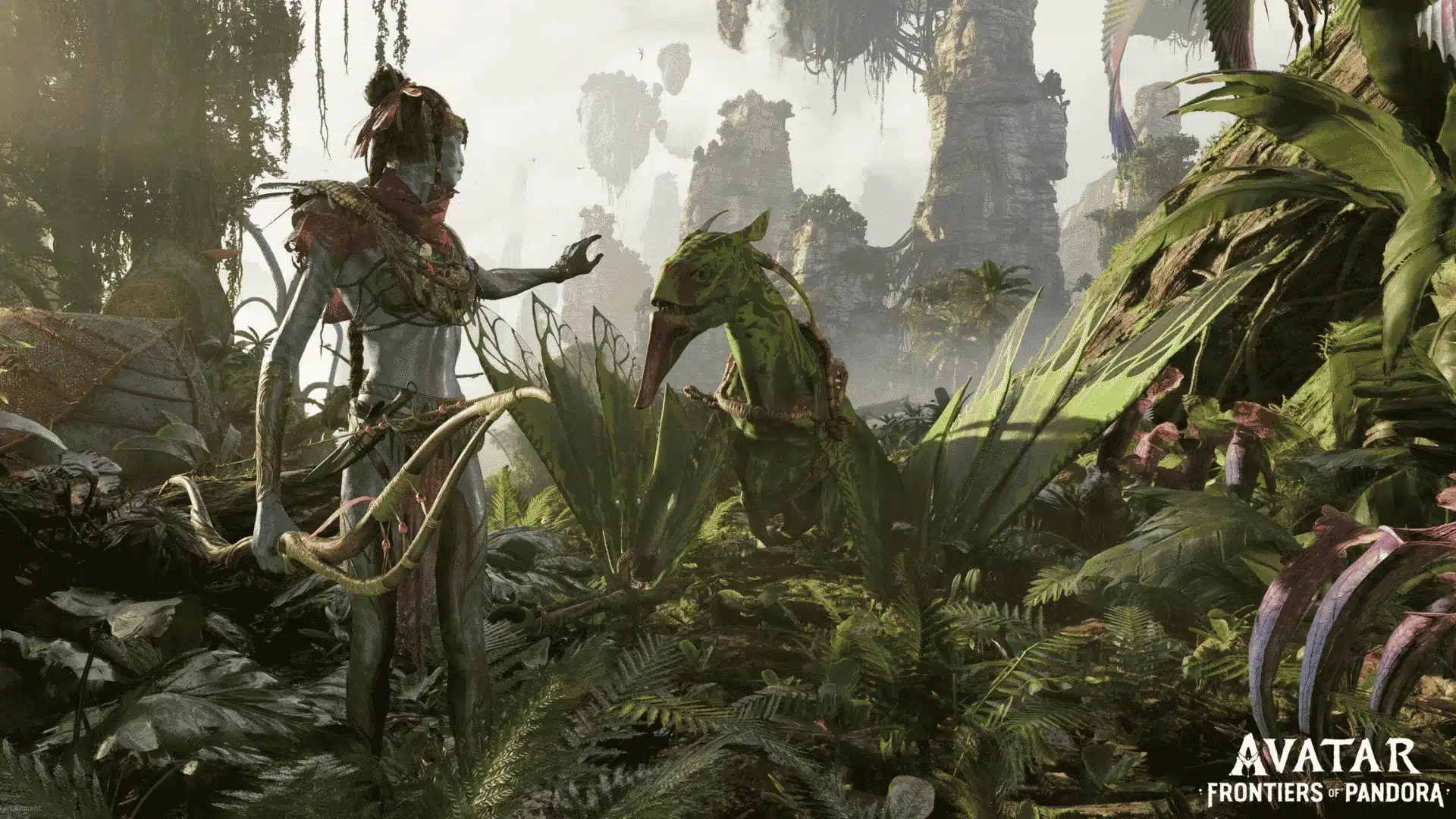
Most open-world games look beautiful in screenshots. Frontiers of Pandora looks beautiful as you move, fight, and just exist within it.
That distinction matters more than it sounds. I expected to be impressed by the visuals. I didn’t expect them to actually change how I played.
That shift is what separates this game’s world design from most of its competition.
1. Visual Design and the Living Ecosystem
The world doesn’t just look reactive. It is reactive, and that difference drives the entire immersion system.
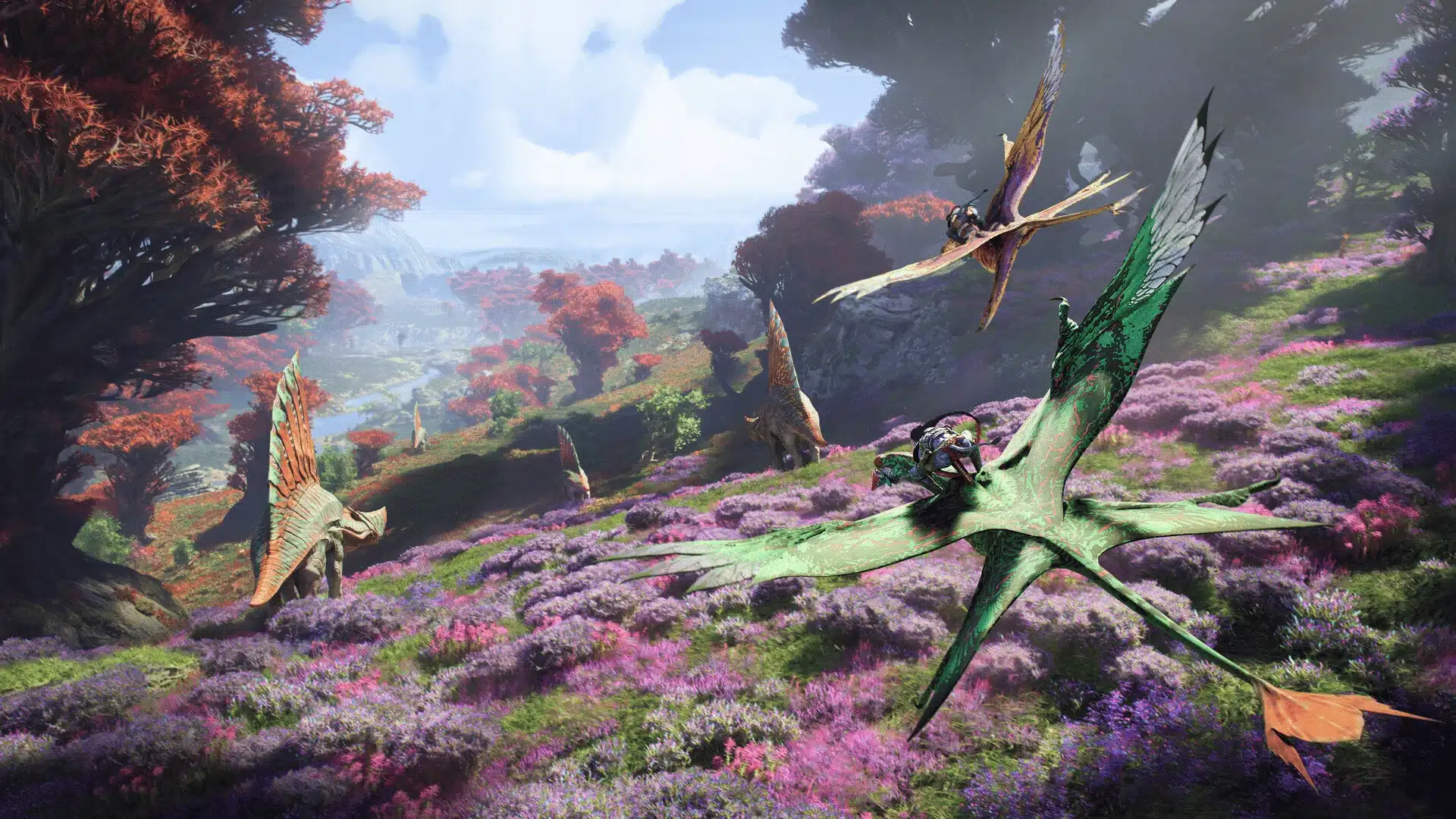
- Flora bends and lights up as you move through it, giving the environment a physical presence most games fake with particle effects.
- Weather rolls in dynamically, changing visibility, altering how you move, and making the Western Frontier biome feel genuinely alive rather than staged.
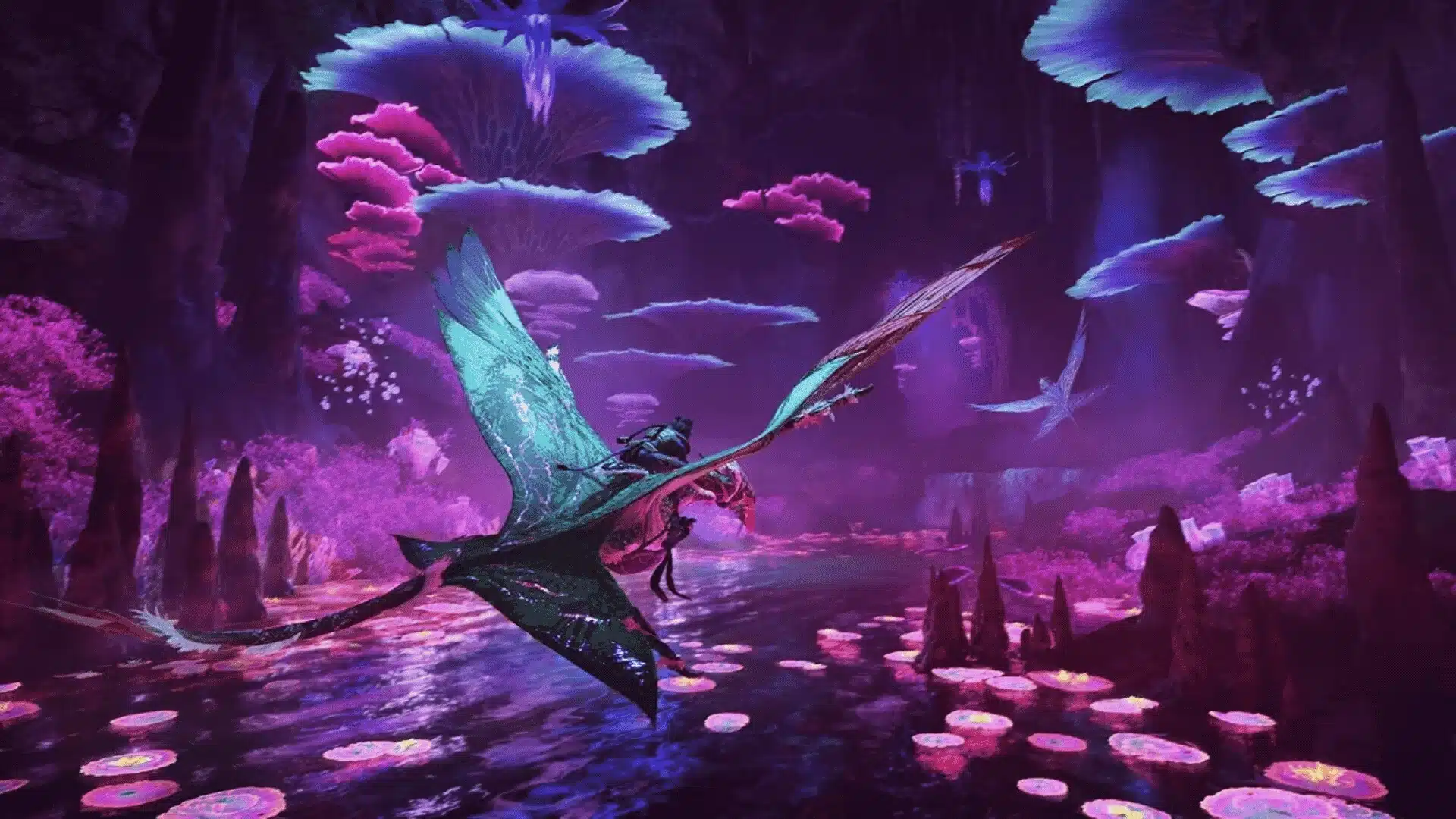
- Bioluminescence at night pulls double duty; it’s visually stunning and functions as a quiet navigation cue.
It works as a constant feedback loop, as much as the scenery does, one that continually tells you where you are and how the ecosystem is responding to your presence.
That design loop, world reacts, player notices, immersion deepens, compounds quietly over hours. By the time I realized it was happening, I was already completely bought in.
2. Traversal: Parkour and Ikran Flight
Movement is the game’s most consistently praised system, and it earns that reputation across both ground and air.
- Ground parkour through dense jungle canopy feels agile and physical, not floaty or automated like many open-world traversal systems.
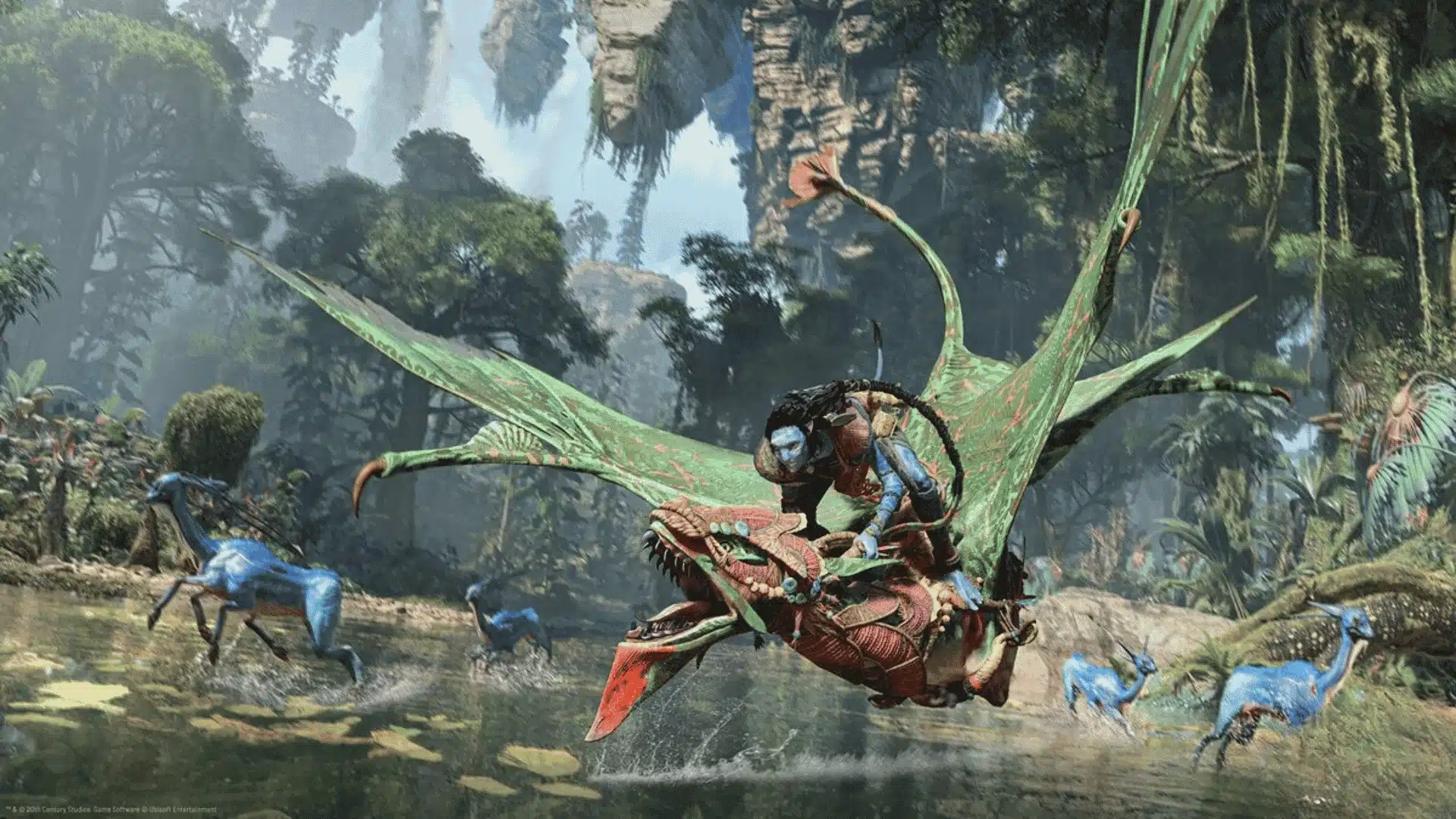
- Ikran flight is where everything clicks into place. Your bonded mount and the world’s scale finally match each other in the air.
- Co-op multiplayer is available and, according to community feedback, makes traversal noticeably more enjoyable with another player alongside you, turning a solo repetition problem into something you can laugh through instead.
Most open-world maps feel big in a way that becomes tedious. Pandora feels big in a way that stays exhilarating from the air. That’s genuinely harder to pull off than it sounds.
Ground combat on foot is more contested among reviewers. Parkour gets near-universal praise. That gap is worth knowing if you’re deciding how much of the game appeals to you specifically.
The main story runs roughly 20 to 25 hours. Completionists covering the full map, side content, and DLC are looking at 50 to 60 hours or more.
3. World Authenticity and Lore Fidelity
This is not a rushed licensed tie-in, and you can feel the difference within the first few hours of play.
- James Cameron’s team was directly involved in development, which meant Na’vi culture, language, and ecological philosophy were built with specificity rather than approximation.
- Most licensed games borrow the surface: the look, the characters, the soundtrack cues. This one borrowed the underlying logic of the world, and it shows consistently.
- The lore holds up when you push on it, in small environmental details, in how NPCs speak, in how the world’s systems reflect Na’vi values rather than contradict them.
I’ve played enough licensed games to know what careless world-building feels like. Frontiers of Pandora doesn’t have that quality anywhere in its environment design.
The same painstaking care shows up in worlds built without a film license behind them, too, like Ghost of Tsushima, which makes it a world-building achievement more than a licensing one.
That investment is also what makes the game’s weaknesses hit harder than they otherwise would. When the world is this carefully constructed, a generic mission structure stands out in sharp contrast.
For players who prioritize exploration and immersion, these strengths alone justify the purchase, particularly at a discount or via Game Pass.
Where It Stumbles: The Ubisoft Formula, the Story, and Why They’re Connected
The main criticisms are repetitive mission design, a shallow story, and weak enemy AI. I’d heard all of those before I played.
What I didn’t expect was how much worse they’d feel here than in other games with the same problems. Pandora’s world raises your expectations before the loop lets them down.
The mission structure breaks that unspoken promise every time it hands you another outpost to clear or resource to gather, and each repeat registers as more than a design limitation; it reads like a betrayal of what the world itself set up.
That’s the specific friction reviewers kept calling “Ubisoft fatigue” without ever fully explaining why it hit differently here.
1. The Open-World Formula and Why It Hits Differently Here
The Far Cry comparison reviewers reach for is structurally accurate. The bones are essentially identical across both franchises, right down to the outpost-clearing loop.
- Outpost clearing follows a familiar pattern: scout, infiltrate or assault, liberate, then move to the next marker.
- Resource collection is woven into crafting and progression in ways that feel mandatory rather than genuinely optional or exploratory.
- Fetch quests fill the side mission roster so frequently that they become noticeable and wearisome within the first 10 hours.
None of these mechanics is broken individually. In a different game, they’d pass unremarked. In Pandora, they land differently because the surrounding world is extraordinary.
I noticed this clearly around hour 8. Standing in one of the most visually arresting environments I’d seen in years, I was opening a map menu to find the nearest collectible icon.
Not every co-op release from this stable falls into that same trap, though, which makes it worth noting when one avoids it.
Our review of a co-op title that escapes that formula covers exactly that kind of exception, and the contrast only sharpens how conventional Pandora’s structure looks it comparison.
That friction between the world’s quality and the loop’s demands doesn’t resolve. It settles into a low-grade disappointment that quietly colors the entire mid-game experience.
2. Story and the Colonial Narrative
The story’s weaknesses are real, but worth understanding correctly rather than attributing them entirely to the wrong cause.
- Human antagonists are thinly written, driven by greed and resource extraction in ways inherited directly from the films rather than developed freshly.
- Colonial tropes the story establishes are never complicated or meaningfully pushed beyond their starting position throughout the campaign.
- The protagonist’s arc has genuine moments, but they’re unevenly spaced across a second act that noticeably loses momentum.
The story’s weakness has less to do with this being a licensed game and more to do with a gameplay loop that runs directly counter to the themes it’s trying to build.
You can’t spend 40 hours enacting extraction mechanics and expect the anti-extraction narrative to land with full weight. The player has already been the extractive force the whole time.
3. Combat, Stealth, and AI
Combat works well enough that I rarely thought about it. Stealth is where I hit the fault line that most players describe when they say the game is “difficult in the wrong ways.”
- Weak enemy AI doesn’t just make fights easier; it removes the credible threat model that makes stealth feel like it’s worth attempting in the first place.
- Stealth only rewards you when enemies are dangerous enough that detection has genuine stakes. Here, the stakes are inconsistent, which is worse than if they were simply low.
- Direct combat players will notice the AI’s weakness considerably less. If you prefer head-on encounters, the system is functional and occasionally satisfying.
I tried stealth approaches repeatedly before understanding the actual problem.
The AI breaks unpredictably, you’re attempting a patient approach, the threat response fires at random, and suddenly you’re in a chaotic fight you never chose to start.
That inconsistency is what breaks stealth as a viable approach, not the difficulty itself. Once I stopped leaning on stealth and treated it as occasional rather than optimal, the game felt noticeably smoother.
How the Game Has Evolved Since Launch: Updates, DLC, and Community Reception
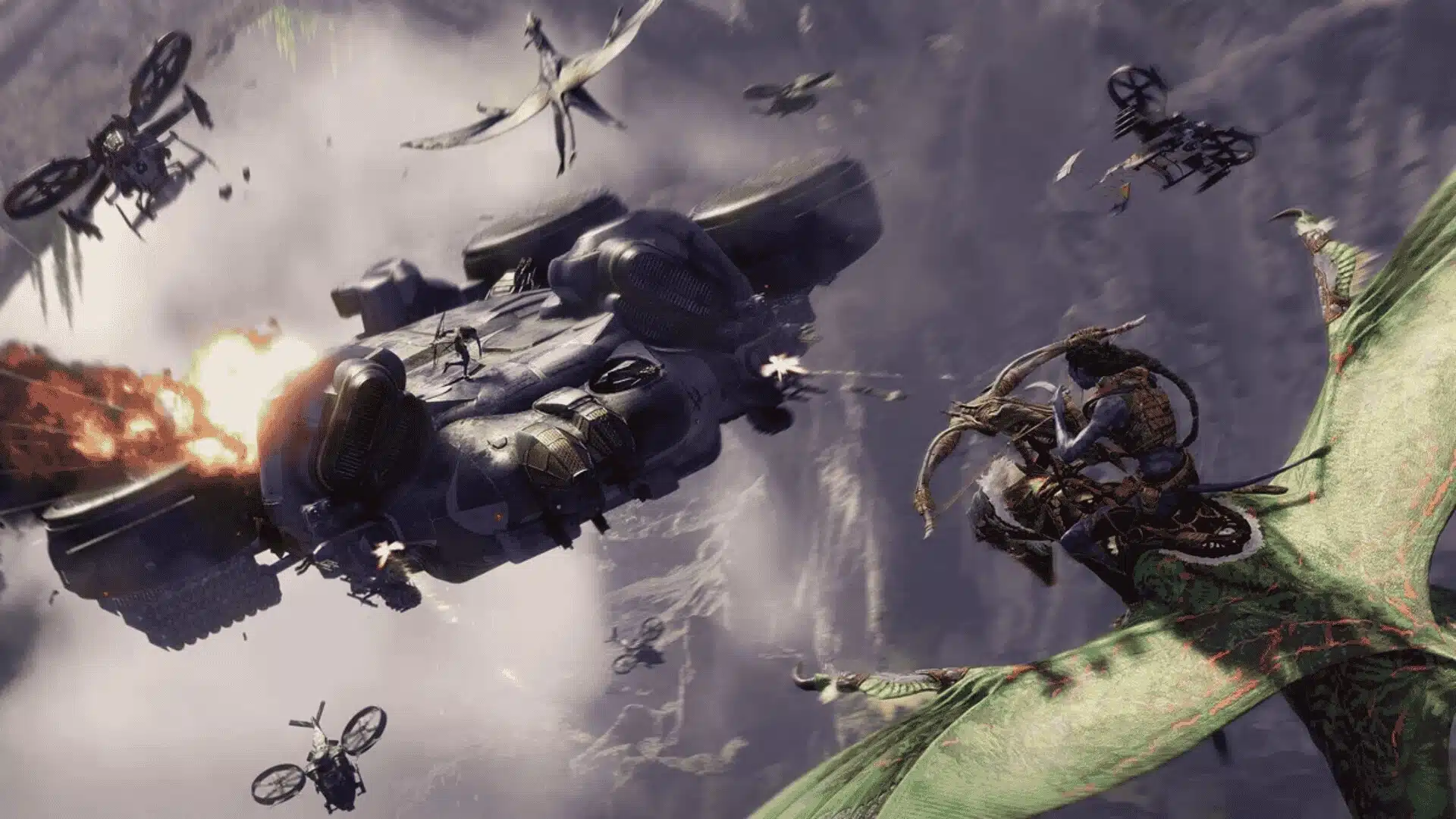
The game I’d be pointing you toward in mid-2026 is meaningfully different from the one reviewers scored in December 2023.
I think the launch window was genuinely a bad time to form a final opinion on this game.
The scores were shaped by conditions, full price, no expansions, and high franchise expectations that no longer apply to most new players.
At $70, a formulaic loop is a real grievance worth scoring down. At zero marginal cost via Game Pass, the same loop looks very different. The game didn’t change. The context around it did.
From the Ashes: What the DLC Adds and How It’s Been Received
“From the Ashes” was released on December 19, 2025, timed to coincide with the Avatar: Fire and Ash film. It’s the third expansion and the most substantial thing Ubisoft has added to this game since launch.
| DLC | Release | Content Type | Included In Season Pass |
|---|---|---|---|
| The Sky Breaker | July 2024 | New area, new threat | Yes |
| Secrets of the Spires | November 2024 | Mountainous new region | Yes |
| From the Ashes | December 19, 2025 | Full story expansion, new protagonist | Separate, $24.99 |
Ubisoft says the full expansion offers about 20 hours of content for $24.99, though playtime depends on how you play.
The story also feels sharper than the base game, with a more focused, personal, and better-paced structure.
A free December 5, 2025 update added third-person mode, New Game Plus, and a 40fps console option for 120Hz screens.
QoL changes also improved fast travel, inventory handling, and menu clutter.
The DLC also introduces a new protagonist, So’lek, and a standalone story that doesn’t require replaying the main campaign first.
That lowered barrier matters; it’s how returning players can re-enter without having to replay what frustrated them the first time.
The improvements aren’t surface-level. The QoL fixes address the specific friction points that drove players away in 2023.
That’s why the sentiment among returning players has been noticeably warmer, not just nostalgia for the world.
The Game Pass Effect and Second-Wave Discovery
The base game joined Game Pass Ultimate and PC Game Pass on February 17, 2026, on cloud, Xbox Series X/S, handheld, and PC. That arrival changed who was discovering it and how.
- Adjusted expectations matter more than post-launch analyses usually admit. I’ve noticed this across multiple games: players without a $70 purchase to justify tend to engage more openly.
- Co-op multiplayer keeps getting flagged in community threads as underrated. It transforms traversal into a shared experience that offsets the repetitiveness in ways solo play can’t.
- Third-person mode, added that December, gives players a genuinely new way to experience a world that was always the game’s strongest feature. I’d use it if I were starting fresh today.
I’ve watched this same arc play out with other Ubisoft open-world titles I initially dismissed.
The version you encounter 18 months post-launch, patched and on a subscription service, rarely matches the one that shaped the original consensus.
The game you’d play today is not the game reviewers scored in December 2023. That gap is worth holding onto when you’re deciding whether to try it.
The Verdict: Who Should Play Avatar: Frontiers of Pandora (And Who Shouldn’t)
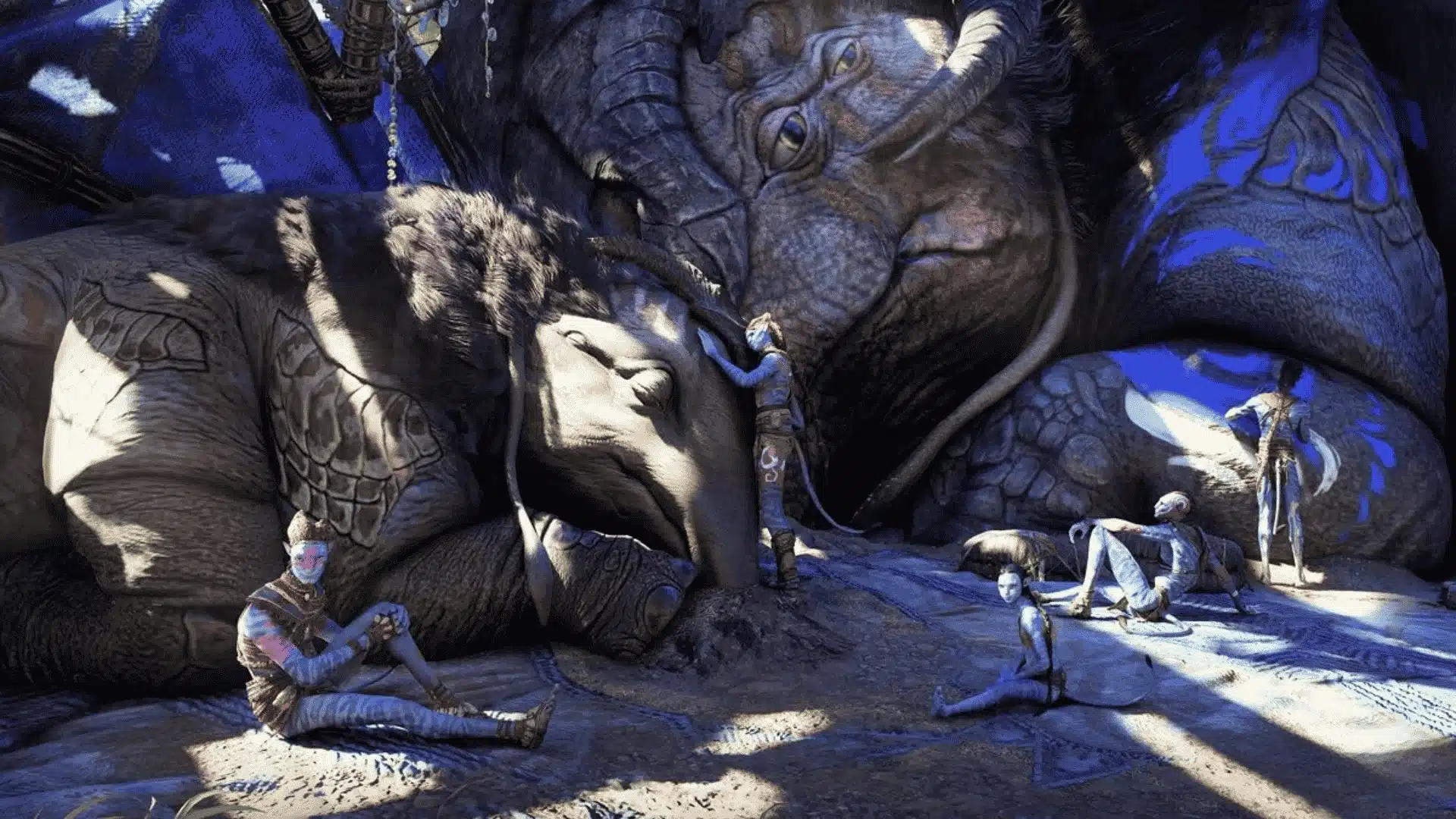
I’ll say it plainly: Avatar: Frontiers of Pandora is worth playing. Whether it’s worth playing for you is the more useful question, and it depends entirely on what you want.
The 5.8-9/10 score range confused me at first. I thought I’d missed something, a patch, a controversy. I hadn’t. It’s a game that excels at one thing and does another poorly.
Figuring out which side of that line you sit on is the only verdict that actually matters. Everything below is meant to help you do that honestly.
Play It If
- You prioritize exploration and world immersion over narrative or systems depth. I haven’t played a recent open-world game that matches Pandora’s visual and ecological craft at this level.
- You’re an Avatar or James Cameron fan who wants to live inside the world rather than just pass through it. The lore fidelity surprised me. Cameron’s team was directly involved, and it shows.
- You’re on Game Pass. The base game has been available since February 2026. At zero marginal cost, the formulaic loop stops being a $70 problem and becomes much easier to absorb.
- You bounced off it at launch. I almost didn’t go back. Third-person mode, QoL fixes, and fast travel improvements landed in December 2025. The version available today felt noticeably different.
If the base game clicks, “From the Ashes” is worth doing next. Reviewers I trust describe it as tighter, better paced, and more emotionally resonant than the main campaign before it.
At full price, I’d still point exploration-first players toward it. But the mid-game loop will test your patience before the world earns you back. Go in knowing that.
Skip It If
- You’re story-first I pushed through the full narrative, hoping it would develop. It didn’t. Colonial tropes get established early and are never complicated. The second act loses momentum badly.
- You’re Ubisoft formula-fatigued. If Far Cry’s outpost-clearing loop wore you down before, this one will too. The backdrop is extraordinary. The loop underneath it is identical to what fatigued you.
- You play primarily through stealth and systems depth. I tried to be stealthy repeatedly before understanding the real problem. Traversal is exceptional. Combat and stealth are not, and weak AI makes them worse.
Many people assumed a critical failure due to the commercial underperformance at launch. I made that assumption briefly, too. It was wrong. This was a distribution problem, not a quality verdict.
In 2026, with Game Pass available and two years of post-launch work behind the product, the decision you’re facing is genuinely different from the one reviewers faced in 2023.
The game carries a real structural tension between its Na’vi values and its extractive mechanics. I couldn’t stop noticing it once I saw it. It’s worth playing despite that, but go in knowing it exists.
Conclusion
Avatar: Frontiers of Pandora reviews make more sense when you stop treating every score as the same kind of judgment.
You should judge the game by what you want most, because the world, movement, story, and mission loop land very differently.
I would try the current version first, especially if Game Pass makes the entry cost easier to ignore. The updates and DLC do not erase every weak spot, but they make the decision fairer than it was at launch.
If you care about Pandora itself, this version deserves a real chance before you trust one old score.
Did the world pull you in, or did the Ubisoft loop push you away? Tell us, share with us in the comments below.
Frequently Asked Questions
Is Avatar: Frontiers of Pandora Worth Playing?
It depends entirely on what you value. Exploration and traversal players will find it genuinely rewarding. Story-first players and anyone fatigued by Ubisoft’s open-world formula will likely leave disappointed.
Did Avatar: Frontiers of Pandora Flop?
Avatar: Frontiers of Pandora didn’t completely flop, but it had a lukewarm reception. Mixed-to-positive scores ranging from 5.8 to 9/10 reflect audience mismatch and a crowded holiday window, not a broken product.
How Many Hours of Gameplay Does Avatar: Frontiers of Pandora Offer?
The main story runs 20 to 25 hours. Full completion, including side content, outposts, collectibles, and the “From the Ashes” DLC, pushes that closer to 50-60 hours.
How Does Avatar: Frontiers of Pandora Compare to Far Cry?
Structurally identical. Both share outpost clearing, resource loops, and Ubisoft’s open-world formula.
Frontiers of Pandora diverges through superior traversal, Ikran flight, and a world that Far Cry never comes close to matching in terms of atmosphere.