
Hunter’s leveling speed has nothing to do with hitting hard. It comes from a pet absorbing damage while you stay at range, finishing pulls at full health without stopping to eat.
This WoW Classic Hunter leveling guide exists because I spent weeks blaming my talents when the real problems were Growl ranks and pet food all along.
Hunter is forgiving when the fundamentals are right. It punishes hard when they’re quietly wrong over hundreds of pulls, without ever presenting a single obvious cause to fix.
Everything that actually matters, pet management, pull rhythm, gear decisions, is laid out below in the order it naturally clicks into place.
What Makes Hunter One of the Best Solo Leveling Classes in Classic WoW?
Hunter isn’t the fastest leveler because it hits hardest. Our Priest leveling breakdown takes a completely different approach, focusing on self-healing rather than on a tanking pet.
Hunter is fast because your pet absorbs damage, keeping you healthier between pulls than almost any other class.
When I first rolled a Hunter, I assumed the speed came from big crits. It didn’t. The real gain was finishing fights at full health because the pet tanked, not me.
That advantage holds strongest in open-world questing. It shrinks in dungeons where pet aggro is a problem. Two real weak spots: levels 1 to 10 before you tame your first pet at level 10, and the Dead Zone.
Best Hunter Leveling Talents 1–60 (Beast Mastery Build)
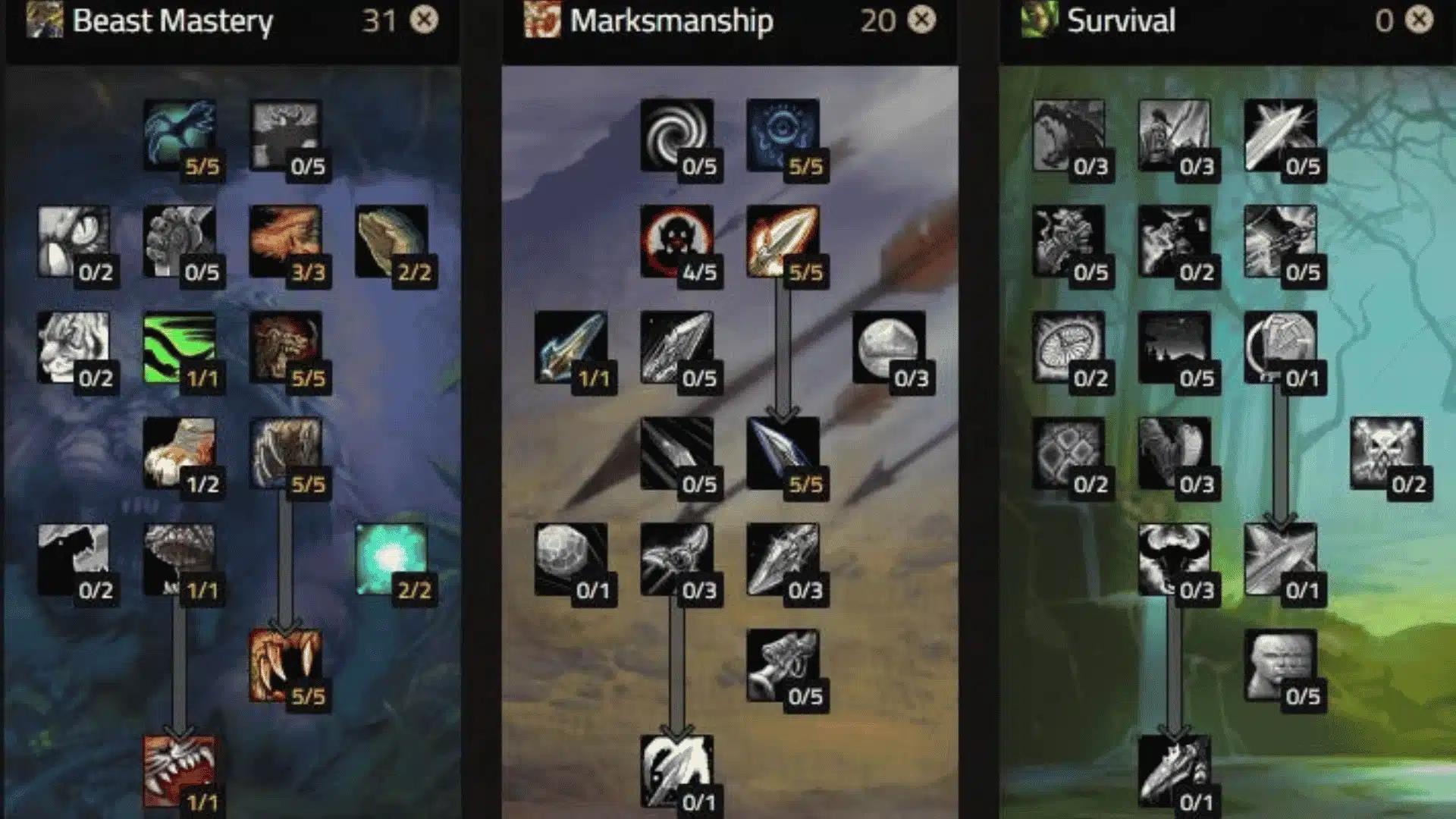
Beast Mastery is the best leveling spec in Classic WoW. Your pet deals most of your damage, and BM talents multiply that output in ways no other tree matches early on.
Marksmanship looks appealing but isn’t. MM depends on sustained auto-attack uptime that kiting constantly interrupts.
I learned this the hard way around level 30, bleeding points into the wrong tree.
1. Levels 1-20: Core Pet Talents First
Start every point in Beast Mastery. Cobra Reflexes and Endurance Training give your pet staying power. Improved Aspect of the Hawk feels tempting early; skip it completely for now.
I spread points around on my first Hunter, trying to feel rounded, and it backfired. My pet kept dying, I kept eating, and leveling felt slow.
Front-loading pet talents fixed everything almost immediately.
MM vs. BM: Marksmanship needs gear you don’t have yet. BM’s pet damage scales off talents alone. Every Hunter I’ve seen struggle early was splitting points between both trees.
2. Levels 21-40: Unleashed Fury and Ferocity Priority
Unleashed Fury and Ferocity are your targets here.
They multiplicatively increase pet damage, which carries most of your output, while your own gear remains inconsistent and below the hit cap.
I remember hitting 30 with both maxed and noticing pulls suddenly felt cleaner. The pet held aggro longer, I stopped eating between kills, and leveling speed noticeably picked up from there.
3. Levels 41-60: Completing the Build and Utility Points
Core BM talents are done by 41. Remaining points go into early Survival; Surefooted especially, for hit chance and trap reliability. Don’t split into Marksmanship at this stage.
Hardcore players should weigh Survival more here. In a normal realm, I stayed BM and grabbed utility second. Either way, avoid the temptation to chase MM finishing talents now.
4. Talent Build at Level 60
At 60, you’ll sit at around 31 points deep in Beast Mastery, with the remaining points in Survival. Bestial Wrath requires 51 points , it isn’t reachable at 60 in Classic, so don’t plan around it.
The build isn’t flashy and won’t impress anyone in a duel. But it’s why your pet holds aggro, kills stay smooth, and you actually reach 60 without losing momentum halfway through.
Pet Selection and Management: The Real Engine of Fast Leveling
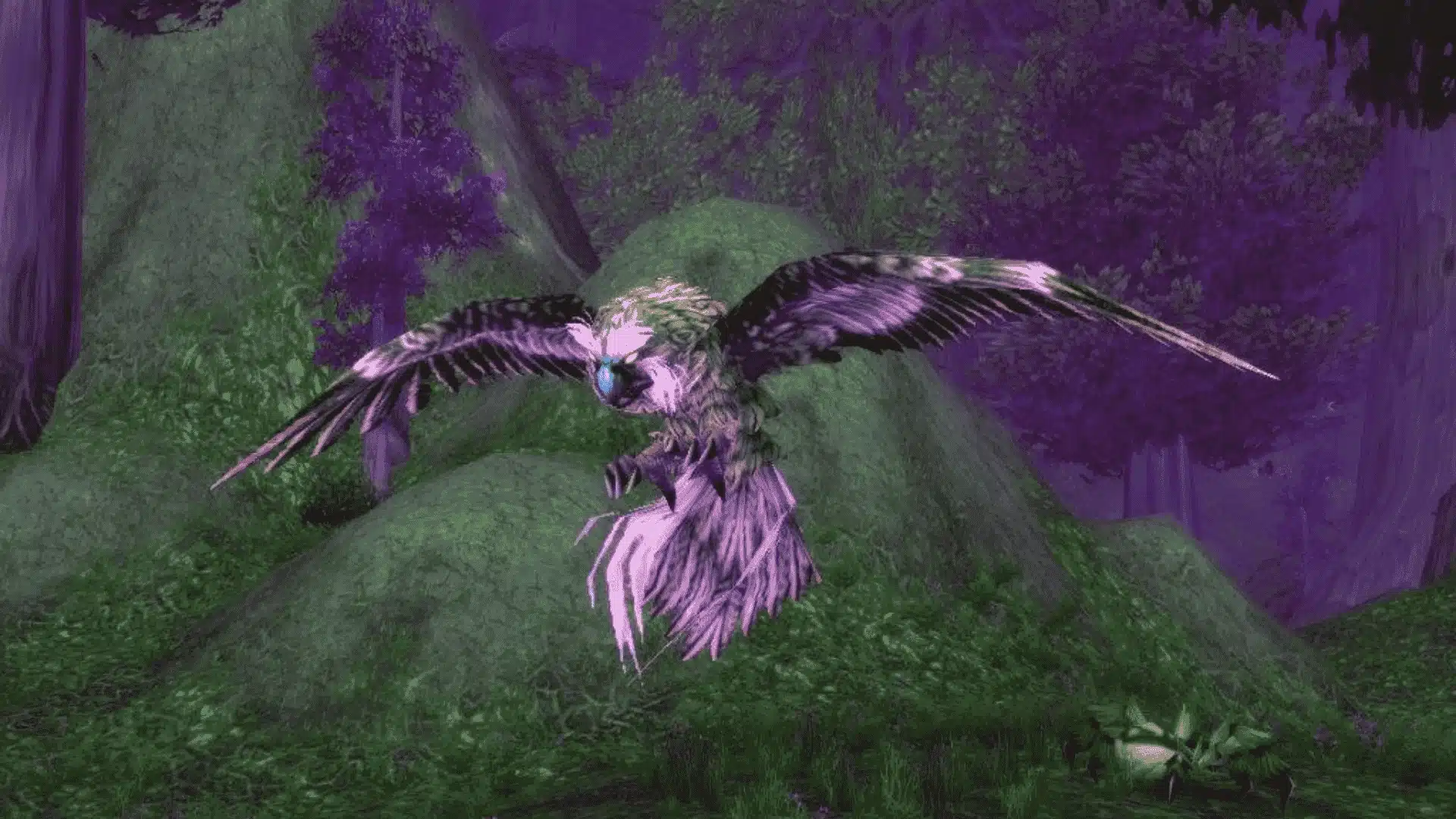
Use a boar from levels 1 to 32, then switch to a cat. Most Hunter leveling problems I’ve seen trace back to pet management, not talents or rotation.
Your kill speed depends on a simple loop: pet holds aggro, you finish your rotation, the mob dies before reaching you, and no damage lands on you, so the next pull starts immediately.
Three variables control whether the loop holds: Growl rank, pet happiness, and food quality. Let anyone slip, and XP per hour drops without you ever identifying why.
1. Boar (Levels 1–32): Why It’s the Default Choice?
Boars have the highest base HP of any early pet, which prevents cascade failure. More HP means longer aggro hold and more completed rotations before anything goes wrong.
- Charge generates an immediate threat on pull.
- Eats Fungus and Fruit, which are cheap, commonly looted, and never a sourcing problem.
- The wrong pet starts a failure chain: lost aggro at 50% mob health, melee hits, forced eating every few pulls, and lower XP/hour.
I ran a wolf on my first Hunter because it looked cooler. I ate after nearly every pull and couldn’t figure out why. The boar looks unexciting but outperforms every time.
2. Cat (Levels 32–60): When to Switch and Why?
Once BM talents fill out around level 32-40, cat DPS overtakes boar survivability. Bite and Claw run on separate cooldowns, and your pet talents multiply both simultaneously.
- The ideal switch window is levels 32-40. I moved at 34 and noticed the difference within an hour.
- Cats require meat, which is slightly harder to source, but one dedicated bag slot handles it easily.
Make the switch when your BM talents are solid. Holding onto the boar past level 40 leaves real damage on the table.
3. Owl/Bat: When is Screech Worth It?
Screech blasts a single target and reduces the melee attack power of all enemies within range for a few seconds. It’s not the default choice, but it earns its place in specific situations.
- Multi-mob pull zones where single-target aggro consistently breaks down.
- Hardcore leveling, where Screech’s attack speed debuff buys time during bad pulls.
I used a bat through Stranglethorn Vale, and it changed how manageable the zone felt. For standard leveling, it is situational, but genuinely strong when the situation fits.
4. Keeping Your Pet Combat-Ready: Happiness, Loyalty, and Growl Ranks
- Train Growl every five levels. Each rank has a fixed threat value that stops holding aggro as mob health scales up.
- Feed your pet before combat if its happiness indicator drops below the green Happy tier. Unhappy pets deal 75% damage, while Happy pets deal 125%.
- Keep your pet within five levels of your own, or threat and damage both fall off.
- Use Mend Pet proactively. It slows the decay of happiness mid-session instead of only saving the pet from dying.
I ignored Growl ranks for an entire session once and spent an hour wondering why aggro kept breaking. Keep all three current, and the loop holds. Let them slip, and you lose hours without knowing why.
Rotation, Pull Technique, and Eliminating Downtime
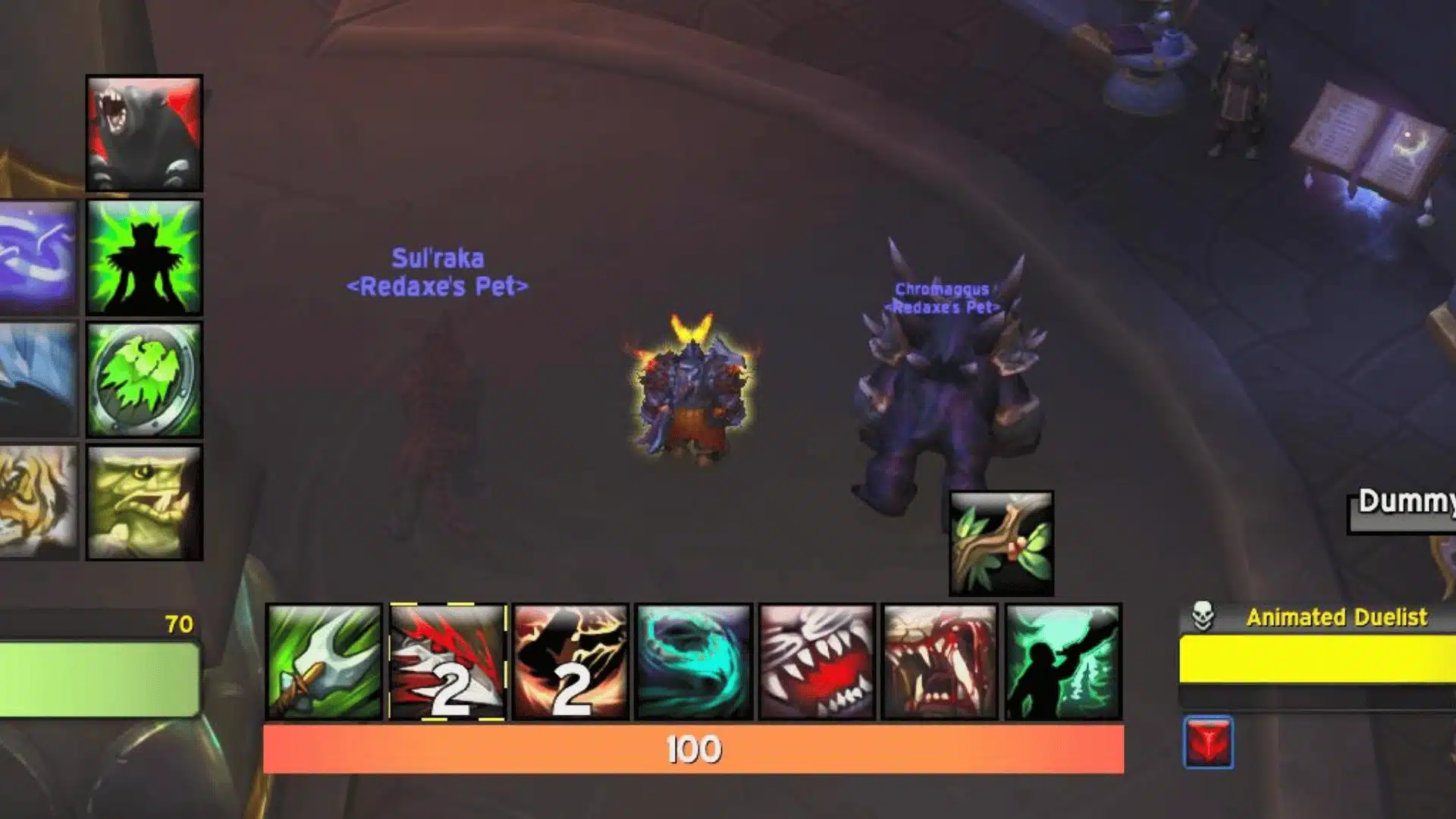
Hunter leveling rotation isn’t built for maximum DPS. It’s built to do enough damage at range to kill before the mob reaches you, so you take little to no damage on the way in.
The pull-reset-engage rhythm works as a loop. Hunter’s Mark plus Serpent Sting opens at max range. Arcane Shot fires on cooldown while you backpedal steadily away.
Auto Shot only needs about half a second of standing still to fire; the rest of the swing timer is free to move, use abilities, or backpedal without losing the shot. That’s what makes kiting and steady damage possible at the same time.
Each phase triggers the next. Sting applies pressure, Arcane Shot accelerates the kill, and backpedaling maintains range.
When the loop breaks, you take hits, and the session slows noticeably.
- Standard pull sequence: Open with Hunter’s Mark, apply Serpent Sting, then fire Arcane Shot on cooldown while backpedaling steadily. I overcomplicated this for weeks before the simplest version clicked.
- Managing the Dead Zone: The Dead Zone sits between 8 and 20 yards, where neither ranged nor melee attacks connect. Wing Clip breaks you out instantly and reestablishes range.
- Concussive Shot and Freezing Trap: Concussive Shot buys distance when Wing Clip is on cooldown. Freezing Trap resets the pull entirely if two mobs close on you simultaneously.
- Aspect management: The aspect of the Hawk stays active during every fight. Aspect of the Cheetah only goes up between pulls with absolutely no mobs nearby to avoid getting dazed.
- Daze risk: Being dazed mid-pull was my most common cause of unexpected death. One nearby mob, while running in Cheetah, instantly undoes an otherwise clean session.
- Feign Death timing: Feign Death’s real value lies in being proactive rather than reactive. Accidental two-pull or sudden pet death, drop it immediately rather than waiting until your health is critical.
Master the rhythm first, and everything else follows. Maintaining range and using Feign Death proactively consistently separate smooth sessions from frustrating ones.
Gearing Priorities While Leveling
Agility first, Stamina second, everything else after. Those two stats cover almost every gearing decision you’ll face between levels 1 and 60 without overcomplicating anything.
Intellect looks useful because Hunters use mana. In practice, I never ran out mid-pull. You spend more time in combat than out, making mana regen nearly irrelevant compared to Agility’s combined returns.
1. Stat Priority and Why?
Agility gives attack power, crit chance, and dodge simultaneously.
That’s the kind of multi-stat return I appreciate as someone who studied math; no single number tells the whole story, but Agility comes closest.
No other stat delivers as much leveling value per point, which is why it consistently pulls ahead of everything else.
Stamina is your buffer when pulls go wrong. Strength gives attack power, but at a lower rate per point than Agility. I ignored Strength entirely and never felt the difference in leveling.
2. Ammunition and Quiver: The Overlooked DPS Variables
Ammo DPS adds up across hundreds of pulls. I ran outdated arrows for an entire zone once and lost meaningful damage output without realizing it until I finally upgraded at a vendor.
Always buy the highest-rank arrows or bullets available. A quiver or ammo pouch also provides 15% ranged attack speed, which is significant enough to justify permanently giving up a full bag slot.
3. When to Spend Gold on Gear vs. Save It?
An outdated weapon is a bigger DPS loss than any talent mistake you could make. I hoarded gold on my first Hunter and wondered why kills felt sluggish through the entire level brackets.
Replace your ranged and melee weapons every ten levels minimum. Armor upgrades matter far less.
Enchanting leveling gear is rarely worth the cost; vendor upgrades every few levels easily outpace the enchantments on older pieces.
One more thing worth deciding early: bows, guns, and crossbows each raise a separate weapon skill, and switching between them resets your accuracy while you relearn the new one.
Pick a weapon type at the start and stick with it through 60 instead of chasing whichever upgrade drops next.
Gear doesn’t need to be perfect while leveling, but your weapon and ammo tier should never fall more than ten levels behind what’s available to you.
4. Race Selection by Faction
Orc is the strongest Horde Hunter for leveling; Dwarf edges out Alliance options if you’re using a gun. That said, race matters far less than most players think going in.
I spent an hour deciding my race on my first Hunter. In hindsight, keeping Growl ranks current had more impact on my leveling speed than any racial passive ever did.
Horde
- Orc: Command increases pet damage by 5%, making it the single strongest leveling racial for BM Hunter.
- Troll: Bow Specialization plus Berserking provides solid ranged weapon skill and a useful burst window.
- Tauren: War Stomp offers a brief AoE stun that buys time during bad pulls or accidental aggro.
- Undead: No meaningful Hunter-relevant racials; choose it for aesthetic reasons, not mechanical ones.
Alliance
- Dwarf: Gun Specialization passively adds a ranged weapon skill whenever you’re leveling with a rifle.
- Night Elf: Shadowmeld resets bad pulls and acts as a second safety tool alongside Feign Death, especially valuable in Hardcore.
- Human: No Hunter-relevant racials worth noting, a fine aesthetic choice but nothing that accelerates leveling.
No race will make or break your leveling experience. Pick Orc or Troll on Horde, Dwarf on Alliance if using a gun, and focus on the mechanics that actually move the needle.
Zone Routing and Leveling Path 1–60

There is no single perfect zone path for Hunter. Bigger gains come from staying in combat rather than chasing theoretically optimal routes across the map.
I wasted more time traveling between “better” zones than I ever lost staying somewhere slightly suboptimal. Pick a zone, exhaust its quests, move on cleanly.
1. Levels 1–20: Starting Zones and Early Horde/Alliance Paths
Your starting zone naturally carries you to level 10. Alliance moves into Westfall or Loch Modan; Horde into the Barrens. Both have spread-out mobs that suit Hunter perfectly.
Avoid dense cave areas here. Without Feign Death yet, accidental multi-pulls run out of control fast. I learned this the hard way in Deadmines at level 12 and never forgot it.
2. Levels 20–40: Mid-Game Zones and the Quest Hub Transition
Ashenvale, Hillsbrad Foothills, and Stranglethorn Vale comfortably cover this bracket. Wailing Caverns is worth a group run or two, but isn’t required for solid progress.
Stranglethorn Vale is dense and competitive on populated servers. Scarlet Monastery runs with a premade group around level 34. Replace it cleanly if the zone feels overcrowded.
3. Levels 40–60: Late-Game Efficiency and When to Dungeon Grind
Un’Goro Crater and the Plaguelands carry late leveling efficiently. Both have abundant beast mobs that suit Hunter’s pull loop and keep Skinning profitable simultaneously.
Dungeon grinding with a premade: Zul’Farrak, Maraudon, Stratholme beats solo questing per hour. Without a premade, queue time erodes that advantage fast. I quested solo and kept pace comfortably.
Zone choice matters less than pull efficiency and pet management. Stay in combat, minimize travel, and almost any reasonable path gets you to 60 without losing significant time.
Professions Worth Picking Up While Leveling
Skinning paired with Leatherworking is the strongest leveling combination for Hunter, and it’s worth reading a dedicated Classic Skinning walkthrough if you want the fastest possible skill-up path.
Skinning generates passive gold from beasts you’re already killing every session anyway.
I tried Herbalism on my first Hunter, thinking it seemed profitable. It added nothing. Skinning fits naturally into every pull, with no extra steps required.
- Skinning: Pairs perfectly with Hunter since you’re constantly killing beasts, covering ammo and gear expenses throughout leveling without any dedicated farming sessions.
- Leatherworking: It provides meaningful upgrades in the 20–40 bracket where quest rewards are inconsistent. Past 40, quest rewards begin outpacing craftable pieces fairly regularly.
- Engineering: Grenades provide interrupts, scopes add ranged attack power, and Goblin Sapper Charges offer emergency utility. Higher gold cost than Skinning and Leatherworking combined.
- Herbalism/Mining: Valid for endgame wealth but zero leveling synergy for Hunter. Choose these only if gold accumulation matters more to you than leveling efficiency.
- First Aid: Bandages between pulls are faster than eating and cover situations where your pet goes down unexpectedly mid-pull, leaving you exposed.
Hardcore players should consider Engineering seriously. Stun grenades act as emergency tools when Feign Death is on cooldown, and a pull goes completely sideways.
Skinning and First Aid together cover most of what Hunter needs while leveling. Engineering adds real utility if you’re willing to invest the gold it demands.
Common Mistakes That Slow Down Hunter Leveling
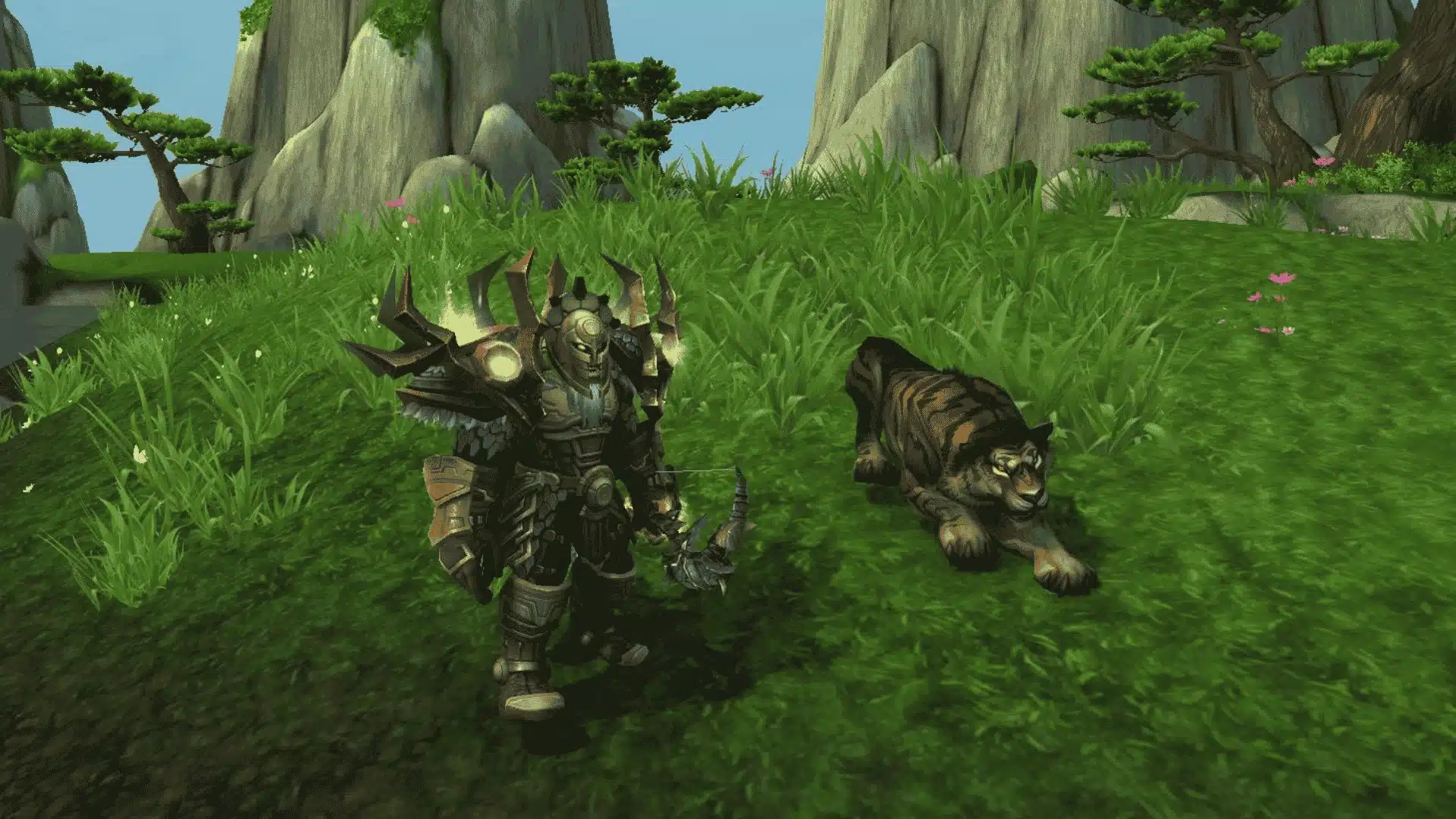
Most leveling mistakes aren’t talent errors. They’re small mechanical habits compounding silently over hundreds of pulls, costing hours without ever feeling like a single obvious problem.
- Outdated Growl rank: Growl under-threat pulls aggro at 50% mob health, forcing melee hits and eating that compounds silently across every session without feeling like one obvious problem.
- Aspect of the Cheetah near mobs: Getting dazed mid-pull instantly collapses the rotation. In Hardcore, using Cheetah in dense areas is disproportionately lethal compared to normal servers.
- Skipping the pet trainer and neglecting the ammo tier: Pets never auto-learn upgrades, and outdated arrows silently tax DPS. Both go unnoticed until fixed, and pulls suddenly feel noticeably faster.
- Buying vendor food over cooking: Looted meat and basic Cooking cover nearly everything. Vendor food repeatedly drains gold better spent on weapon upgrades and current ammunition tiers.
- Reactive Feign Death: Dropping Feign Death immediately on an accidental two-pull resets everything cleanly. Waiting until health is critical turns a recoverable situation into a potential death.
Small habits compound quietly across sixty levels. Fixing these six mistakes costs nothing except attention and delivers more leveling speed than any talent adjustment ever will.
Conclusion
Hunter leveling clicked for me the moment I stopped chasing damage and started managing the pet loop. Growl ranks, ammo tiers, and pull rhythm all quietly determine everything.
The gap between a frustrating and smooth leveling experience rarely comes down to talent. It comes down to mechanical habits repeated across sixty levels of gameplay.
Getting these fundamentals right early means fewer wasted sessions, less gold spent recovering mistakes, and a cleaner path to level 60 than most Hunter players actually experience.
Pick up a boar, front-load Beast Mastery, stay in combat. Everything above points to one outcome: reaching 60 faster, with noticeably less frustration along the way.
What’s the pet or pull habit that changed your own leveling the most? Drop it in the comments; we’d genuinely like to compare notes with other Hunters working through Classic right now.
Frequently Asked Questions
How Long Does It Take to Level a Hunter From 1 to 60 in WoW Classic?
Most players clear it in 4 to 7 days of active playtime, depending on questing efficiency and how much time you spend traveling versus fighting. Hunters land on the faster end of that range because pet tanking cuts downtime so much.
Do I Need a Leveling Addon to Level a Hunter Efficiently?
No, but a quest-tracking addon like Questie saves real time by marking objectives on your map. It’s a convenience layer, not a requirement. Everything in this guide works fine with the default UI.
Is It Better to Level a Hunter Solo or With a Group?
Solo is usually faster for Hunter specifically, since your pet already fills the tanking role a group would otherwise provide. Grouping helps most for elite quests and instance-locked gear, not general questing speed.
How Much Gold Should I Budget for Gear While Leveling a Hunter?
Set aside gold for a new ranged weapon every ten levels and a steady supply of top-tier ammo; that’s where your money matters most. Armor upgrades from quests and vendors usually cover the rest without extra spending.
Can a Hunter Safely Solo Elite Quests While Leveling?
Many single elites are doable with a strong pet, Feign Death held in reserve, and Freezing Trap ready for backup. Elites with adds or a second elite nearby are where solo attempts usually go wrong, so scout the pull first.