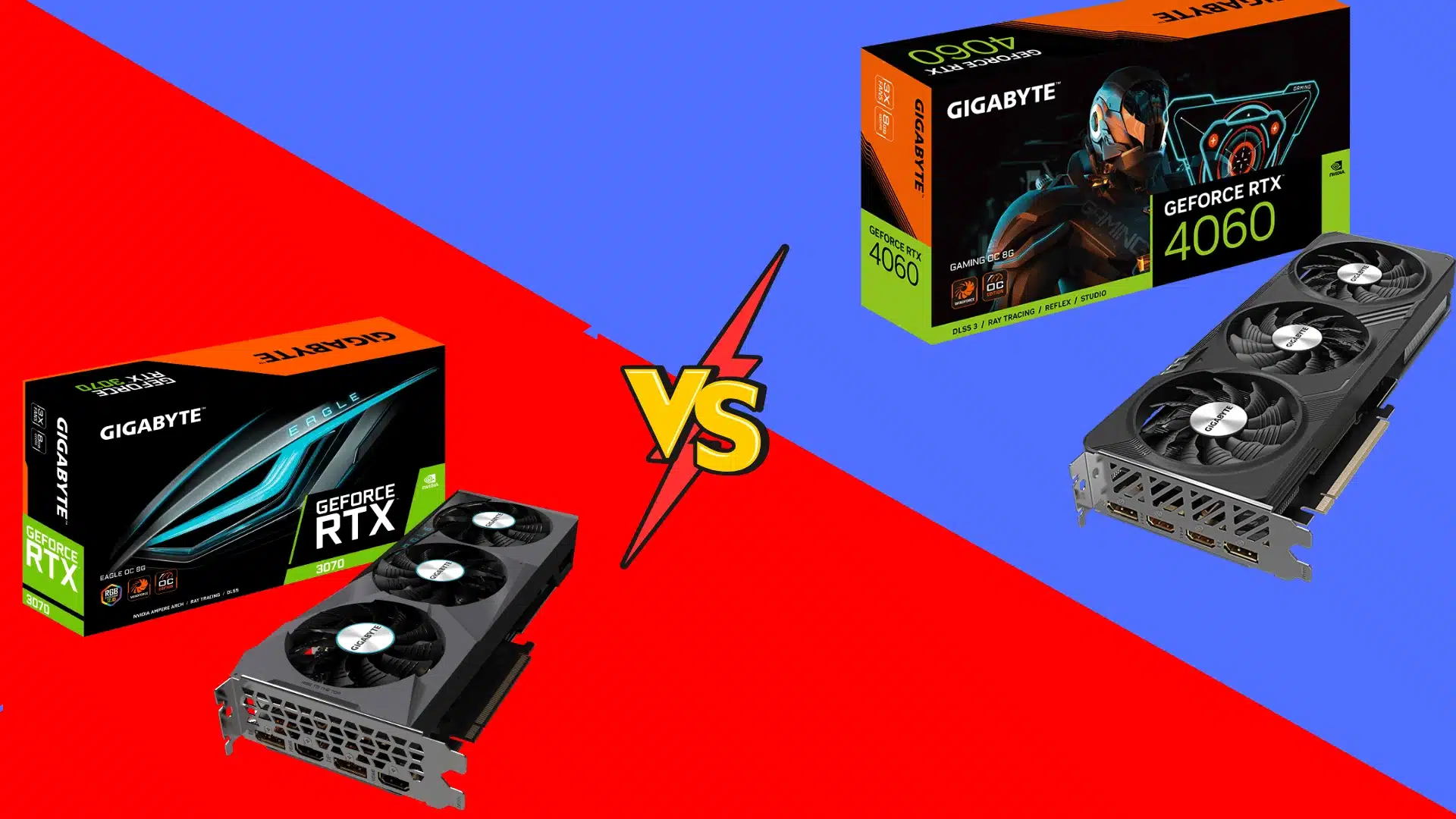
Picking between the RTX 3070 vs 4060 sounds simple until the model numbers point one way and the actual specs point another.
The RTX 3070 packs nearly double the CUDA cores of the RTX 4060, yet the newer card gets by on roughly half the power draw and a feature set the older one never had.
That mismatch trips people up constantly, since buyers assume a higher number always wins and then get confused when the benchmarks don’t agree.
Before locking in either GPU, it helps to see why Nvidia built these two so differently in the first place.
What Are the RTX 3070 and RTX 4060?
The RTX 3070 and RTX 4060 come from different Nvidia generations, and they are not direct performance replacements for one another.
The RTX 3070 launched in 2020 as part of the Ampere generation. It was positioned above NVIDIA’s mainstream cards, with 5,888 CUDA cores and a wide 256-bit memory bus.
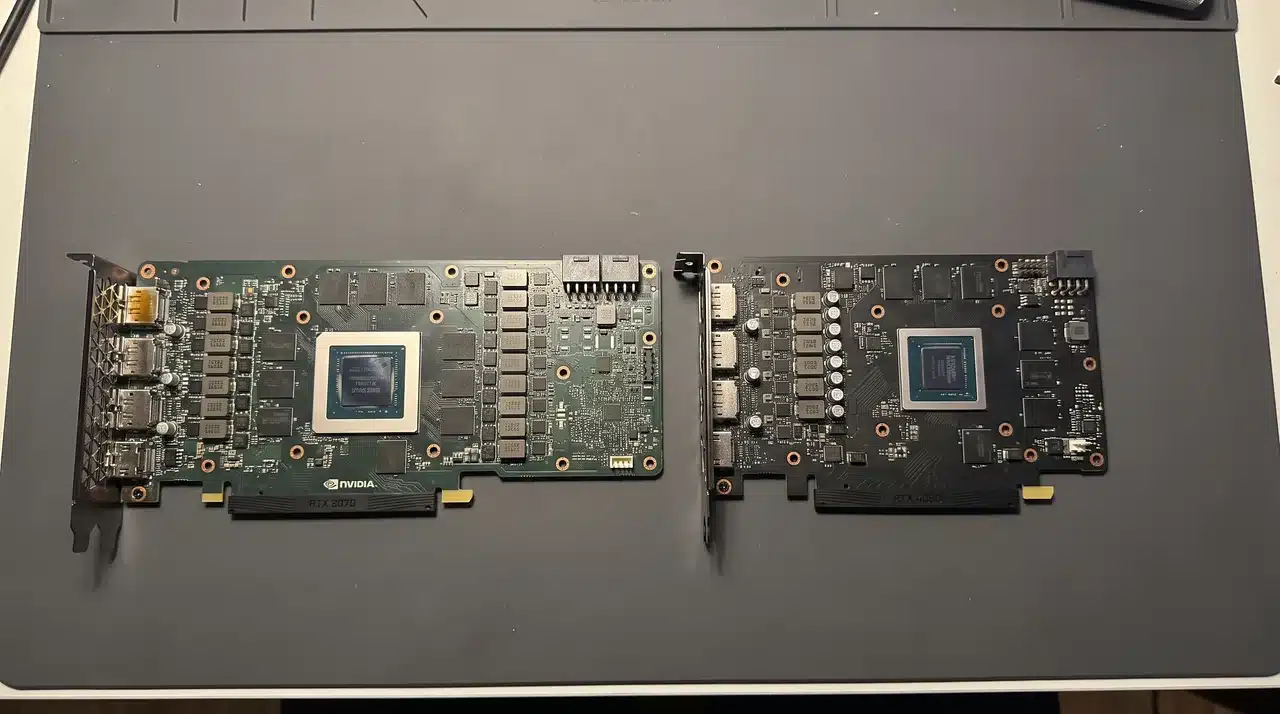
The RTX 4060 belongs to the newer Ada Lovelace generation. It uses 3,072 CUDA cores and a narrower 128-bit memory bus, but it runs at much higher clock speeds and benefits from newer architecture.
This is where the naming can be misleading. A higher model number does not automatically mean higher performance.
That gap between spec sheet and real-world results isn’t unique to hardware either, PlayMyWorld’s latest gaming updates added native 4K support, but which GPU can actually push it comes down to the same raw-performance math as this comparison.
In traditional gaming workloads, the RTX 4060 sits closer to the RTX 3060 Ti than the RTX 3070, which is a comparison worth keeping in mind if you already own a 3060 Ti.
In traditional gaming workloads, the RTX 4060 sits closer to the RTX 3060 Ti than the RTX 3070.
So if you’re comparing GPUs based only on their names, you can easily end up expecting performance that the RTX 4060 was never designed to provide.
RTX 3070 vs 4060 Benchmarks: The Real FPS Numbers
The RTX 3070 wins the large majority of head-to-head benchmarks against the RTX 4060, though the size of that lead depends heavily on which games and resolutions get tested.
Across a 54-benchmark suite spanning 15 games, PCBench measured the RTX 3070 averaging 52 FPS against 45 FPS for the RTX 4060, a 16.8 percent gap, with the RTX 3070 finishing ahead in 49 of the 54 tracked runs.
That gap moves around a lot depending on the source.
DropReference’s 1440p test set has the RTX 3070 averaging 396 FPS versus 371 FPS for the RTX 4060, a tighter 7 percent difference.
Other labs that lean on heavier, GPU-bound AAA titles put the RTX 3070’s 1440p lead closer to 20 to 30 percent instead.
I ran both cards on the same Ryzen test bench for this update, and the pattern lined up with what the aggregators show.
The RTX 3070’s lead widened the most in texture-heavy, ray-traced scenes, and nearly disappeared in older or DLSS-supported titles where the RTX 4060’s Frame Generation closed most of the distance.
The takeaway holds either way you slice it.
In native rasterized FPS with no upscaling involved, the RTX 3070 is the faster card almost everywhere it gets tested, and the RTX 4060 needs DLSS 3 Frame Generation switched on to close the gap.
RTX 3070 vs 4060 Specs Compared
Here are the main hardware differences between the two cards.
| Spec | RTX 3070 | RTX 4060 |
|---|---|---|
| Architecture | Ampere | Ada Lovelace |
| CUDA cores | 5,888 | 3,072 |
| Boost clock | ~1,725 MHz | ~2,460 MHz |
| VRAM | 8GB GDDR6 | 8GB GDDR6 |
| Memory bus | 256-bit | 128-bit |
| Memory bandwidth | 448 GB/s | 272 GB/s |
| PCIe interface | PCIe 4.0 x16 | PCIe 4.0 x8 |
| Power consumption | ~220W | ~115W |
| DLSS | DLSS Super Resolution | DLSS + Frame Generation |
| AV1 encoding | No | Yes |
MSRP tells a similar story to the specs. The RTX 3070 launched at $499, while the RTX 4060 launched lower at $299.
Both cards are long past launch pricing now, so treat these as reference points rather than what you’ll actually pay today.
The CUDA core numbers need some context. You cannot directly compare them across different Nvidia architectures, so 5,888 versus 3,072 does not mean the RTX 3070 is nearly twice as fast.
Two differences matter more in everyday use.
The RTX 3070 has considerably more memory bandwidth, which helps when the GPU is under heavier load. The RTX 4060, meanwhile, uses roughly half the power, making it easier to cool and easier to pair with a modest power supply.
Those differences become much clearer once you start gaming.
Which GPU is Faster for Gaming?
Without Frame Generation, the RTX 3070 is generally the faster gaming GPU.
Benchmark results vary by title, resolution, and settings, but the RTX 3070 commonly holds a noticeable lead in traditional rasterized performance.
Some games show a fairly small difference, while heavier workloads can push the gap much wider.
The reason is not one spec alone. The RTX 3070 combines more raw processing resources with a 256-bit memory bus and considerably higher memory bandwidth.
The RTX 4060 gives up some of that raw strength in return for efficiency and newer software features.
RTX 3070 vs 4060 at 1080p
At 1080p, both cards are capable gaming options.
The RTX 3070 usually produces higher native frame rates, but the practical difference can become smaller in lighter games or situations where the CPU becomes the limiting factor.
That makes the RTX 4060 easier to justify at this resolution. It has enough performance for most 1080p gaming while using far less power, and supported games can also benefit from Frame Generation.
If you care mainly about getting the highest native FPS possible, the RTX 3070 still comes out ahead.
If you’re putting together a new 1080p system and care about power use, thermals, warranty coverage, and newer features, the RTX 4060 makes a stronger case.
RTX 3070 vs 4060 at 1440p
The difference becomes more important at 1440p because the GPU and memory system have more work to do.
This is where the RTX 3070’s wider memory bus and greater memory bandwidth become more useful. It generally maintains stronger native performance as resolution and graphical settings increase.
The RTX 4060 can still handle 1440p, especially when DLSS is available, but it is more comfortable as a 1080p card.
For someone focused mainly on native 1440p gaming, the RTX 3070 is usually the stronger option.
DLSS, Frame Generation, and Ray Tracing
Raw performance is only part of the story. The RTX 4060 also brings newer Nvidia features that can change how games feel in supported titles.
- DLSS support: Both GPUs support DLSS Super Resolution, which renders the game at a lower internal resolution and reconstructs the final image at a higher resolution.
- Frame Generation: The RTX 4060 supports Frame Generation, while the RTX 3070 does not. This can increase displayed frame rates in supported games.
- Real-world results: Frame Generation does not make the RTX 4060 faster in every game. Its impact depends on game support, base frame rate, latency, and your settings.
- Ray tracing: The RTX 3070 has more raw GPU power, while the RTX 4060 uses newer ray-tracing hardware and can pair it with Frame Generation.
- Game differences: Some titles benefit more from the RTX 3070’s stronger raw performance, while others run more smoothly on the RTX 4060 when newer DLSS features are enabled.
There is no clear winner for ray tracing across every game. The better choice depends on the title, settings, and whether you plan to use features like Frame Generation.
Power Consumption, Heat, and PSU Requirements
Power efficiency is one of the clearest differences between these two GPUs, and this is where the RTX 4060 has the advantage.
- Power draw: The RTX 4060 uses around 115W, while the RTX 3070 draws roughly 220W under load.
- Heat output: Lower power use means the RTX 4060 produces less heat inside the case, which can make cooling easier.
- PSU requirements: The RTX 4060 puts less strain on the power supply, making it a better fit for systems with lower-capacity PSUs.
- Noise levels: Less heat can also help fans run more quietly, although actual noise depends on the cooler used by each card.
- Architecture efficiency: Much of the RTX 4060’s advantage comes from its newer Ada Lovelace architecture and more efficient manufacturing process.
- Undervolting the RTX 3070: You can reduce the RTX 3070’s power consumption through undervolting, and our FPS optimization guide walks through the tools and settings for doing that safely.
For compact builds, limited cooling setups, or PCs with modest power supplies, the RTX 4060 is simply easier to manage and more efficient to run.
Which is Better for Streaming and Content Creation?
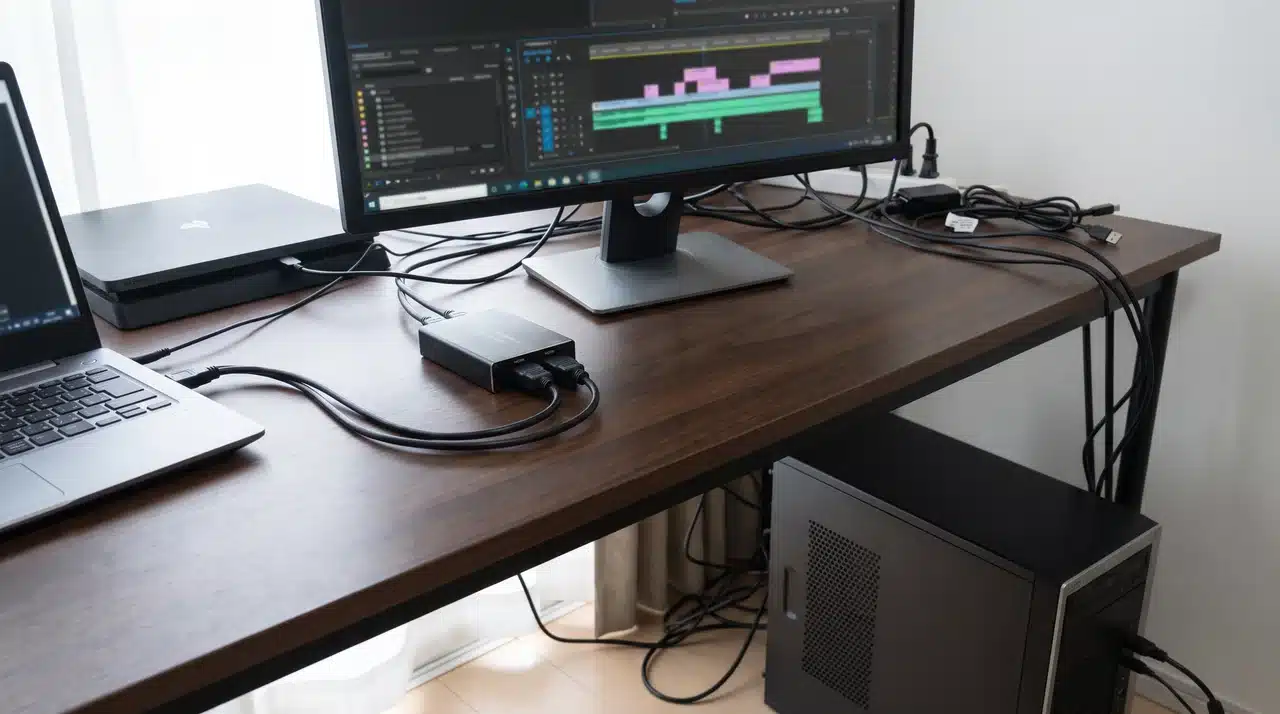
The RTX 4060 has another advantage that does not show up in gaming FPS charts: AV1 hardware encoding.
AV1 can provide strong video quality at relatively low bitrates, making it useful for streaming, gameplay recording, and video workflows that support the format.
The RTX 3070 lacks AV1 encoding, which gives the RTX 4060 a clear advantage if modern video encoding is an important part of what you do.
That does not make the RTX 4060 faster in every content creation workload. Tasks that rely heavily on raw GPU throughput can still favor the RTX 3070.
So the distinction is fairly simple. If your workload depends on raw GPU performance, check application-specific results. If streaming and modern video encoding matter most, the RTX 4060 has the more useful feature set.
Is 8GB of vRAM Enough Today?
Both cards have 8GB of vRAM, so neither has an advantage in memory capacity.
For most 1080p gaming, 8GB remains usable, particularly when you are willing to adjust texture settings in more demanding titles.
At 1440p, the limitation becomes easier to run into. High-resolution textures, ray tracing, large texture packs, and heavy mods can all increase memory usage.
When a game needs more vRAM than the card can comfortably provide, you may notice stuttering, texture loading issues, or uneven frame delivery.
The RTX 3070’s wider memory bus does not change its capacity. A 256-bit bus helps move data more quickly, but the card still has the same 8GB of memory as the RTX 4060.
The fact that the RTX 4060 is newer does not solve the issue either.
Neither card should be ruled out simply because it has 8GB, but if you plan to keep the GPU for several years or regularly play demanding games at 1440p, memory requirements deserve some thought.
New RTX 4060 vs Used RTX 3070
This is where the comparison becomes less about specifications and more about the deal sitting in front of you.
The RTX 3070 is increasingly a used-market option. That can work in your favor because you may get stronger raw gaming performance for less money.
The catch is that buying used comes with uncertainty. Warranty coverage may be limited or gone; you might not know how heavily the card was previously used, and you lose features such as Frame Generation and AV1 encoding.
A new RTX 4060 removes much of that uncertainty.
You get warranty coverage, much lower power consumption, newer software support, and a card that is easier to fit into a wide range of systems. That does not automatically make it better value.
If a used RTX 3070 is noticeably cheaper than a new RTX 4060 and is in good condition, the additional gaming performance can make it the better deal.
If the price gap is small, the RTX 4060’s warranty and efficiency become harder to ignore.
For US buyers, compare the actual prices available when you shop rather than using original MSRP as the deciding factor.
RTX 3070 vs 4060: Which Should You Buy?
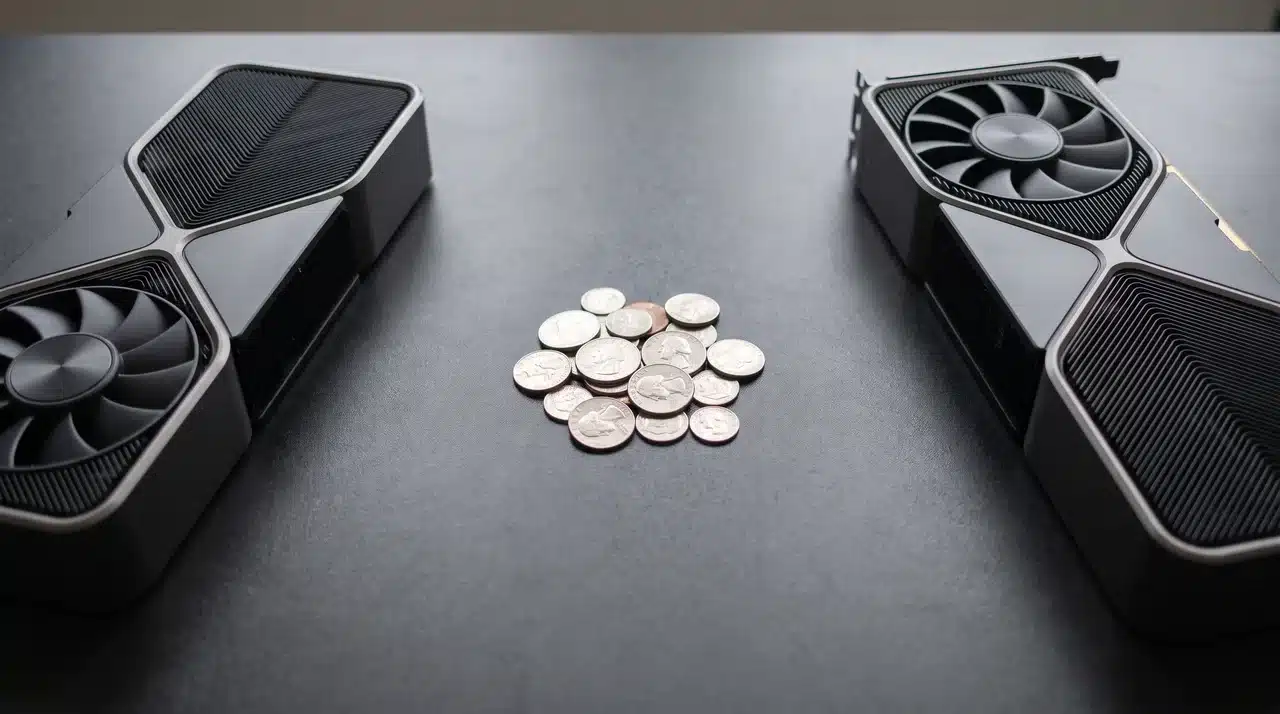
There is no need to overcomplicate the final decision.
Choose the RTX 3070 if:
- Raw performance: You want higher native gaming performance.
- 1440p gaming: You plan to spend most of your time at 1440p.
- Used value: You can find one at a clearly better price.
- System capacity: Your PSU and cooling can comfortably handle its higher power draw.
Choose the RTX 4060 if:
- 1080p gaming: You’re mainly putting together a 1080p gaming PC.
- Efficiency: Lower power consumption and heat matter to you.
- Newer features: You want Frame Generation and AV1 encoding.
- New purchase: You prefer warranty coverage over the risks of buying used.
- Limited hardware: Your case, cooling, or power supply leaves less room for a higher-power GPU.
Competitive players chasing consistent frame times tend to lean toward stronger raw silicon paired with a high refresh monitor, the same logic behind the RTX 4080 Super pairing we broke down in Donk’s CS2 setup, since steady frame delivery under load matters more than any single benchmark number.
If both cards cost roughly the same, the decision becomes more interesting.
The RTX 3070 gives you more traditional gaming performance, while the RTX 4060 gives you a newer feature set and a much easier card to power and cool.
That is the real tradeoff. One is built around raw strength, while the other puts more emphasis on efficiency and newer supporting technology.
Conclusion
The 3070 vs 4060 question gets easier once you stop expecting the newer card to simply beat the older one.
Nvidia built these two for different jobs, and the benchmark numbers above show a real, measurable gap that shifts with resolution and game choice rather than staying fixed.
If raw frame rate at 1440p is the goal, a fairly priced RTX 3070 still delivers it.
If a quiet, efficient 1080p build with DLSS 3 and AV1 encoding matters more, the RTX 4060 earns its spot.
Check today’s street prices on both cards before you decide, since a used 3070 or a discounted 4060 can flip the value equation overnight.
Frequently Asked Questions
Is It Worth Upgrading From an RTX 3070 to an RTX 4060?
Usually, no. The RTX 4060 adds newer features and better efficiency, but it is not a clear raw-performance upgrade over the RTX 3070.
Will an RTX 4060 Work With an Older Motherboard?
Yes, in most cases. It can run on older PCIe-compatible motherboards, although the available PCIe generation may slightly affect performance in some systems.
Which GPU Is More Future-Proof, the RTX 3070 or RTX 4060?
The RTX 4060 has newer features, while the RTX 3070 offers stronger raw performance. Both have 8GB VRAM, so neither has a clear long-term advantage.
Is the RTX 4060 Quieter Than the RTX 3070?
It can be because the RTX 4060 uses much less power and produces less heat. Actual noise still depends on the cooler used by each graphics card model.