Reading a DOOM Eternal review before you buy is smart, because opinions on this game split hard depending on who you ask.
Some players call the combat the best the genre has produced in years. Others call the same combat exhausting and unfair.
Both reactions come from the exact same system, just seen from different points on the learning curve.
The resource loop, the mobility tools, and the difficulty setting you pick decide which side of that split you land on. Once that clicks, the shooter underneath starts to make a lot more sense.
What Kind of Shooter is DOOM Eternal?
DOOM Eternal looks like a fast FPS, but playing it like a typical shooter is where many players struggle.
Most shooters let you stick with your favorite weapon and react as things happen. Eternal pushes you to make decisions constantly.
Different enemies create different problems, so you need to decide what to handle first. A heavy demon controlling the arena may matter more than the enemy attacking you.
Smaller enemies can stay alive if they help you refill resources later. Target priority matters just as much as aim.
The same goes for weapons. Sticking to one favorite gun works against the game’s design. Each weapon has a purpose, and switching between them is part of the combat.
If you usually play shooters by finding a comfortable setup and staying with it, Eternal can feel rough at first. But if you enjoy fast decisions and adapting mid-fight, the combat starts to click.
What is DOOM Eternal’s Core Gameplay Loop?
DOOM Eternal doesn’t give you separate systems for weapons, health, and movement. It fuses them into one loop, and you feel that the moment a fight starts going wrong.
Run low on ammo, and you reach for the chainsaw. Get hit hard, and you need a glory kill for health, or a blast of flame belch for armor.
Each fix creates a new gap somewhere else, so you’re always trading one shortage for another. That loop drives every encounter in this game.
1. The Resource Triangle (Chainsaw, Flame Belch, Glory Kills)
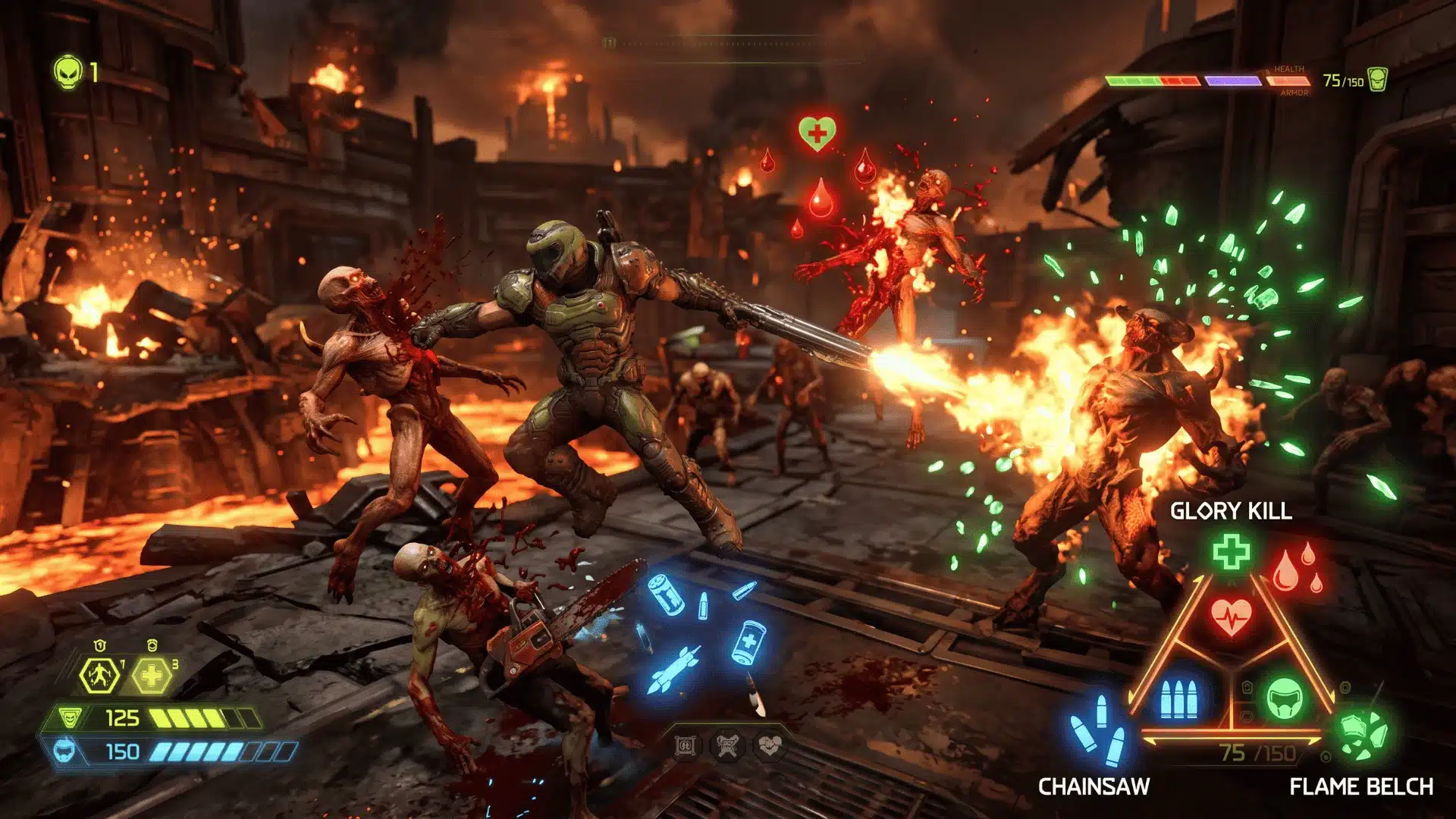
Think of it as a triangle you’re constantly walking around.
Chainsaw a weak enemy, and you get ammo. Glory kill a staggered one, and you get health. Torch something with flame belch, and you get armor.
None of these sit still waiting for you. The moment you’re low on one resource, the game is nudging you toward the specific kill that restocks it.
On lower difficulties, that nudge is gentle.
Crank the difficulty up, and the windows to make these plays shrink fast, which is exactly why the same fight can feel completely manageable on one setting and brutal on another.
2. Mobility as a Combat Requirement (Dash, Wall-Climb, Monkey Bars)
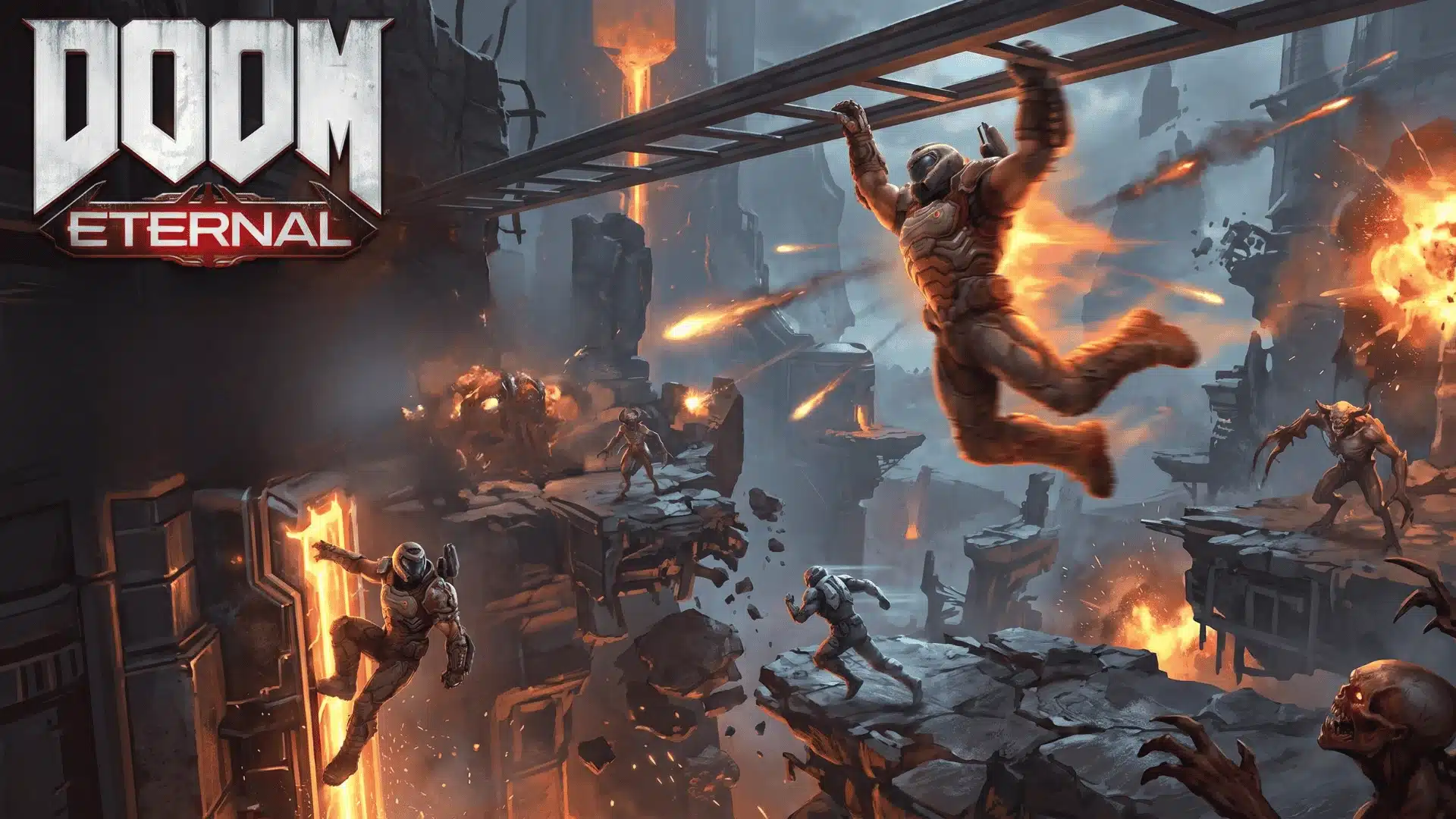
If you played DOOM 2016 and expected movement to be a nice extra, drop that idea now. Dash, wall-climb, and monkey bars aren’t flair here. They’re your escape routes.
The resource triangle above assumes you can reposition instantly to make the kill you need.
Skip the mobility tools, and you’ll get boxed in by enemies you could’ve easily dodged around, and that reads as the game being unfair, when really it’s just a tool you didn’t use.
3. Weapon Modifiers and Enemy Weak Points
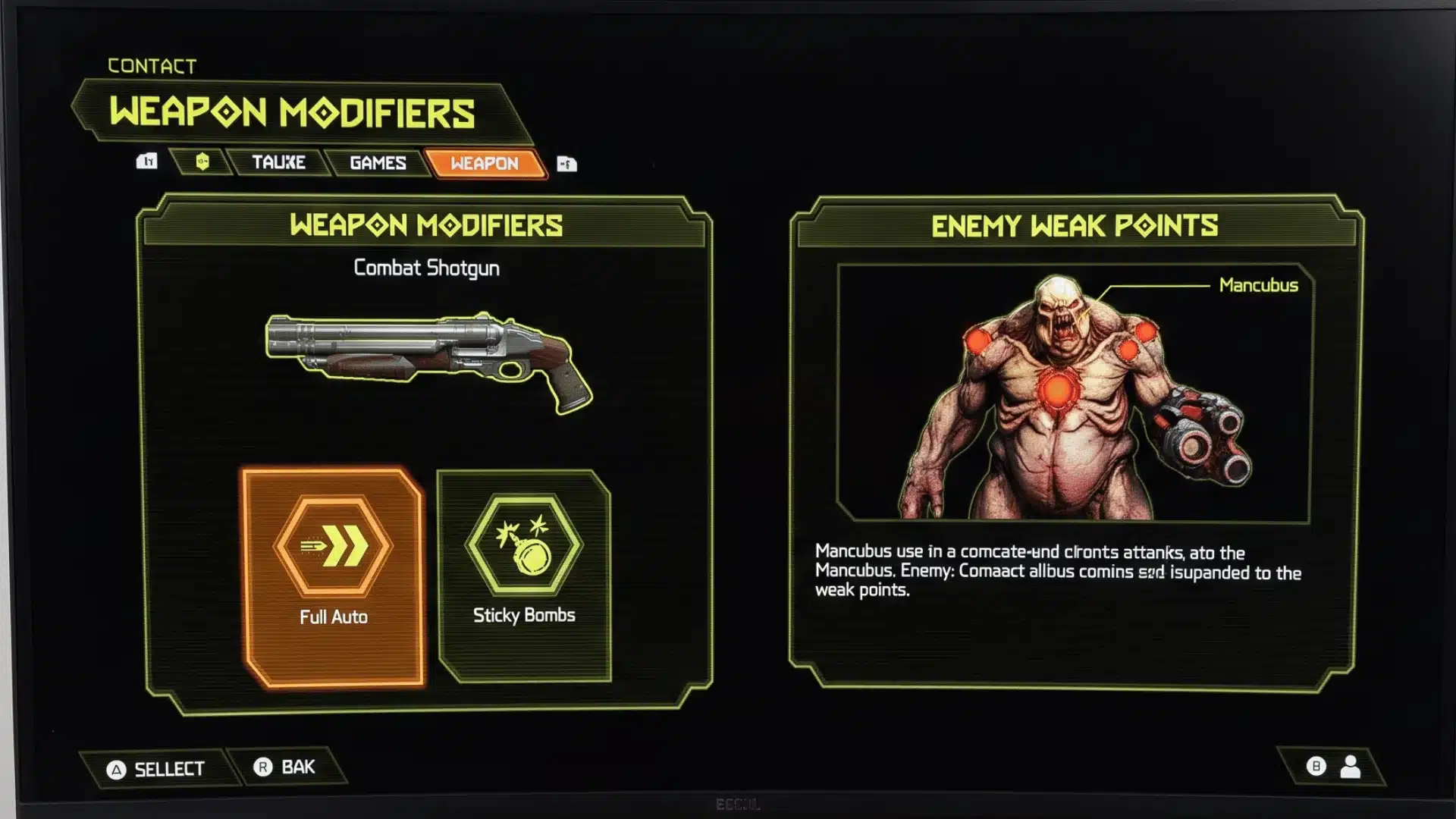
Every weapon in DOOM Eternal has a purpose beyond dealing damage.
Alternate firing modes are designed to exploit enemy weaknesses, like breaking shields with the Plasma Rifle or using the Ballista’s precision attacks on airborne targets.
Learning these matchups changes how fights feel. Instead of unloading ammo into every demon, you start picking the right tool and removing threats much faster.
Story, Presentation, and Critical Reception
DOOM Eternal is not built around plot twists, but it gives the DOOM Slayer far more lore than DOOM 2016 did.
The campaign moves from an overrun Earth to Hell itself, then into Argent D’Nur and the corrupted heavenly realm of Urdak.
Optional codex entries fill in the backstory for players who want it, without forcing it on anyone who doesn’t.
Developed by id Software and published by Bethesda Softworks, DOOM Eternal launched in March 2020 on PC, PlayStation, and Xbox, later adding a Nintendo Switch release and free upgrades for newer consoles.
The game holds an aggregate critic score in the high 80s, putting it ahead of its 2025 prequel, DOOM: The Dark Ages, and in line with the rest of the modern trilogy.
It also earned praise for running smoothly across a wide range of hardware, which matters if your setup is more modest than a high-end gaming rig.
That critical reception lines up with what most players find once the resource triangle clicks: a technically polished, visually loud shooter that backs up its speed with real mechanical depth.
What are the Biggest Trade-Offs in DOOM Eternal?

Spend any time reading player reactions to this game, and you’ll notice two camps arguing past each other. One says the combat loop is exhausting and rigid.
The other calls it one of the best skill ceilings in the genre.
Here’s the thing: they’re both describing the same system from a different point on the learning curve.
The Skill-Ceiling Case
Once the resource triangle clicks, this game turns into something close to a rhythm game. You’re not panicking about ammo anymore.
You’re reading the room, picking targets in the right order, and chaining kills without slowing down. That flow state is what players mean when they praise the skill ceiling.
The Fatigue Case (Rigid Pacing and Platforming)
Before that click happens, the same system feels like a chore. You’re juggling three resource meters while enemies close in, and it feels less like combat and more like triage.
On top of that, the first-person platforming sections interrupt the rhythm you just built up.
That’s a separate complaint from the combat loop: the platforming breaks pacing, and that has little to do with how the resource loop itself plays.
Most players who bounce off this game are simply hitting the wall before the system pays off. Treat glory kills and flame belch as mandatory, not optional, and that wall gets a lot shorter.
When Does the Verdict on DOOM Eternal Change?
Whether this game is right for you depends on a few things about where you’re coming from, not just what the game does.
If you played DOOM 2016 and want more of that same feel, expect an adjustment period. The resource-mobility loop covered above isn’t a bigger version of that game.
It’s a different design, built around triage instead of straightforward run-and-gun.
Your difficulty choice matters just as much. Drop it down a notch, and the refill windows in the resource triangle get more forgiving.
Most of the “exhausting loop” complaints soften or disappear entirely once the timing pressure eases up.
And if you’re wondering whether it holds up years after launch, it does. The combat system hasn’t aged in any way that weakens the case for playing it now.
What actually decides your experience is whether the difficulty and pacing suit you, not how old the game feels.
Conclusion
This DOOM Eternal review comes down to one idea: the frustration and the praise are the same system seen from different sides of the learning curve.
Once the resource triangle clicks and mobility stops feeling optional, the game turns into one of the most rewarding shooters you can play right now.
Chainsaw for ammo, glory kill for health, torch for armor, and keep moving between all three. That is the whole game in one sentence, and everything else builds on top of it.
If you are still on the fence, drop the difficulty a notch, play the first two hours with that loop in mind, and see how it feels.
Frequently Asked Questions
Is DOOM Eternal a Good Game?
Yes. Critics and most players rate it highly for its combat depth and mobility system. The main friction comes from its strict resource loop and platforming sections, not any core design flaw. Adjust to its rhythm instead of fighting it, and it holds up well against other games in the genre.
What’s Better, DOOM or DOOM Eternal?
DOOM Eternal expands heavily on 2016’s combat, adding deeper resource management, mobility tools, and enemy weak points to track. That makes it more demanding, but far more rewarding once it clicks. DOOM 2016 is still the better starting point if you want something simpler, faster to learn, and closer to a traditional shooter.
Is DOOM Eternal Hard to Play?
It has a steeper learning curve than most shooters. You’re juggling ammo, armor, and health sources in real time instead of relying on regeneration or pickups. Expect difficulty spikes until the resource loop clicks; after that, it gets far more manageable.
How Many Hours Does It Take to Beat DOOM Eternal?
A single-player campaign run typically takes 15 to 20 hours, depending on difficulty and how much you explore. Add more time if you’re hunting secrets or chasing unlockable challenges. Going for full completion, including DLC campaigns, will take noticeably longer.