The best 1980s arcade games were built around quick sessions, simple controls, and cabinets that gave players an experience home consoles could not easily match at the time.
Trackballs, steering wheels, rotary controls, and multiplayer setups helped individual machines stand out across busy arcade floors.
That decade produced maze games, shooters, racers, platformers, brawlers, and cooperative titles that still influence gaming today.
Pac-Man, Galaga, Donkey Kong, Defender, Gauntlet, and dozens of others each brought something different to the arcade.
This list ranks top of the strongest releases, then adds more classics worth knowing, along with ways to play them today and suggestions for where to start.
What Defined 1980s Arcade Games
1980s arcade games were defined by short, coin-operated sessions, simple controls, rising challenges, and cabinets that offered experiences people couldn’t easily get at home.
The early 1980s became the center of arcade gaming’s golden age after earlier hits like Space Invaders helped build the market.
Developers needed games that players could understand quickly but still want to improve at over time.
That golden age took off before home consoles could compete, back when swappable game cartridges were still a novelty most players had never touched.
Worth remembering: The cabinet itself was part of the experience, not just a screen and controls.
Trackballs, steering wheels, rotary controls, and multiplayer setups changed how many games were played. These choices helped each machine create its own identity on a crowded arcade floor.
The ranked list below shows the games that used these ideas most effectively.
Best 1980s Arcade Games Ranked
These picks rank the best 1980s arcade games by influence, play value, recognition, and cabinet appeal. Each game earns its position for a distinct reason.
1. Pac-Man (1980)
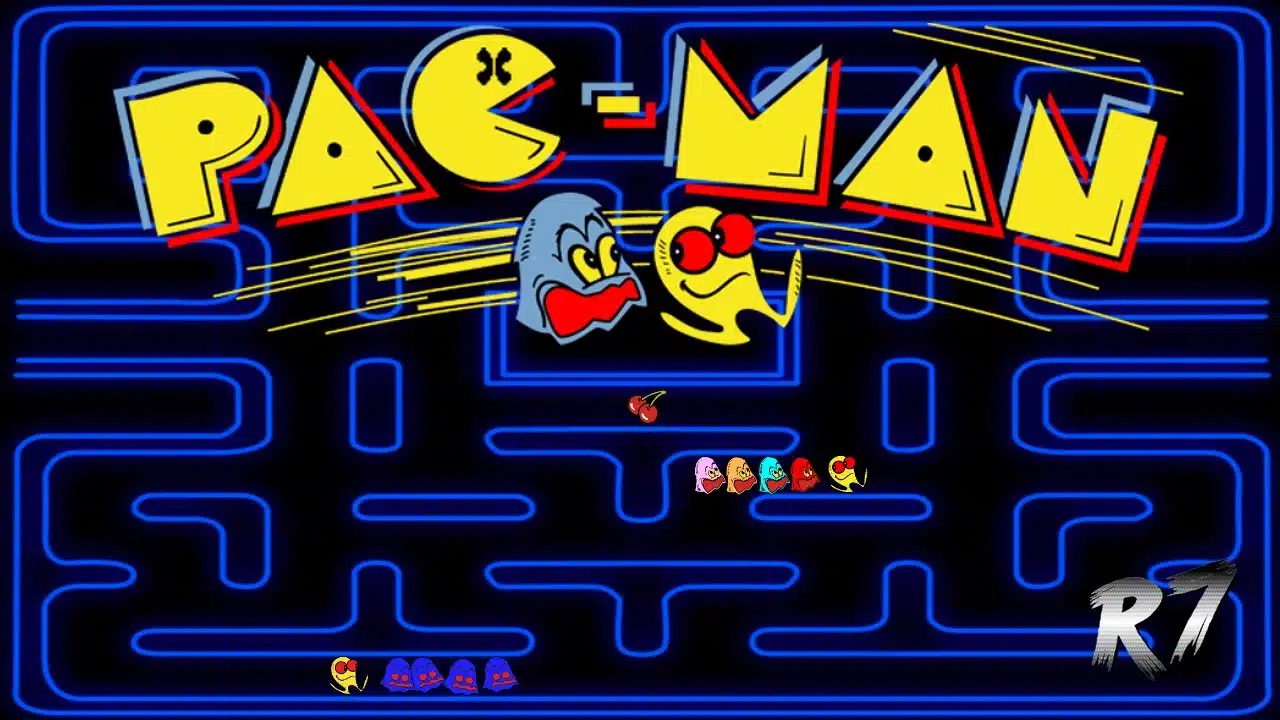
Namco’s Pac-Man turned maze play into a global arcade standard. You clear dots while avoiding four ghosts with distinct movement patterns.
Its characters and maze-chase format helped push arcade games far beyond the space-shooter image of the late 1970s.
2. Galaga (1981)
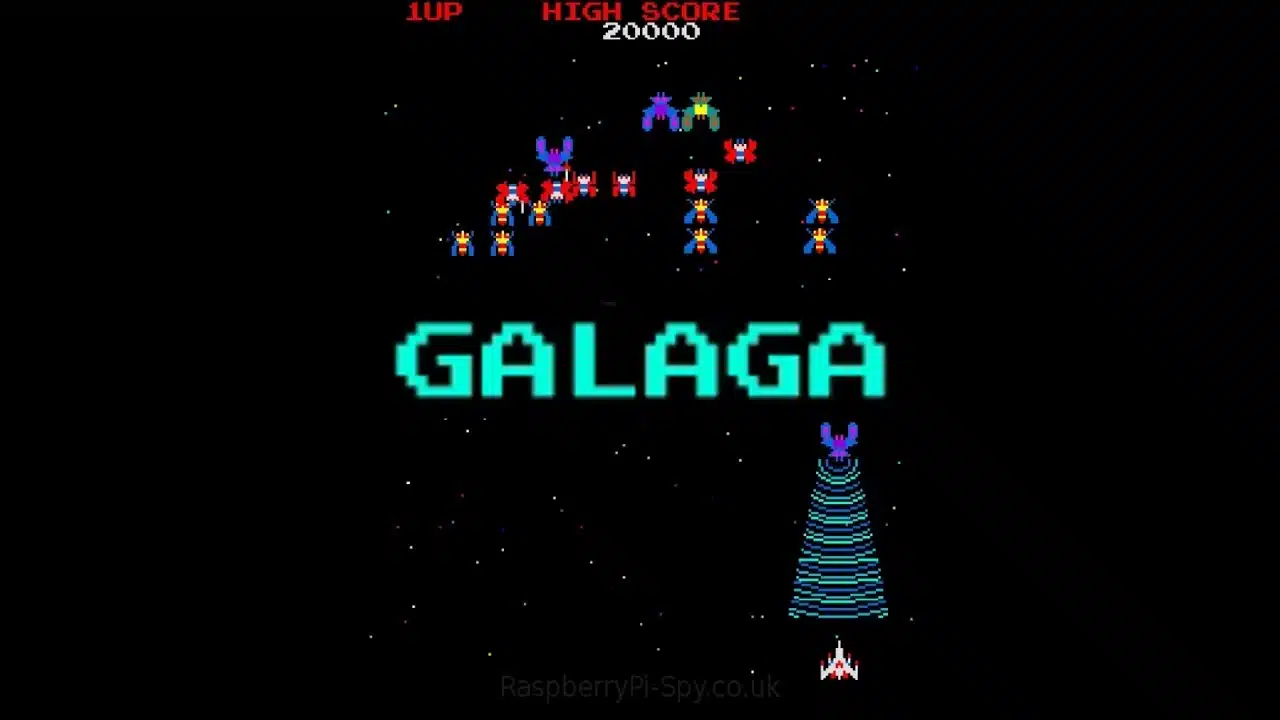
Namco’s Galaga refined fixed-screen shooting through diving formations and a memorable tractor beam. You pilot a starfighter against insect-like alien forces.
Captured fighters can later be recovered, creating a powerful dual-fighter setup that rewards calculated risk.
3. Donkey Kong (1981)
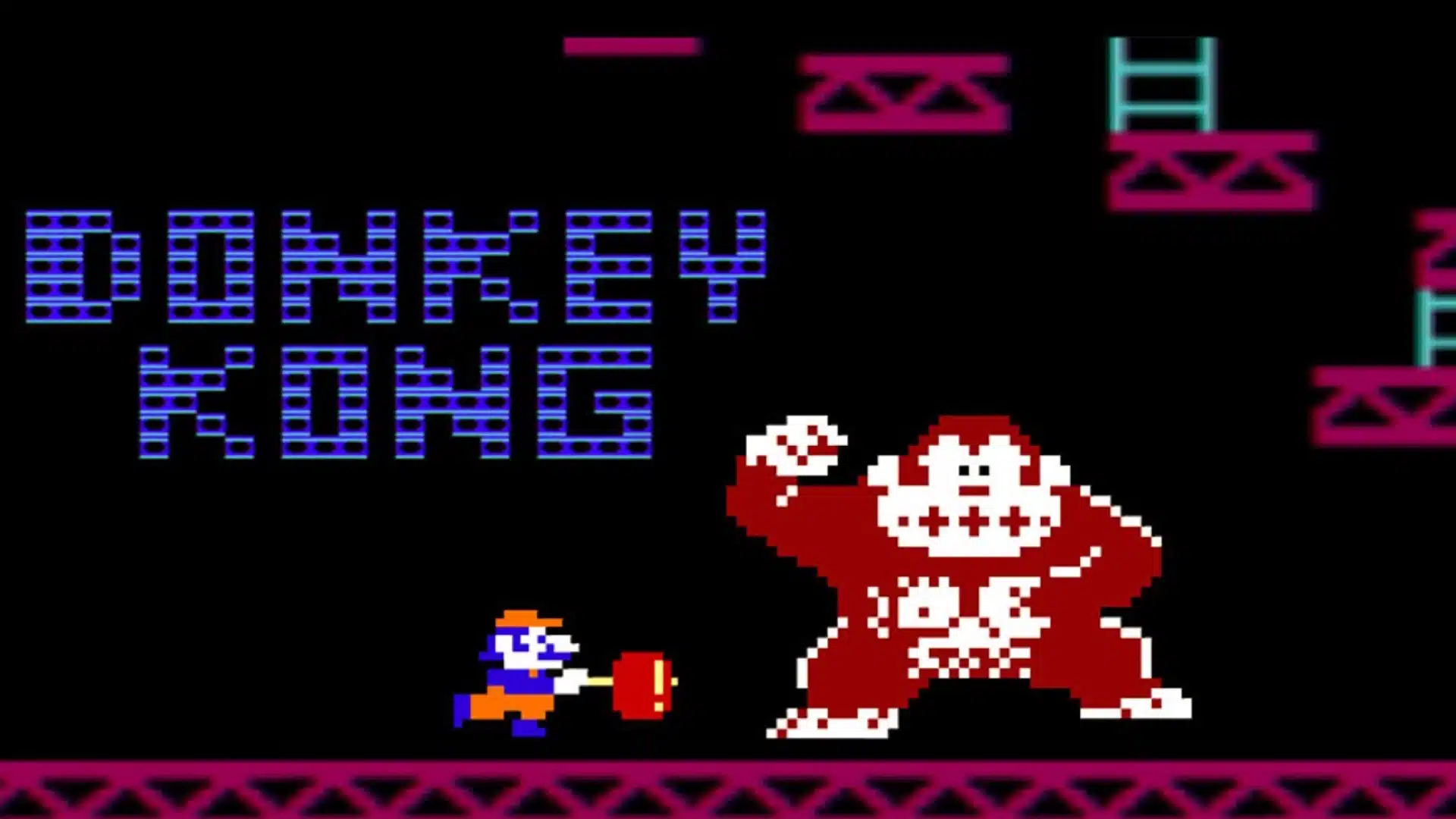
Nintendo’s Donkey Kong introduced Jumpman, later known as Mario. He climbs girders and platforms to rescue Pauline from Donkey Kong.
Its jumping, obstacles, characters, and clear rescue goal helped establish an early model for arcade platform games.
4. Ms. Pac-Man (1982)
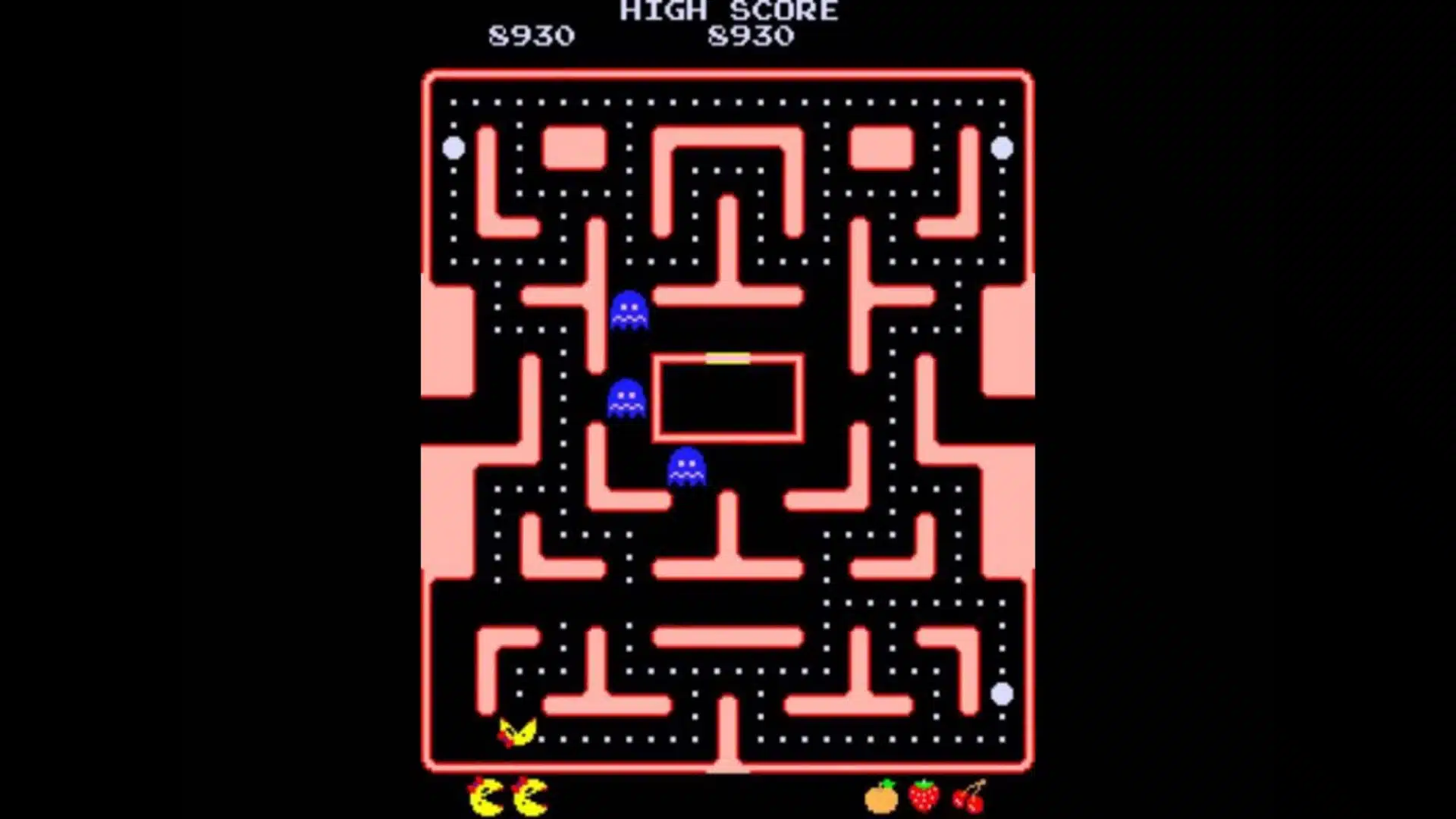
Ms. Pac-Man expanded the original maze formula with four mazes and less predictable ghost behavior.
Changing layouts reduced routine play and demanded more adjustment between stages, giving experienced players a deeper version of the original format.
5. Defender (1981)
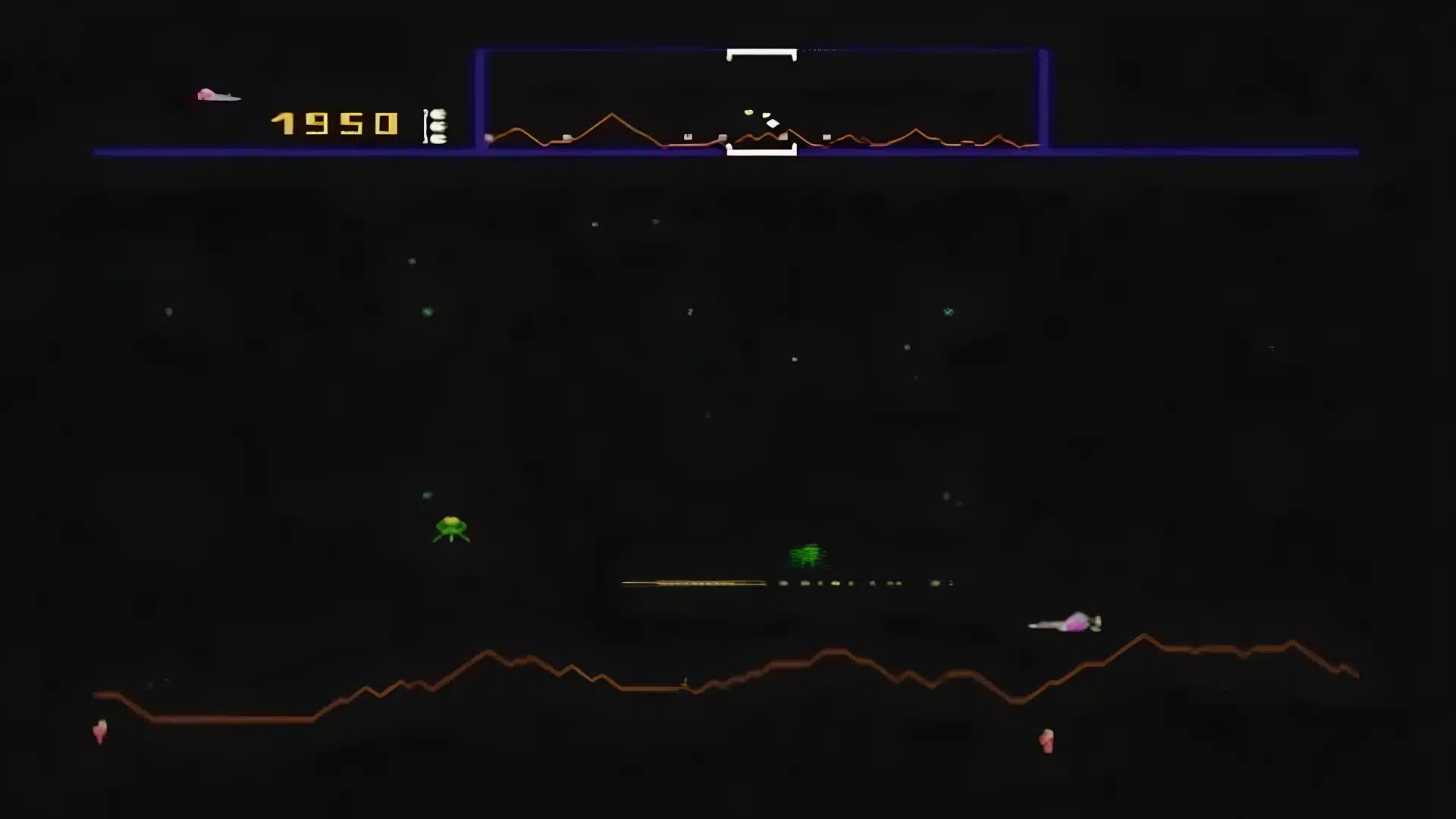
Defender placed shooting across a scrolling landscape rather than one fixed screen. Radar helped players track threats beyond the visible area.
Its demanding control layout required coordination and practice, giving skilled players unusually broad control over movement and combat.
6. Centipede (1981)
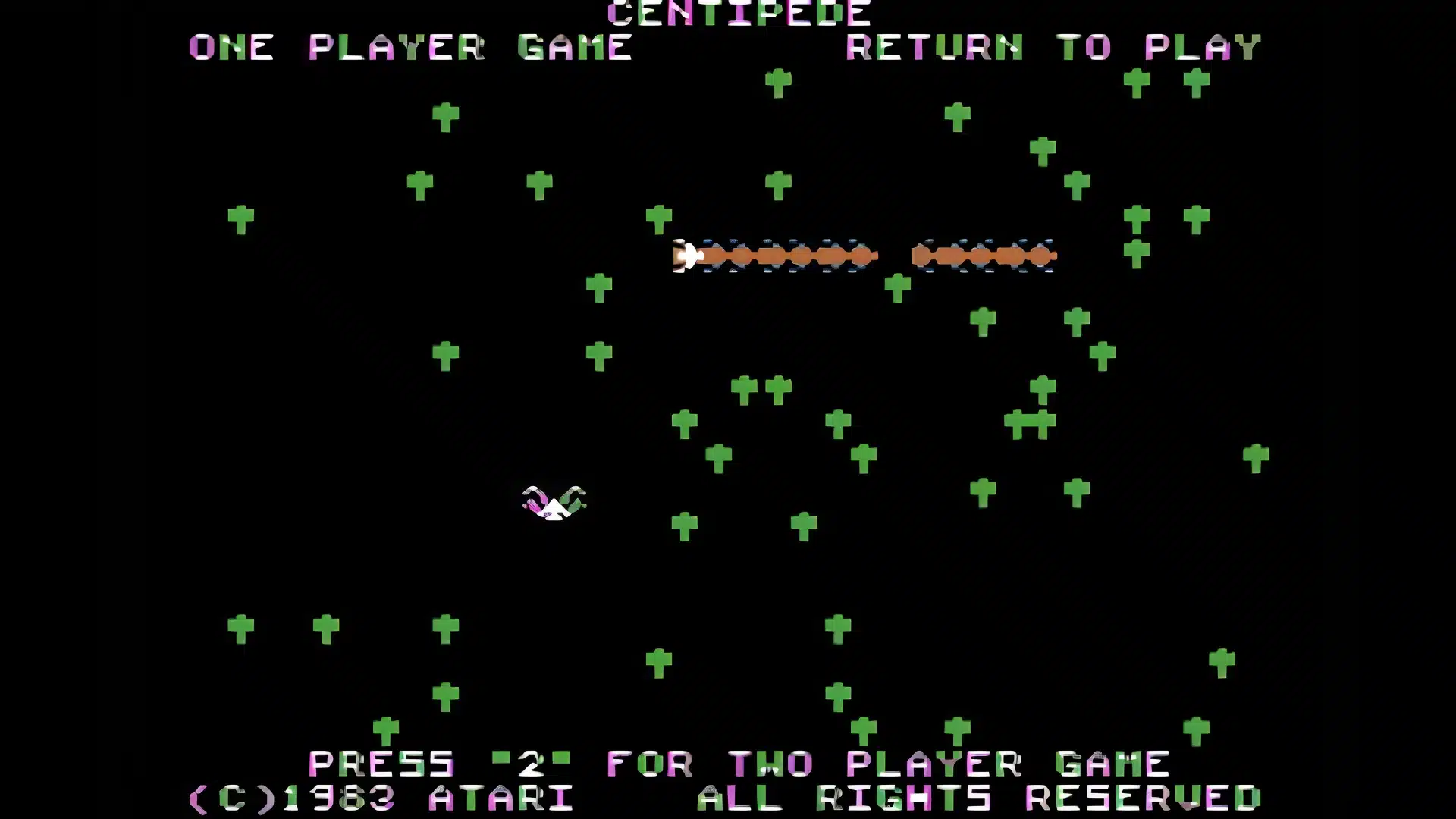
Atari’s Centipede paired a trackball with a vertical playfield filled by descending segmented enemies.
The control allowed quick movement across the lower screen, while mushrooms constantly changed enemy paths and altered each defensive situation.
7. Frogger (1981)
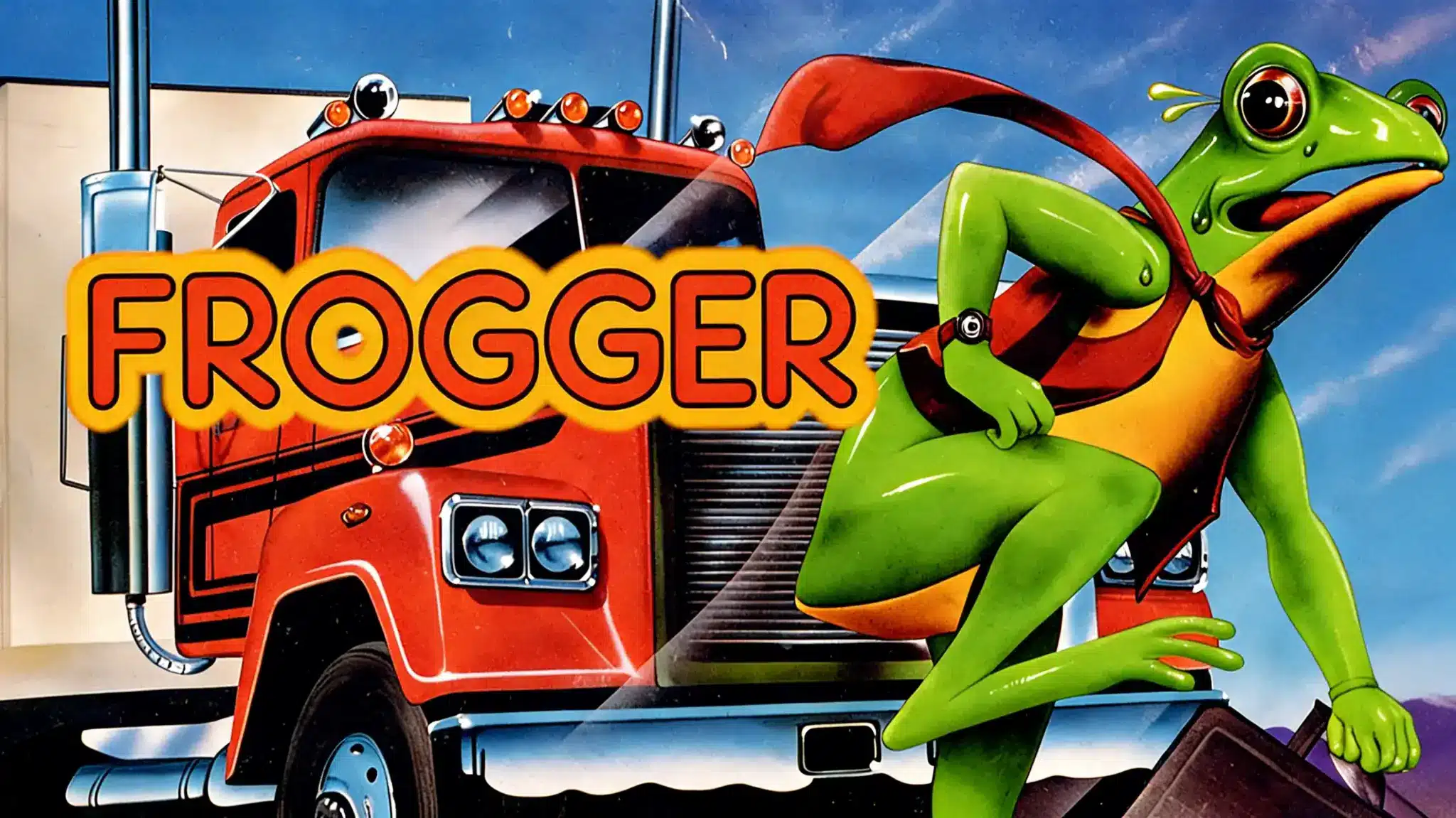
Konami’s Frogger built its challenge around movement rather than combat. You guide frogs through traffic before crossing a moving river.
Cars, logs, turtles, and timing hazards turned route choice into the main skill instead of shooting or direct attacks.
8. Robotron: 2084 (1982)
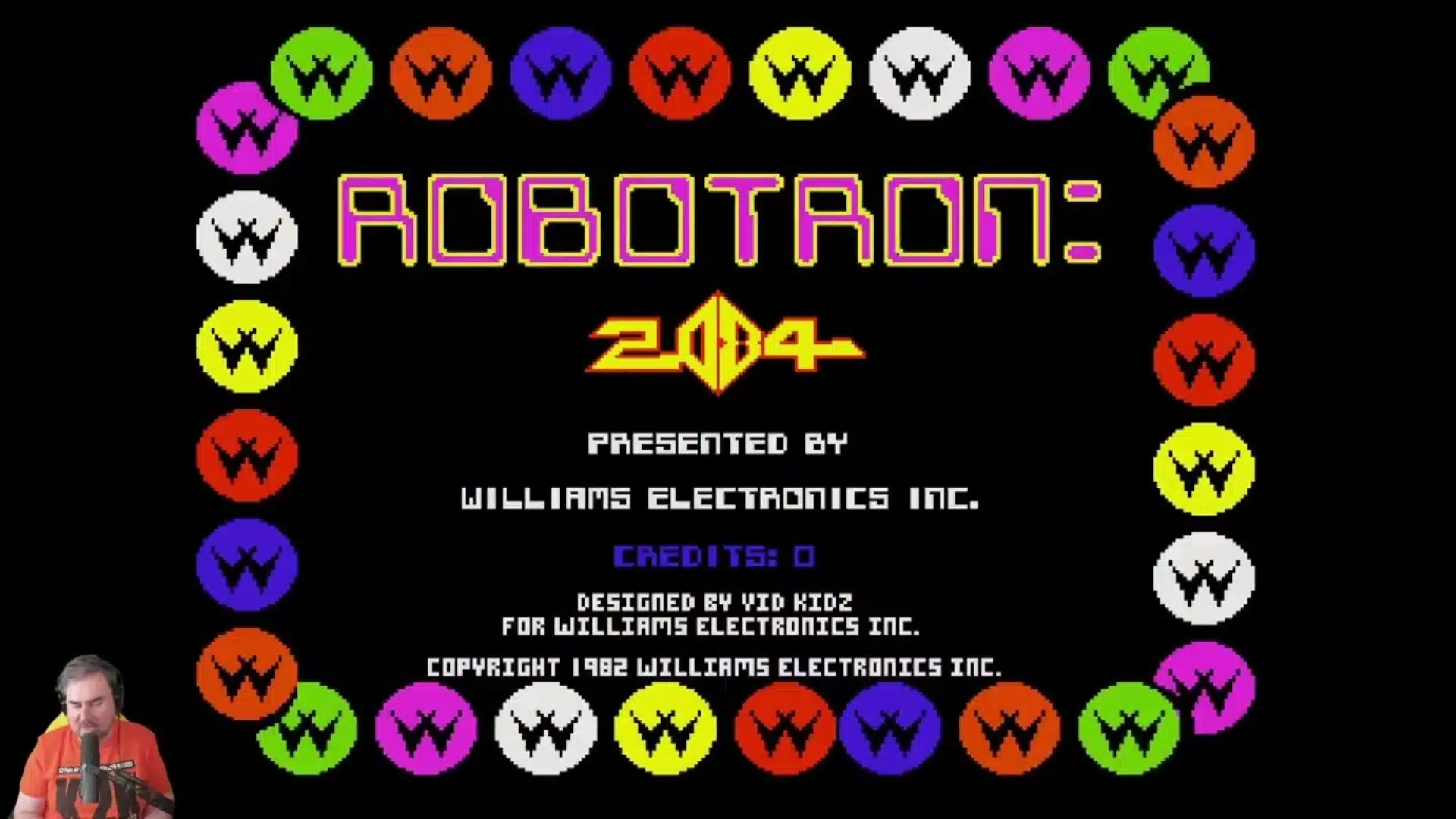
Robotron: 2084 used one joystick for movement and another for shooting. Players could therefore move and fire in separate directions.
That twin-stick layout supported frantic arena combat while giving experienced players precise control over positioning and attacks.
9. Tempest (1981)
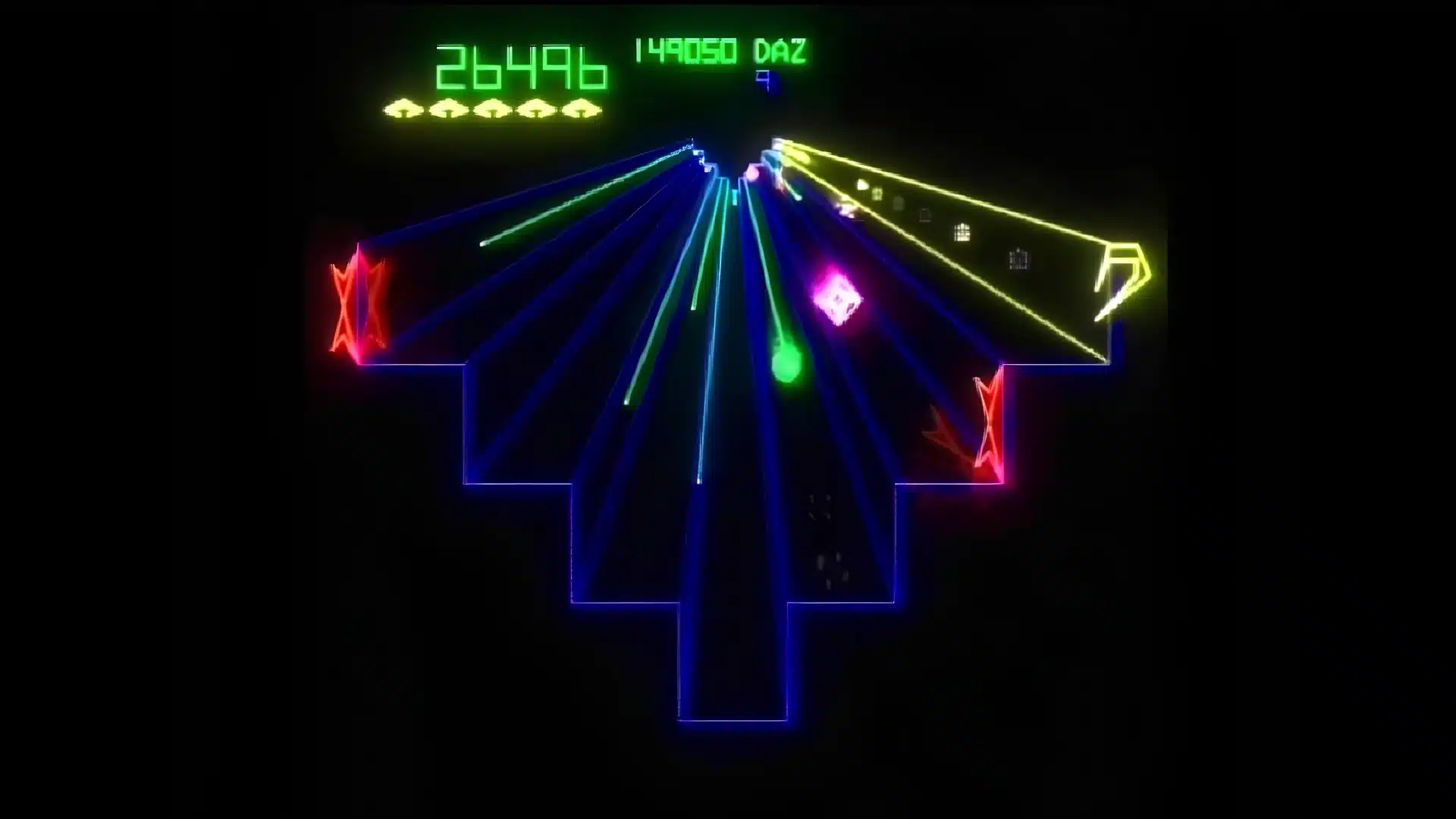
Tempest combined color vector graphics with a rotary control used to move around geometric playfields.
Enemies advanced from deeper inside each shape, so survival depended on controlling the rim while clearing threats before they reached you.
10. Dragon’s Lair (1983)
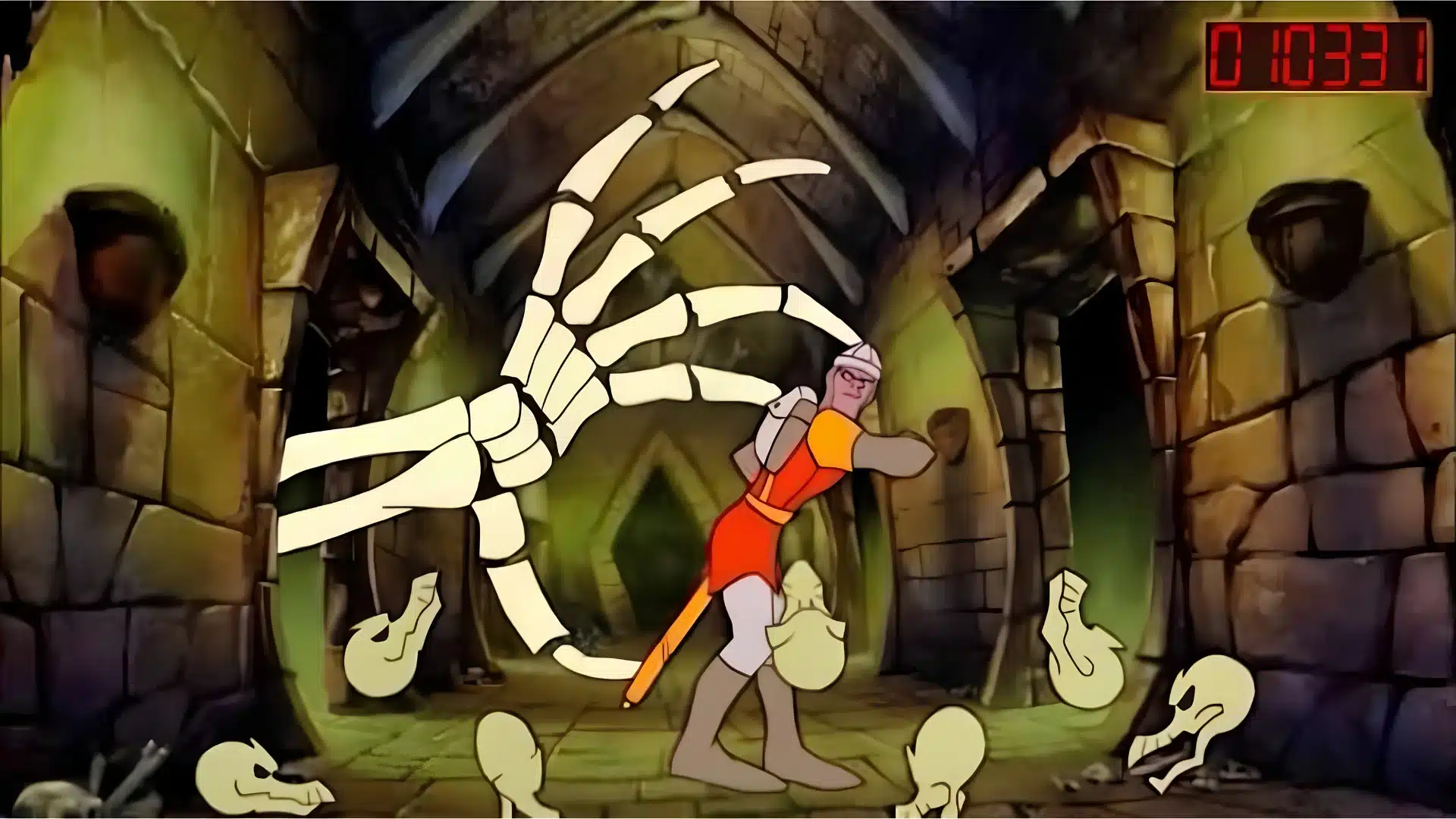
Dragon’s Lair used laserdisc animation to create hand-drawn visuals instead of the sprite graphics common in many arcade games.
Players responded to timed visual cues, making animation and precise input timing central to the experience.
11. Pole Position (1982)
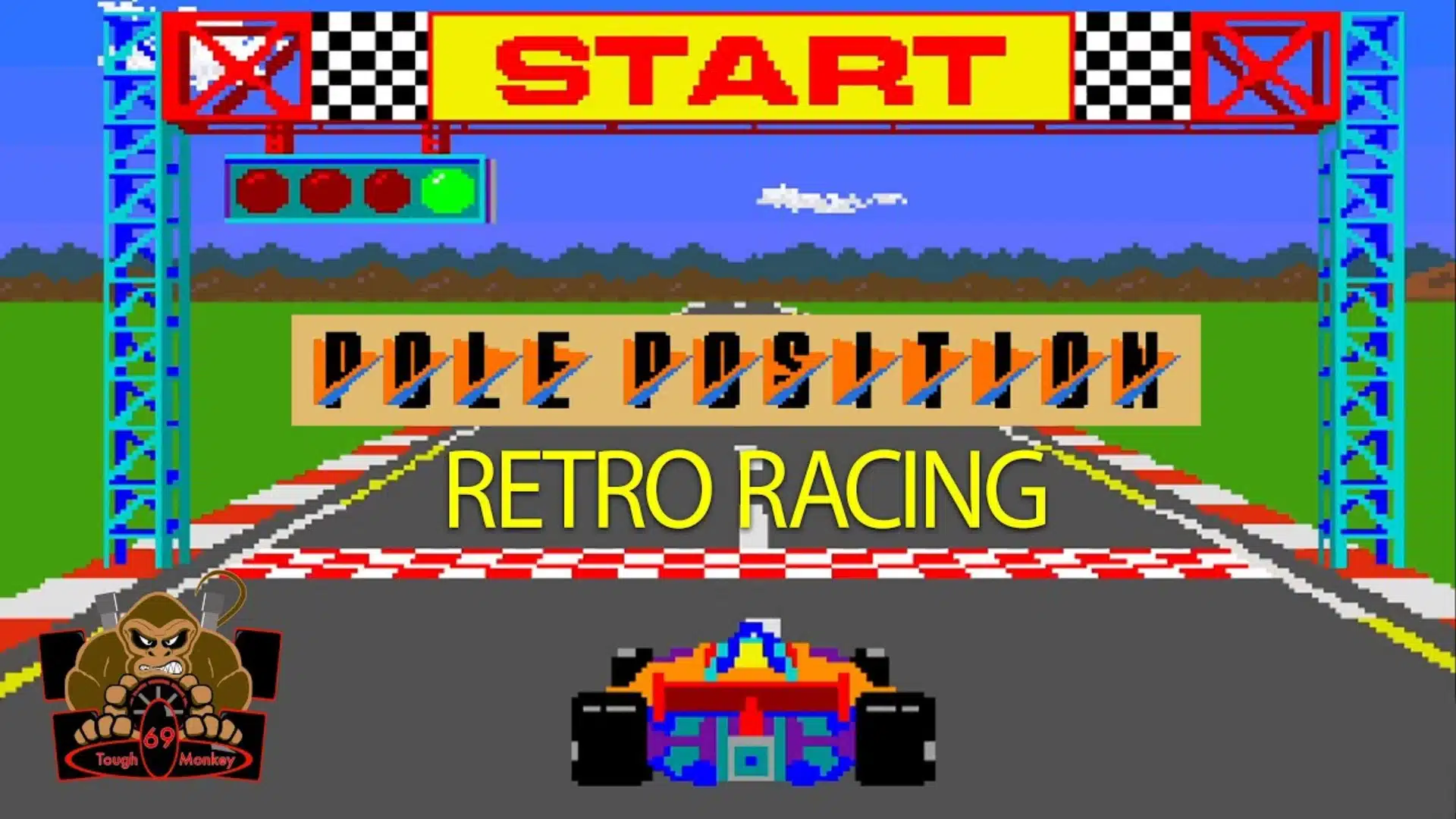
Pole Position used a steering wheel and pedal to bring more physical control to arcade racing.
Players first qualified against the clock, then entered a race filled with traffic, track limits, and timed overtaking decisions.
12. Gauntlet (1985)
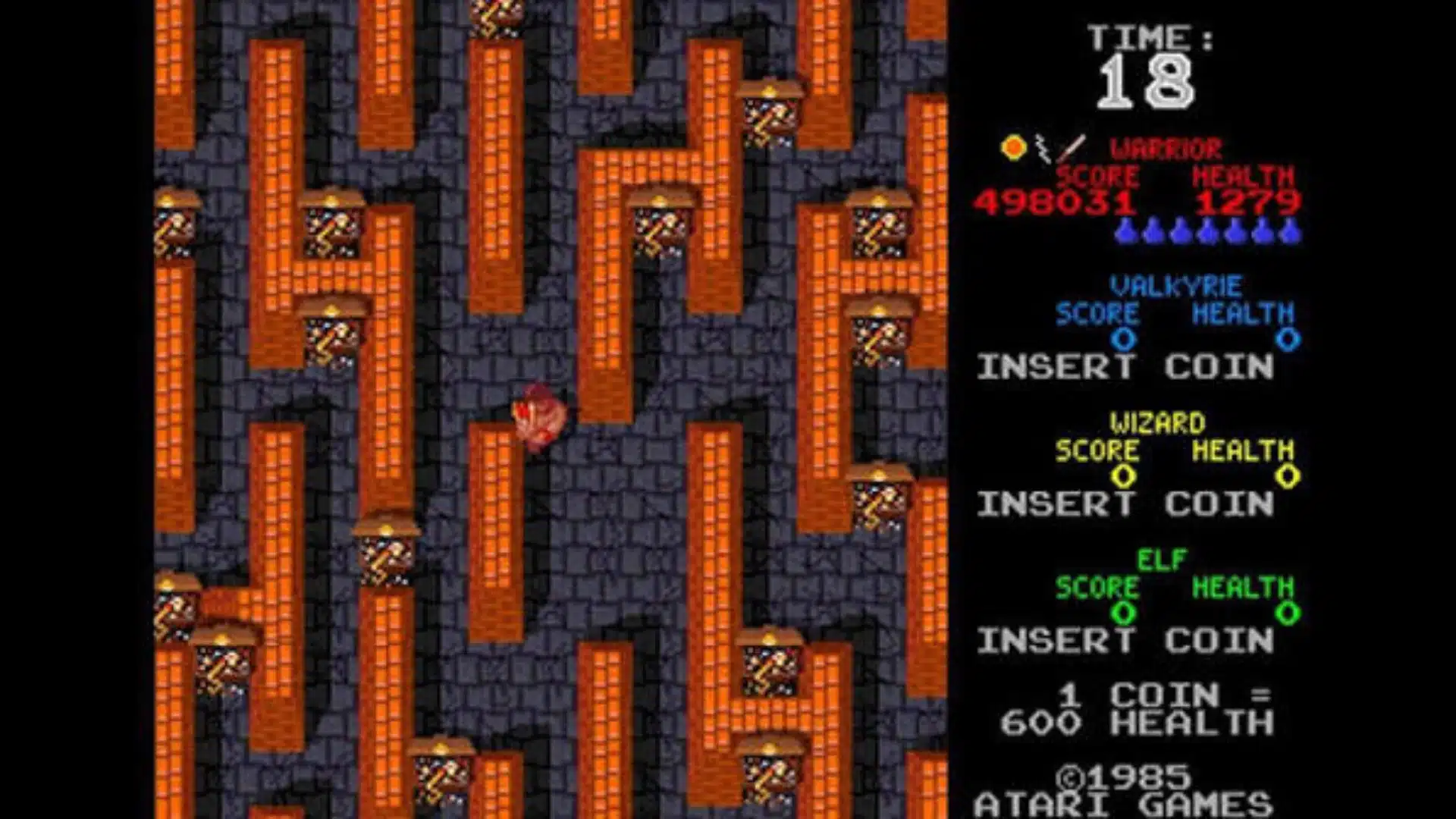
Gauntlet let four players enter the same dungeon as distinct fantasy characters. Each class offered its own strengths and weaknesses.
Shared exploration, combat, food, and treasure gave the cabinet a cooperative structure built around managing limited resources together.
13. Missile Command (1980)
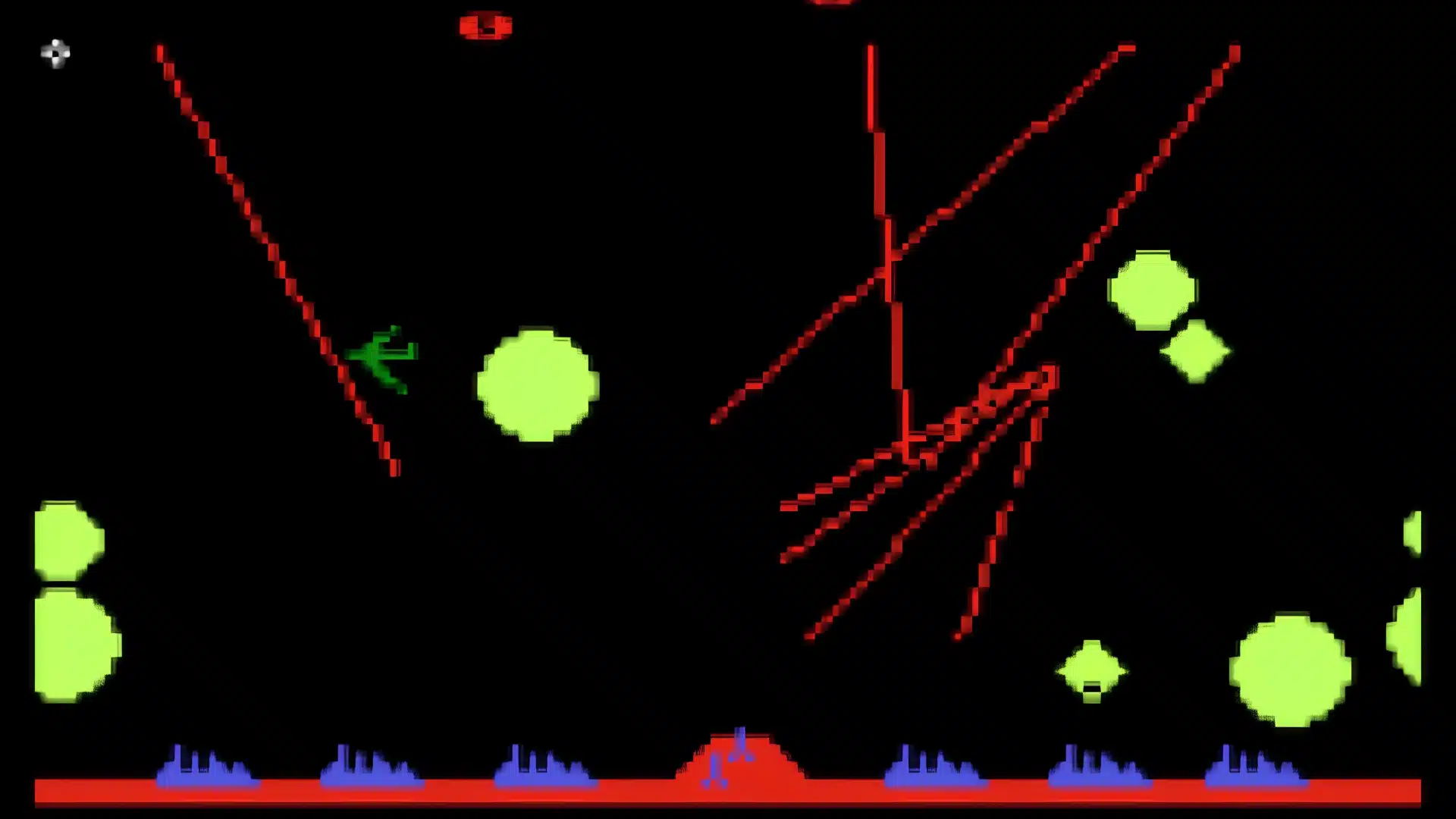
Missile Command asked players to defend cities from incoming missile attacks. A trackball controlled targeting across the screen.
Limited defensive ammunition made every shot matter, creating tension through resource management rather than increasingly complex controls.
14. Rampage (1986)
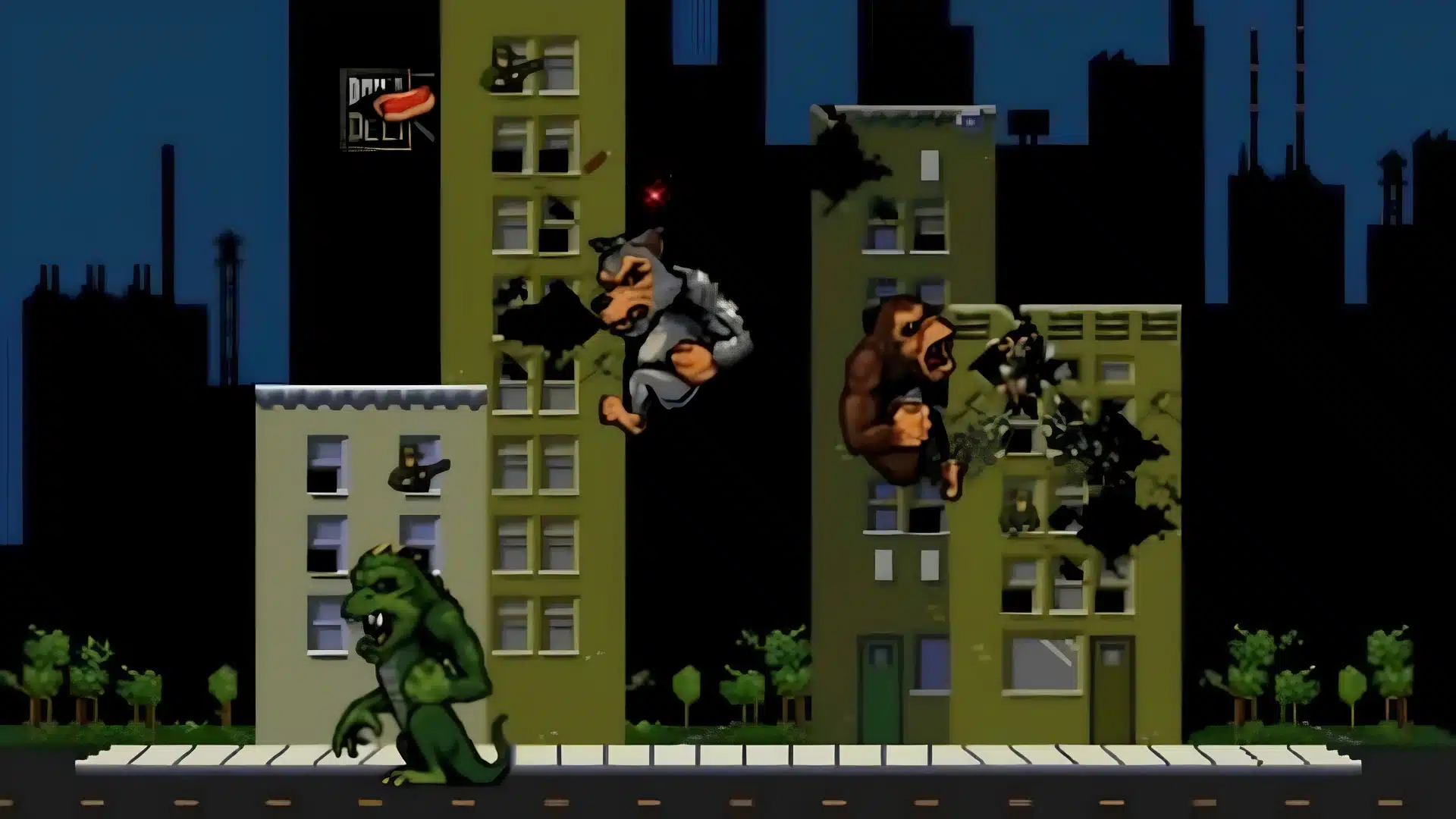
Rampage let up to three players control giant monsters destroying buildings and fighting military forces.
The goal reversed the usual rescue setup, making destruction itself the objective while players competed and interfered with one another.
15. Spy Hunter (1983)
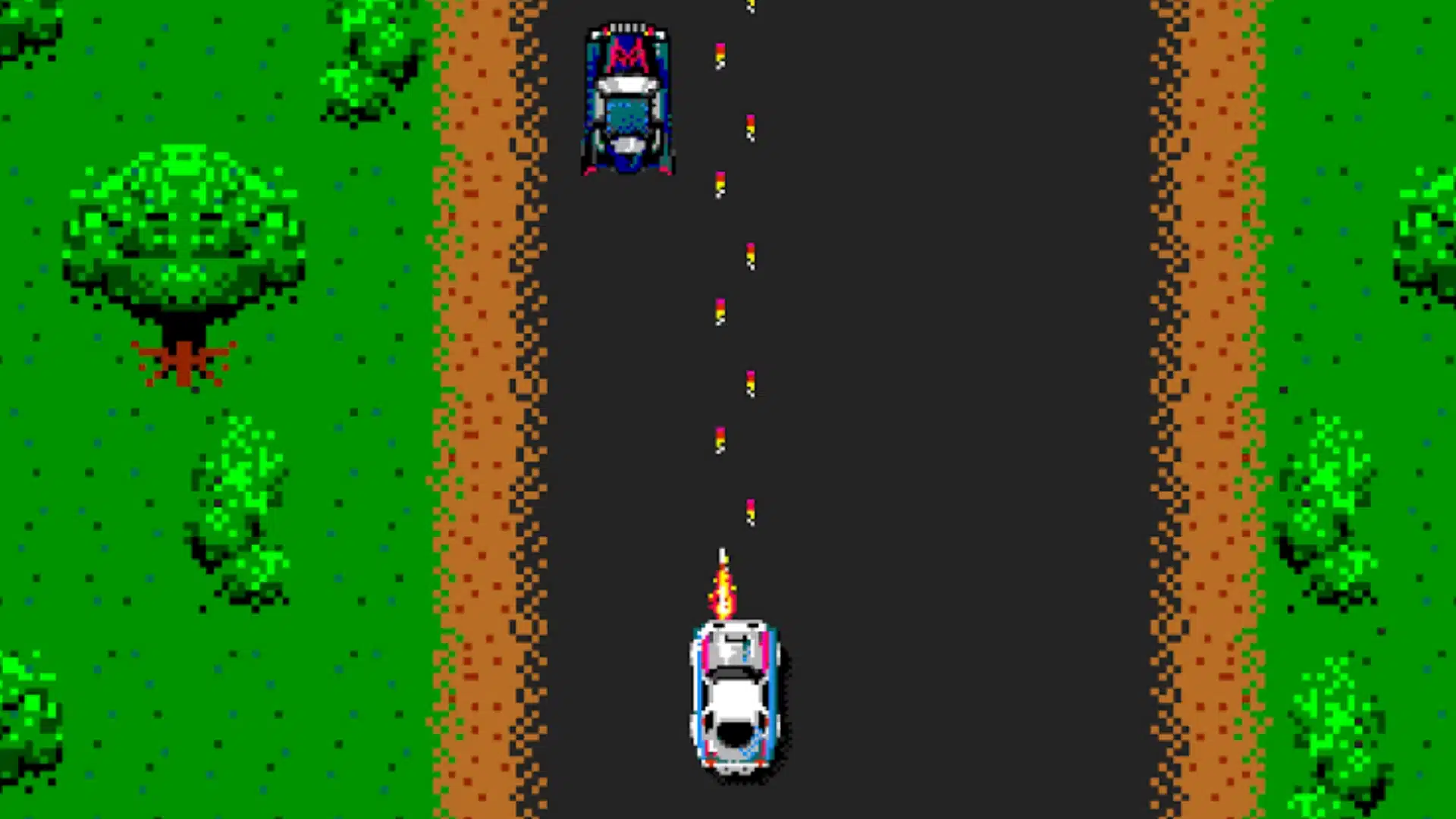
Spy Hunter combined high-speed driving with vehicle combat. Weapons helped players remove enemy cars while regular traffic remained a hazard.
That mix turned racing into continuous pursuit, where road position and weapon use mattered at the same time.
16. Punch-Out!! (1984)
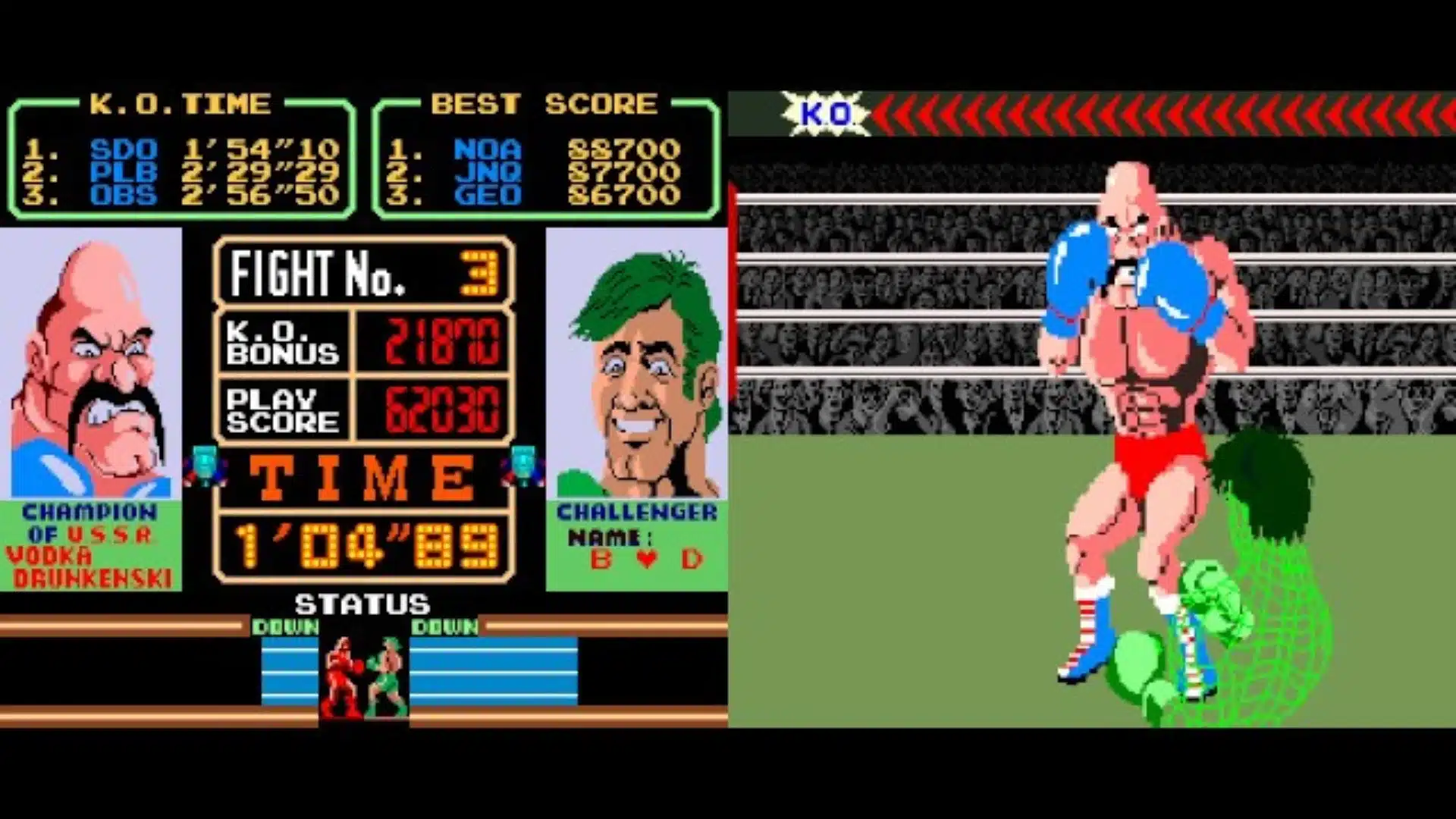
Punch-Out!! used two stacked screens and opponents built around readable attack patterns.
Winning depended on recognizing tells, dodging correctly, and countering at the right moment rather than relying on constant punching.
17. Double Dragon (1987)
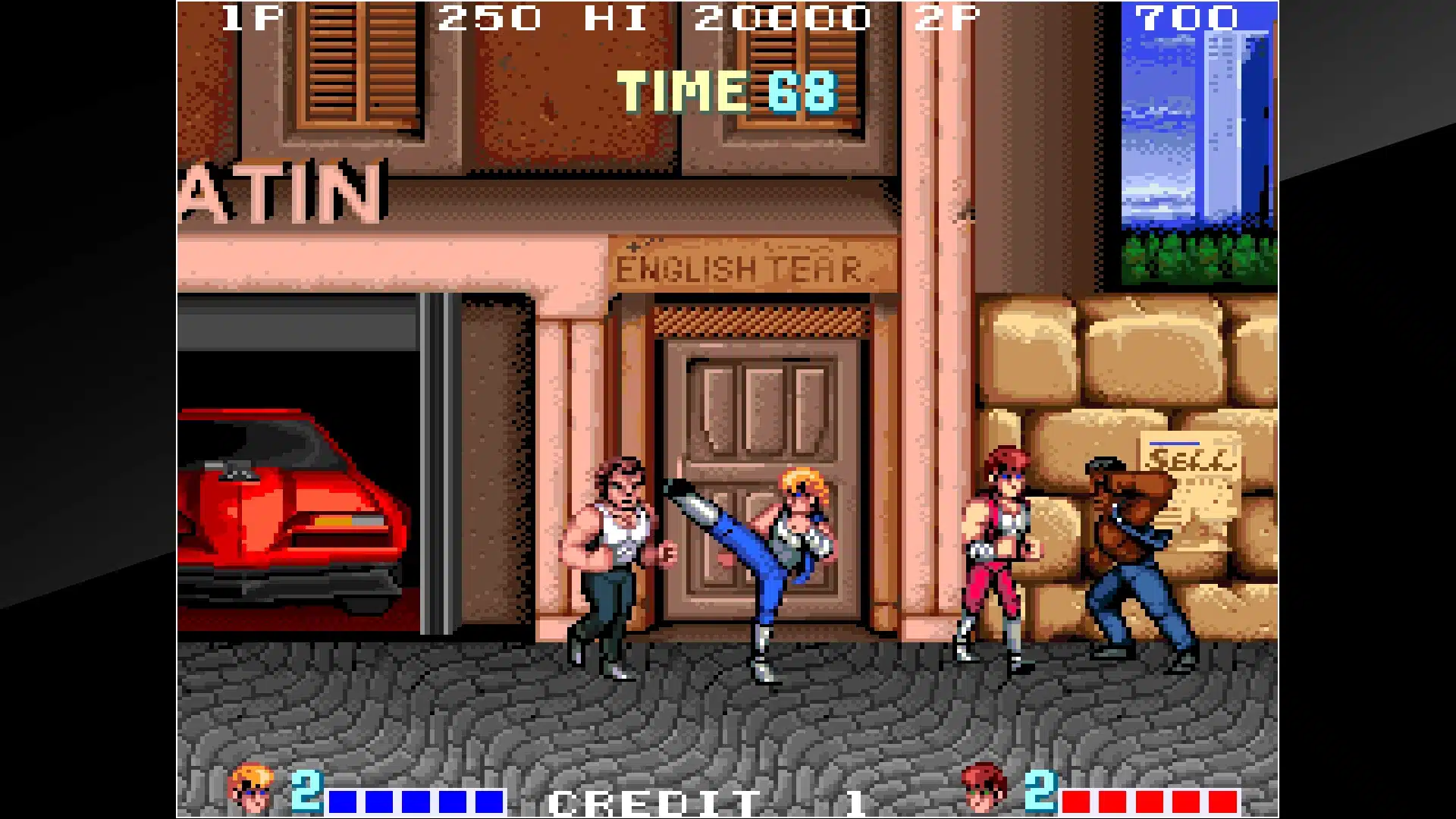
Double Dragon helped establish the side-scrolling beat-’em-up as a major late-decade arcade format.
Two players could fight through streets together using punches, kicks, grabs, and dropped weapons against waves of enemies.
18. Contra (1987)
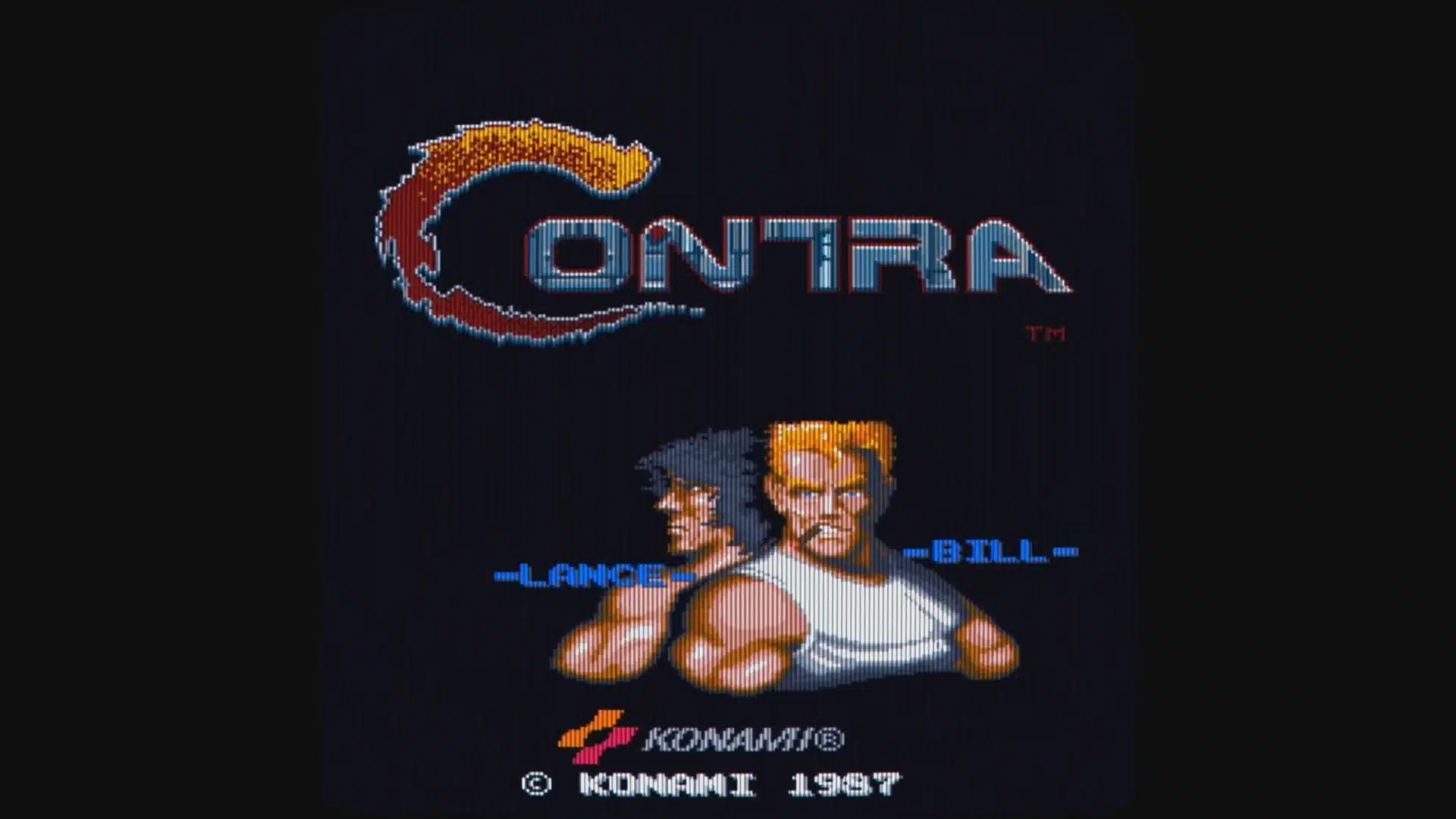
Contra mixed running, jumping, and shooting across side-scrolling combat stages. Two players could tackle the action together.
Weapon upgrades and constant movement gave the game a run-and-gun structure built around quick reactions and forward momentum.
19. Hang-On (1985)
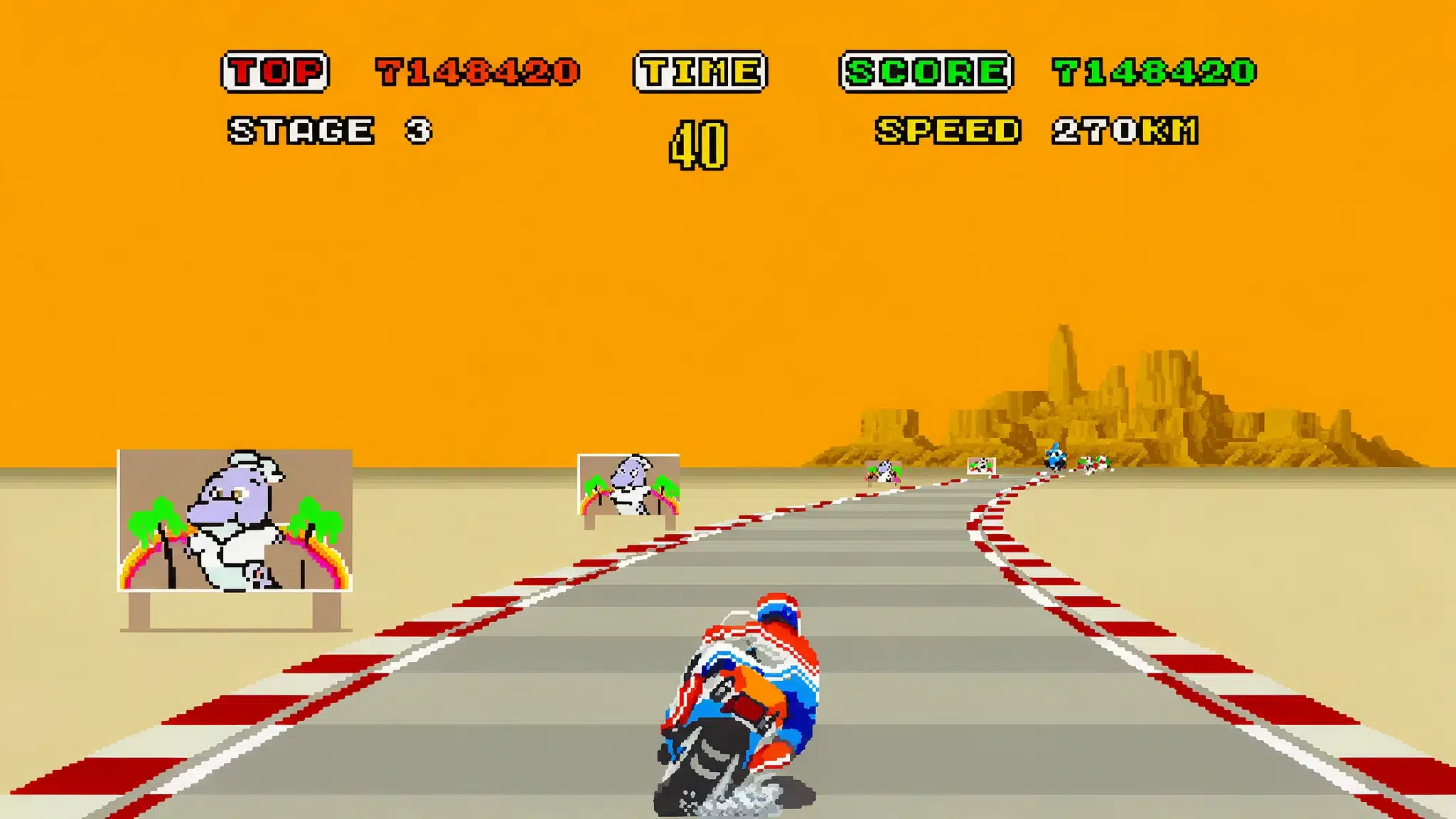
Hang-On’s deluxe motorcycle cabinet let players steer by leaning their body while racing against the clock.
That body-controlled setup turned cabinet movement into part of the racing input rather than relying only on buttons or a wheel.
20. Final Fight (1989)
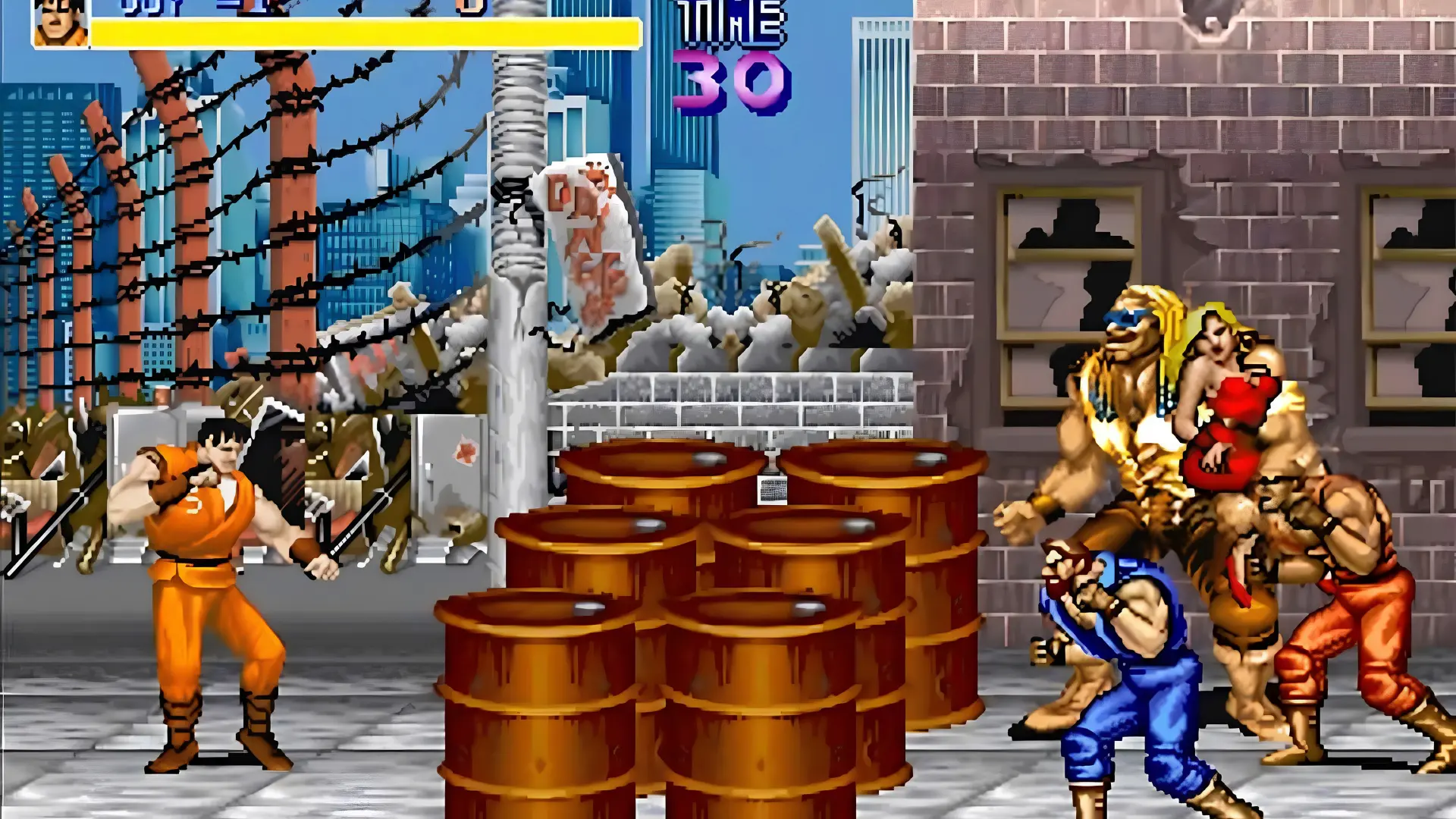
Final Fight brought large characters and crowded side-scrolling brawls to the end of the decade. Two players could clear streets together through grabs, throws, weapons, and close-range attacks against groups of enemies.
These picks cover the decade’s sctrongest maze games, shooters, racers, platformers, brawlers, and multiplayer releases without repeating the same reason twice.
More 1980s Arcade Games Worth Knowing
Beyond the main ranking, these additional 1980s arcade games added new ideas, genres, and cabinet experiences. The table below brings together more classics that helped define the decade.
Serial No. | Game | Year | Genre | Why It Stands Out |
|---|---|---|---|---|
21 | Armor Attack | 1980 | Combat | Vector tank combat supported two players across maze-like streets. |
22 | Star Castle | 1980 | Shooter | Rotating vector rings protected a dangerous central cannon. |
23 | Berzerk | 1980 | Maze Shooter | Talking robots added speech to fast maze combat. |
24 | Crazy Climber | 1980 | Climbing | Twin-stick controls turned skyscraper climbing into the main challenge. |
25 | Wizard of Wor | 1980 | Maze Shooter | Two players could cooperate or attack each other inside monster-filled mazes. |
26 | Mr. Do! | 1982 | Maze | Digging tunnels and collecting cherries created flexible routes through each stage. |
27 | Dig Dug | 1982 | Maze | Players dug underground paths and defeated enemies with an air pump. |
28 | Q*bert | 1982 | Action | Diagonal movement across stacked cubes created an unusual movement puzzle. |
29 | Joust | 1982 | Action | Players fought airborne enemies while controlling the height of flying mounts. |
30 | TRON | 1982 | Action | Four challenges based on the Disney film shared one cabinet. |
31 | Bagman | 1982 | Platformer | Ladders, carts, and elevators helped players collect gold while avoiding guards. |
32 | Zaxxon | 1982 | Shooter | Isometric graphics added height and depth to scrolling space combat. |
33 | Mr. Do’s Castle | 1983 | Platformer | Platforms and traps replaced the digging system used in Mr. Do! |
34 | Tapper | 1983 | Action | Serving drinks became a fast timing challenge across several bar counters. |
35 | Elevator Action | 1983 | Action | Shooting and platform movement centered on elevators inside a tall building. |
36 | Gyruss | 1983 | Shooter | Circular movement around the screen edge changed the usual space-shooter layout. |
37 | Discs of Tron | 1983 | Action | Disc throwing combined aiming, blocking, and movement across raised platforms. |
38 | Major Havoc | 1983 | Action | Vector shooting shifted into platform sections during the same game. |
39 | M.A.C.H. 3 | 1983 | Shooter | Laserdisc footage placed jet combat over moving filmed backgrounds. |
40 | Pole Position II | 1983 | Racing | New circuits expanded the racing setup introduced by Pole Position. |
41 | Mario Bros. | 1983 | Platformer | Two players cleared enemies from fixed platforms using coordinated movement. |
42 | Star Wars | 1983 | Shooter | Vector graphics recreated space battles from the film inside a cockpit cabinet. |
43 | Gaplus | 1984 | Shooter | Capture systems and new formations expanded the Galaga-style shooting format. |
44 | Timber | 1984 | Action | Two lumberjacks raced to cut trees while avoiding hazards. |
45 | Paperboy | 1985 | Action | Handlebar controls guided a newspaper route through obstacle-filled streets. |
46 | Ghosts ‘n Goblins | 1985 | Platformer | Tough platform combat mixed medieval monsters with limited player protection. |
47 | Out Run | 1986 | Racing | Branching routes let players choose different roads during high-speed driving. |
48 | Arkanoid | 1986 | Breakout | A rotary controller guided a paddle through increasingly complex brick patterns. |
49 | R-Type | 1987 | Shooter | Horizontal shooting relied on careful movement and the detachable Force unit. |
50 | 88 Games | 1988 | Sports | Multiple athletic events turned quick timing into competitive arcade play. |
51 | Teenage Mutant Ninja Turtles | 1989 | Beat-’em-up | Four-player brawling brought the television characters into cooperative arcade action. |
These extra picks complete the wider arcade picture by showing how many different styles existed beyond the biggest names. Together, they add more depth to the decade’s classic lineup.
How to Play 1980s Arcade Games Today
You can still play these games without tracking down an original cabinet. Your best option depends on space, budget, and hardware preference.
Compilation cabinets: Arcade1Up’s Class of ’81 Deluxe stands over five feet tall and includes 12 games, including Ms. Pac-Man and Galaga.
Multi-game cabinets: GameRoomSolutions’ Model R43 supports four players, uses a 43-inch display, and includes thousands of classic games.
Online and emulated play: Browser versions and retro collections offer easier access, though licensing and availability can vary.
Original cabinets: Restored machines preserve the original controls and hardware, but condition and maintenance needs differ by unit.
If you want that same golden-age library in your pocket, a good emulation handheld handles it far better than a phone ever will.
My own pick to start with is Galaga.
It rewards precision over memorization faster than almost anything else on this list, and that fast feedback loop is exactly why it has stayed in rotation for over forty years.
Modern cabinets make these 1980s arcade games easy to own today, while original hardware gives you the closest period setup. Your choice comes down to access, cost, and space.
Which 1980s Arcade Game Should You Try First?
The best starting point depends on what kind of arcade experience you enjoy. Different games from the decade focused on different skills, controls, and styles of play.
For classic maze action: Pac-Man and Ms. Pac-Man offer simple controls with challenging stages.
For fast shooting: Galaga, Defender, and R-Type focus on movement, timing, and enemy patterns.
For multiplayer fun: Gauntlet, Double Dragon, and Final Fight work well with friends.
For unusual controls: Centipede, Tempest, Pole Position, and Hang-On show how cabinets changed the way games felt.
There is no single correct place to start. Pick the style that matches what you enjoy, then explore the other classics from there.
Conclusion
The appeal of 1980s arcade games goes beyond nostalgia. These titles helped define entire genres while experimenting with controls, cabinet designs, multiplayer formats, and gameplay ideas that were difficult to reproduce at home.
Some players may prefer fast shooters like Galaga, while others will gravitate toward maze games, racing cabinets, platformers, or cooperative brawlers.
There is no single starting point that works for everyone, which is part of what makes the decade so interesting to revisit.
Use the ranking as a starting point, then try the games that match the style you enjoy most.
Which 1980s arcade game would make your personal top five? Share your picks in the comments.
Frequently Asked Questions
What were popular arcade games in 1985?
Commando, Space Harrier, Gradius, Gauntlet, and Hang-On were among the most notable 1985 arcade releases. That year blended fast-paced shooting, high-speed racing, and cooperative multiplayer action across very different cabinet designs. Gauntlet stood out for letting up to four players explore a dungeon together, while Hang-On introduced a motorcycle cabinet players steered by leaning their whole body.
Why do arcade release years differ between sources?
Japanese and U.S. launches for the same arcade game did not always happen in the same year, since a title often debuted in one region months before reaching the other. Copyright filings, licensing agreements, and staggered regional rollouts can also produce different official release dates depending on which source or region a database references.
Why do publisher names differ by country?
A Japanese developer often partnered with a separate company to handle manufacturing, marketing, or distribution once a game crossed into the U.S. or European market. That arrangement is why the same 1980s arcade game can show up under different company names depending on which region’s cabinet, flyer, or marquee you happen to be looking at.
Did arcade machines save high scores permanently?
Not always. Many early cabinets lost every recorded score the moment the machine powered off, resetting the leaderboard overnight. Others used battery-backed memory or similar persistent storage that kept high scores intact between sessions. The exact behavior depended entirely on the hardware inside a specific cabinet, not on the game itself.