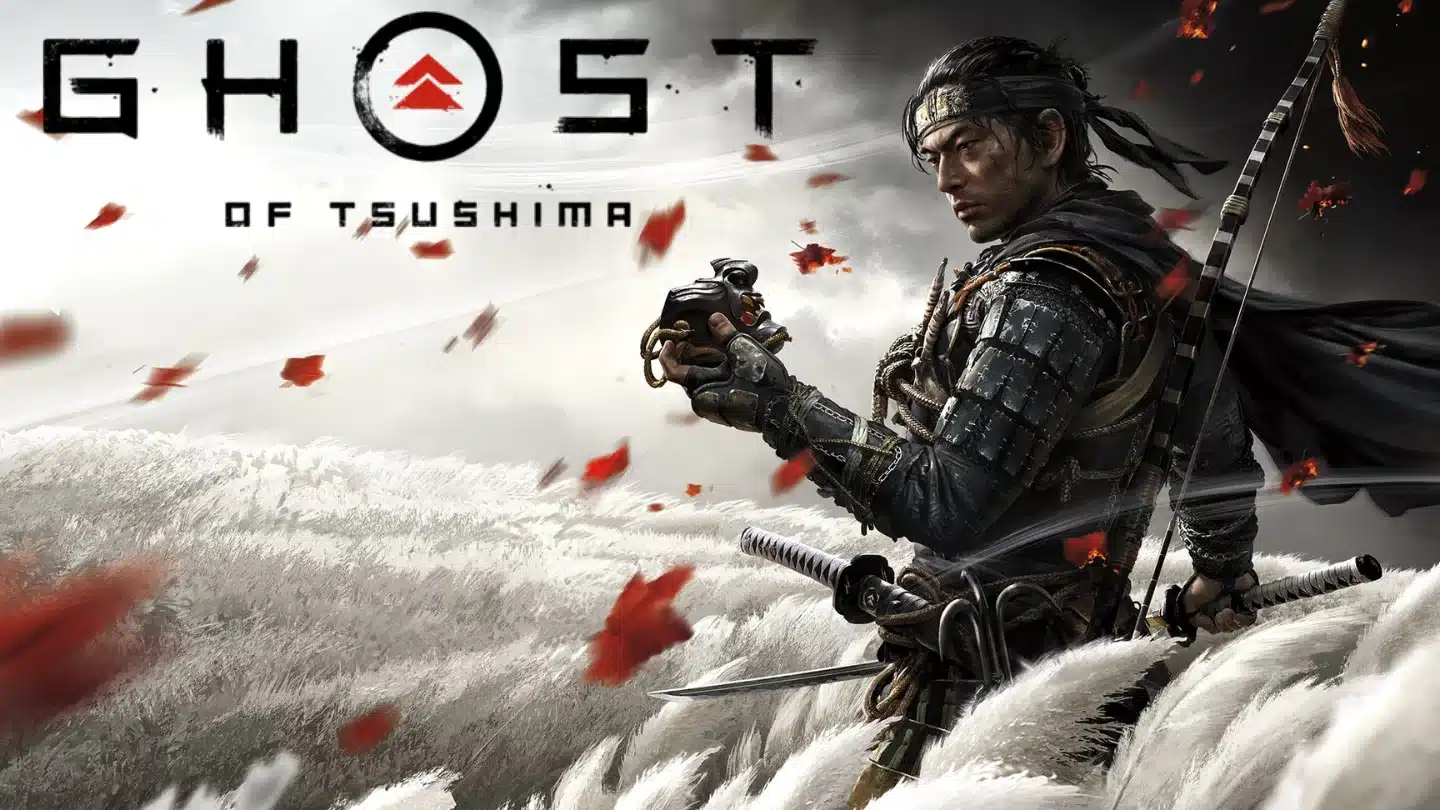
Finding a game that truly feels like a film is rare. Most action games throw you into combat and call it a day. But Ghost of Tsushima? It’s something else entirely.
If you’ve been searching for an honest Ghost of Tsushima review before spending your money, you’re in the right place.
I spent days playing this game, and I’m going to break down everything, the combat, the story, the visuals, and whether it actually lives up to the hype.
Towards the end, you will know exactly if this game is worth your time.
The Samurai’s Fall – Jin Sakai’s Expedition from Honor to Ghost
Jin Sakai starts the game as a proud samurai. He follows a strict code of honor, and fighting with honor is everything to him. But then the Mongols invaded Tsushima.
They’re brutal, and they don’t play fair. Jin quickly learns that honor alone won’t save his people.
So he makes a hard choice. He starts using tactics that a true samurai would never touch.
Stealth, fear, deception. It costs him something deep inside. You can feel that struggle as you play through the story.
That shift from honorable warrior to the Ghost is what makes Jin such a great character. He’s not just a fighter. He’s a man torn between who he was and what he has to become.
I found that arc genuinely hard to put down.
Ghost of Tsushima Review – Precision Swordplay and Tactical Combat

The combat in Ghost of Tsushima is one of the best parts of the whole game. It feels sharp, satisfying, and surprisingly deep once you get the hang of it.
Stance-Based Sword Combat
The four stances are what set this game apart from other sword fighters. Each one is built for a specific enemy type, and switching between them mid-fight feels really rewarding.
- Stone Stance works best against regular swordsmen
- Water Stance breaks through shield-bearing enemies
- Wind Stance handles spear users with quick spinning strikes
- Moon Stance staggers the big, heavy brutes
Learning when to switch kept me on my toes throughout the whole game. It never felt random.
Parry, Dodge, and the Resolve System
Getting your timing right with parries feels incredible. A well-timed block opens enemies up for a powerful counter strike. Dodging works just as well when things get messy with multiple enemies.
The Resolve system ties everything together nicely. You build Resolve through kills and parries, then spend it to heal or pull off special techniques.
I found myself managing it carefully during tougher boss fights, especially against Khotun Khan, where a single mistake could drain everything quickly.
Standoffs and Skill Progression
Standoffs are pure samurai cinema. You face an enemy, wait for them to charge, and cut them down in one clean strike. There’s no better feeling in this game.
- Skill upgrades come through exploration and story progress
- No heavy grinding required, which keeps the pacing tight
- New abilities feel earned, not handed to you
I picked up new techniques naturally as I played, and that made each upgrade feel meaningful rather than just a number going up.
Ghost Tools and Stealth Tactics
As Jin shifts away from the samurai code, a whole new set of tools opens up. These completely change how you approach fights.
I started using stealth more in the later areas of the game.
Clearing an entire camp without being spotted gave me a different kind of satisfaction compared to a straight sword fight.
- Kunai for quick multi-target throws
- Black powder bombs for tight groups
- Smoke bombs to slip away or reposition
- Terror tactics to shake enemy’s morale
The Balance Between Honor and Stealth
The game never forces you to pick one style over the other. You can open with a standoff, take down two enemies cleanly, then go full stealth for the rest. That freedom is what keeps combat fresh.
Difficulty options also make this accessible for everyone.
I played on medium and found it challenging but fair. The combat always felt like a conversation between me and the game, and that’s a rare thing to get right.
Graphics, Art Direction, and Sound Design in Ghost of Tsushima

Few games stop you mid-run just to make you look around. In every Ghost of Tsushima review you read, the visuals come up first, and honestly, that’s no surprise.
1. A World That Looks Like a Painting
Every single area in this game feels hand-crafted. The golden wheat fields, the red maple forests, the snow-covered mountain paths.
Each region has its own look and mood, and the transitions between them feel completely natural. I genuinely stopped moving more than once just to watch the wind push through the grass. Sucker Punch didn’t just build a map.
They built a world that feels alive in every frame you look at.
2. Weather and Lighting Done Right
The weather system in this game is more than just a visual feature. A sudden rainstorm changes the whole mood of a scene. Fog rolling over a hillside makes stealth sections feel tense in a way that no mechanic alone could create.
The lighting at sunset and sunrise is some of the best I’ve seen in any open-world game. It genuinely looks cinematic, and that word gets thrown around a lot, but here it actually fits.
3. Kurosawa Mode
This is a love letter to classic samurai films. Kurosawa Mode strips the game down to black and white with a grainy film filter and adds a scratchy audio layer on top.
I switched it on for a couple of hours, and it completely changed how the game felt. Boss fights hit differently in black and white.
It’s a small addition, but it shows how much care went into this game’s overall vision.
4. Sound Design and the Composer’s Touch
The music in Ghost of Tsushima is quietly one of its strongest features.
Any thorough Ghost of Tsushima review would be incomplete without mentioning composer Ilan Eshkeri, who worked alongside Japanese musician Shigeru Umebayashi to create a score that blends traditional Japanese instruments with sweeping orchestral arrangements.
Combat music kicks in at exactly the right moment. Quiet exploration sections let the ambient sounds breathe, birds, wind, and distant water.
Every sound feels considered and placed with real intention.
5. The Guiding Wind
Instead of a mini-map cluttering your screen, the game uses a wind mechanic to point you toward your next objective.
You swipe, the wind blows, and you follow. It sounds simple, and it is. But it keeps your eyes on the world rather than a corner of the screen.
That one design choice does more to immerse you than most games’ entire interfaces do.
Where the Game Shines and Where It Falls Short
No game is perfect, and Ghost of Tsushima is no different.
| What Works Well | What Could Be Better |
|---|---|
| Stance-based combat feels sharp and rewarding | Side quests can feel repetitive after a while |
| The world is visually striking in every area | The open world formula follows familiar patterns |
| Jin’s story arc is genuinely compelling | Some enemy types get recycled too often |
| Kurosawa Mode adds a whole new feel | Stealth AI can be inconsistent at times |
| Sound design and music are of top quality | The map can feel overwhelming early on |
| Standoffs deliver pure samurai cinema moments | Story pacing slows down in the middle act |
Final Verdict
Ghost of Tsushima delivers where it counts. The combat feels sharp, the story hits hard, and the world is genuinely beautiful to spend time in.
Yes, it has a few rough edges, but nothing that takes away from the overall experience.
This Ghost of Tsushima review only scratches the surface of what the game offers.
If you’re on the fence, just play it. You won’t regret the time you put in. Have you already played it? Drop your thoughts in the comments below. I’d love to hear what you made of Jin’s story.