
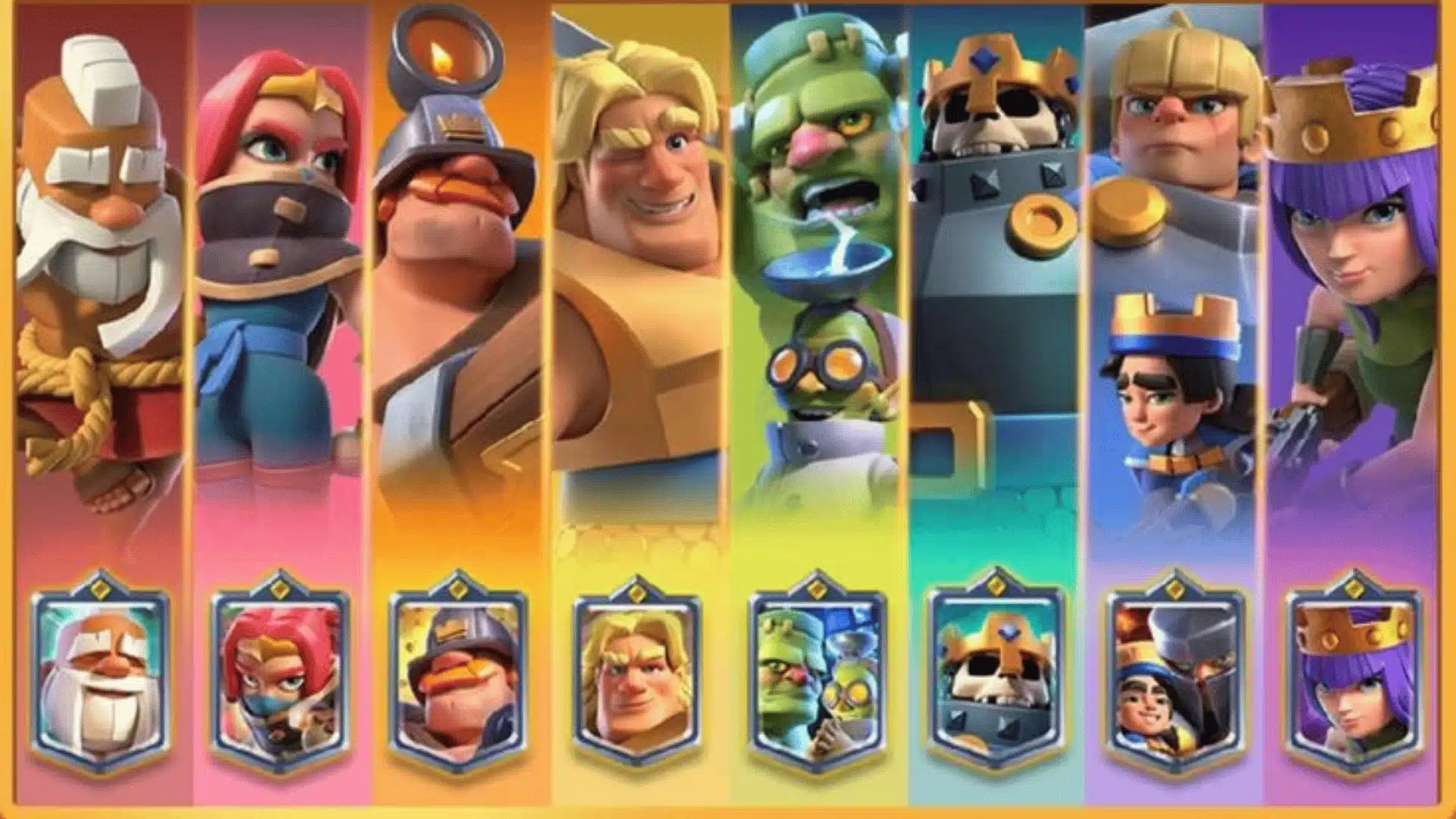
I treated cards as interchangeable slots for longer than I’d like to admit before realizing type, rarity, and Elixir cost each tell a completely different story about how they actually work.
Every card falls into one of four types. Troops move and fight on their own. Spells hit once with no targeting logic. Buildings defend or spawn troops from a fixed spot.
Tower Troops replaced old Princess Towers in December 2023 and defend your Crown Towers directly.
You currently choose from four: Tower Princess, Cannoneer, Dagger Duchess, and Royal Chef.
Rarity signals collection difficulty, not raw strength. Cards range from 1 to 9 Elixir, cap at Level 16, and since May 2026, Collection Level tracks every card level you own.
Card Types, Rarity, Elixir & Levels: How Clash Royale’s System Actually Works?
I spent months treating cards as interchangeable slots before realizing type, rarity, and Elixir cost each tell a completely different story about how they actually work.
Every card falls into one of four types. Troops move and fight on their own. Spells hit once with no targeting logic. Buildings defend or spawn troops from a fixed spot.
Tower Troops replaced old Princess Towers in December 2023 and defend your Crown Towers directly. You currently choose from four: Tower Princess, Cannoneer, Dagger Duchess, and Royal Chef.
Rarity signals collection difficulty, not raw strength. Cards range from 1 to 9 Elixir, cap at Level 16, and since May 2026, Collection Level tracks every card level you own.
Mastering Troop Cards: Your Deck’s Backbone
Troops are the beating heart of every deck, coming in four rarities plus Champions and Event Cards. I treated Commons as filler once, and my decks got slower, more predictable, and easier to beat.
1. Common Troops
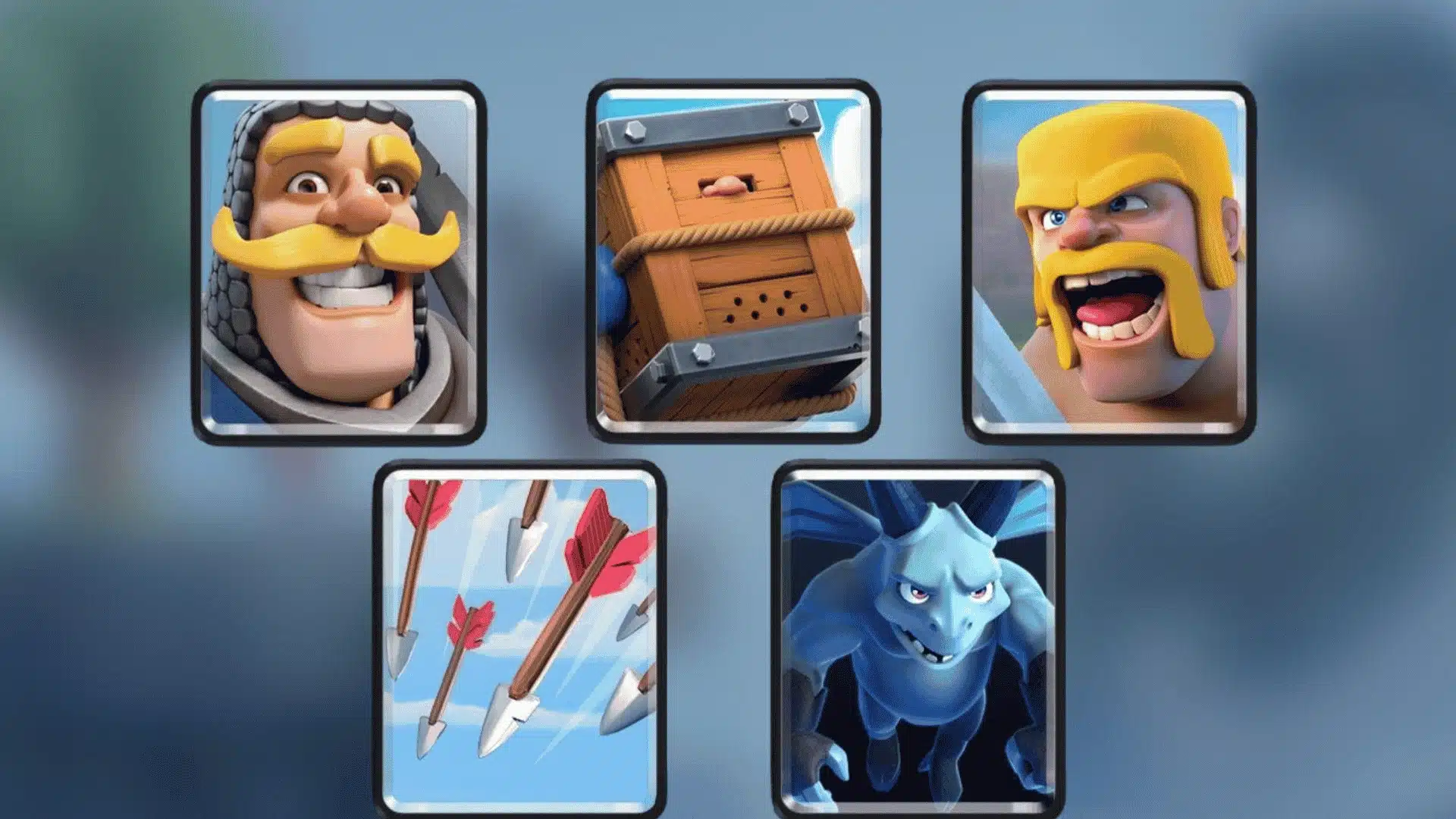
Commons like Knight, Skeletons, Barbarians, and Archers form the cycle and support backbone of nearly every competitive deck on ladder right now, from beginner pushes to World Finals lineups.
- Knight (3 Elixir): A reliable melee tank that absorbs hits and distracts single-target attackers, still one of the most flexible 3-cost cards after a decade of balance passes.
- Skeletons (1 Elixir): The purest cycle card in the game, three fragile units that kite and distract for almost nothing, now boosted further by its popular Evolution form.
- Barbarians (5 Elixir): Four melee units that overwhelm single targets and punish opponents who overcommit, a strong defensive answer against isolated tanks pushing down one lane.
- Archers (3 Elixir): Two ranged units covering ground and air, consistently viable across nearly every archetype, with an Evolution that adds a devastating rear-facing shot.
- Goblins (2 Elixir): A fast ground swarm that surrounds and eliminates unescorted troops efficiently, punishing opponents who send single win conditions without any support behind them.
- Bomber (2 Elixir): Low-cost ground splash damage that clears swarms without trading unit for unit, though recent balance passes have kept its Evolution firmly in check.
- Spear Goblins (2 Elixir): Ranged air defense and cheap chip damage without ever closing distance, a reliable support piece behind almost any tank you’re pushing with.
- Minions (3 Elixir): Three flying units with surprising damage output for their Elixir cost, equally useful chasing air troops or adding pressure behind a ground push.
- Ice Spirit (1 Elixir): Freezes and resets targeting on a single enemy for a moment, a cheap defensive reset that also cycles you back to your key cards fast.
- Fire Spirit (2 Elixir): A single jumping unit dealing splash damage on impact, efficient against swarms and a common finisher for chip-damage cycle decks.
- Electro Spirit (1 Elixir): Chains a stun between nearby enemies on contact, disrupting charge-ups like Sparky or Inferno Tower for almost nothing in Elixir cost.
- Goblin Brawler (3 Elixir): A tankier melee Goblin that absorbs a hit or two before going down, giving your swarm plays a touch more durability.
- Bats (2 Elixir): Five fragile flying units that swarm air and ground targets alike, cheap enough to trade favorably against almost anything they touch.
- Minion Horde (5 Elixir): Six flying units delivering heavy burst damage, devastating if unanswered but wiped out instantly by any splash spell or troop.
Knight, Skeletons, and Archers still dominate top-ladder decks in Season 85. Standings shift constantly with balance updates, so check current win rates before committing resources to upgrades.
2. Rare Troops
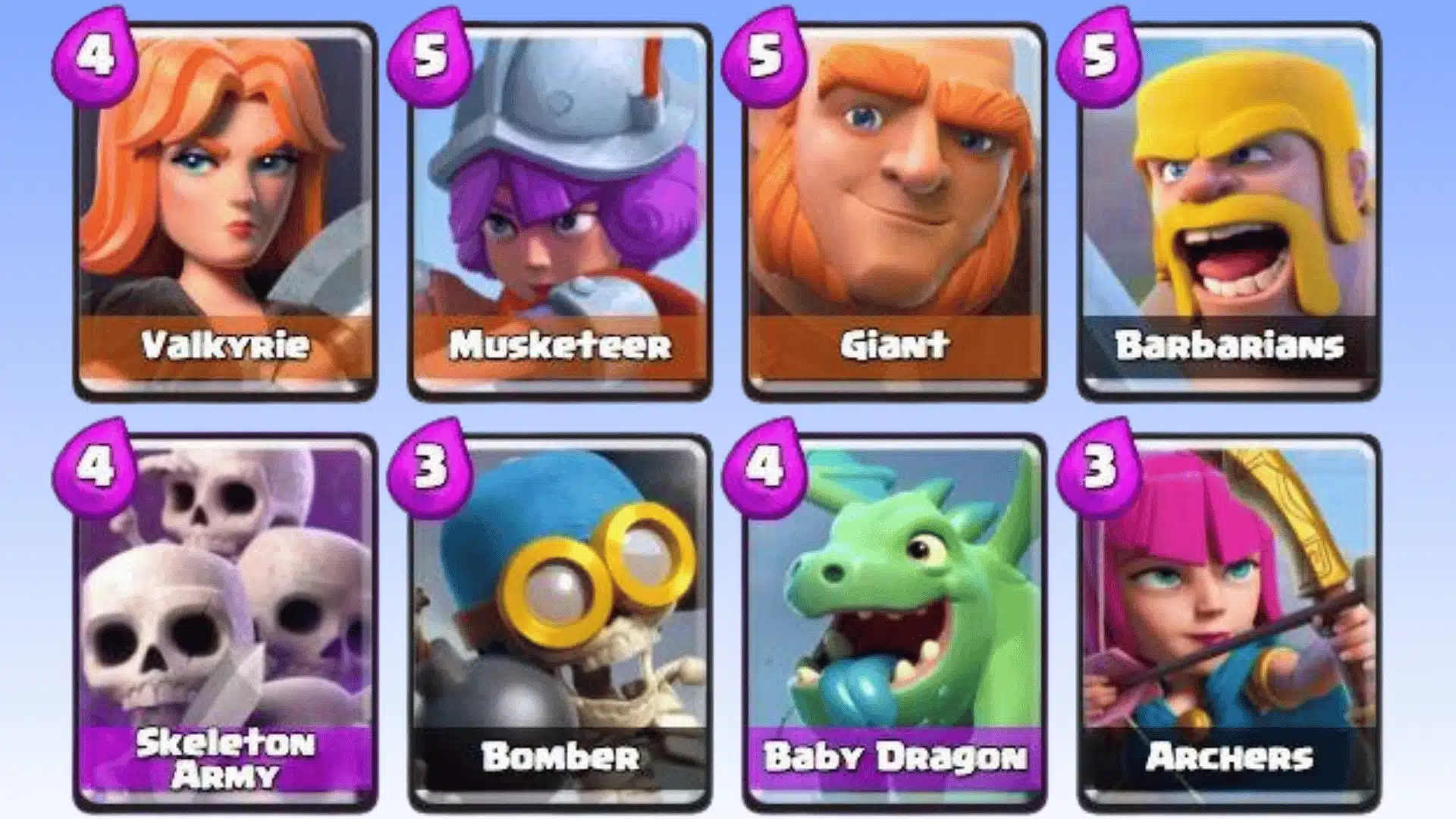
Rare cards add one layer of complexity over Commons, usually through slightly higher Elixir costs and mechanics that reward positioning and timing over pure reaction speed and reflexes.
- Hog Rider (4 Elixir): Fast building-targeting unit that jumps the river, one of the most consistent win conditions ever printed, and the backbone of the legendary 2.6 cycle archetype.
- Giant (5 Elixir): Slow, high-hitpoint tank that soaks tower damage while troops push behind it, forming the classic beatdown shell that countless decks still build around.
- Mini P.E.K.K.A (4 Elixir): High single-target damage that punishes lone tanks and uncontested pushes hard, though it folds instantly to swarm troops without careful placement.
- Musketeer (4 Elixir): Ranged air and ground coverage that defends and supports pushes without needing specific synergy, making it one of the most flexible 4-cost cards available.
- Valkyrie (4 Elixir): Rotating ground splash that clears swarms surrounding your tanks reliably, a staple defensive piece that has barely needed balance intervention in years.
- Dark Prince (4 Elixir): Clears swarms in front of your push while its shield absorbs one hit, effectively a splash troop and a Prince rolled into one card.
- Goblin Gang (3 Elixir): A mixed swarm of three Goblins and three Spear Goblins, flexible enough to defend, bait spells, or add pressure behind a push.
- Flying Machine (4 Elixir): Long-range flying support troop that outranges most air and ground defenders, useful for chip damage without ever entering melee range.
- Battle Ram (4 Elixir): Rushes toward buildings and spawns two Barbarians on impact, forcing an immediate defensive reaction or free tower damage if ignored.
- Royal Giant (6 Elixir): Tower-targeting ranged tank that hits from a distance, trading the Giant’s melee range for reach at a higher Elixir cost.
- Guards (3 Elixir): A shielded three-unit swarm that survives small spells like Zap or Log, making it a durable answer to fragile win conditions.
- Three Musketeers (9 Elixir): Splits into two groups for double-lane pressure, an expensive but devastating card if it isn’t punished immediately by a heavy spell.
- Rascals (5 Elixir): A boy and two girls that split across the lane, giving you both a tanky melee unit and ranged support at once.
- Zappies (4 Elixir): A trio that stuns on hit, resetting charge-ups and disrupting incoming pushes while dealing steady ranged damage of its own.
- Royal Hogs (5 Elixir): Four hogs that split across both lanes and jump the river, pressuring your opponent’s defense on two fronts simultaneously.
- Firecracker (3 Elixir): Long-range splash troop that knocks itself back after firing, repositioning out of melee range automatically after every shot she takes.
- Royal Recruits (7 Elixir): Six shielded units spread across the full lane, an expensive but resilient wall that absorbs damage while pushing forward together.
- Elite Barbarians (6 Elixir): Two fast, hard-hitting Barbarians built for burst damage, dangerous on offense but vulnerable to any splash spell in range.
- Ice Golem (2 Elixir): A slow, tanky defender that explodes into a slowing effect on death, cheap enough to kite win conditions or absorb a single hit.
- Mega Minion (3 Elixir): A single flying unit handling both defense and push support efficiently, punching above its Elixir cost against most ground troops.
- Dart Goblin (3 Elixir): A fast, long-range attacker that pierces through multiple targets, ideal for sniping buildings and troops from a safe distance.
- Goblin Demolisher (4 Elixir): Throws explosives like a Bomber until half health, then charges the nearest building for a final building-damage burst.
Hog Rider and Mini P.E.K.K.A remain fixtures in top decks across multiple seasons. Balance patches shift exact standings regularly, so treat any tier list as a snapshot, not gospel.
3. Epic Troops
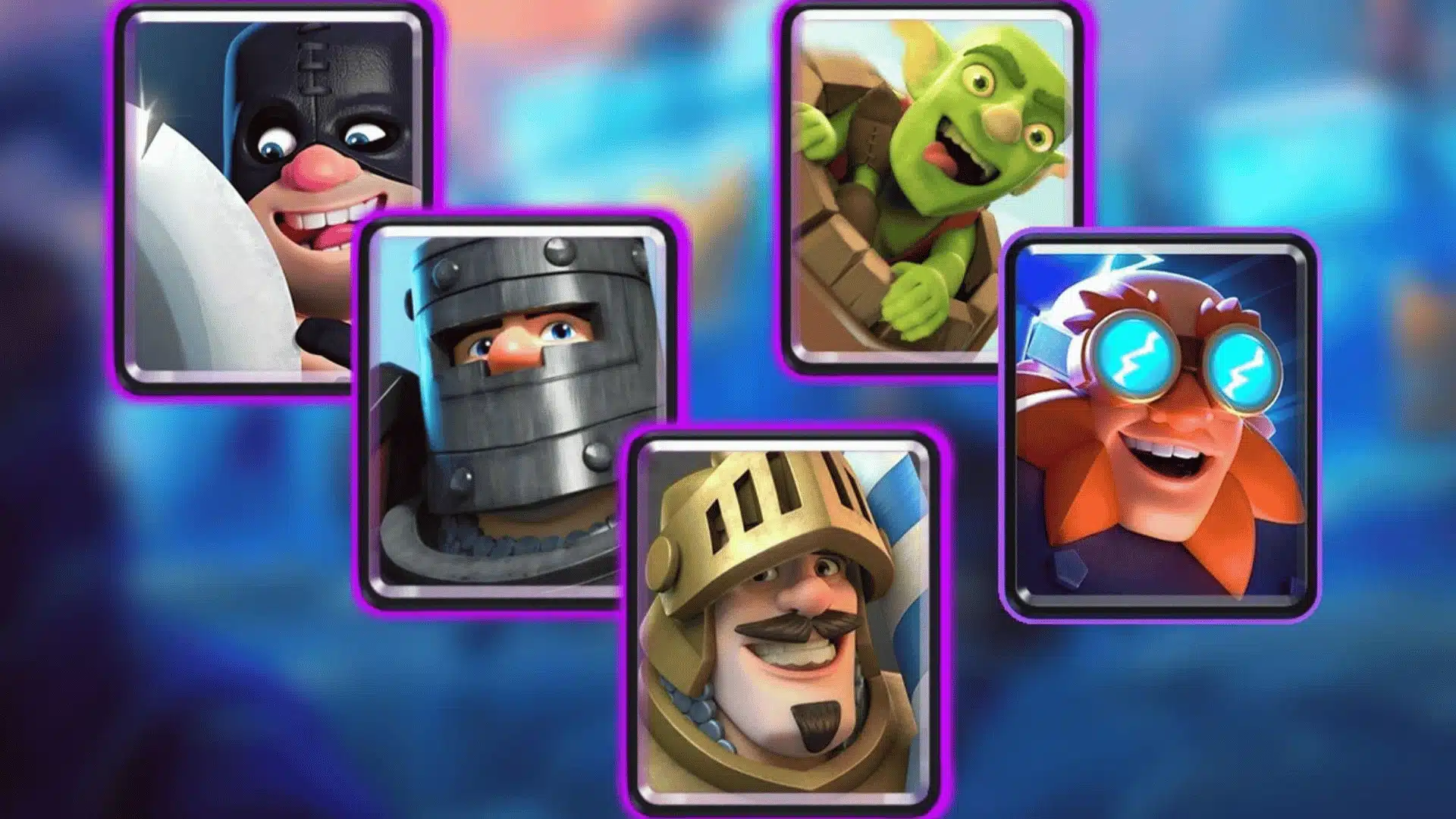
Epics drop far less often than Commons or Rares, and upgrade copies take real time to accumulate. I assumed Epics were automatically stronger, and that assumption cost me matches for months.
- P.E.K.K.A (7 Elixir): Devastating against single targets but folds to swarms without support, needing a deck built entirely around protecting it on its slow walk forward.
- Balloon (5 Elixir): Massive building damage that needs air cover to survive the approach, now sharing the spotlight with its newer Hero Balloon variant introduced in April 2026.
- Prince (5 Elixir): Doubles damage on charge but telegraphs its approach every single time, rewarding opponents who react fast and punishing players who charge without support.
- Witch (5 Elixir): Spawns Skeletons continuously while dealing ground splash behind your push, functioning as both a swarm generator and a slow, steady area denial tool.
- Skeleton Army (3 Elixir): Shuts down lone tanks instantly, though one well-placed Arrows or Zap wipes the entire seventeen-unit swarm in a single spell cast.
- Goblin Barrel (3 Elixir): Forces opponents into reactive spending rather than building pressure, the anchor of every Log Bait archetype since the deck’s earliest days.
- Golem (8 Elixir): The heaviest tank in the game, splitting into two Golemites on death, forming the core of nearly every classic beatdown archetype.
- Baby Dragon (4 Elixir): Flying splash support troop that covers both air and ground, a reliable mid-cost addition behind almost any tank-based push.
- Bowler (5 Elixir): A rolling boulder that damages everything in its path repeatedly, excellent at controlling a full lane of ground troops at once.
- Goblin Giant (6 Elixir): A large tank carrying two Spear Goblins on its back, giving it built-in ranged support while it absorbs tower damage.
- Executioner (5 Elixir): A returning axe that hits troops twice per throw, excellent against clustered defenders and grouped support troops behind a push.
- Skeleton Barrel (3 Elixir): A flying barrel that drops Skeletons on impact or death, sneaking chip damage in from the air if left unanswered.
- Elixir Golem (3 Elixir): Splits into smaller Golemites on death, refunding Elixir to your opponent each time, a strange but genuinely high-pressure tank.
- Battle Healer (4 Elixir): A melee support troop that heals nearby allies while attacking, valuable for sustaining a push through prolonged engagements.
- Skeleton Dragons (4 Elixir): Two small flying splash units that support pushes from the air, cheap enough to slot into fast cycle decks.
- Goblin Drill (4 Elixir): Burrows underground and surfaces near the tower, dropping Goblins directly behind your opponent’s defense before they can react.
- Hunter (4 Elixir): Deals massive burst damage at close range with a shotgun-style spread, devastating against tanks but weak once enemies close the gap.
- Electro Dragon (5 Elixir): A flying chain-stun troop that disrupts multiple targets at once, particularly strong against grouped swarms and support troops.
- Giant Skeleton (6 Elixir): A slow tank carrying a massive bomb that detonates on death, punishing opponents who finish it too close to their tower.
- Wizard (5 Elixir): A splash mage covering both air and ground, dealing steady area damage that clears swarms behind almost any tank you’re running.
- Wall Breakers (2 Elixir): Two bomb-carrying units that dash straight toward buildings, dealing heavy building damage if left completely unanswered by defenders.
- Electro Giant (7 Elixir): A high-hitpoint tank that stuns and damages anything attacking it up close, punishing melee troops that try to trade with it directly.
P.E.K.K.A and Balloon have historically anchored strong competitive builds across ladder and tournament play. Support cards matter just as much here, since none of these Epics function alone.
4. Legendary Troops
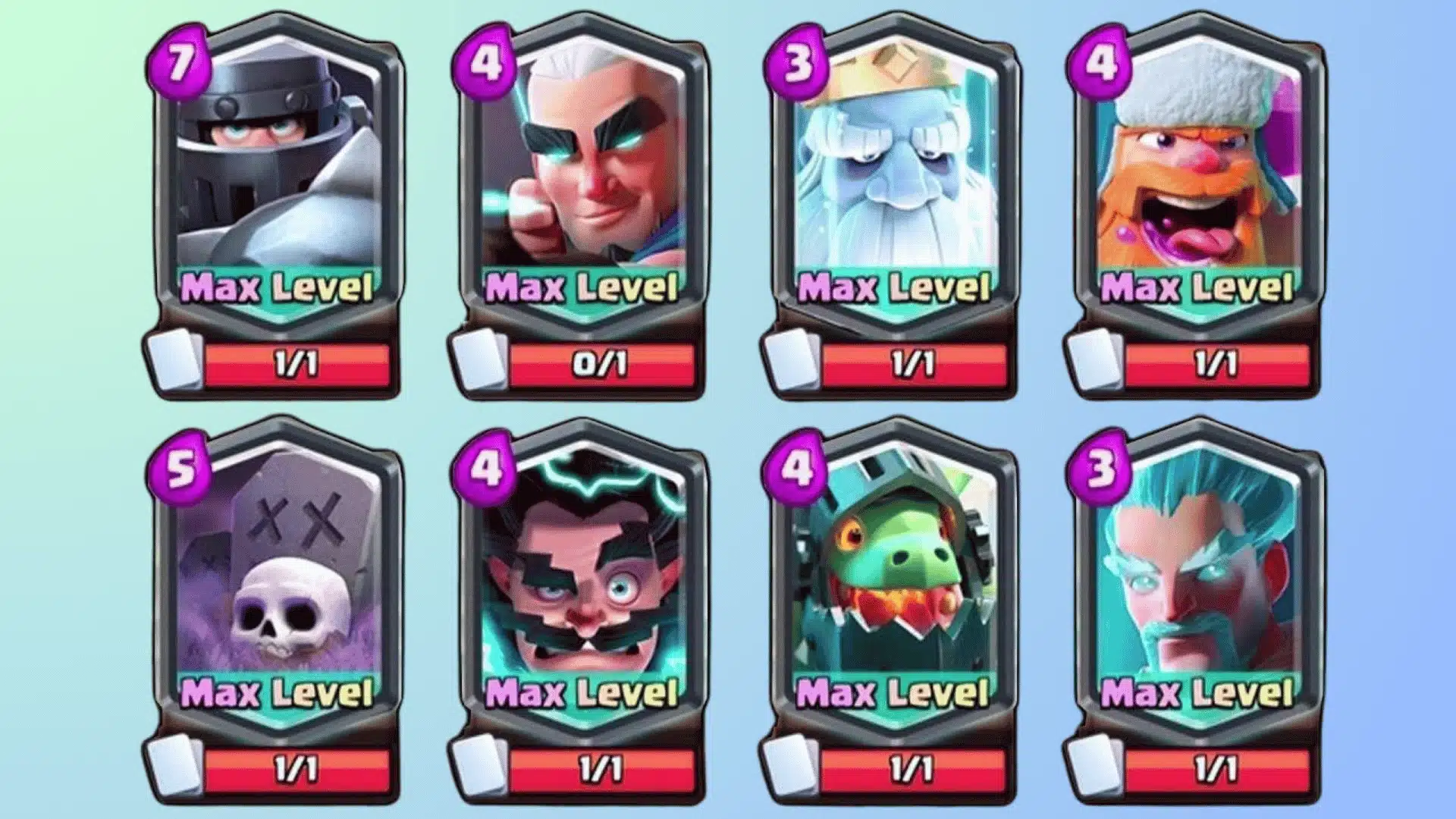
Legendaries aren’t defined by rarity alone. Each one breaks at least one standard troop rule through targeting, movement, or timing that no other card in the game replicates.
- Princess (3 Elixir): Lobs splash shots over Arena walls, hitting areas no other ranged troop can reach, making her one of the safest chip-damage tools on ladder.
- Miner (3 Elixir): Tunnels underground and surfaces anywhere on the map, bypassing every defense placed in front of your opponent’s towers entirely, ideal for chip strategies.
- Mega Knight (7 Elixir): Spawns with a jump dealing splash damage, punishing clustered troops the instant it lands, a powerful answer to swarm-heavy defensive setups.
- Electro Wizard (4 Elixir): Resets ability charges and stuns on deploy, neutralizing threats like Sparky or Inferno Tower the moment he touches the battlefield first.
- Royal Ghost (3 Elixir): Turns invisible briefly after taking damage, dodging incoming spells and swarms if timed correctly against reactive opponents playing around his visibility window.
- Lava Hound (7 Elixir): A flying tank that protects air support riding beneath it, splitting into Lava Pups on death for one last burst of damage.
- Inferno Dragon (4 Elixir): A mobile version of Inferno Tower, ramping damage on a single target while flying, making it a strong tank shredder.
- Sparky (6 Elixir): Charges up slowly before releasing a devastating electrical blast, capable of wiping most ground pushes if it isn’t interrupted first.
- Bandit (3 Elixir): Dashes forward and becomes untargetable mid-dash, only effective when pressure elsewhere forces opponents to split their attention across the arena.
- Ram Rider (5 Elixir): Charges toward buildings and snares the first troop it hits, combining a tank-seeking ram with a disruptive support unit.
- Fisherman (3 Elixir): Hooks and pulls troops or buildings toward it, disrupting opponent positioning entirely and setting up a follow-up splash spell.
- Ice Wizard (3 Elixir): A ranged support troop that slows every enemy it hits on landing and with every attack after, quietly locking down pushes without ever dealing heavy damage itself.
- Magic Archer (4 Elixir): Fires an arrow that pierces through multiple troops and buildings in a straight line, hitting everything along its path at once.
- Lumberjack (4 Elixir): Drops a Rage spell on death, accelerating whatever troops follow behind it, making him a common finisher for aggressive pushes.
- Mother Witch (4 Elixir): Curses enemy troops so they turn into Cursed Hogs on death, converting your opponent’s own swarm into a threat against them.
- Night Witch (4 Elixir): Spawns Bats continuously while dealing melee damage alongside your push, functioning as both an attacker and a steady swarm generator.
- Phoenix (4 Elixir): A flying troop that revives as an egg after dying once per life, giving it two full lives in a single deployment.
- Goblinstein (5 Elixir): An experimental Goblin-themed tank that grows stronger as it takes damage, punishing opponents who try to slowly whittle it down.
- Spirit Empress (3 Elixir): Clash Royale’s first true dual-form card, switching between a 3-Elixir ground attacker and a heavier 6-Elixir dragon form on deploy.
- Rune Giant (6 Elixir): A heavy tank built around a rune-based support mechanic, adding utility on top of standard high-hitpoint tank behavior.
- Suspicious Bush (3 Elixir): An ambush-style card that hides pressure inside a bush prop, catching opponents off guard when it finally reveals itself.
- Goblin Machine (5 Elixir): A mechanical Goblin-piloted pressure unit that blends tank durability with steady chip damage on its slow walk forward.
- Berserker (3 Elixir): A fast, aggressive melee attacker built for early pressure, rewarding players who commit to quick trades over slow setups.
- Cannon Cart (5 Elixir): A rolling cannon on wheels that becomes a stationary defensive building once destroyed, blurring the line between troop and building.
- Ronin (5 Elixir): The newest Legendary as of July 2026, a melee duelist that parries and reflects double damage against P.E.K.K.A, Mega Knight, and every other melee attacker.
Princess and Miner have stayed fixtures in top-ladder decks across multiple metas. Legendaries reward positioning over raw stats, so timing matters more here than almost any other tier.
Mastering Champion Cards: When to Trigger That Ability
Champions sit above Legendaries as the rarest standard tier. Each one carries a passive behavior plus a player-triggered active ability, charged through combat and fired manually whenever you choose to unleash it.
I played Archer Queen for two weeks without realizing she had an ability at all, placing her like an expensive Legendary and wondering why she kept underperforming against far cheaper cards on ladder.
| Champion | Elixir | Active Ability |
|---|---|---|
| Archer Queen | 5 | Turns invisible and heals briefly |
| Skeleton King | 4 | Summons an army from collected souls |
| Golden Knight | 4 | Chains a dash between multiple troops |
| Mighty Miner | 4 | Surfaces underground with a stun |
| Monk | 5 | Deflects incoming projectiles back |
| Little Prince | 4 | Spawns a Guard and boosts his push |
| Boss Bandit | 4 | Deals devastating damage to structures and tanky units |
The timing principle that changed my results: activate under pressure when your Champion is about to die, or activate to open a lane your opponent genuinely can’t answer in time.
Boss Bandit has recently emerged as one of the strongest Champions in the current meta. Balance updates keep adjusting Champion power every season, so today’s top pick won’t stay untouched forever.
Heroes work the same way: one manually triggered ability layered onto a familiar base card. Six Hero forms currently exist, and July 2026’s patch specifically nerfed three of them.
| Hero | Elixir | Active Ability |
|---|---|---|
| Hero Knight | 3 | Taunts nearby enemies, then slams for area damage |
| Hero Balloon | 5 | Upgrades its aerial approach with an earlier bomb drop |
| Hero Tombstone | 3 | Summons a Tomb Queen with extra defensive utility |
| Hero Magic Archer | 4 | Fires a piercing shot with extended, enhanced range |
| Hero Goblins | 2 | Temporarily boosts nearby Goblin-type troops |
| Hero Mega Minion | 3 | Gains a bonus knockback effect on activation |
Two more Hero forms, Hero Bowler and Hero Dark Prince, joined the roster earlier in 2026. Expect this list to keep growing as Supercell rolls Hero treatment out to more base cards.
Grabbing Event Cards Before They Rotate Out
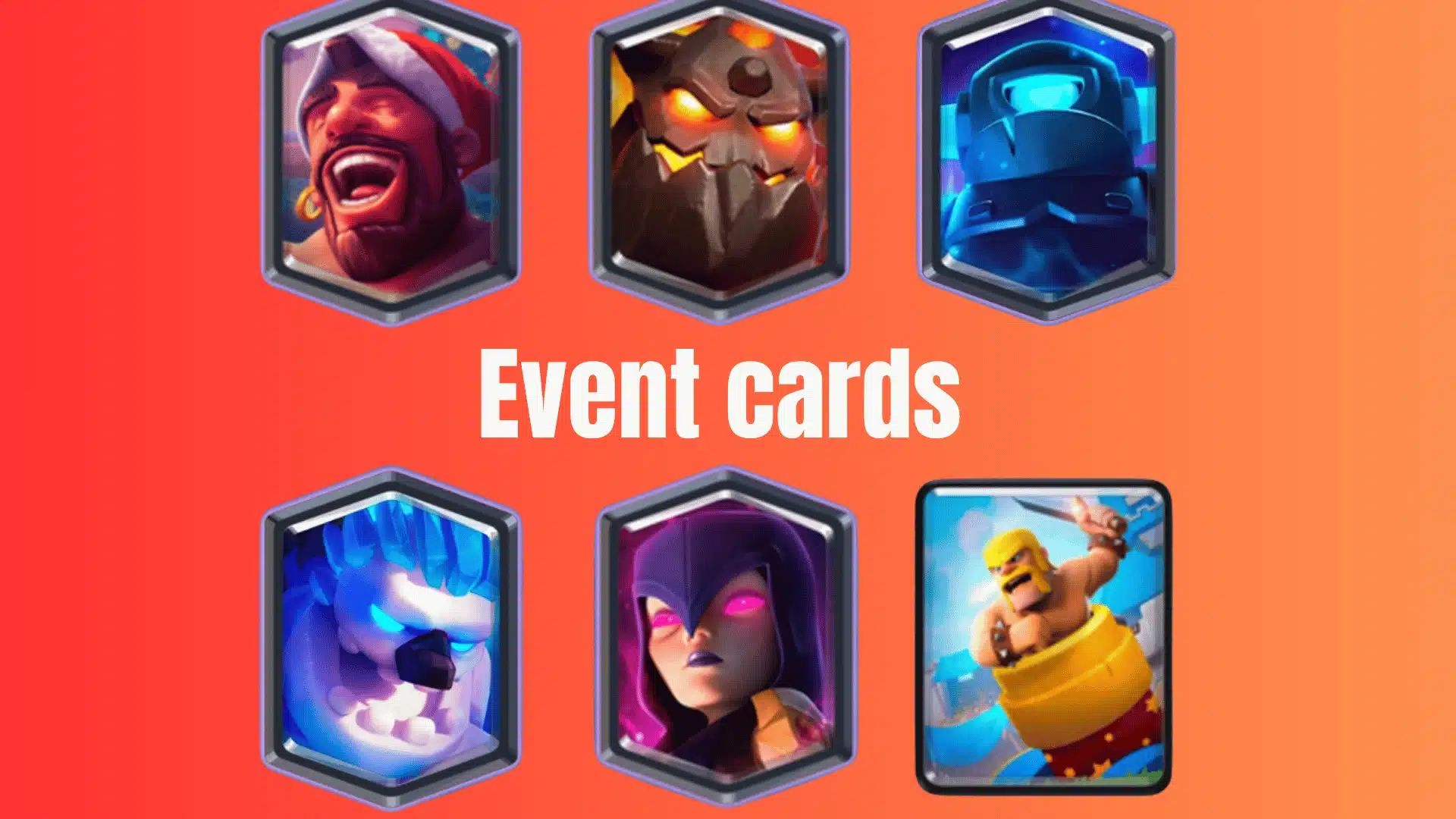
Event Cards launch through limited-time in-game events before joining the permanent card pool through chests and the shop. They’re free to unlock during the event window if you participate.
Spirit Empress debuted this way as Clash Royale’s first true dual-form card, switching between a 3-Elixir ground attacker and a heavier 6-Elixir dragon form depending on how you deploy her.
Boss Bandit followed a similar path before becoming a standard Champion, and Skeleton King originally launched as a limited event card years before becoming a permanent chest unlock for everyone.
If you miss an event window, don’t panic. Most event cards return to permanent rotation eventually, though upgrading them early during the event usually costs noticeably less than waiting.
Not every event card sticks around, though. Terry, Party Hut, Santa Hog Rider, and several Super troop variants were fully removed after their events ended, so treat those windows as genuinely limited.
Spell Cards: Organized by Usage, Not Rarity

Spells don’t move or chase enemies, they deploy once and resolve instantly. Grouping them by rarity tells you little, so here they’re organized by the actual role each one plays.
1. Big Damage & Finisher Spells
These spells exist to end matches or remove your opponent’s most threatening single card. They cost more Elixir but deliver damage no small spell could ever hope to match.
- Rocket (6 Elixir): Highest single-hit spell damage in the game, capable of reaching anywhere on the map and finishing towers that survived every other push you sent.
- Lightning (6 Elixir): Hits up to three highest-hitpoint targets simultaneously, making it the go-to answer against stacked support troops behind a heavy beatdown push.
- Fireball (4 Elixir): Medium-radius damage hitting air and ground troops reliably, the most balanced damage spell in the game and a staple across countless deck archetypes.
- Graveyard (5 Elixir): Spawns a steady stream of Skeletons directly on top of a tower, a slow-burn finisher that overwhelms defenses one skeleton at a time.
I used to hoard these for the “perfect” moment and lose towers waiting. Play them the instant they earn back more value than they cost. Hesitation is the real mistake.
2. Swarm-Clear Spells
Cheap, reactive spells built to wipe out low-hitpoint troops before they overwhelm your defense. Every competitive deck runs at least one, usually two, from this category.
- The Log (2 Elixir): Rolls across the ground knocking back everything it hits, cycling cheaply while chipping towers and clearing swarms in one efficient, low-cost motion.
- Zap (2 Elixir): Small area damage that also resets targeting and stuns briefly, countering Sparky, Inferno Tower, and Inferno Dragon charge-ups in a single cheap cast.
- Arrows (3 Elixir): Wide-radius, low-damage spell built specifically to answer Skeleton Army, Goblin Gang, and Minion Horde before they overwhelm your defensive troops entirely.
- Barbarian Barrel (2 Elixir): Rolls forward dealing knockback damage before releasing a Barbarian on impact, combining swarm-clearing chip damage with a free extra defender.
- Giant Snowball (2 Elixir): Slows and knocks back everything it hits, cheap enough to interrupt an incoming push while barely denting your Elixir count.
These are the cards I never leave home without. Running zero swarm-clear spells is the fastest way I know to lose a match to a three-Elixir Goblin Gang.
3. Control & Utility Spells
These spells manipulate positioning and tempo rather than dealing damage directly. They’re harder to master but can completely flip a losing defensive situation into a favorable trade.
- Tornado (3 Elixir): Pulls troops toward its center and toward your Tower, activating King Tower defense early while grouping enemies for a follow-up splash spell.
- Earthquake (3 Elixir): Damages buildings and ground troops while slowing their movement, uniquely effective at chipping tower health while also disrupting an incoming ground push.
- Freeze (4 Elixir): Temporarily disables every troop and building it hits, locking down an entire push mid-attack long enough for your defense to fully reset.
- Poison (4 Elixir): Damages ground troops and buildings continuously over its duration, also slowing enemy movement and attack speed inside its lingering, ground-covering radius.
- Goblin Curse (3 Elixir): Curses an enemy troop so it spawns a Goblin fighting for you on death, flipping your opponent’s own push against them.
- Vines (3 Elixir): Roots the three highest-hitpoint enemies in place for two seconds, even dragging air troops down to the ground for ground troops to hit.
- Void (3 Elixir): Deals damage over three waves that scales higher the fewer targets are caught inside, excellent against isolated tanks and defensive buildings alike.
Control spells took me longest to master, since misreading the moment wastes four Elixir instantly. Once I learned the timing, they became my favorite cards to outplay opponents with.
4. Support Spells
Support spells buff your own troops instead of harming the opponent’s. They’re deck-defining when built around properly, but nearly useless without the right troops to pair them with.
- Rage (2 Elixir): Temporarily boosts attack and movement speed for troops caught in its radius, historically paired with Balloon and Lumberjack for devastating, fast-closing pushes.
- Heal Spirit (1 Elixir): A tiny troop that heals nearby friendly units on death, cheap enough to slot into almost any deck needing extra defensive sustain.
- Clone (3 Elixir): Duplicates every friendly troop caught in its radius at low health, turning a small existing push into a sudden, overwhelming swarm.
- Mirror (Variable Elixir): Replays whatever card you last played at one Elixir more, doubling up on a win condition or spell for a surprise follow-up.
- Royal Delivery (3 Elixir): Drops a shielded Royal Recruit that deals damage on landing, functioning as cheap defense and chip damage in one single cast.
Support spells only work if your deck actually needs them. I’ve cut Rage more than once because the push it was meant to boost never showed up.
Building Cards: Organized by Usage, Not Rarity
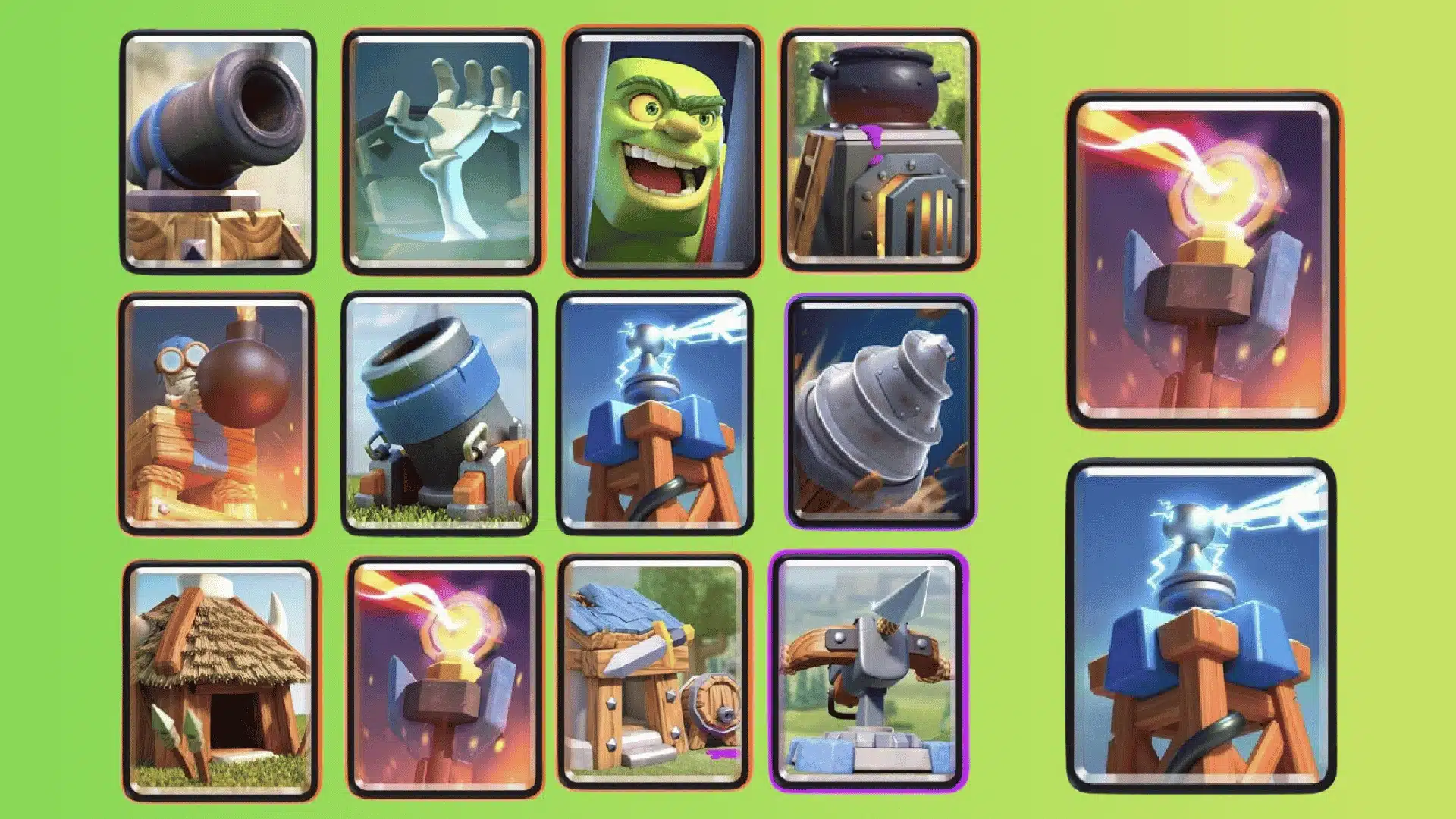
Buildings sit stationary and force opponents to target them, creating mandatory damage zones. Like spells, their role in your deck matters far more than which rarity tier they belong to.
1. Defensive Buildings
Pure defense pieces designed to tank hits and eliminate whatever pushes into them. Most decks run exactly one, chosen based on what win conditions they expect to face most.
- Cannon (3 Elixir): The cheapest defensive building available, targeting ground troops only, and still one of the hardest counters to Hog Rider after years of balance passes.
- Tesla (4 Elixir): Hides underground until triggered, covering both air and ground threats, making it unpredictable and awkward to bait out compared to always-visible buildings.
- Inferno Tower (5 Elixir): Locks onto one target and scales damage the longer it stays connected, the single hardest counter to tanks like Golem or Mega Knight.
- Bomb Tower (4 Elixir): A splash-damage building that clears ground swarms in a fixed radius, a solid alternative to Cannon against multi-unit pushes.
I used to place these too early out of nerves. Waiting until the tank actually commits to a lane makes every one of these three buildings hit far harder.
2. Spawner Buildings
Buildings that generate troops continuously over their lifetime, blurring the line between building and troop entirely. They demand patience since their value builds slowly across the whole match.
- Goblin Hut (5 Elixir): Spawns Spear Goblins at intervals throughout its lifetime, applying constant chip pressure while doubling as a soft defensive anchor near your tower.
- Tombstone (3 Elixir): Releases Skeletons periodically and again on destruction, now also the base card behind Hero Tombstone’s Tomb Queen ability added in June 2026.
- Barbarian Hut (6 Elixir): Spawns Barbarians at intervals throughout its lifetime, a pricier but tankier alternative to Goblin Hut for sustained lane pressure.
- Furnace (4 Elixir): Spawns Fire Spirits at regular intervals, blurring the building and troop line while chipping away at incoming pushes steadily.
- Goblin Cage (4 Elixir): A defensive building that releases a Goblin Brawler once destroyed, giving you a delayed second wave of defense for free.
- Elixir Collector (6 Elixir): Generates extra Elixir over time instead of spawning troops, creating an economic advantage in matchups that go the distance.
Spawners rewarded my patience more than any other building type. Leave one standing a full minute and it quietly wins the Elixir trade war without you doing much else.
3. Siege Buildings
Siege buildings attack towers directly from your own half of the arena, forming entire deck archetypes built around protecting them long enough to demolish the opponent’s tower first.
- X-Bow (6 Elixir): Long-range building that snipes towers from your side of the river, requiring heavy defensive support since it can’t attack troops up close.
- Mortar (4 Elixir): Deals area splash damage from a distance, cheaper than X-Bow but slower to ramp up consistent, reliable tower damage over a full match.
Siege decks demanded a complete mindset shift from me. You’re not attacking anymore, you’re defending a building that’s doing all the attacking on its own.
Evolutions: Which Cards Have Them & How to Unlock Them
Evolutions confused me at first, they aren’t a new rarity tier. They’re enhanced versions of cards I already owned, changing behavior rather than just boosting stats, like Evo Skeletons spawning with shields.
I unlock Evolutions through Evolution Shards, earned via the Season Shop, Pass Royale milestones, or event challenges. Roughly thirty-plus cards across every rarity now have an Evolution form waiting to be claimed.
One rule tripped me up constantly: only one Evolved card per deck per battle. You can’t stack multiple Evolutions, so I choose whichever one anchors my strategy, currently Skeletons, Knight, or Goblin Barrel. Zap, Valkyrie, Mega Knight, and Wall Breakers all have Evolution forms too, with more added almost every season.
Heroes are the newest related mechanic, adding a manually activated ability on top of a standard card like Knight or Balloon, covered in full detail under Champion Cards above. July 2026’s patch nerfed three Hero cards at once, a clear signal Supercell is reining them in.
Best Card Decks in the Current Meta
Rarity never decided these decks, elixir efficiency and tournament seeding and format choices did just as much to shape what’s viable.
Here are three archetypes that prove cheap, well-built decks consistently outperform expensive collections of rare, flashy cards.
1. 2.6 Hog Cycle (Evo Variant)

Cards: Hog Rider, Evo Skeletons, Ice Spirit, Musketeer, Evo Cannon, Fireball, The Log, Ice Golem, averaging 2.6 Elixir.
This deck has stayed near the top of the ladder since 2017, one of the fastest cycles ever built.
The plan never changes: cycle back to Hog Rider fast, track your opponent’s counter, then chip the tower. Inferno Tower and Tornado remain its hardest counters, both neutralizing Hog before it lands a hit.
2. Mohamed Light’s Signature Deck
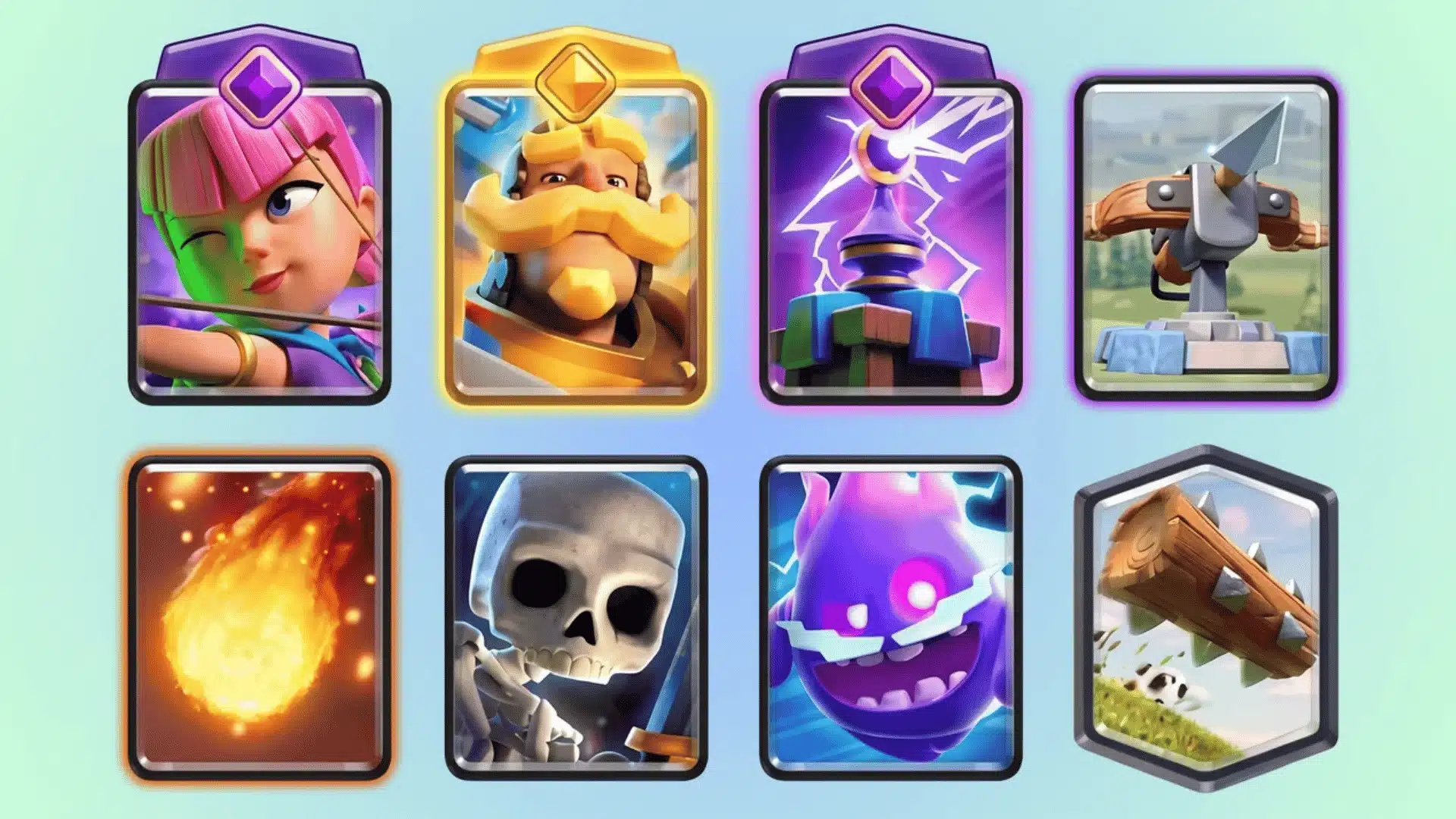
Cards: X-Bow, Hero Knight, Evo Archers, Evo Tesla, Skeletons, Electro Spirit, Fireball, The Log.
Three-time CRL World Champion Mohamed Light, the kind of player competitive esports scenes across genres tend to build entire tournament brackets around, has run this exact deck as his primary ladder pick through 2026.
The gameplan centers on protecting X-Bow long enough to demolish the tower, while Hero Knight’s taunt buys crucial seconds.
At roughly 3.0 average Elixir, precise placement matters more than raw card power.
3. Log Bait
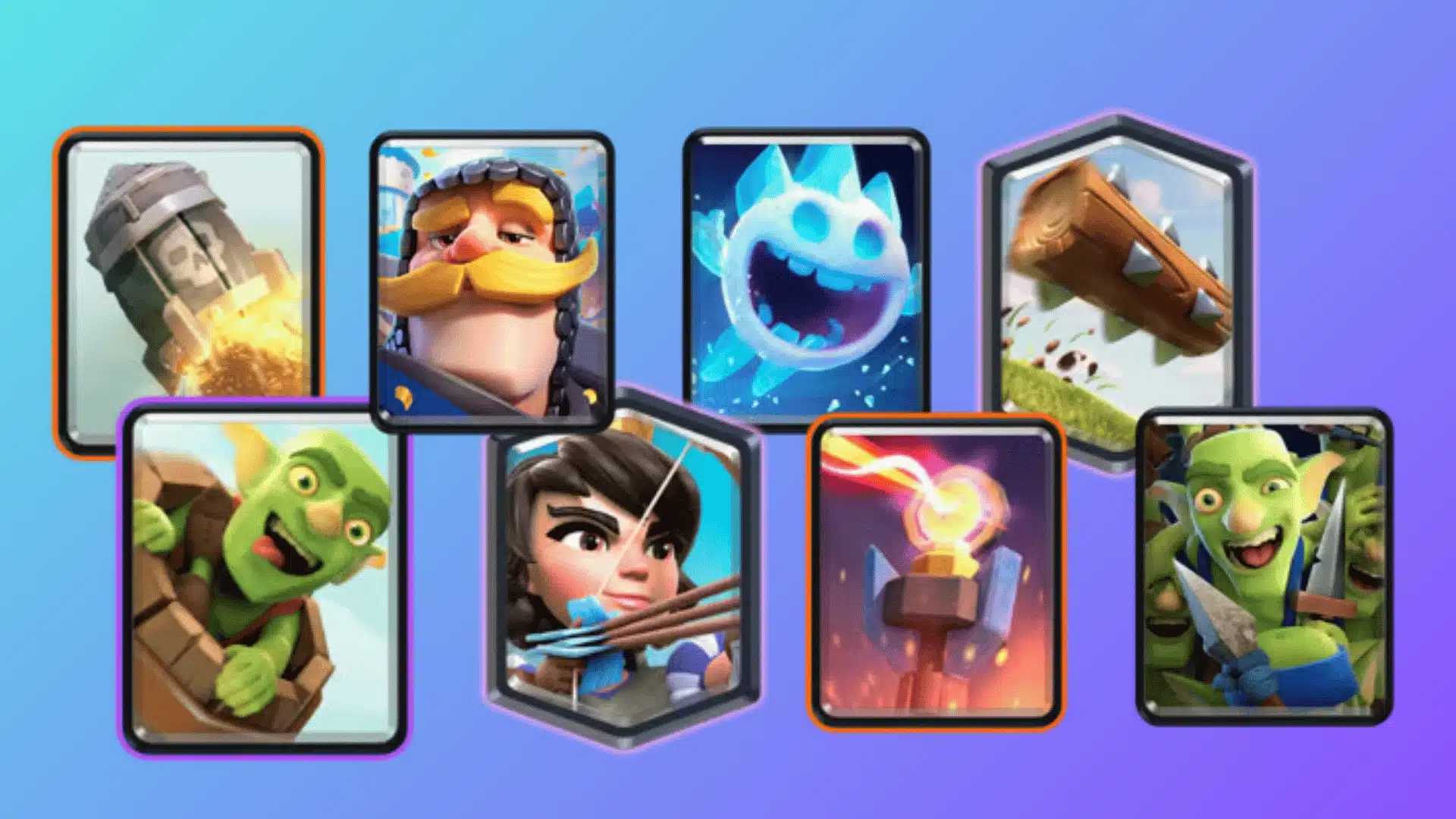
Cards: Goblin Barrel, Goblin Gang, Princess, Ice Spirit, Rocket, The Log, Inferno Tower, Knight.
Associated with specialists like SurgicalGoblin, this archetype has stayed relevant for nearly a decade of balance changes.
The strategy baits The Log or Zap out using cheap, spell-vulnerable troops, then punishes the empty hand with Goblin Barrel or Rocket. It rewards prediction and patience over mechanical skill entirely.
Conclusion
Clash Royale characters make more sense when you stop judging them by rarity alone.
Commons keep your deck moving, Rares add steady support, Epics often shape your main plan, and Legendaries or Champions ask for sharper timing.
The real lesson is that every card type has a job, and a weaker looking card can win more matches if it fits your deck better.
I would focus on learning one role at a time before spending resources on every rare card you unlock. Start with a simple deck, test each card with purpose, and watch what actually wins trades.
Which Clash Royale card changed how you play the most? Tell us, share with us in comments below.
Frequently Asked Questions
What are All the Characters in Clash Royale Called?
Clash Royale’s deployable cards include Troops, Spells, and Buildings across five rarity tiers: Common, Rare, Epic, Legendary, and Champion. The game features over 100 cards, with new ones added each season.
Which Heroes Are in Clash Royale?
Clash Royale’s heroes are its Champions: Archer Queen, Skeleton King, Golden Knight, Mighty Miner, Monk, and Little Prince. Each carries a unique active ability that players trigger manually during battle.
What Are the Best Characters in Clash Royale?
No single best character exists. Meta shifts with every balance update. Hog Rider, Goblin Barrel, and Barbarians consistently appear in top-ladder decks because elixir efficiency outweighs raw power.
What Is the Difference Between Legendary and Champion Characters?
Legendaries have unique passive behaviors that activate automatically. Champions add a player-triggered active ability that charges during battle. That manual activation is what makes them structurally distinct from Legendaries.