Some co-op games are fun for a few hours, then start repeating themselves. Split Fiction takes a very different path. Every chapter introduces fresh ideas, making it hard to predict what comes next.
I expected another solid co-op game from Hazelight Studios, but it kept surprising me in ways I did not expect. That is exactly why so many split fiction reviews have been so positive.
Still, high scores do not always tell the whole story. Strong gameplay does not automatically mean every part of the experience works equally well.
Before you buy, it helps to know where the game shines and where it falls a little short.
What is Split Fiction and Who Made It?
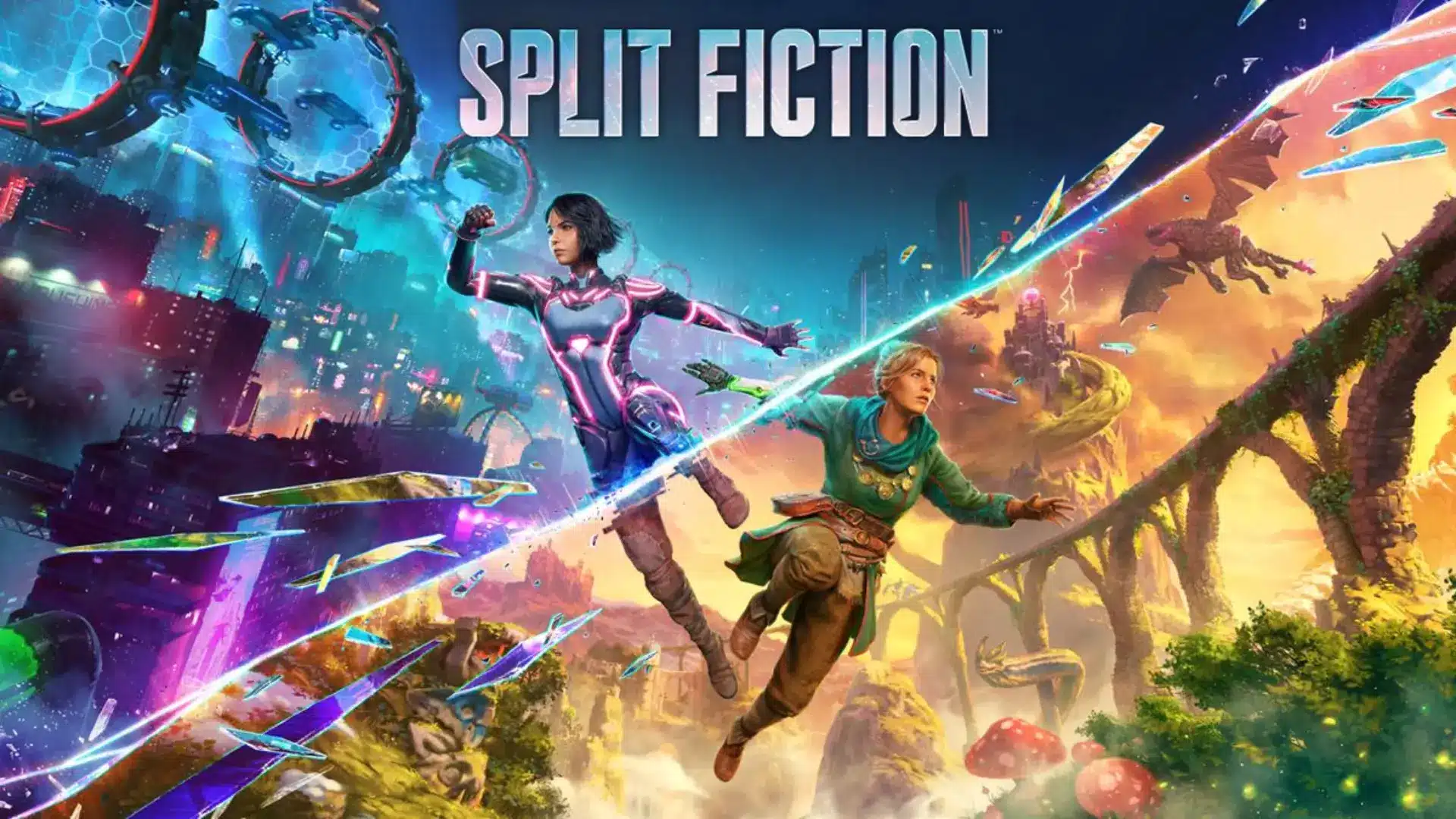
Split Fiction is a 2-player co-op action-adventure from Hazelight Studios, the team behind It Takes Two, following two writers whose fictional worlds collide across wildly different genres.
Hazelight has a short but impressive track record. A Way Out and It Takes Two both set a high bar for co-op design, so expectations for this one were never going to be low.
Studio founder Josef Fares has directed all three games, and his insistence on co-op-only design is exactly why Split Fiction can’t be played solo.
The game follows Zoe and Mio, two writers with opposing styles who get pulled into each other’s imaginary worlds. It’s chaotic in the best way.
It’s available on PS5, Xbox Series X|S, PC, and Switch 2. One smart detail: the Friend’s Pass lets one player invite another for free, so only one of you needs to buy it.
How Does the Gameplay Actually Hold Up?
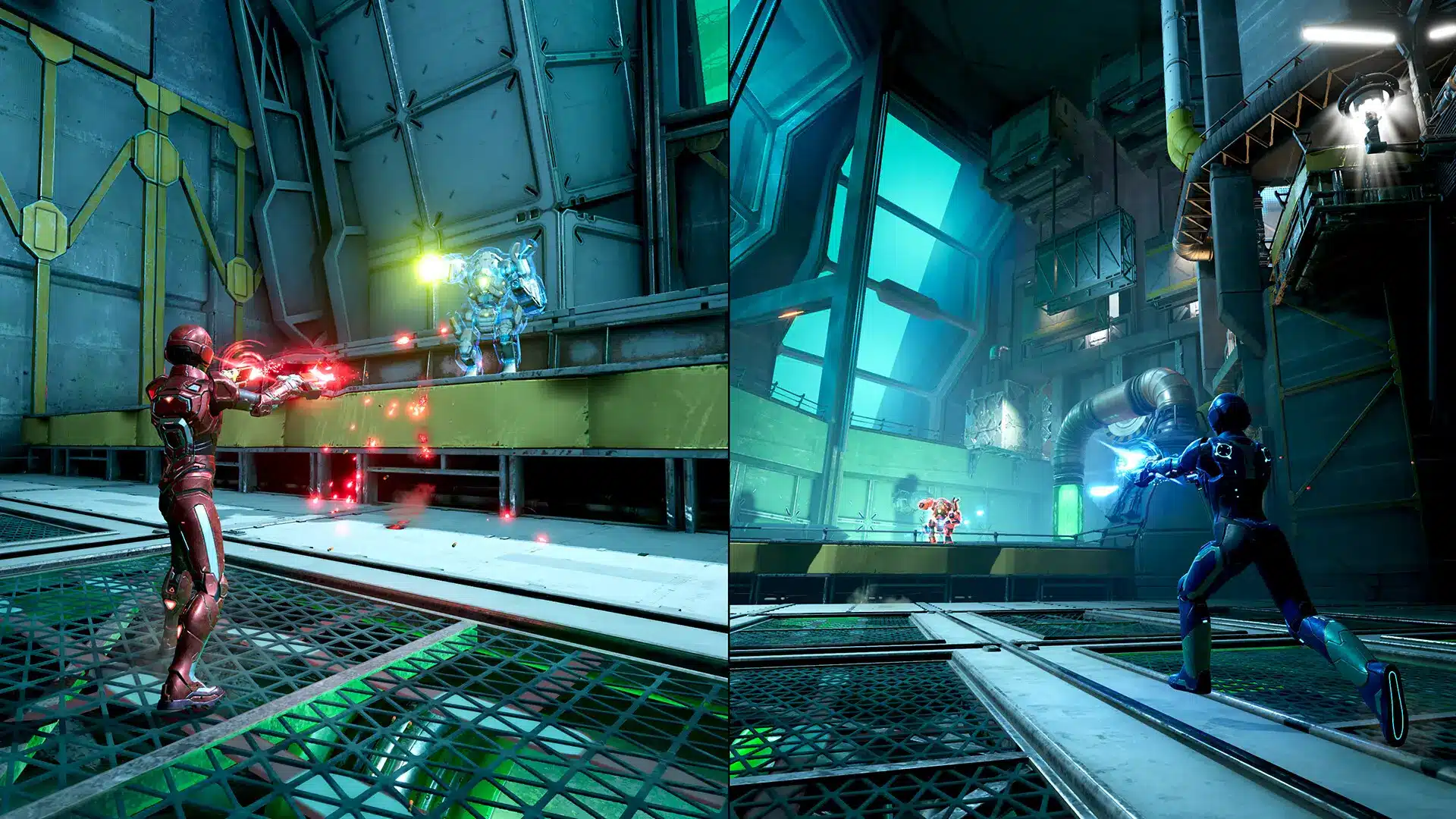
Split Fiction’s defining design choice is that almost no mechanic repeats; each level is built around a new idea, which keeps the 14-hour runtime from feeling padded.
Most co-op games give you one core mechanic and build everything around it. Split Fiction doesn’t work that way. Each level hands you something new: different abilities, different rules, different goals.
What makes this stand out isn’t just the variety. It’s that every mechanic is built around two players specifically. You’re not playing alongside someone; you need each other to move forward.
Here’s what that looks like in practice:
- Shared abilities: One player controls gravity, the other manages momentum; neither works without the other.
- Puzzle design: Most puzzles require both players to act at the same time, not taking turns.
- Genre shifts: Platformer one level, shooter the next, then something else entirely, the game keeps reinventing itself.
That interdependence is what sets this apart from co-op games, where the second player is optional.
The pacing reflects this well. I’ve played titles where the middle act quietly falls apart. Split Fiction rarely gives you room to feel that drift.
That said, a few sections do feel less polished than the rest. The ideas are still there, but the execution doesn’t quite match the game’s usual standard.
These dips are short and don’t derail anything. Think of it like a strong film with two scenes that needed one more pass at the editing; the overall experience holds, but those moments are noticeable.
For most players, it won’t matter much. The mechanical creativity across the full run is genuinely hard to match.
Is the Story Worth Your Attention?
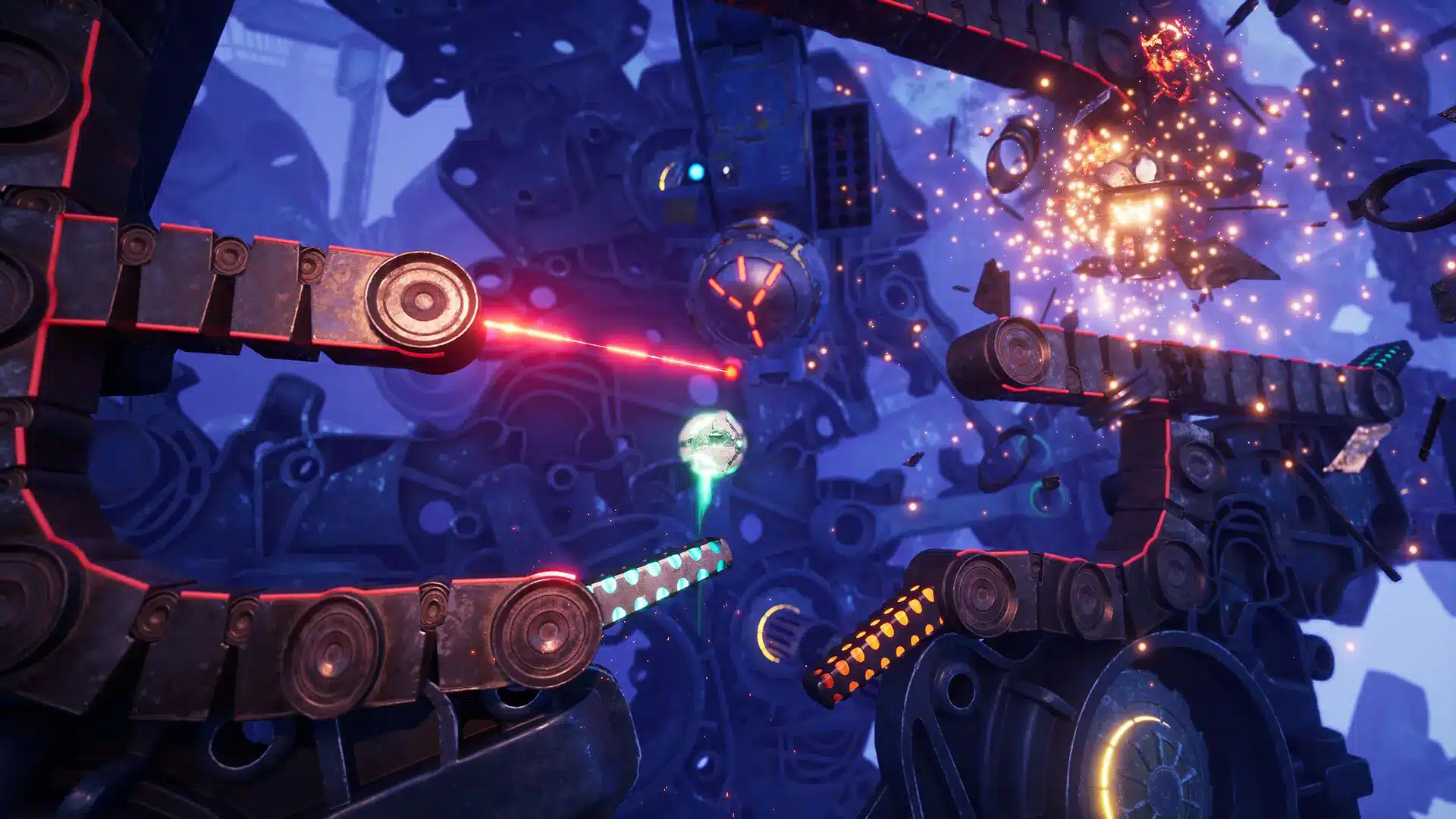
Split Fiction’s story lands differently depending on what you came for: the co-op spectacle or the emotional writing that made It Takes Two memorable.
The core arc follows Zoe and Mio, two writers with clashing personalities who learn to understand each other. Here’s how the different story elements hold up:
- The emotional arc: Most critics found Zoe and Mio’s journey genuinely touching. The bond between them builds slowly and pays off by the end.
- The dialogue: Thin in places, occasionally veering into cliché. It doesn’t derail the experience, but it’s noticeable.
- The antagonist: Rader Publishing, the company that traps Zoe and Mio inside their own stories, comes across as underdeveloped. Several players and reviewers flagged this as the weakest narrative element in the game.
Professional reviews treat these as minor caveats. Reddit threads tell a different story: some players finished the game feeling genuinely let down by the writing.
The divide tends to follow one clear pattern:
- Mechanics-first players rarely notice the shortcomings. The gameplay keeps them engaged enough to avoid dwelling on it.
- Story-first players, especially those drawn in by It Takes Two’s grounded emotional writing, are more likely to feel the gap.
That gap is real, and it’s worth naming directly rather than burying it. If strong character writing is what you’re coming for, manage expectations here.
The story isn’t bad. It just doesn’t match the ambition of everything happening around it.
How Does It Compare to It Takes Two?
Both games are from the same studio and share the same co-op DNA, but they prioritize different things; knowing which matters to you settles the comparison.
These aren’t competing games; they complement each other well. But they do pull in different directions, and that matters depending on what you’re looking for.
| Category | Split Fiction | It Takes Two |
|---|---|---|
| Scale | Larger, more levels, bigger set pieces | More contained, focused experience |
| Genre Variety | Shifts entirely at each level | Consistent mechanics throughout |
| Mechanical Ambition | Higher constantly introduces new co-op ideas | Strong but more predictable |
| Narrative Quality | Serviceable, occasionally thin | Tighter, more emotionally grounded |
| Character Chemistry | Zoe and Mio feel underdeveloped | Cody and May feel fully written |
| Emotional Payoff | Present, but lighter | Earns its ending more completely |
| Best For | Mechanics-first players | Story-first players |
The table makes the split clear, but the practical answer is simpler than it looks.
If gameplay variety is your priority, Split Fiction is the stronger pick. If you want the writing to match the mechanics, start with It Takes Two, then come back for this one.
Visuals, Performance, and Platform Differences
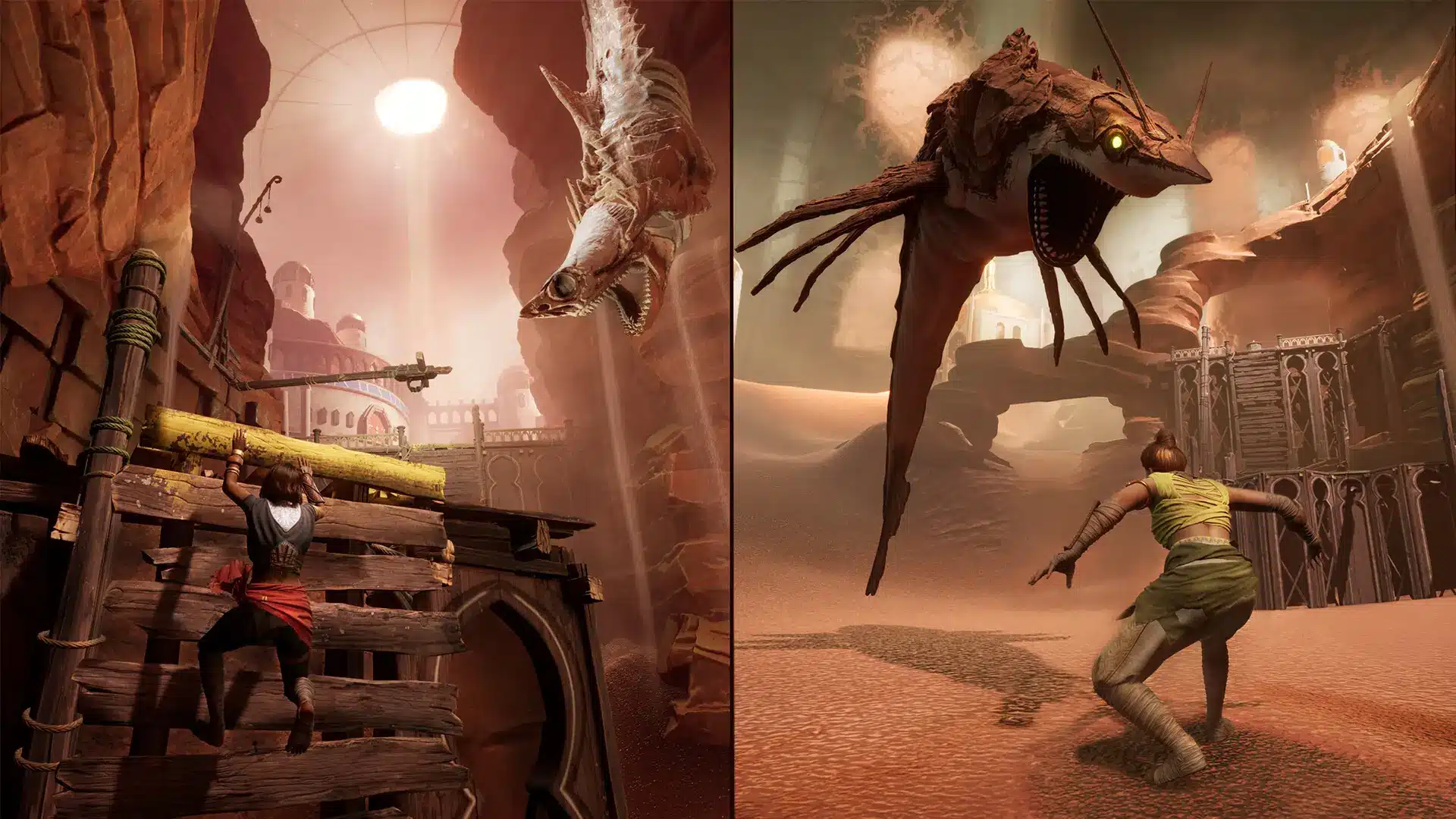
Split Fiction runs cleanly across PS5, Xbox Series X|S, PC, and Switch 2, with the Friend’s Pass letting one player invite another at no cost.
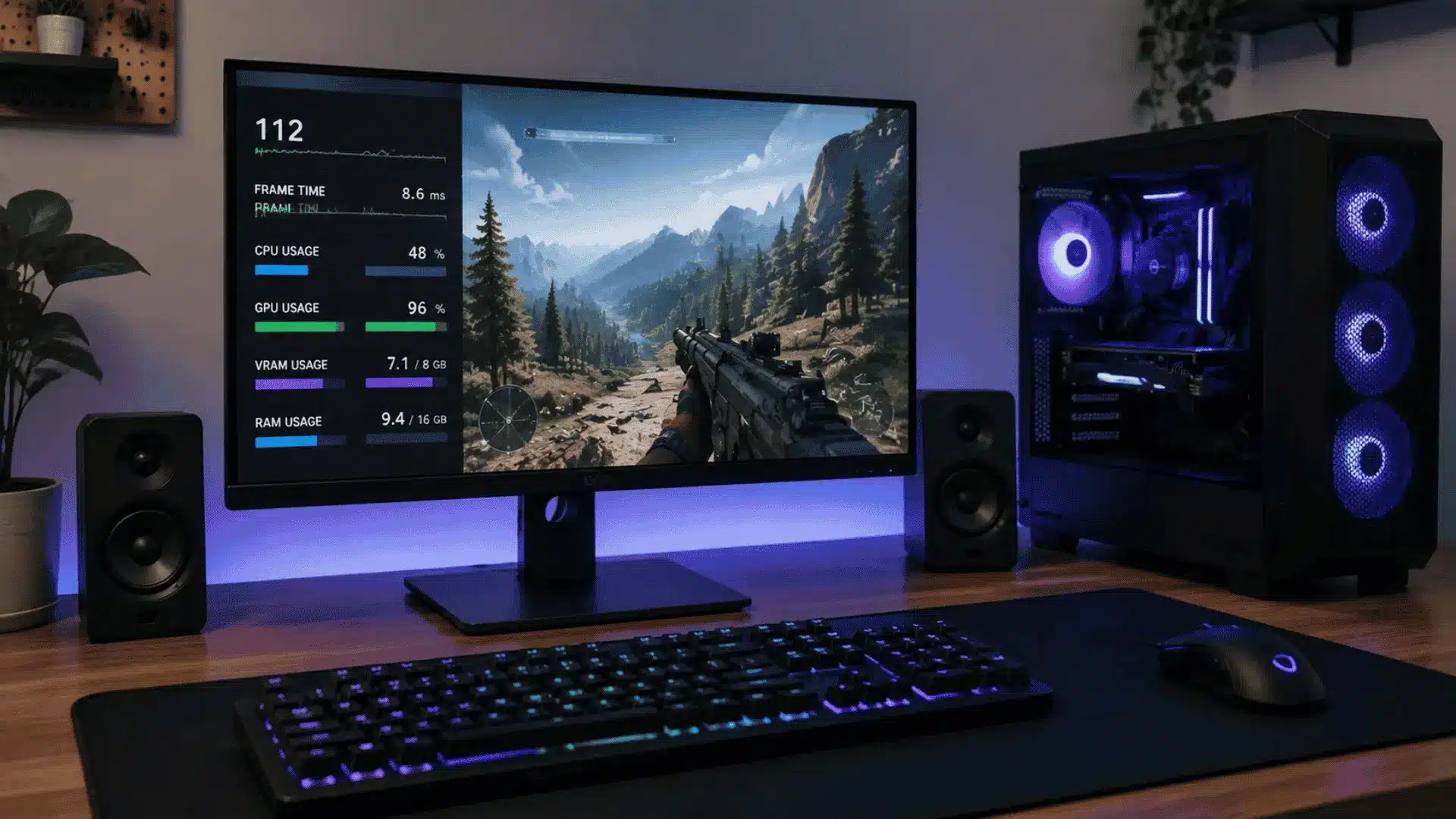
Performance has been consistently praised across the board. PS5 and Xbox Series X|S versions run at a steady 4K/60fps, with no significant complaints about frame drops or technical issues.
The PC version is available through Steam, the Epic Games Store, and the EA app, and holds up just as well. Nothing feels like a downgraded port, and it supports ultrawide resolutions along with Steam Deck compatibility for anyone who wants to play on the go.
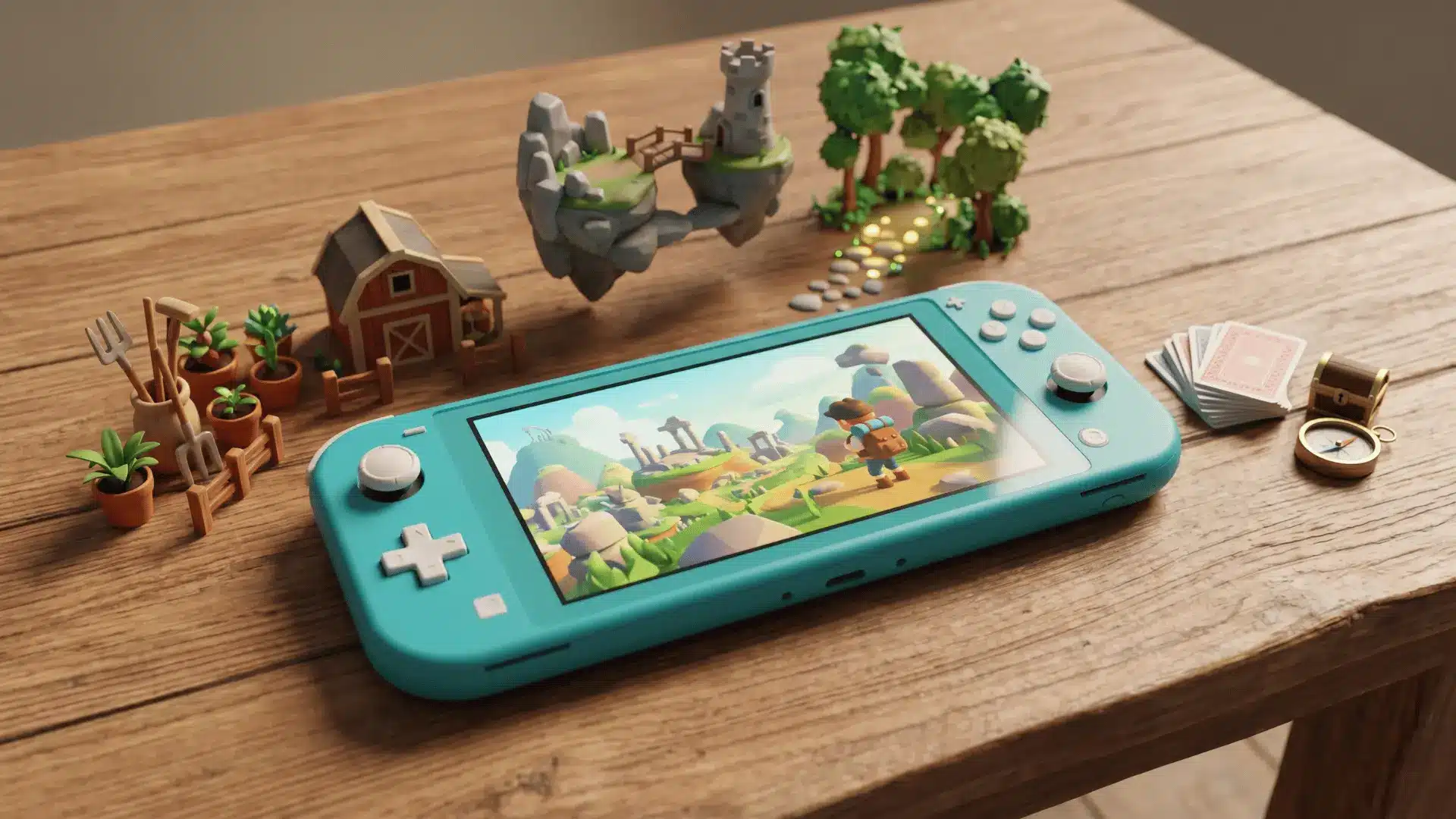
The Switch 2 version launched on June 5, 2025, as a console launch title, and it keeps the full co-op mechanic set intact; nothing was cut to make it work on the hardware.
Visually, though, it’s a step down: the game runs at 1080p/30fps on Switch 2, compared to 4K/60fps on PS5 and Xbox Series X|S, and reviewers noted softer textures and lower frame rates in docked mode.
If you haven’t played it elsewhere first, you likely won’t mind. If you have, you’ll notice.
The Friend’s Pass works across all platforms. One copy gets you both players in; your partner doesn’t need to purchase the game separately to join.
Is Split Fiction Worth Buying?
Split Fiction is one of the best co-op games available, but whether it’s the right co-op game depends on what you and your partner are looking for.
The answer depends on what kind of experience you’re looking for. Arma Reforger is another game where the buying decision depends even more on the type of player you are.
- Mechanics-first co-op players: Strong buy. The variety, ambition, and co-op design are hard to match at this price point.
- Story-first players: Worth it, but temper expectations. The gameplay is exceptional, the writing less so.
- It Takes Two fans: You’ll enjoy it, but don’t expect the same emotional payoff. It’s a different kind of experience.
- Solo players: Skip it for now. The game is built around two-player interdependence at every level; it doesn’t translate well alone.
The Friend’s Pass makes the decision easier regardless. Only one of you needs to own it to play together.
If you have a regular co-op partner and want something that keeps surprising you both, Split Fiction earns its price without much debate.
Wrapping Up
After reading different split fiction reviews and spending time with the game myself, I think it earns its reputation as one of the strongest co-op experiences available today.
Its creative level design and constant gameplay variety make it easy to recommend, even if the story does not always reach the same level.
If you enjoy solving puzzles and working closely with a friend, there is plenty here to enjoy.
Knowing both the strengths and the weaker points can help you decide if it fits your style. Have you played Split Fiction yet? Share your thoughts and experience in the comments below.
Frequently Asked Questions
Is Split Fiction harder than It Takes Two?
Neither game is punishing. Split Fiction introduces new mechanics more frequently, which can feel disorienting, but the puzzles stay approachable throughout.
Why is Split Fiction so highly rated?
Mechanical variety drives the praise. Almost no mechanic repeats, and every puzzle genuinely requires both players; no one gets carried.
How many hours does Split Fiction take to beat?
Most pairs finish the game’s eight main chapters in 12 to 14 hours. The 12 optional side stories add another 2 to 3 hours, and the pacing rarely makes the runtime feel long.
Is Split Fiction good for players who don’t usually play games?
Yes. The difficulty curve accommodates mixed-skill pairs well. The early hours can feel overwhelming, but the game adjusts naturally as you progress.