Reviews gave Metroid Dread a near-perfect reception, and honestly, the scores are deserved. But a high Metacritic aggregate doesn’t tell you whether the game will click for you specifically.
I went in expecting something close to Super Metroid’s open wandering. What I got was tighter, more directed, and more demanding than I anticipated in the first two hours.
The EMMI sections frustrated me before they made sense. The bosses stopped me cold until one mechanic finally clicked. The movement system revealed depth I wasn’t looking for.
What that experience actually looks like, broken down honestly, is what follows here.
What Is Metroid Dread and Who Made It?
Metroid Dread is a 2D side-scrolling action-adventure developed by MercurySteam, published by Nintendo for Switch in October 2021, and the direct sequel to Metroid Fusion.
Samus spends the game on ZDR, a planet crawling with Chozo ruins and the source of the mysterious transmission that pulls her in.
I assumed it was a soft reboot when I picked it up. It isn’t. Dread closes a narrative arc running from Metroid II straight through Super Metroid and Fusion.
MercurySteam had already worked on the franchise once before, Metroid: Samus Returns on 3DS in 2017. They weren’t learning the series with Dread. They were refining it.
Fusion was released in 2002, which puts the actual wait at 19 years, not the rounder decade-plus number that gets tossed around casually. That context matters more than it sounds.
Whether Dread is the right game for you specifically is a different question than whether it’s good. The critical scores are strong, but that distinction is worth working through honestly.
How the EMMI Sections Work
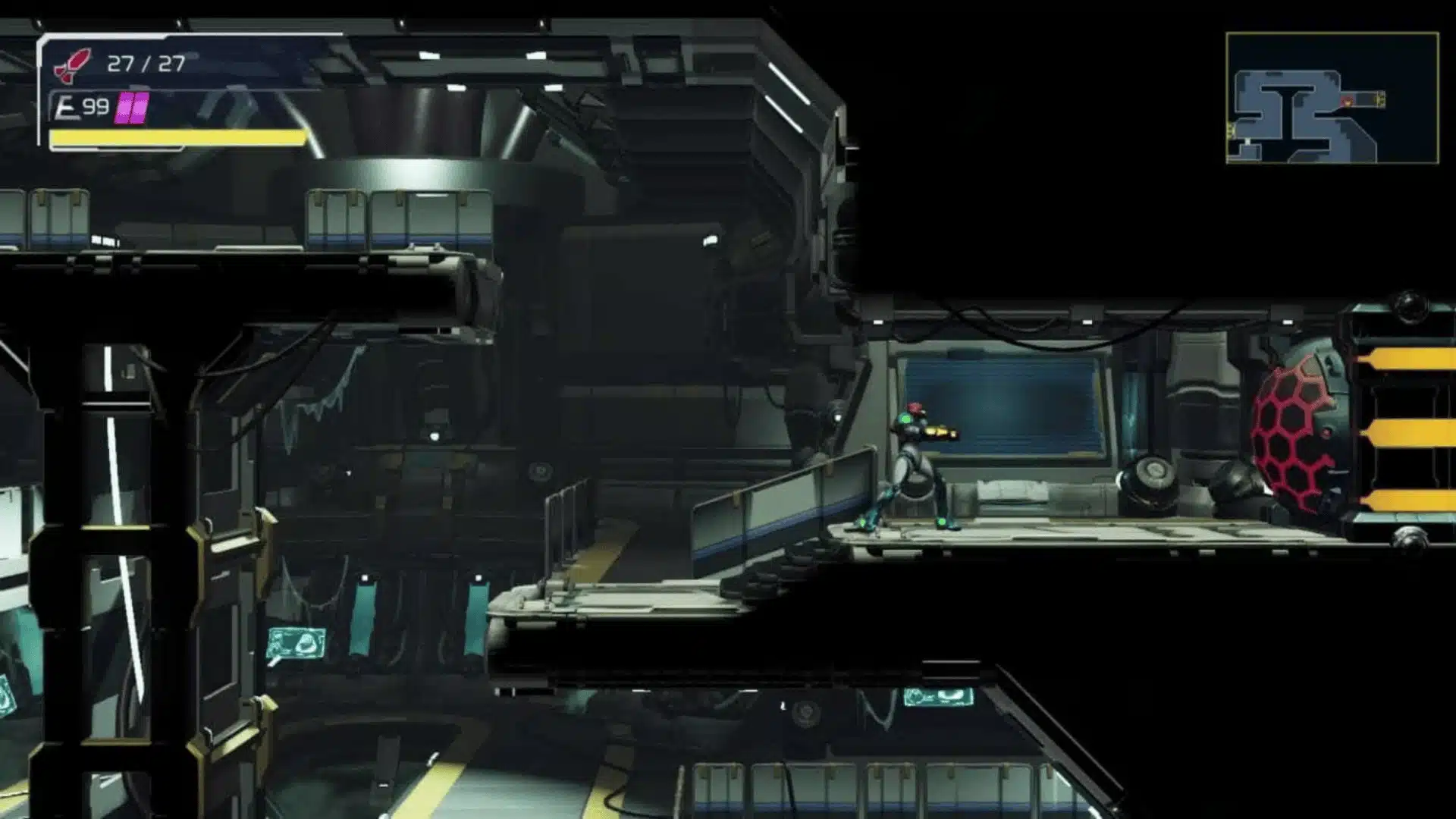
EMMIs (E.M.M.I.) are indestructible pursuit robots patrolling dedicated zones throughout Dread’s map. They kill Samus instantly on capture and cannot be fought with standard weapons.
If you’ve read other reviews, you’ve seen “tense” and “threatening” used repeatedly. What those reviews skip is why the tension works mechanically and why it eventually stops working.
What EMMIs are and How They Detect You?
Learning how EMMIs detect you is the first real skill Dread asks you to develop. Everything else in the early game is secondary to understanding this system.
- EMMIs patrol fixed corridors in defined zones, separate from the main exploration map
- Detection triggers on line-of-sight or proximity, a brief flash warning appears before full pursuit activates
- Once pursuit begins, a narrow escape window opens to break detection range or hide using the Phantom Cloak
- Getting caught means instant death regardless of health, no damage buffer, no last-second recovery
Master the detection window, and the EMMI zones become puzzles. Ignore it and they become the most frustrating part of the game.
Why They Can’t Be Fought and When They Can?
Most players spend their first EMMI encounter trying to shoot their way out. That instinct is exactly what the design is built to break.
- Standard weapons do nothing; every shot bounces off an EMMI’s frame completely
- The only solution is the Omega Cannon, a charged weapon found within each EMMI’s specific zone
- The Omega Cannon works once per zone, on that zone’s EMMI only; it never carries forward
- This resets the entire dynamic fresh with each of the game’s seven EMMI encounters
The rest of Dread rewards the growth of combat power. EMMI zones strip that away deliberately. Your expanding arsenal becomes irrelevant the moment you enter their corridors.
Why Are the EMMI Sections Both the Game’s Highlight and Its Most Repeated Criticism?
The first few EMMI encounters are where the mechanic is at its strongest. The problem is what happens after that.
- The first two or three encounters are genuinely tense, insta-kill stakes, and pursuit scripting land hard
- By the fifth or sixth, the format is fully familiar, locate the Omega Cannon, avoid the EMMI, fire once, move on
- Each new EMMI has cosmetic differences and minor ability variations, but the underlying loop doesn’t escalate meaningfully
- The “dread” of the title is mechanical and literal, but that mechanism repeats without compounding across zones
This is the legitimate criticism worth stating plainly. EMMI sections are the most debated element across reviews and Reddit for exactly this reason, and that debate is earned.
Why Does Dread Feel Linear Even Though the Map Isn’t?
The EMMI corridor scripting, combined with Dread’s waypoint system, compresses spatial awareness into reactive tunnels rather than open exploration.
The map itself isn’t linear. Backtracking genuinely opens up as abilities accumulate. But in the early and mid-game, EMMI zones block lateral movement, while waypoints consistently push you forward.
That combination creates a directed experience that feels authored rather than open. Players expecting Super Metroid’s wandering freedom will feel that friction before they understand the intent behind it.
Dread trades exploration looseness for mechanical precision and narrative momentum. Once I understood that was the deliberate trade-off, the hand-holdy feeling stopped registering as a flaw.
Boss Design, Combat, and the Difficulty Spike Problem
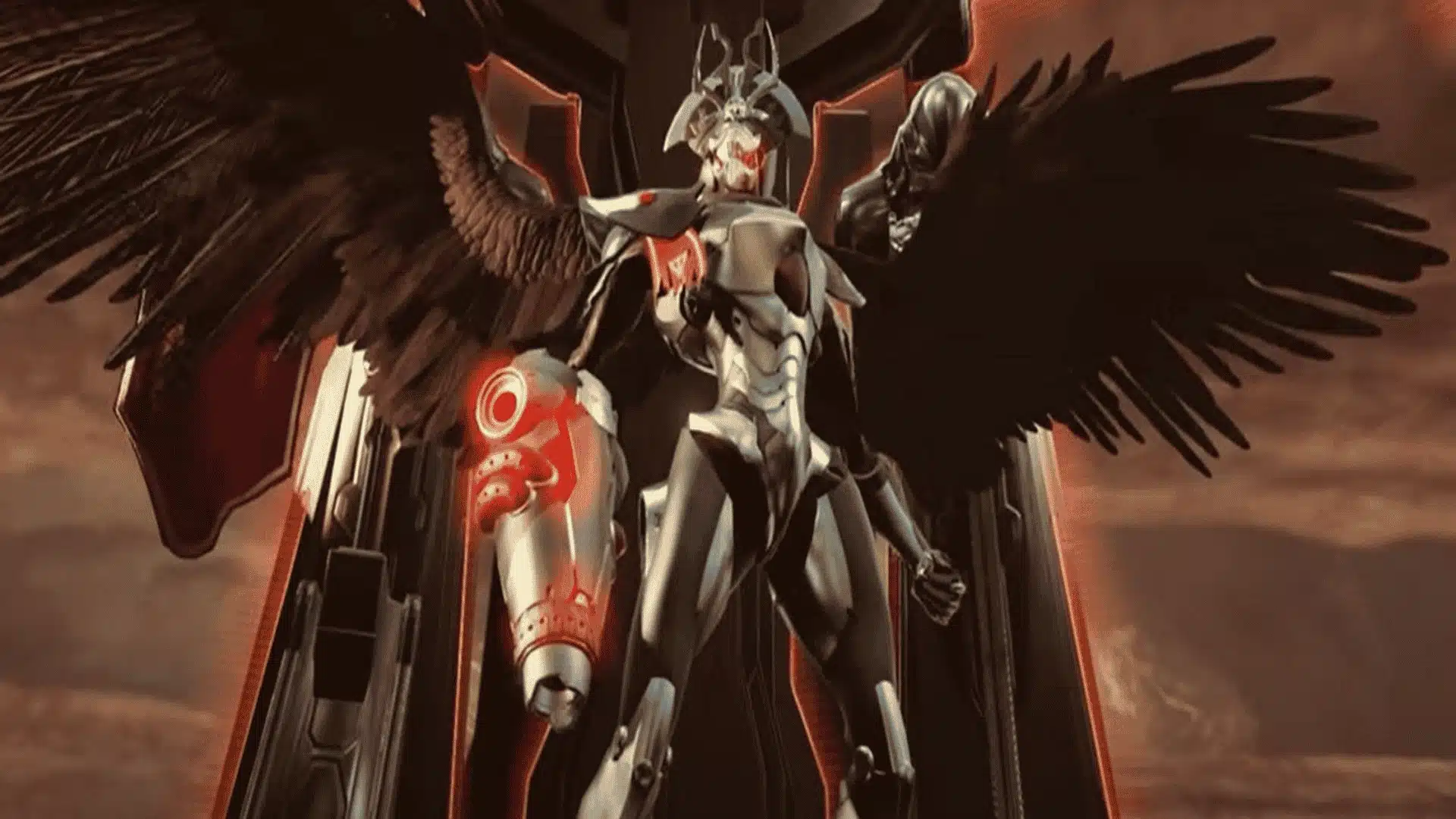
Metroid Dread’s boss fights are genuinely excellent, multi-phase, visually spectacular, and mechanically demanding in ways that feel earned rather than arbitrary. They’re also where most players hit a wall.
The difficulty isn’t random. It comes from a specific skill-transfer problem the EMMI sections accidentally create. Understanding that gap changes how you experience the entire back half.
What Makes the Boss Fights Work?
Boss encounters operate on a completely different design logic than EMMI zones. Where EMMIs demand evasion and retreat, bosses demand aggression, pattern recognition, and sustained forward pressure.
- Each major boss runs multiple distinct phases, escalating in speed and complexity as health drops
- Abilities collected through exploration directly affect how fights play out, and your toolkit grows into the encounters
- Visual and audio cues telegraph attacks clearly; the game is readable once you slow down and watch
- The Raven Beak finale structures itself as a cumulative payoff, demanding mastery of nearly everything learned prior
| Boss Element | What It Tests | Payoff When Mastered |
|---|---|---|
| Phase transitions | Pattern adaptability | Momentum and rhythm |
| Attack telegraphing | Visual reading speed | Anticipation over reaction |
| Ability integration | Toolkit fluency | Fights feel orchestrated |
| Raven Beak finale | Full-game mastery | Narrative and mechanical closure |
The final boss sequence is the strongest argument against the repetition criticism. It doesn’t feel like something you grind through; it feels like a closing statement.
The Parry Window: Why Missing It Costs You the Game?
The melee counter isn’t just a useful tool. It’s the skill gate the entire mid-game is built around, and most players don’t realize it until a boss stops them cold.
- A flashing orange signal means a melee counter is available in that precise moment
- Landing it stuns the enemy, deals significant damage, and restores a small amount of energy
- Missing it removes your most efficient damage window and energy recovery loop simultaneously
- Mid-game bosses are tuned assuming regular counters; ignoring the mechanic makes them feel artificially punishing
There’s a cascade problem sitting underneath the difficulty spike. EMMI zones spend the first half training you to flee, memorize escape routes, avoid confrontation, and survive by retreating consistently.
Boss arenas then demand the exact opposite. You need to move toward the attack, time the counter, and stay aggressive under sustained pressure throughout each phase.
| Skill Built in EMMI Zones | Skill Required in Boss Arenas | Conflict |
|---|---|---|
| Flee on detection | Engage aggressively | Direct opposition |
| Memorize escape routes | Read attack patterns | Different spatial focus |
| Conserve movement | Commit to dodge timing | Opposite risk tolerance |
| Avoid all contact | Land melee counters | Fundamental reversal |
The difficulty curve made complete sense the moment I stopped treating bosses like EMMI encounters and instead leaned into the counter window. The game isn’t unfair; it’s asking you to unlearn what it just taught you.
For players coming from Hollow Knight, the adjustment is real. Dread rewards reaction speed over pattern patience, a meaningfully different demand than what that game builds.
Are the Bosses Actually Repetitive?
GameSpot’s criticism of repetition isn’t wrong, but it’s aimed at the wrong targets. The main sequence escalates meaningfully. The mid-game mini-bosses are where the complaint actually lands.
- Mini-bosses, particularly returning Chozo Soldiers, reuse attack patterns across multiple encounters with minimal variation
- Main sequence bosses are structurally distinct; no two feel like reskins of the same underlying fight
- The criticism is partially valid but overstated when applied to the full roster collectively
- Dread has roughly a dozen memorable encounters; three or four repeat-pattern mini-bosses shouldn’t define everything
Metroid Dread is genuinely hard, with its biggest challenge coming from boss encounters and the shift away from EMMI-style play.
If that kind of mechanical challenge appeals to you, the Astral Chain review covers another Switch action game that rewards mastery. That difficulty is purposeful rather than punishing.
The game didn’t stumble under that weight either. It holds an 88 on Metacritic and remains one of the better-selling Metroid entries, still drawing new players and discussion well into 2026.
Movement, Ability Progression, and Why Dread Feels Different to Control?
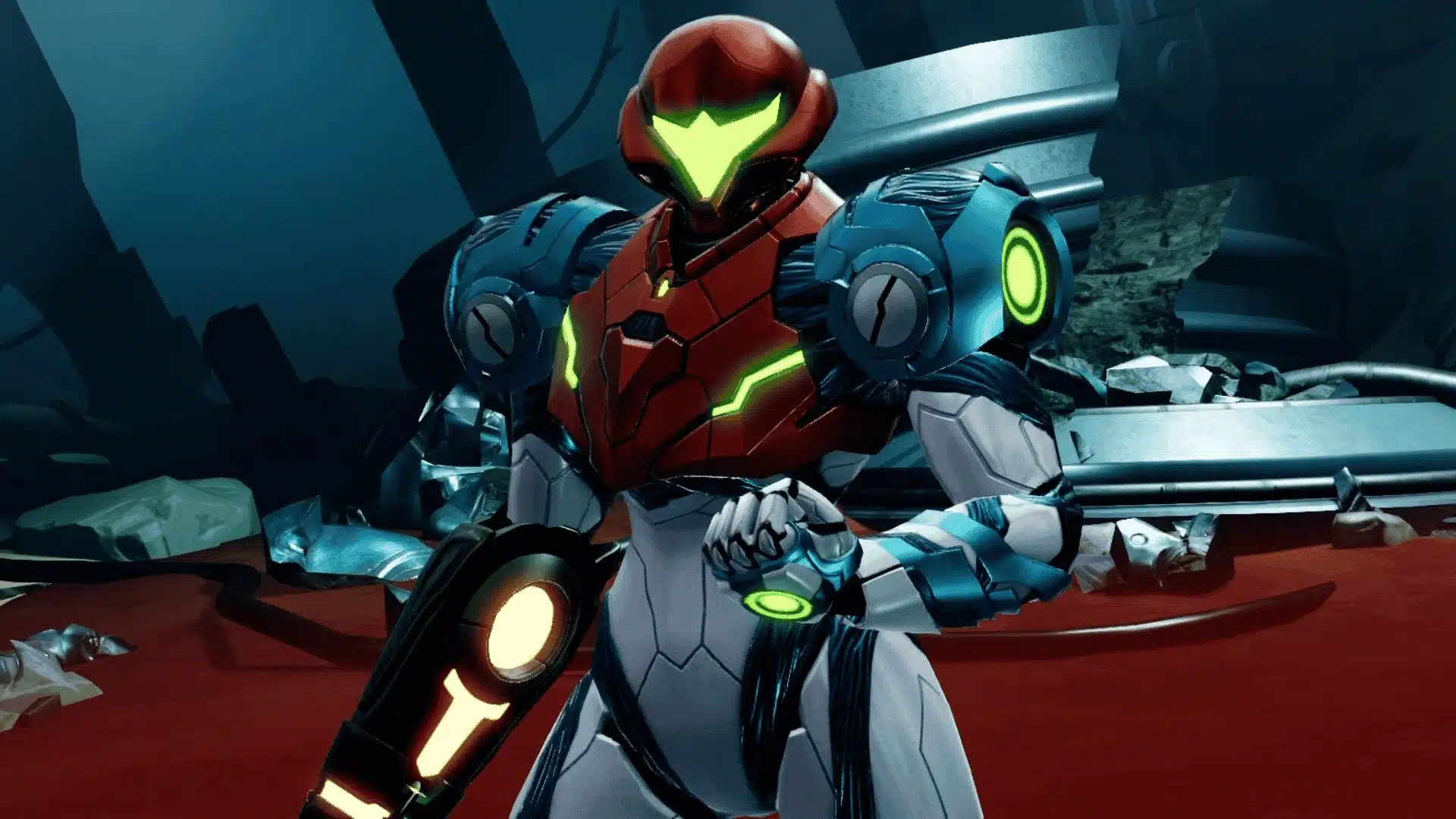
Metroid Dread’s major ability unlocks include the Slide, Spider Magnet, Phantom Cloak, Grapple Beam, and Speed Booster. Each one permanently changes how Samus moves through the world.
What separates Dread from most Metroidvanias isn’t the list of abilities itself. It’s that each unlock retroactively reframes areas I’d already visited and thought I fully understood.
Core Movement Abilities and What They Unlock
Every ability in Dread does two things simultaneously. It opens new paths forward while recontextualizing everything I’d already passed through. That dual function is what makes progression feel alive.
- Slide: Low-profile movement through tight corridors; also a dodge tool in combat that connects directly to melee counter timing
- Spider Magnet: Wall and ceiling traversal; opens vertical exploration across the entire map once acquired
- Phantom Cloak: Turns Samus invisible and silent; introduced as an EMMI evasion tool but functions equally as a traversal and environmental puzzle solution
- Grapple Beam: Swing mechanics and destructible block interactions; gates several mid-game areas and creates new movement lines across large rooms
What I didn’t expect about the Phantom Cloak was how useful it remained after the EMMI sections ended. It kept showing up in exploration and puzzles in ways that made the systems feel genuinely connected.
Dread’s movement is more momentum-based and mechanically layered than Hollow Knight’s floatier, rhythm-driven traversal. It’s a different physical language entirely, with neither approach being objectively better.
Every ability I picked up made me want to revisit old rooms immediately. That pull is what keeps Dread’s pacing feeling purposeful rather than padded across its full runtime.
The Speed Booster and Skill Expression
The Speed Booster is where Dread stopped being a game about unlocking doors for me and started being about genuine mastery. No other ability created the same skill gap between players.
- Activates after Samus reaches sustained sprint speed across sufficient flat ground
- Stores momentum as a charged state, releasable through specific environmental sequences
- Unlocks hidden routes and sequence breaks invisible to players treating it purely as a movement upgrade
- Speed Booster puzzles are the clearest indicator between a competent playthrough and a genuinely skilled one, since they’re the only sequence breaks in the game that punish hesitation rather than reward caution
Most ability gates ask you to recognize that a new tool solves a visible problem. Speed Booster puzzles asked something fundamentally different from anything I’d encountered before.
I had to mentally pre-solve entire environmental chains before moving, because execution happens at full speed with absolutely no room to pause mid-sequence at all.
It’s the only mechanic in Dread that demands planning and execution at the same time, instead of one after the other. These puzzles consistently feel harder than they look, and the reason comes down to when you’re solving them, not how hard the input is.
I got these wrong repeatedly before I realized I was trying to figure them out while moving. The moment I started solving them mentally first, they became satisfying rather than frustrating.
The Speed Booster rewards players who push beyond the critical path with sequence breaks and hidden routes the main progression never requires. It’s where Dread’s real depth quietly lives.
The Controls Criticism: Handheld vs. Docked
GamesRadar+ flagged hand-cramping controls in their review. I felt it too, specifically in handheld mode during late-game boss encounters. It’s a real ergonomic issue, not a design problem.
- In docked mode with a Pro Controller, the scheme feels natural and responsive without meaningful strain during extended sessions
- In handheld mode, simultaneous shoulder buttons, triggers, and face button combinations create genuine hand fatigue over longer play periods
- The issue compounds during boss encounters where dodge, counter, shoot, and aim all activate simultaneously under time pressure
- Switching to docked mode or an external controller resolves most of the complaint entirely and comfortably
I played my first twelve hours in handheld mode and assumed the controls were just demanding. Switching to docked completely changed how the game felt in my hands.
The criticism is real and worth naming honestly before someone buys the game expecting a comfortable handheld experience throughout. It matters depending on how you typically play Switch.
Dread’s input demands are high because its mechanical ceiling is equally high. Switching to docked mode and letting go of the controls made the criticism obvious, and the complaints faded from there.
Conclusion
Metroid Dread doesn’t ease you in; it assumes you’ll meet it halfway, and that assumption trips up many players who go in cold.
The bosses, the EMMI zones, the controls, and the criticism each landed differently once I understood the design logic sitting underneath them.
Getting that context before starting would have saved me several frustrated hours and at least a dozen unnecessary deaths against mid-game bosses.
If the game sounds like your kind of challenge, go in with clear expectations; it’s a better experience, and a genuinely great one overall.
Frequently Asked Questions
Is Metroid Dread a Hard Game?
Yes, but not arbitrarily. Difficulty concentrates in EMMI encounters and boss fights specifically. Both punish players who haven’t yet internalized the core mechanics. Expect a real learning curve, especially across the first half.
Is Metroid Dread Better Than Hollow Knight?
They optimize for different things entirely. Hollow Knight rewards patience, atmosphere, and depth of exploration. Dread rewards speed, precision, and mechanical escalation. Which one lands depends entirely on what you’re looking for from the genre.
Do I Need To Play Previous Metroid Games Before Metroid Dread?
No, but Metroid Fusion context pays off significantly at the ending. New players can follow the story independently. Series veterans, particularly those who remember Fusion’s conclusion, will get meaningfully more from Dread’s closing out.
How long is Metroid Dread?
A first playthrough runs roughly 8 to 12 hours, depending on exploration pace. Completionist runs add several hours beyond that. A hard mode and time-attack framing unlock after completion for players who want more.