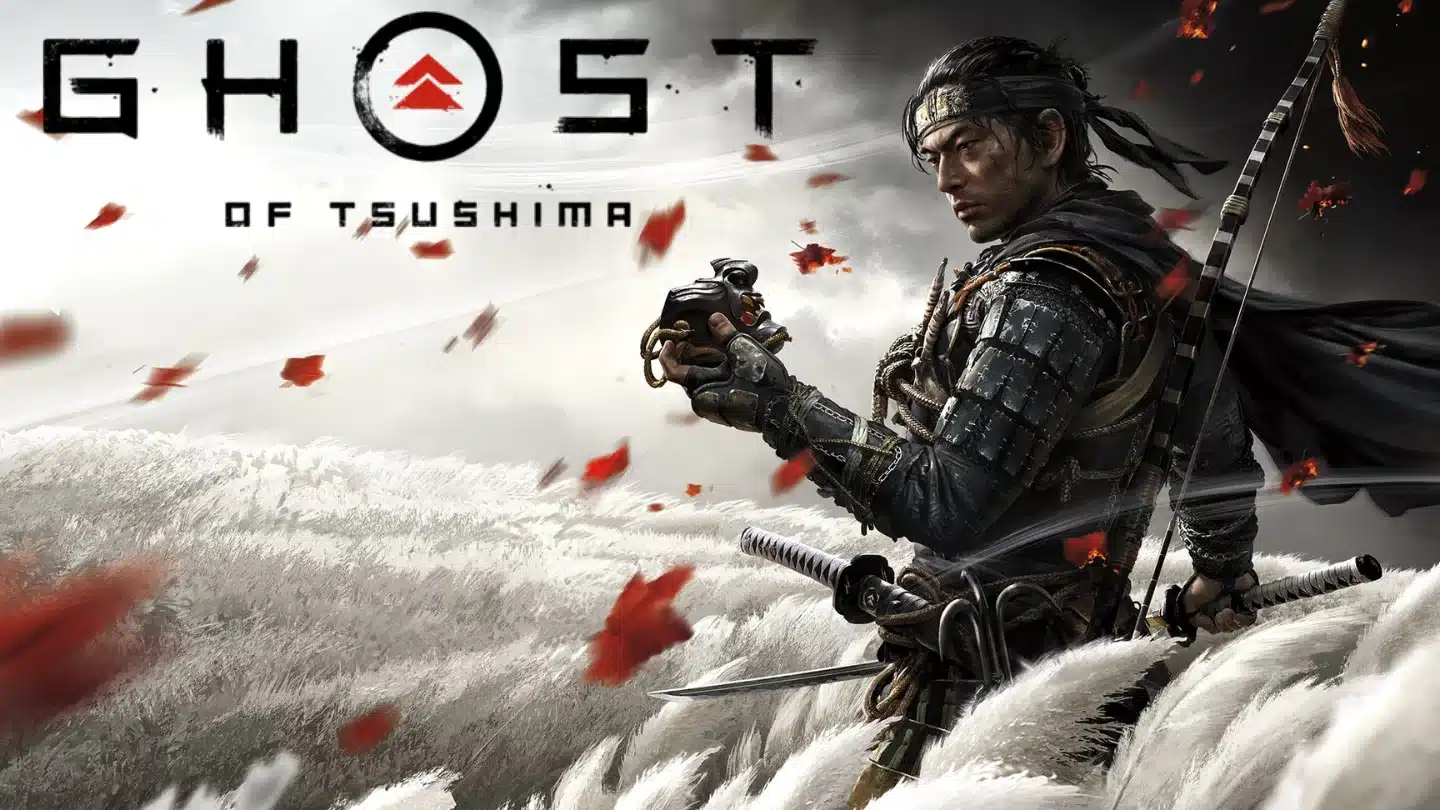
I started Ghost of Tsushima expecting a fast-paced samurai fantasy filled with magic and larger-than-life battles. Instead, I found a grounded story built around honor, sacrifice, and survival. That surprise completely changed how I looked at the game.
It has some of the best sword combat I’ve played, but it also has flaws that are easy to overlook when people only focus on the praise. If you’re searching for a Ghost of Tsushima review that’s honest about both, this one’s for you.
I’ll share what stood out, what fell short, and who will enjoy it most.
What Ghost of Tsushima Is Actually About?
Ghost of Tsushima is a historical action-adventure by Sucker Punch Productions, set during the real 1274 Mongol invasion of Tsushima Island. I went in expecting fantasy, and it’s nothing like that.
That historical grounding changes the tone immediately. The invasion actually happened, the island fell, and the game carries that weight into every scene without softening it.
You play as Jin Sakai, a samurai trained in honor and discipline. When the Mongols overwhelm the defenses, surviving means fighting dirty: ambushes, poison, fear tactics a samurai isn’t supposed to touch.
That conflict between who Jin was trained to be and what he becomes isn’t a gimmick. It’s the engine the entire story runs on, and I didn’t expect it to hit as hard as it does.
If you’re coming from Nioh or Sekiro expecting something supernatural, recalibrate. There’s no magic system here, and the tone is closer to a classic samurai film.
This review covers the base game; the Ghost of Tsushima Director’s Cut adds Iki Island, and Legends launched separately.
What Makes the Combat Work?
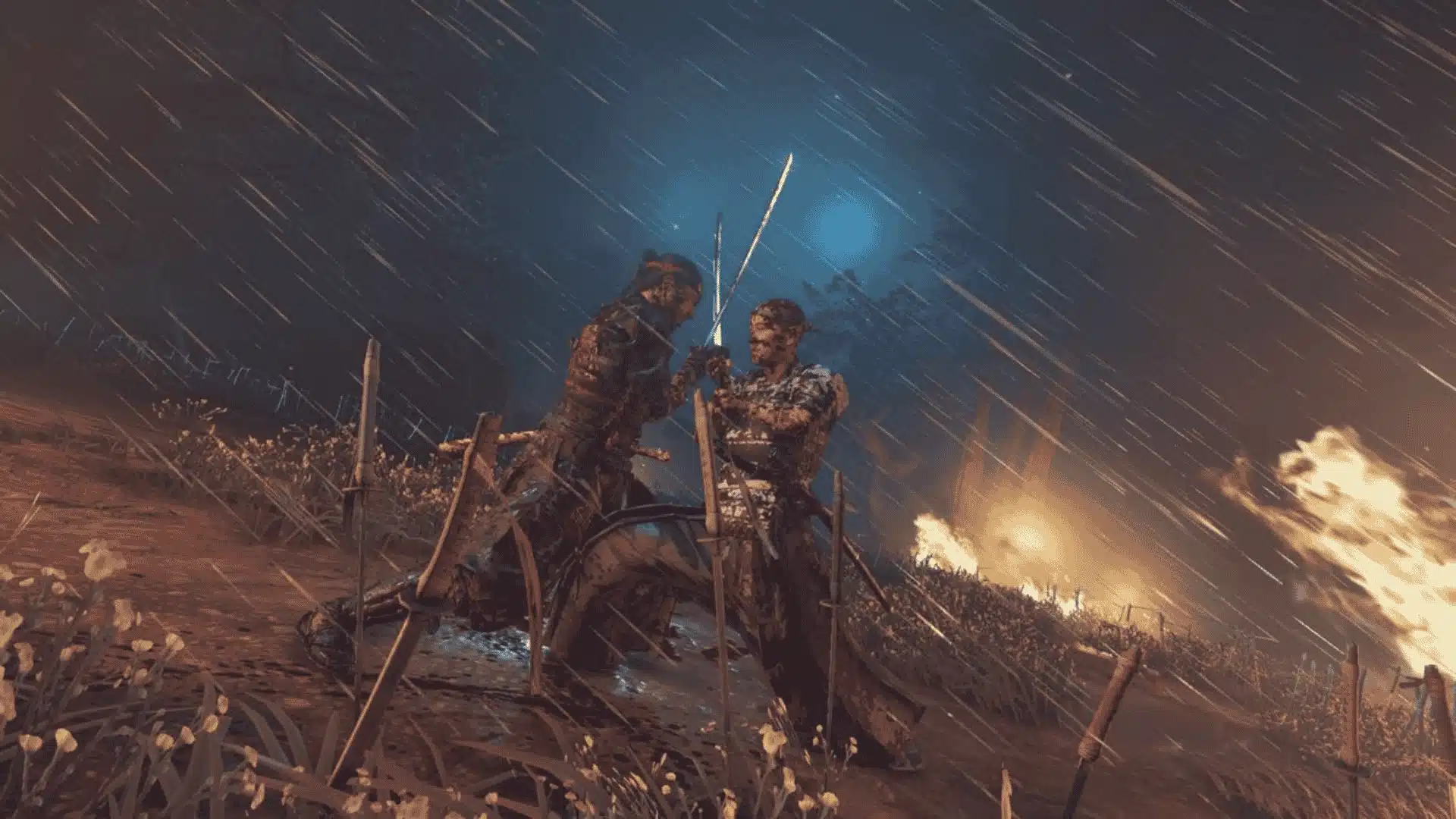
Ghost of Tsushima’s swordplay feels cinematic because the system teaches you not through tutorials, but through punishment and repetition.
The inputs are simple. The decisions underneath them aren’t.
The Stance System
There are four stances, each designed to counter a specific enemy type. Getting the read right is what separates fluid combat from getting punished repeatedly.
| Stance | Built For | What It Does |
|---|---|---|
| Stone | Swordsmen | Counters fast, aggressive fighters who close distance quickly |
| Water | Shield-bearers | Breaks their guard and opens them up for follow-up attacks |
| Wind | Spearmen | Disrupts their range advantage before they can use it |
| Moon | Brutes | Handles heavy enemies who absorb normal attacks easily |
You don’t pick stances after the fight starts. You read the enemy before you engage: weapon shape, armor, and posture all signal the enemy’s type.
Get the read right, and the attack window opens cleanly. Get it wrong, and you absorb the hit. That feedback loop is what makes the system feel intentional rather than shallow.
I was constantly punished in the first few hours for ignoring enemy signals. Once I started reading posture before engaging, the combat shifted from reactive to controlled.
Standoffs, Parries, and the Samurai Film Feel
Most major encounters let you open with a standoff, one high-stakes moment that sets the tone before the fight fully begins.
- Wait for the enemy to commit, then counter at the exact right frame
- Land it, and you drop one or two enemies before the brawl starts
- Miss it, and you’re immediately on the back foot with no buffer
Parrying follows the same rhythm: precise timing, clean reward, real cost if you’re late. Both mechanics push combat toward something deliberate.
Once both clicked for me, fights stopped feeling like button sequences. They started feeling like scenes.
Ghost Weapons and Stealth Tools
Ghost weapons sit alongside the swordplay as situational tools, not replacements. Knowing when to use them is what makes the combat system feel complete.
- Kunai: quick multi-target throw, useful for interrupting grouped enemies fast
- Smoke bombs: create instant disengagement or repositioning room mid-fight
- Sticky bombs: slow, high-damage, best against single armored targets
- Half-bow: ranged option for picking off enemies before closing in
These tools work best when used to control the shape of a fight, not avoid it. I rarely needed them against one or two enemies.
The game never pushes you to rely on ghost tools over direct combat. They add flexibility without changing what the combat is actually about.
The combat works because every layer reinforces the same loop: read, decide, commit; the Resident Evil Requiem review takes that same loop into horror. The system is simple; the execution isn’t.
The World, Exploration, and How the Game Guides You?
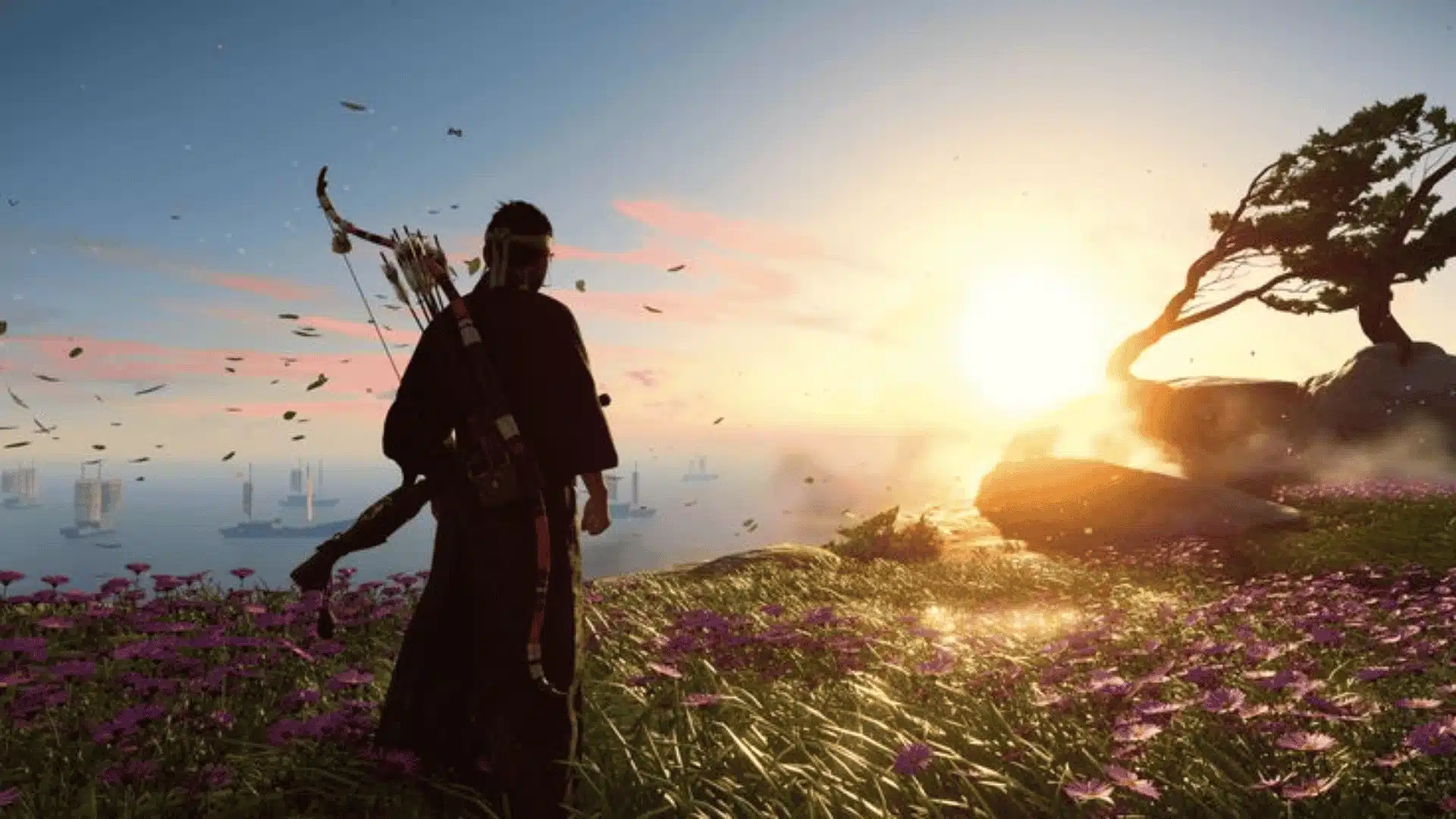
The world in Ghost of Tsushima isn’t just a backdrop. It’s the navigation system. Once that clicked for me, I stopped missing the minimap entirely.
Each section below covers a different layer of how the game moves you through its world.
How Does the Guiding Wind Replace the Minimap?
You swipe the touchpad, and wind sweeps across the screen, pointing you toward your objective. Your eyes stay on the world, not a corner icon.
That’s the core of it, but the system goes further than one mechanic.
- Golden birds appear near points of interest and fly toward them when you follow
- Foxes lead you to hidden shrines tucked into the landscape
- Smoke on the horizon marks enemy camps; weather shifts signal area transitions
- Color does real navigation work; warm light pulls you toward story moments
I spent the first hour swiping constantly, waiting to feel lost. I never did. The friction is front-loaded and gone within the first region.
The world is built so that looking around is always more useful than looking at a HUD. That’s not a design accident. It’s the whole philosophy.
Kurosawa Mode and What It Actually Changes?
Kurosawa Mode converts the game to black-and-white with a film-grain overlay and degraded audio. It’s a direct nod to Akira Kurosawa’s classic samurai films.
You enable it from the display settings before or during a playthrough. It works across the entire game.
- Visuals shift to high-contrast black-and-white with intentional grain
- Audio gets a slightly muffled, vintage quality that changes the feel of dialogue
- Combat feels slower and more deliberate, and the visual noise strips away the color cues
- Story scenes carry noticeably more weight without color pulling focus
I switched it on midway through Act 1, expecting a novelty. I kept it on for the rest of the game. It changes the pacing more than the visuals. Everything feels considered in a way the standard mode doesn’t quite produce.
Mythic Tales and the Side Content Worth Doing
Mythic Tales are the one category of side content I’d tell anyone to prioritize. They don’t appear on the map. You find them by talking to musicians out in the world.
That discovery mechanic alone separates them from everything else.
- Each tale is tied to a legendary warrior or weapon with its own backstory
- They play out across multiple locations, not a single point on a map
- Rewards are substantial, techniques like Heavenly Strike or armor sets you can’t get anywhere else, the kind that change how you approach entire fights
- The storytelling quality is noticeably higher than standard side missions
I found my first one by accident, following a shamisen player’s music through a forest. It led to one of the best sequences in the game. If you only do one category of side content, make it these.
They’re built differently from everything else in the open world.
The Story and Jin’s Character Arc
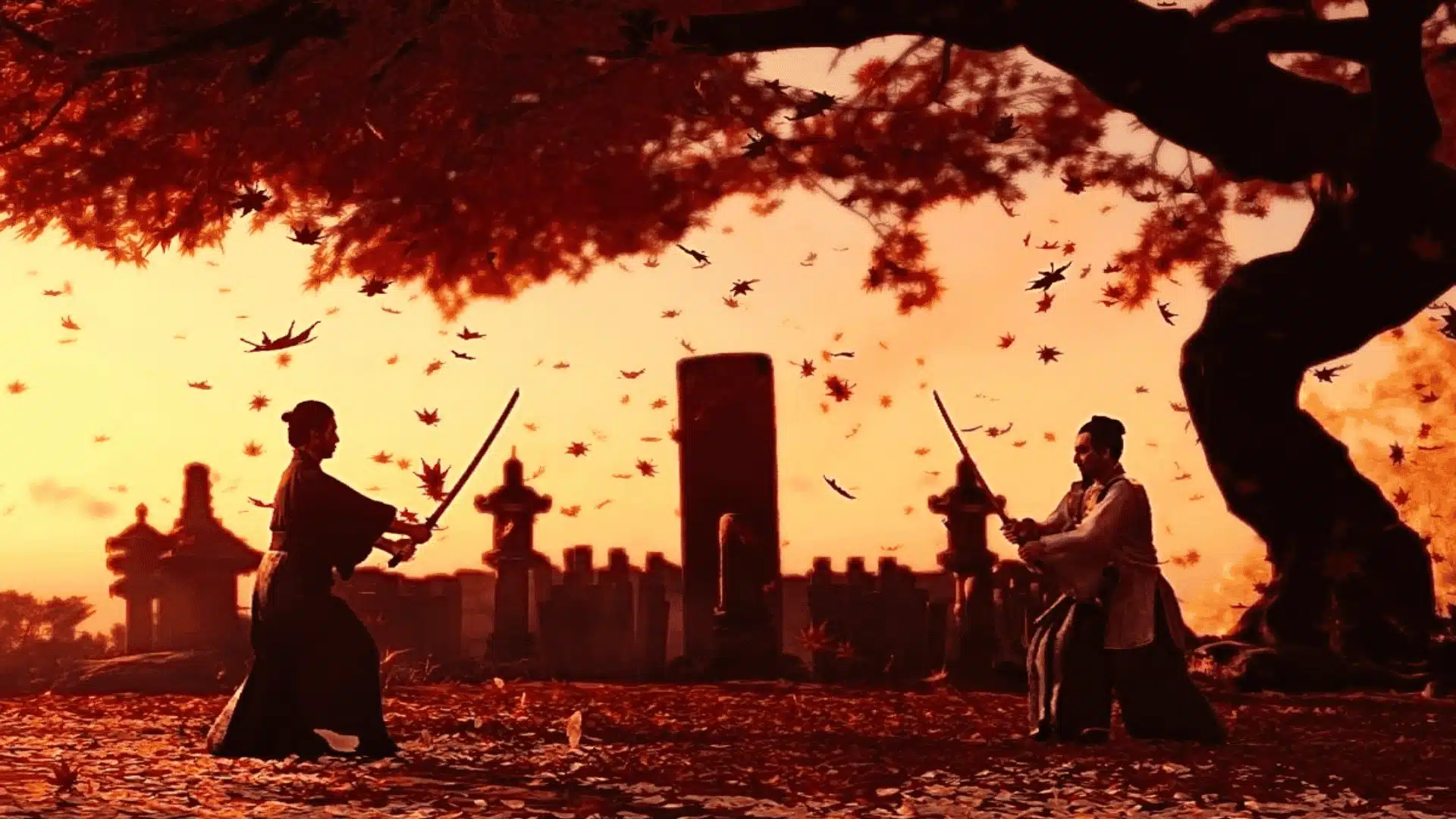
Ghost of Tsushima’s story is good, not because it’s complex, but because it commits fully to what it’s trying to be. It’s built like a classical samurai film, deliberately, not by default.
Jin starts as a samurai with a clear code: honor, discipline, direct confrontation. The Mongols dismantle that in the opening hours, and what follows is Jin becoming something his training never prepared him for.
Every ghost technique you unlock carries a small moral cost. The game layers those costs quietly across all three acts, and I didn’t notice how much that accumulation was affecting me until late in Act 2.
By then, I was already invested in a way I hadn’t expected from a game I’d picked up mostly for the combat.
The Jin and Shimura relationship is where the story earns its weight. Here’s what makes it work:
- Their conflict isn’t about strategy or the war; it’s personal and unresolvable
- Shimura represents everything Jin was and can’t accept what Jin is becoming
- Jin respects Shimura completely, which makes every disagreement cost something
- The tension builds across all three acts without needing a dramatic confrontation
I went into this expecting a serviceable story wrapped around good combat. The Shimura thread genuinely surprised me.
Where the story doesn’t hold up is outside that central relationship. The gaps are real and worth knowing about:
- Supporting characters get interesting setups but underdeveloped resolutions
- Khotun Khan is threatening and functional as a villain, but not much deeper
- Side character arcs feel rushed, especially in Acts 2 and 3, when pacing accelerates
The broader story loses momentum whenever it moves away from Jin and Shimura. The game seems to know this and keeps pulling focus back to that thread.
The story isn’t trying to match the narrative complexity of other PlayStation exclusives. It’s chasing tone, and it holds that tone more consistently than almost anything else I’ve played.
The story won’t surprise you with complexity, but if you let it work on its own terms, it earns its ending more than most games manage.
Where Does Ghost of Tsushima Lose Its Footing?
Ghost of Tsushima is repetitive, and that’s a fair complaint. The real question is why: the map density, camps, collectibles, and side activities were built for completionists.
It wasn’t designed for players who want variety across every hour. When you chase every marker, the padding is real and unavoidable.
When you treat that content as optional texture and stay close to the main story and Mythic Tales, the pacing holds. The flaw isn’t bad design. It’s a mismatch between how the game was built and how most players engage with open worlds.
I learned this the hard way, about 25 hours in, wondering why the game suddenly felt like a checklist.
The Open World Padding Problem
Ghost of Tsushima is repetitive because its side content reuses the same structural templates across a very large map. Liberate a camp, find a collectible, complete a short task, repeated dozens of times.
The problem gets worse in Act 2. Players pushing for full completion hit a wall of samey content before the story reaches its emotional peak in Act 3.
The game never signals that skipping side content is valid. That absence causes a burnout pattern that colors the overall verdict, not because Act 3 is weak, but because most players arrive there already exhausted. Knowing this before you start changes everything.
If you’ve played Assassin’s Creed and the rhythm feels familiar, you’re not imagining it. Ghost of Tsushima runs on the same skeleton: liberate a camp, grab a collectible, unlock the next fast-travel point.
Sucker Punch dresses that checklist in better swordplay and stronger cinematography, but the loop underneath, tower-then-sweep, camp-then-loot, is the one Ubisoft has been shipping for over a decade.
If that formula burned you out on Valhalla or Odyssey, know that going in. The Guiding Wind and Kurosawa Mode change how the padding feels. They don’t change how much of it there is.
Stealth Is Functional, Not Deep
The ghost playstyle gives you real tools: smoke bombs, distractions, and assassination chains. They work cleanly, and the game never breaks when you lean on them.
But stealth doesn’t have the same feedback loop as sword combat. There’s no read-and-react layer, no equivalent of the stance system creating decisions under pressure before each engagement.
Enemy AI makes it easier than it should be. Guards have short detection ranges and predictable patrol patterns. I cleared the entire camps without feeling challenged once I understood the spacing between them.
Animation and Enemy AI
Outside of combat, the animation work shows its limits. Cutscene facial expressions are stiff, and character movement during dialogue lacks the fluidity the action sequences deliver consistently.
It doesn’t break immersion completely, but it creates a gap between the cinematic ambition of the story and the technical execution supporting it. That gap widens in quieter, more intimate scenes.
Enemy AI has the same ceiling. In structured combat encounters, enemies are aggressive and easy to read. Outside of those, their behavior gets inconsistent. I had guards lose track of me in ways that felt more like oversights than design choices.
Ghost of Tsushima’s weaknesses are real, but almost all of them are avoidable once you understand what kind of game you’re actually playing.
Is Ghost of Tsushima Worth Playing in 2026?
Ghost of Tsushima is worth playing in 2026, but whether it’s right for you depends entirely on what you’re bringing to it. I’ll give you a straight answer by player type.
- If combat depth and cinematic feel are what you’re after, it’s an easy yes. The stance system and swordplay held up for me across 40 hours, and nothing about the combat felt dated by the end.
- Want a dense, complex narrative instead? Adjust your expectations going in. The story earned its ending for me, but it won’t surprise you structurally; it’s classical, not layered.
- If you compulsively complete open worlds, I’d warn you directly: I pushed through full Act 2 completion and arrived at Act 3 already drained. Skip the map markers. The main path is enough.
- And if you’re coming from Sekiro or Nioh expecting a FromSoftware-level challenge, recalibrate before you start. This game is more accessible and less punishing; the combat rewards you, but the difficulty ceiling is lower.
The PS5 version offers the smoothest experience, with faster load times, haptic feedback, and adaptive triggers. I noticed the difference immediately, coming from the PS4 version.
The PS4 version works but sits noticeably behind on load times and visual fidelity. If you have a choice, the PS5 is worth it.
On version, buy the Director’s Cut if you’re purchasing new. It includes Iki Island, a separate story region with roughly 10–15 additional hours, and the price difference is marginal.
Ghost of Tsushima has previously appeared in the PS Plus catalog. Check the current lineup before purchasing, as availability shifts.
The Steam version launched in 2024 at $59.99, but it’s now two years old and regularly drops to $25–30 during sales, so there’s rarely a reason to pay full price.
The game rewards players who meet it on its own terms. I went in with the wrong expectations twice before it clicked, and once it did, I didn’t want it to end.
Conclusion
After spending dozens of hours with Ghost of Tsushima, I still think the game deserves its strong reputation, but not for the reasons many people expect.
Its combat, atmosphere, and central story stayed with me long after the credits rolled. At the same time, the repetitive side content and simple stealth system kept it from feeling perfect.
If you focus on the main story and the best side quests, the experience is much stronger. I believe that’s the best way to enjoy it.
Have you played Ghost of Tsushima, or are you planning to? Share your thoughts in the comments.
Frequently Asked Questions
Is Ghost of Tsushima Based on a True Story?
The 1274 Mongol invasion of Tsushima Island is a real historical event. Jin Sakai and all main characters are fictional. Sucker Punch used the setting for tone rather than documentation.
How Long Does It Take to Beat Ghost of Tsushima?
The main story runs roughly 20–25 hours. A completionist playthrough hits 50–60 hours. For a first run, stick to the main story and Mythic Tales, and skip most map markers.
What Is the Difference Between Ghost of Tsushima and the Director’s Cut?
The Director’s Cut includes the base game plus the Iki Island expansion, a new region and story arc adding roughly 10–15 hours. It also includes PS5-specific enhancements like haptic feedback and faster load times.
How Does Ghost of Tsushima Compare to Sekiro?
Both are set in feudal Japan with melee-focused combat, but they play very differently. Sekiro punishes and demands mastery. Ghost of Tsushima is more accessible, cinematic, and story-driven throughout.