
Some Resident Evil games focus on slow, nerve-racking horror, while others lean into fast action.
Resident Evil Requiem tries to bring both styles together into a single story, making it one of the series’ most interesting entries in years.
I went in expecting one approach to outshine the other, but the game surprised me more than once. Some moments kept me tense, while others encouraged me to fight head-on.
This Resident Evil Requiem review looks at how those two ideas work together, where the game succeeds, where it struggles, and who will enjoy the experience the most.
What is Resident Evil Requiem and Who Is It For?
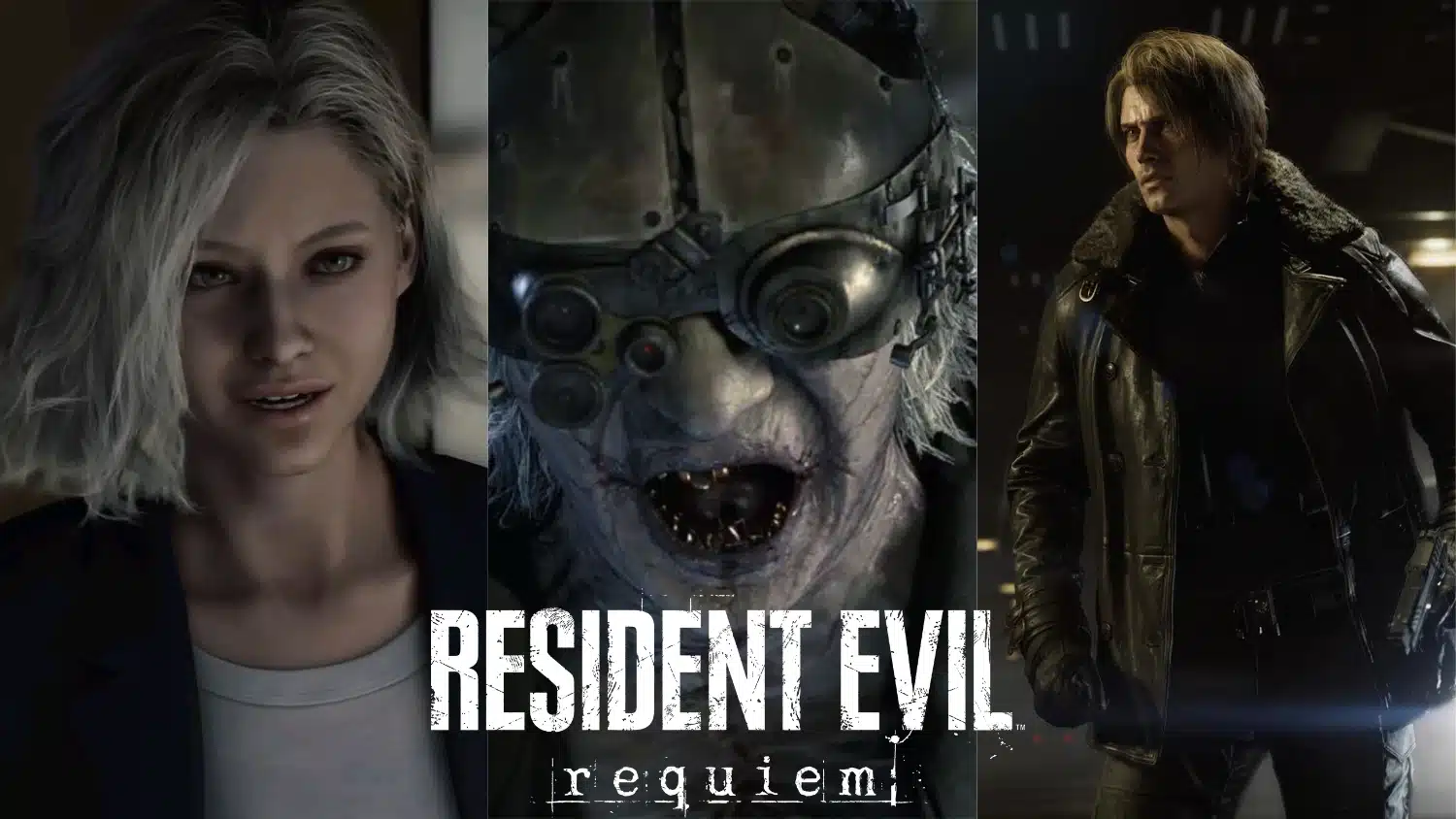
Resident Evil Requiem is a mainline Capcom survival horror game released in early 2026. It puts two playable protagonists, FBI analyst Grace Ashcroft and series veteran Leon S. Kennedy, through a single campaign with two distinct play styles.
Grace’s sections are built around fear and scarcity. Leon’s are loud, action-heavy, and deliberately over the top.
Capcom designed this for two audiences at once: survival horror fans and action-RE fans.
Similar audience splits have appeared in other major releases, including reviews of Avatar Frontiers of Pandora, where players were equally divided over the game’s design priorities. New players can start here without prior knowledge.
But if you’ve been with this franchise a while, you’ll get significantly more out of it.
How Do the Two Playstyles Actually Work?
Grace and Leon play like two different games stitched into one, and once I understood that was intentional, everything clicked. The mechanics aren’t just tonal shifts; they’re built on opposite design logic.
Grace Ashcroft: Survival Horror Mechanics

Grace’s sections run on scarcity. Ammunition is rare, healing items are limited, and the game doesn’t quietly replenish your supplies between encounters.
That scarcity changes how you move. You stop treating enemies as problems to solve and start treating them as threats to avoid.
Stealth isn’t a bonus option in Grace’s chapters; it’s the primary tool. Running low on resources forces you to rethink routes and timing, and to accept that not every fight is winnable.
The environments reinforce this. Tight spaces and unpredictable patrol patterns mean one mistake can spiral fast. Grace’s sections felt closest to Resident Evil 7 to me, slow, pressured, and genuinely uncomfortable in the best way.
Leon S. Kennedy: Action Horror Mechanics

Leon’s chapters remove almost every constraint Grace operates under. Ammunition is plentiful, enemies are meant to be engaged, and the tone shifts hard into B-movie spectacle.
Big set pieces, cheesy one-liners, combat that rewards aggression – it’s a deliberate tonal flip.
Where Grace made me feel exposed, Leon made me feel capable. That shift is intentional, and it matters for how the two halves interact.
The switch between protagonists isn’t eased in gradually. Capcom cuts between them abruptly, and honestly, once I stopped expecting a smooth transition, it started to make sense.
Does the Tonal Contrast Work or Does it Break the Game?

The dual-tone structure works when the pacing lets each mode breathe, and breaks down when a chapter overstays its welcome.
When the rhythm is right, the two styles genuinely feed each other:
- Grace builds the pressure first. Scarce resources and slow dread create real tension.
- Leon burns through it. His action-heavy chapters spend that tension deliberately, like a release valve.
- Then you’re back with Grace, and the fear feels earned again, because Leon just spent it.
Each mode recovers the emotional ground the other one used up.
The breakdown happens when a chapter runs too long. Once you’ve fully settled into one register, the switch doesn’t feel like a gear change; it feels like starting over.
That’s not a design flaw. It’s a pacing issue, and I noticed it more in the back half than the front.
Your history with the franchise also shapes how you receive it:
- RE7 fans tend to treat Grace’s sections as the emotional core
- RE4 fans feel most at home in Leon’s chapters
- Neither group experiences the switches the same way
I came in closer to the RE7 side, so Grace’s chapters hit harder for me. But I never found Leon’s sections unwelcome, just different.
Capcom accepted this trade-off knowingly. Most players find a rhythm with it by the midpoint.
The Nostalgia Question: Homage or Safe Bet?

Requiem brings back Mr. X, classic environmental settings, and legacy threats, and that’s exactly where critical opinion splits. Longtime fans call it earned payoff. Others call it recycling.
I understood both reactions the moment those callbacks hit. If you’ve put hours into this franchise, they land with real weight. If you haven’t, they’re just references to things you weren’t there for.
The nostalgia here isn’t incidental; it’s structural. Here’s what that actually means in practice:
- Leon’s presence does real work here. Pairing him with Grace makes her unfamiliar mechanics feel safer for returning players.
- The dual-protagonist framing is itself a callback, since pairing a new character with a beloved one is a security blanket, not just a story choice.
- Even the legacy threats aren’t decoration. They’re placed exactly where the game needs emotional weight fast.
Grace herself proves how deliberate this is. She’s the daughter of Alyssa Ashcroft, a survivor character from the series’ old Outbreak spin-off games. Even the “new” protagonist is built on a callback most players never played.
That’s what makes this debate hard to settle cleanly. Critical opinion actually splits along those lines. GamesRadar+ pushed back on calling it nostalgia bait, framing the callbacks as closure for old storylines instead.
Niche Gamer went the other way, arguing that the fan service gets jammed in at the expense of anything new. That divide frustrated some people and satisfied others, depending entirely on what they came in wanting.
For me, the callbacks worked more than they didn’t. But I can see exactly where someone wanting genuine series evolution would feel shortchanged.
The real question isn’t whether Capcom leaned on nostalgia. They clearly did. The question is whether comfort is the right goal for a franchise at this stage, and Requiem doesn’t try to answer that for you.
Should You Play Resident Evil Requiem?
Yes, but who you are as a player determines how much you’ll get out of it. Here’s how I’d break it down: The game is built for a specific kind of Resident Evil fan. Where you land on this list matters:
- If you loved RE7 and RE4 Remake, this is made for you. Requiem pulls from both and balances them better than most expected.
- New to the series? The mechanics are solid enough to enjoy, but the emotional payoff of the callbacks won’t land the same way.
- Pure horror fans will find plenty to like in Grace’s sections, though Leon’s chapters will test your patience.
- Action-RE fans get the opposite problem. Grace’s slow burn may feel like an interruption rather than a feature.
I’d recommend it to most players without hesitation. The one honest warning is this: if hard tonal switches bother you, go in prepared rather than surprised.
Conclusion
After finishing the campaign, I came away feeling that Resident Evil Requiem deserves review discussions because the game takes a bold approach without losing what makes the series memorable.
Grace and Leon offer very different experiences, and that contrast keeps the campaign fresh even when the pacing slips in a few places.
It may not satisfy every fan in the same way, but it delivers a strong mix of horror, action, and familiar moments that are worth seeing for yourself. If you’ve already played it, share your thoughts in the comments and let others know which protagonist you enjoyed most.
Frequently Asked Questions
Is Resident Evil: Requiem a good game?
Yes. It holds strong scores across outlets, and most reviewers call it well-crafted, consistently enjoyable, and one of the better recent franchise entries.
Is Resident Evil: Requiem actually scary?
Grace’s chapters are genuinely tense and stealth-driven. Leon’s are deliberately lighter. How scary it feels depends entirely on which sections you’re currently playing.
How long is Resident Evil: Requiem?
A first playthrough runs between 10 and 15 hours. Additional modes and replay incentives extend total playtime comfortably beyond the main campaign.
Do you need to play previous Resident Evil games first?
Not strictly. The core gameplay is accessible to newcomers, but returning players will get significantly more from the legacy callbacks and character moments.