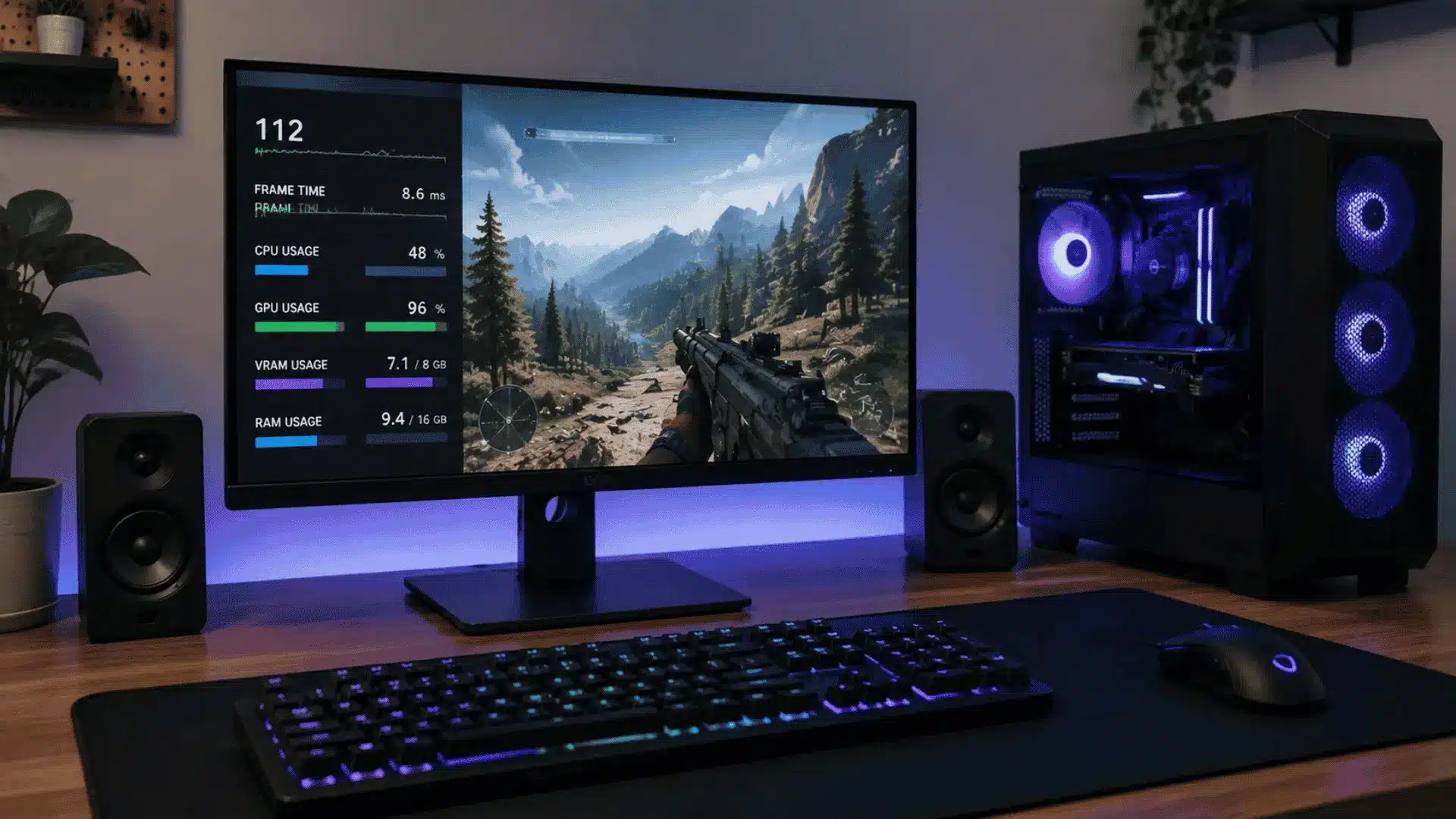

I used to think gaming hacks were all about cheats and shortcuts until I realized the term covers much more. Some methods simply help games run better, while others can put an account at serious risk.
That difference matters more than most players realize.
When I started reading about gaming hacks TheHaketech, I found a mix of safe performance tips, hardware tweaks, and discussions about risky exploits.
Knowing which is which helped me make smarter choices without risking the games I enjoy. A few small changes improved my setup, while avoiding unsafe tools saved me from problems I never wanted to face.
What Are Gaming Hacks on TheHaketech?
When I talk about “gaming hacks” on TheHaketech, I’m really talking about two very different things. It covers legitimate performance tips, hardware setups, PC tweaks, keybind configuration choices, and code-level exploits that modify how a game runs.
The optimization side is about playing smarter within the rules. Better cable management, smarter storage use, and display settings that match my monitor’s capabilities.
None of it touches game files. None of it puts my account at risk. The exploit side is a completely different story.
It involves third-party software, memory editing, and real consequences, including permanent bans. It exists, and it’s important to understand how it works and the risks that come with it, but it’s not usually what I’m looking for.
Common Types of Gaming Hacks TheHaketech Covers

Gaming hacks can mean very different things depending on the context. Some help improve your gaming setup or performance without breaking any rules, while others change how a game works and can violate its Terms of Service.
1. Performance Optimization
Performance optimization focuses on making games run more smoothly without changing game files.
Common methods include updating graphics drivers, adjusting in-game sensitivity settings, enabling the correct monitor refresh rate, and closing background apps that use system resources.
These changes can reduce lag, improve frame rates, and create a more responsive gaming experience while staying within the game’s rules.
2. Hardware Tweaks
Hardware tweaks improve gaming by making better use of your equipment.
Upgrading to an SSD, using a high-refresh-rate monitor, reducing mouse cable drag with a cable bungee, and connecting devices through faster USB ports can all improve responsiveness.
These changes affect your hardware setup instead of the game itself, making them a safe way to improve overall performance.
3. Mods
Mods are player-made changes that add new content, improve graphics, or change gameplay. Many single-player games officially support mods through built-in tools or trusted community platforms.
Before installing any mod, check the game’s rules because some online and multiplayer games do not allow them. Using approved mods helps avoid compatibility issues or account penalties.
4. Cheats
Cheats use unauthorized software or code to gain an unfair advantage in a game. Common examples include aimbots, wallhacks, speed hacks, and memory editing tools.
Most multiplayer games use anti-cheat systems to detect these activities, and breaking the game’s Terms of Service can result in account suspensions, permanent bans, or, in some cases, hardware restrictions.
Legitimate Gaming Hacks: PC Tweaks and Hardware

Most performance problems aren’t about hardware limits; they’re friction points like cord drag, slow load times, or a monitor running below its rated refresh rate, and small PC performance tweaks usually close that gap faster than new hardware does.
| Area | Problem | Solution/My Approach | Impact |
|---|---|---|---|
| Peripheral and Cable Setup | Mouse cord drag creates micro-resistance | Used cord weights, cable bungees, and proper routing | Smooth, precise movement; instant physical improvement |
| Storage and Device Management | Slow load times break rhythm | Moved games to a fast external SSD when needed while keeping my primary drive organized | Faster load times and better storage flexibility; a USB 3.2 SSD performs well, though an internal NVMe SSD is usually faster |
| Display and Refresh Rate Optimization | Monitor frame cap is lower than the GPU output | Set the monitor to the native refresh rate; match the in-game frame cap | Reduced input latency; gameplay feels immediate; gains vary beyond 144 Hz |
By addressing these friction points, I unlocked performance already in my hardware, improving responsiveness and the overall gaming experience without touching any game files.
Getting the Most Out of Gaming Hacks: TheHaketech
Over time, I’ve realized that the real value in gaming hacks TheHaketech offers isn’t about shortcuts or exploits; it’s about understanding how to make my setup work smarter. The site isn’t just a list of tweaks; it’s a roadmap to getting the most out of the hardware and software I already own.
- Learn the fundamentals: I focus on guides that explain why a tweak matters, not just how to apply it. Knowing the “why” helps me make better choices across games.
- Prioritize safety: Whenever a guide mentions third-party software, I double-check whether it’s a legit optimization or a risky exploit. I only apply what won’t jeopardize my account or device.
- Track results: I keep notes on what changes actually improve gameplay, like a slight refresh rate adjustment or reorganizing storage. Seeing measurable improvement keeps me from wasting time on ineffective hacks.
- Stay updated: Games update constantly, and so do performance tips. I follow the latest gaming hacks from TheHaketech to keep my setup up to date without risking a ban.
By treating gaming hacks in TheHaketech as a toolkit rather than a cheat sheet, I’ve boosted my performance, reduced frustration, and leveled up my gaming experience safely.
The Exploit Side: How Code-Level Cheating Actually Works
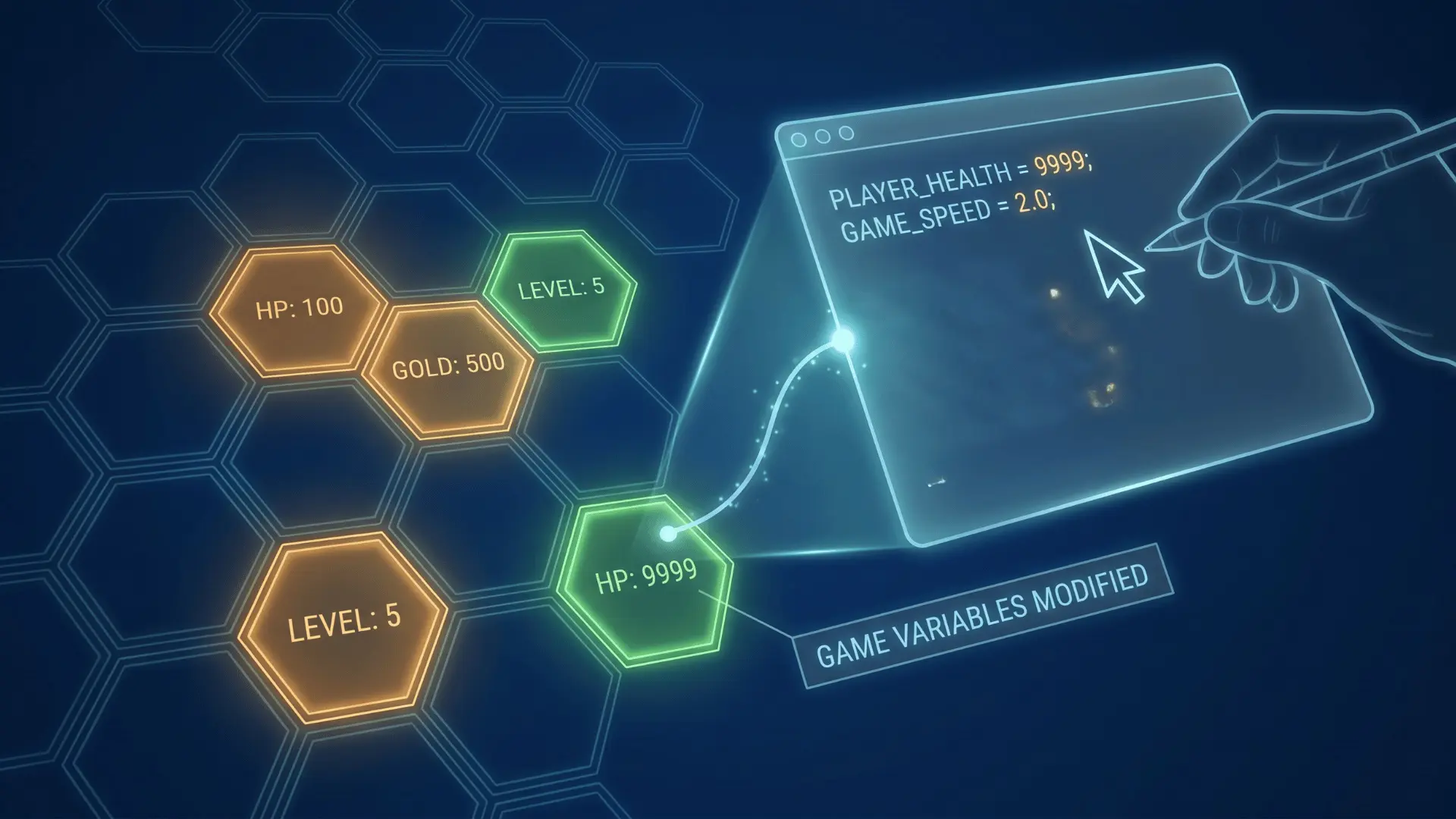
Many game variables exist in my system’s memory while the game is running, although modern online games often verify important information on secure servers to prevent cheating.
Tools like Cheat Engine can scan certain client-side memory values, locate them, and attempt to modify them. Key points about code-level cheating and its risks:
- Memory manipulation: Tools such as Cheat Engine can locate certain client-side values in memory and attempt to modify them.
- Detection: Modern anti-cheat systems monitor for suspicious memory access, code injection, driver activity, and other behaviors linked to cheating. Detection methods vary by game, so not every external process automatically results in a ban.
- Consequences: Bans often go beyond accounts, affecting the hardware itself.
- Hardware fingerprinting: Some anti-cheat systems use a combination of hardware identifiers, making it difficult to bypass a hardware ban simply by creating a new account.
Anti-cheat software doesn’t just scan for cheat files. It actively monitors processes that read and write to game memory. While my game writing to its own memory is normal, any separate external process doing the same triggers a flag.
Why Anti-Cheat Systems Detect Cheats
Riot Vanguard and Easy Anti-Cheat operate at the kernel level. They run beneath most system software, at a layer where external tools can’t hide.
User-space programs can sometimes hide activity from other applications, but kernel-level anti-cheat operates with much deeper system access.
This allows it to detect many suspicious interactions with protected game processes that standard applications may miss.
When I get caught, the consequences can be permanent and broader than expected. A hardware ban doesn’t just target my account; it can also restrict the device I use.
Some anti-cheat systems rely on a combination of hardware identifiers, making it difficult to bypass the ban simply by creating a new account. Cheating isn’t criminal in most places, but it’s not consequence-free.
By installing a game, I agree to the Terms of Service. Violating them means the publisher can revoke my access, even to games I’ve paid for, without a refund. That’s the real cost I don’t ignore.
Why Single-Player and Multiplayer Hacks Aren’t the Same Risk
Not every hack carries the same weight. Modifying a single-player save, like editing my own progress in an offline campaign, doesn’t touch anyone else’s experience. Most anti-cheat systems don’t even flag it, since there’s no competitive integrity to protect.
Multiplayer is where the line gets serious. Any edit that gives me an advantage over other players, whether it’s aim assistance, wallhacks, or resource manipulation, breaks the fairness the game depends on.
That’s the category anti-cheat is built to catch, and it’s the one that leads to bans. When I’m deciding whether something is worth the risk, this distinction usually determines the outcome.
Conclusion
Understanding gaming hacks on TheHaketech is less about finding shortcuts and more about knowing which methods are safe and worth using.
I now focus on performance tweaks, better hardware settings, and trusted gaming practices instead of risky cheats that can lead to bans. A little knowledge goes a long way when choosing what to try and what to avoid.
Taking time to understand the difference can improve gameplay while keeping your account secure. Have you tried any safe gaming optimization tips or useful hardware tweaks?
Share your experience or favorite tip in the comments; I’d love to hear what worked for you.
Frequently Asked Questions
What exactly are “gaming hacks,” and are they the same as cheats?
Gaming hacks can be legit performance tweaks or unauthorized cheats. The first improves gameplay safely, while the latter alters games and risks bans or account loss.
Can optimizing PC settings actually improve my game performance?
Yes. Adjusting refresh rates, graphics settings, storage, and hardware configurations can reduce lag, smooth gameplay, and improve responsiveness without modifying game files or risking your account.
Will using third‑party cheats or memory editors get me banned?
Yes. Anti‑cheat systems detect memory editing or unauthorized tools, leading to permanent bans on accounts or hardware, even if you create a new account afterward.
Are there safer ways to “hack” games without punishment?
Yes. Safe methods include performance tweaks, hardware optimizations, approved mods, and learning game mechanics. Avoid altering multiplayer files or giving unfair advantages to stay safe.