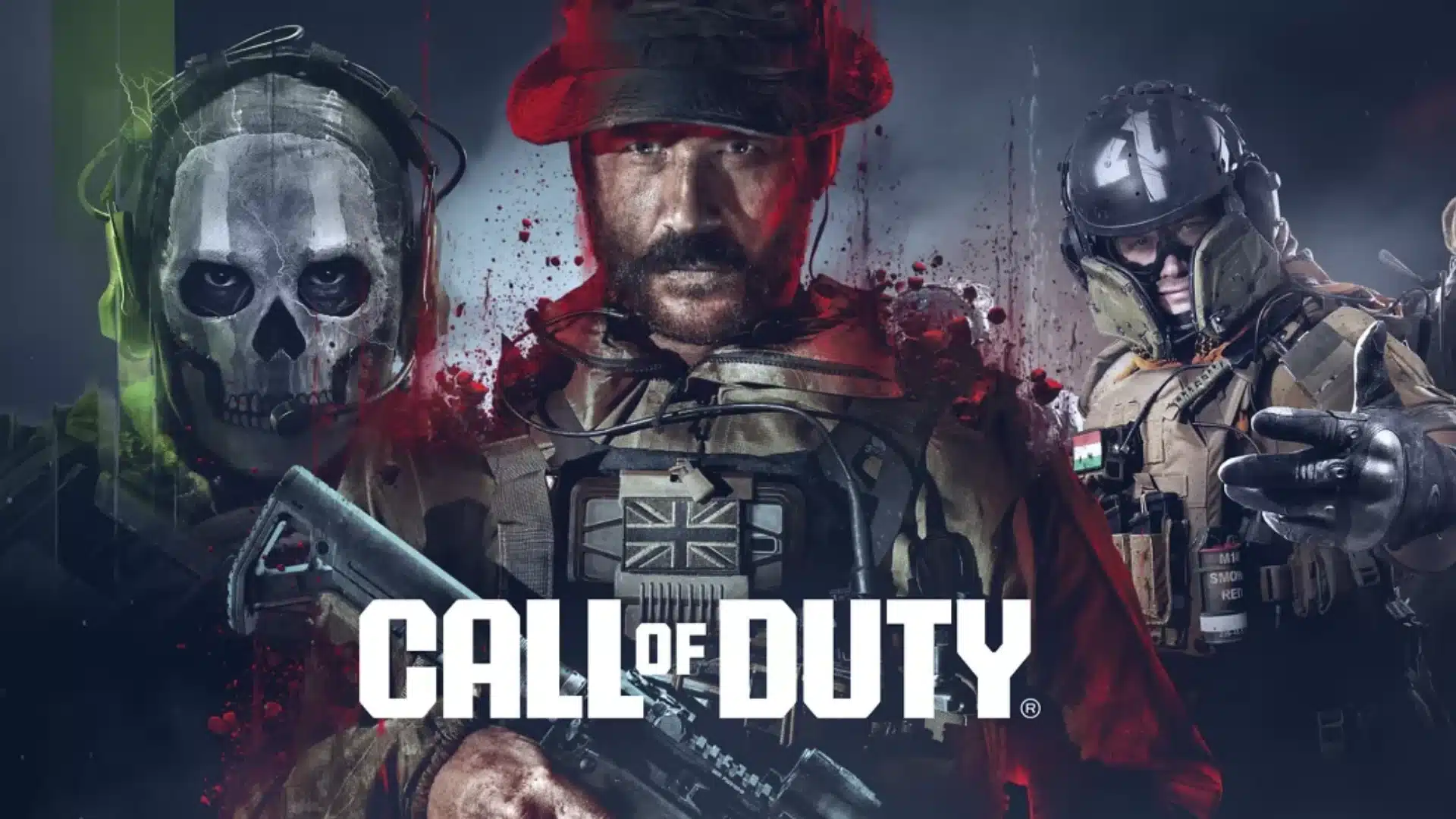
Call of Duty has spent more than two decades changing wars, timelines, and faces, so keeping every character straight can get messy fast.
One game puts you in the boots of a World War II soldier, while the next throws you into covert operations, futuristic combat, or a modern crisis.
Along the way, CoD characters and Call of Duty main characters have become just as memorable as the missions themselves, from hardened squad leaders to villains who refuse to stay gone.
Here, I’ll walk through the main protagonist, villain, and key supporting cast for every mainline release from 2003 to Black Ops 7, making it easier to see who matters, where they appear, and how each story connects.
Who are the Main Call of Duty Characters?
Call of Duty has never relied on a single hero or villain to carry the franchise.
Its character roster changes with each era, shifting from World War II soldiers to covert CIA operatives, special forces units, private military contractors, and futuristic fighters.
The Modern Warfare games are closely associated with names like Price and Soap, while Black Ops builds much of its identity around Mason, Woods, and their complicated history.
Other releases introduce casts created specifically for one conflict or timeline.
Across these campaigns, protagonists usually provide the player’s perspective, supporting characters give the squad its personality, and villains create the pressure driving each mission forward.
21 mainline releases in, that is a lot of CoD characters to track.
Statista reports the franchise has sold more than 500 million lifetime units, which helps explain why so many of these names stuck around long enough to matter.
Looking at protagonists, villains, and supporting casts separately makes the franchise’s large cast much easier to understand across its many timelines.
Call of Duty Protagonists Across Every Mainline Game
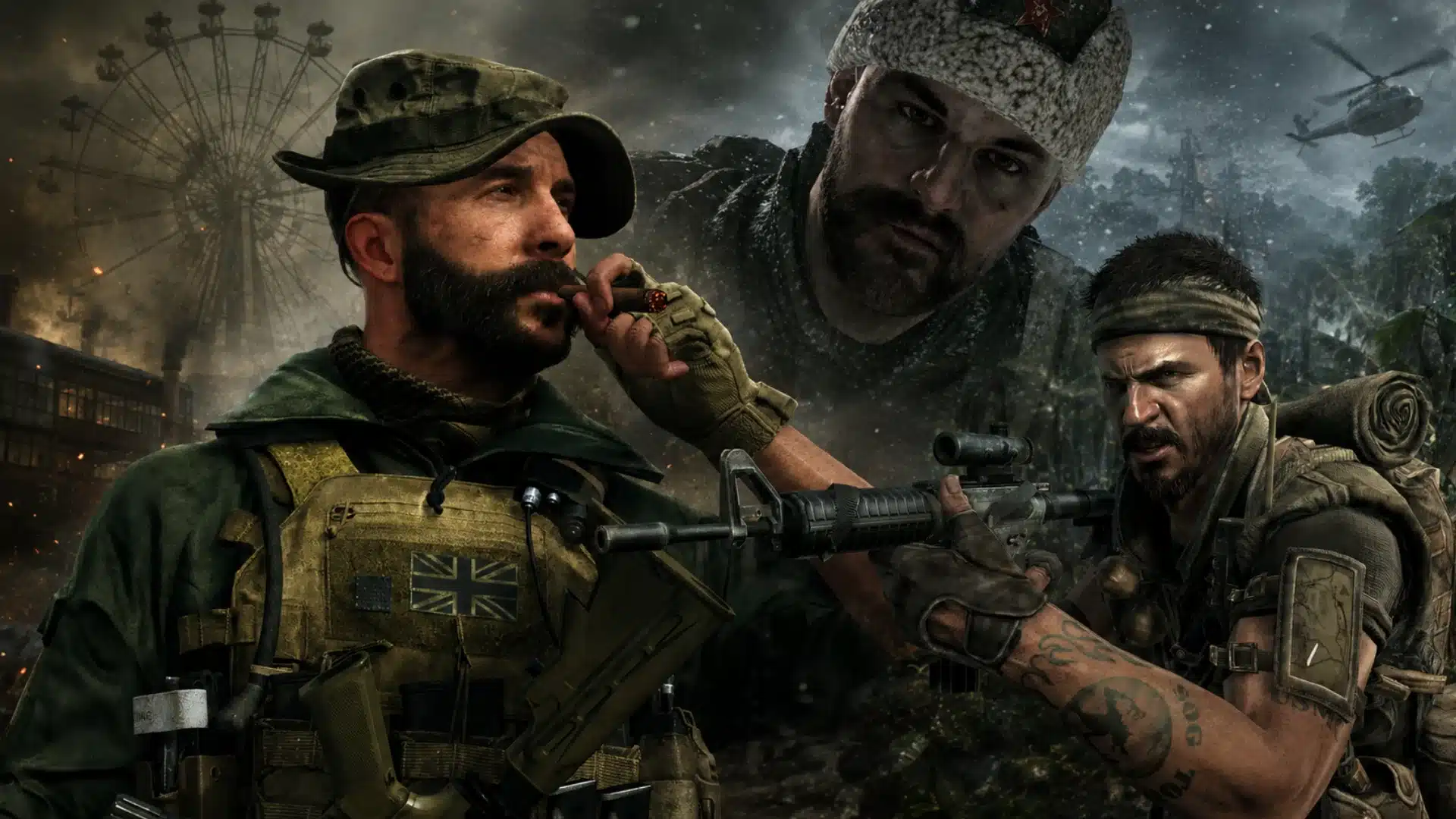
Call of Duty has constantly changed protagonists, moving between ordinary soldiers, elite operators, family legacies, and customizable agents across several wars and timelines.
My own read after tracking these rosters for years: the games that let a protagonist stay silent, like Logan Walker or the Black Ops III player character, tend to age worse than the ones built around a real voice like Price or Farah.
1. Call of Duty (2003)
The original Call of Duty divides its campaign between three Allied soldiers, using separate perspectives to show different fronts of World War II.
- American protagonist: An unnamed 101st Airborne paratrooper fights through Normandy after landing behind enemy lines during the D-Day campaign.
- British protagonist: Sergeant Jack Evans serves with British forces through missions spanning Normandy, Austria, and operations involving the SAS.
- Character approach: All three receive limited personal development because the campaign focuses more heavily on collective wartime experience than individual stories.
2. Call of Duty 2 (2005)
Call of Duty 2 keeps multiple perspectives but gives its playable soldiers clearer identities while following American, British, and Soviet operations across World War II.
- Bill Taylor: An American corporal whose campaign moves from Pointe du Hoc through major battles in France and Germany.
- John Davis: A British sergeant serving during campaigns in North Africa and Europe alongside familiar officers including Captain Price.
- Shared role: Each protagonist represents one section of the wider Allied war effort rather than carrying a deeply personal storyline.
3. Call of Duty 3 (2006)
Call of Duty 3 expands its playable roster across several Allied nations during the Normandy breakout, shifting perspectives throughout one connected military campaign.
- Private Nichols: The primary American protagonist serves with the 29th Infantry Division during the advance through occupied France.
- James Doyle: The returning British soldier participates in Special Air Service operations behind German positions.
- Cole and Bohater: Canadian and Polish perspectives widen the campaign beyond the American and British forces featured more heavily before.
4. Call of Duty 4: Modern Warfare (2007)
Modern Warfare introduces Soap MacTavish while alternating with an American Marine, establishing characters and relationships that would define the original Modern Warfare trilogy.
- John “Soap” MacTavish: A new SAS recruit who joins Captain Price’s unit while pursuing Russian ultranationalists and their allies.
- Paul Jackson: A U.S. Marine sergeant fighting through the Middle Eastern portion of the campaign against Khaled Al-Asad’s forces.
- Captain Price: Although not the main playable protagonist here, Price becomes Soap’s commander, mentor, and one of the franchise’s central figures.
5. Call of Duty: World at War (2008)
World at War alternates between American and Soviet soldiers, contrasting the Pacific campaign with the Red Army’s brutal advance toward Nazi Germany.
- C. Miller: An American Marine fighting Imperial Japanese forces through several major Pacific island battles.
- Dimitri Petrenko: A Soviet soldier who survives Stalingrad before joining the Red Army’s increasingly aggressive push toward Berlin.
- Viktor Reznov: Petrenko’s commanding sergeant becomes his closest companion and the defining personality of the Soviet campaign.
6. Call of Duty: Modern Warfare 2 (2009)
Modern Warfare 2 introduces new playable soldiers while keeping Soap and Price central to a larger conflict involving Task Force 141 and Russia.
- Gary “Roach” Sanderson: A Task Force 141 operator who carries out covert missions under Soap MacTavish and other senior members.
- James Ramirez: A U.S. Army Ranger defending American territory after Russian forces launch a major invasion.
- Soap MacTavish: Now promoted to captain, Soap moves from rookie protagonist to experienced commander and occasionally returns as a playable character.
7. Call of Duty: Black Ops (2010)
Alex Mason leads a psychological Cold War story built around fractured memories, covert missions, brainwashing, and uncertainty over what he can actually trust.
- Alex Mason: A CIA operative and former Marine whose memories form the main structure of the campaign.
- Interrogation setup: Much of Mason’s story is reconstructed while unknown interrogators question him about numbers repeatedly appearing inside his mind.
- Brainwashing: Captivity at Vorkuta leaves Mason psychologically conditioned, making his own memory one of the campaign’s central mysteries.
8. Call of Duty: Modern Warfare 3 (2011)
Modern Warfare 3 rotates between several playable operators while concluding Soap, Price, and Task Force 141’s long pursuit of Vladimir Makarov.
- Derek “Frost” Westbrook: A Delta Force operator involved in major battles across New York, Europe, and other locations.
- Yuri: A Russian loyalist joins Price and Soap while hiding a significant personal connection to Makarov’s past.
- Soap MacTavish: Soap returns as a playable character despite suffering serious injuries during the escalating hunt for Makarov.
9. Call of Duty: Black Ops II (2012)
Black Ops II splits its protagonist role between Alex Mason and his son David, connecting Cold War missions with a conflict set decades later.
- Alex Mason: The returning Black Ops protagonist appears throughout missions set mainly during the 1980s.
- David Mason: Alex’s son leads the 2025 storyline as a commander confronting Raul Menendez and his global movement.
- Generational connection: Menendez’s history with Alex directly shapes David’s mission decades later, tying both timelines together.
10. Call of Duty: Ghosts (2013)
Ghosts centers on Logan Walker, a silent soldier fighting beside his brother after their family becomes personally tied to an elite military unit.
- Logan Walker: The main playable protagonist joins the Ghosts and remains silent throughout the campaign.
- David “Hesh” Walker: Logan’s older brother fights beside him and handles much of the dialogue during their missions.
- Elias Walker: Their father secretly leads the Ghosts and brings both brothers deeper into the conflict.
11. Call of Duty: Advanced Warfare (2014)
Advanced Warfare follows Jack Mitchell from injured Marine to technologically enhanced Atlas operative as his loyalty to the private military company gradually collapses.
- Jack Mitchell: A former U.S. Marine who loses his left arm during a failed operation in Seoul.
- Atlas recruitment: Jonathan Irons recruits Mitchell and provides him with an advanced prosthetic arm and access to powerful military technology.
- Personal connection: Mitchell initially trusts Irons partly because he served alongside and witnessed the death of Irons’ son, Will.
12. Call of Duty: Black Ops III (2015)
Black Ops III makes its protagonist customizable, placing the Player inside a confusing cybernetic conflict where technology increasingly distorts memory, identity, and reality.
- The Player: Players can customize the protagonist’s appearance and gender rather than controlling a fixed named character.
- Cybernetic enhancement: Severe injuries lead the protagonist to receive extensive augmentation through advanced Direct Neural Interface technology.
- Mental conflict: Connections between augmented soldiers and artificial intelligence make it increasingly difficult to separate physical events from psychological experiences.
13. Call of Duty: Infinite Warfare (2016)
Infinite Warfare follows Nick Reyes as an unexpected promotion forces him to balance frontline combat with responsibility for an entire warship and crew.
- Nick Reyes: A Special Combat Air Recon pilot who becomes captain of the Retribution following a devastating enemy attack.
- New responsibility: Reyes must make command decisions while continuing to participate directly in dangerous ground and space operations.
- Retribution crew: Characters including Nora Salter and robot companion E3N support Reyes throughout the campaign.
14. Call of Duty: WWII (2017)
Call of Duty: WWII follows Ronald Daniels from Normandy into Germany, placing his friendship with fellow soldier Robert Zussman at the campaign’s center.
- Ronald “Red” Daniels: A young U.S. Army private serving with the 1st Infantry Division during the Western Allied advance.
- Robert Zussman: Daniels’ closest friend and squadmate becomes central to his motivations throughout the campaign.
- European campaign: Daniels participates in major operations beginning with Normandy and continuing through France, Belgium, and Germany.
15. Call of Duty: Modern Warfare (2019)
The Modern Warfare reboot divides its protagonist duties between Kyle Garrick and Farah Karim while introducing a new version of Captain Price’s world.
- Kyle Garrick: A British SAS operator who works closely with Captain Price and later becomes part of the new Task Force 141.
- Farah Karim: The leader of the Urzikstan Liberation Force fights the occupation while confronting enemies connected directly to her childhood.
- Captain Price: Price serves as the experienced commander linking Garrick’s counterterrorism missions with Farah’s fight in Urzikstan.
16. Call of Duty: Black Ops Cold War (2020)
Black Ops Cold War puts players in the shoes of Agent Bell, a customizable operative whose hidden history becomes one of the campaign’s biggest narrative twists.
- Agent Bell: Players choose Bell’s name details, gender, background, and psychological profile before entering the campaign.
- Russell Adler: The CIA operative leading the team recruits Bell into the hunt for Soviet intelligence figure Perseus.
- Familiar teammates: Alex Mason, Frank Woods, and Jason Hudson return alongside Bell during key sections of the campaign.
17. Call of Duty: Vanguard (2021)
Vanguard uses several protagonists to tell individual wartime stories before bringing its international soldiers together under the newly formed Task Force Vanguard.
- Arthur Kingsley: A British paratrooper and the group’s leader whose battlefield experience helps hold the multinational team together.
- Polina Petrova: A Soviet sniper whose storyline follows her fight against German forces after the destruction surrounding Stalingrad.
- Wade Jackson: An American pilot whose missions include aerial combat and survival behind enemy lines in the Pacific.
18. Call of Duty: Modern Warfare II (2022)
Modern Warfare II treats Task Force 141 as an ensemble, regularly switching playable perspectives as the unit investigates stolen missiles and an expanding conspiracy.
- John “Soap” MacTavish: Soap receives considerable playable time and develops a strong partnership with Ghost throughout the campaign.
- Kyle Garrick: Garrick returns as an established Task Force 141 member involved in several operations under Price.
- Captain Price: Price leads the team while coordinating missions involving international intelligence agencies and allied military units.
19. Call of Duty: Modern Warfare III (2023)
Modern Warfare III continues directly from its predecessor, keeping Task Force 141 together as Vladimir Makarov returns and forces the team into another crisis.
- Captain Price: Price again leads Task Force 141 as its members attempt to stop Makarov’s escalating plans.
- John “Soap” MacTavish: Soap remains a major playable operator and carries significant emotional weight during the campaign.
- Ghost and Garrick: Both operators return for missions spread across the larger pursuit of Makarov and his forces.
20. Call of Duty: Black Ops 6 (2024)
Black Ops 6 centers on William “Case” Calderon, a largely silent operative whose mysterious past becomes tied directly to the conspiracy his team investigates.
- William “Case” Calderon: Case serves as the primary playable protagonist while operating with a rogue team of former CIA personnel.
- Troy Marshall: Marshall leads the field team after events force its members to operate outside normal agency control.
- Sevati Dumas: Sev brings assassination, infiltration, and intelligence experience to the group while working closely alongside Case.
21. Call of Duty: Black Ops 7 (2025)
Black Ops 7 hands the lead back to David “Section” Mason, pulling Alex Mason’s son from Black Ops II into a new fight set a decade after his father’s story closed.
Our Black Ops 7 review covers how the newest campaign holds up if you want the full verdict.
- David “Section” Mason: Now a JSOC commander, Mason leads a four-person Specter One team through a 2035 conflict tied to a shadowy organization called The Guild.
- Specter One squad: Mike Harper, Eric Samuels, and Leilani “50/50” Tupuola round out the playable co-op team alongside Mason.
- Troy Marshall: The Black Ops 6 lead returns in a supporting role, connecting Section’s story to the previous game’s rogue CIA plot.
Across the series, these protagonists show how Call of Duty constantly reinvents its perspective while keeping soldiers, sacrifice, loyalty, and conflict at its core.
Supporting Characters Who Shaped Every Call of Duty Campaign
Behind every protagonist is a squad of allies, commanders, specialists, and familiar faces who help carry each Call of Duty campaign forward.
| Game | Notable Supporting Characters |
|---|---|
| Call of Duty (2003) | Sgt. leaders and squadmates across the American, British, and Soviet campaigns, kept largely unnamed by design |
| Call of Duty 2 (2005) | Captain Price (early appearance), Pvt. MacGregor, Lt. Dimitri Volsky |
| Call of Duty 3 (2006) | Sgt. Frank McCullin, Cpl. Mike Dixon, Pvt. Leroy Huxley |
| Call of Duty 4: Modern Warfare (2007) | Captain Price, Nikolai, “Gaz” Garrick |
| Call of Duty: World at War (2008) | Sgt. Viktor Reznov, Sgt. Roebuck, Cpl. Polonsky |
| Call of Duty: Modern Warfare 2 (2009) | Captain Price, Nikolai, Soap MacTavish |
| Call of Duty: Black Ops (2010) | Frank Woods, Jason Hudson, Viktor Reznov |
| Call of Duty: Modern Warfare 3 (2011) | Captain Price, Kate Laswell (introduced here), Nikolai |
| Call of Duty: Black Ops II (2012) | Frank Woods, Jason Hudson, Farid, Karma (drone specialist) |
| Call of Duty: Ghosts (2013) | Hesh Walker, Elias Walker, Keegan Russ, Thomas Merrick |
| Call of Duty: Advanced Warfare (2014) | Will Irons, Gideon, Ilona, Cormack |
| Call of Duty: Black Ops III (2015) | Jacob Hendricks, Rachel Kane, Dylan Stone |
| Call of Duty: Infinite Warfare (2016) | Lieutenant Nora Salter, Captain Omar, Ethan (combat robot) |
| Call of Duty: WWII (2017) | Robert Zussman, Camille “Rousseau” Denis, William Pierson |
| Call of Duty: Modern Warfare (2019) | Captain Price, Kate Laswell, Alex (CIA operative) |
| Call of Duty: Black Ops Cold War (2020) | Alex Mason, Frank Woods, Jason Hudson, Helen Park |
| Call of Duty: Vanguard (2021) | Richard Webb, Wade Jackson, Lucas Riggs |
| Call of Duty: Modern Warfare II (2022) | Kate Laswell, Colonel Alejandro Vargas, Farah Karim |
| Call of Duty: Modern Warfare III (2023) | Kate Laswell, Farah Karim, General Shepherd (returning) |
| Call of Duty: Black Ops 6 (2024) | Troy Marshall, Sevati “Sev” Dumas, Felix Neumann, Frank Woods |
| Call of Duty: Black Ops 7 (2025) | Mike Harper, Eric Samuels, Leilani “50/50” Tupuola, Troy Marshall |
From Price and Woods to Laswell and Reznov, these supporting characters often provide the personality, loyalty, and tension surrounding each central hero.
Call of Duty Villains Across Every Mainline Game
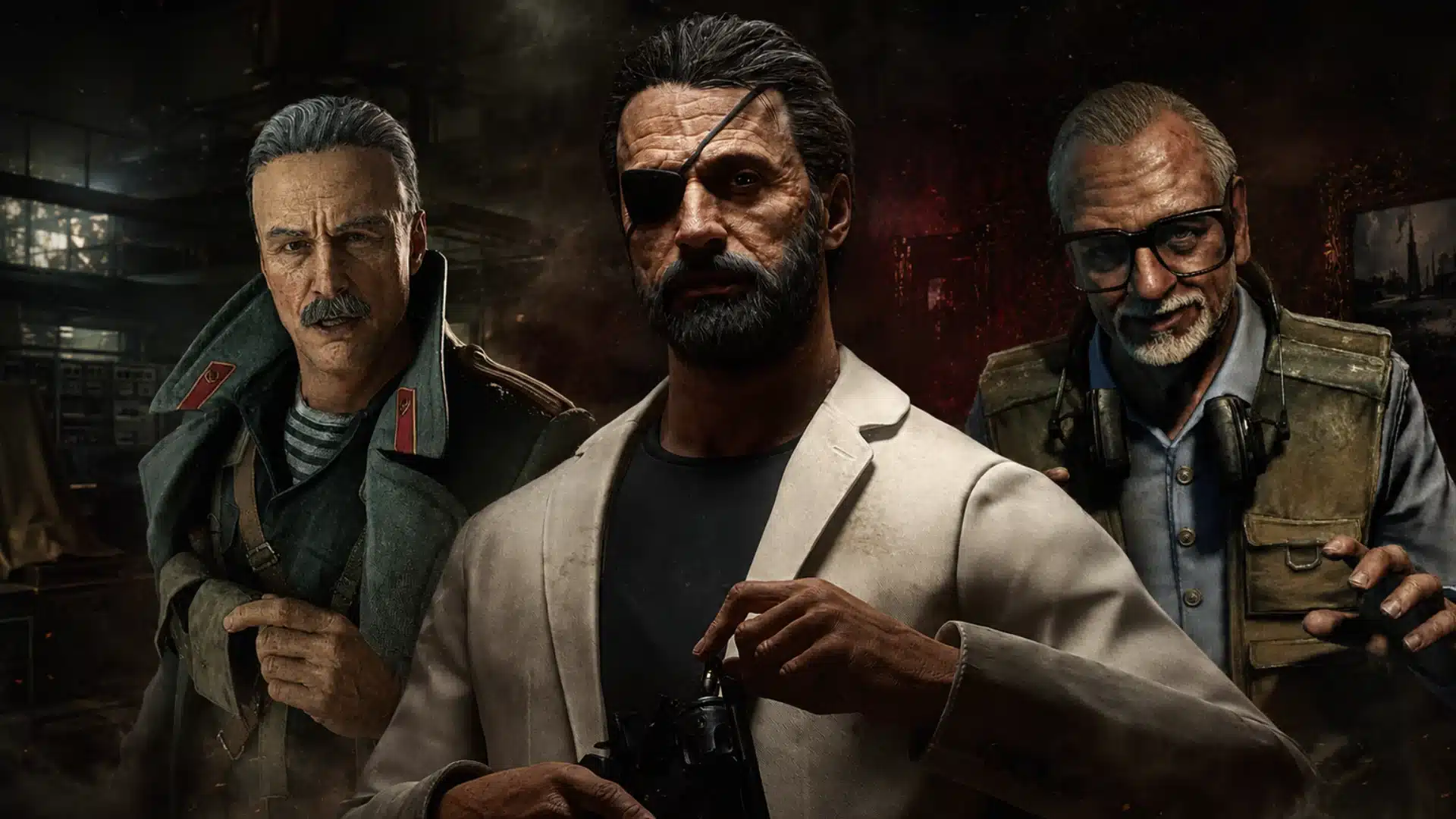
Call of Duty has used everything from faceless wartime armies to terrorist masterminds, rogue generals, artificial intelligence, and personal enemies to drive its campaigns.
1. Call of Duty (2003)
The first Call of Duty has no central named villain; instead, it presents Nazi Germany and its military forces as the campaign’s main opposition.
- Main antagonist: Nazi Germany serves as the broad enemy faced across the American, British, and Soviet campaigns.
- Enemy structure: Players fight German soldiers, officers, armored units, and fortified positions rather than a single commander.
- Story approach: The campaign focuses on major wartime operations, so individual enemy personalities receive very little narrative attention.
2. Call of Duty 2 (2005)
Call of Duty 2 again avoids a traditional main villain, placing Allied soldiers against German military forces across several major World War II campaigns.
- Main antagonist: Nazi Germany remains the overall opposition throughout the American, British, and Soviet storylines.
- No mastermind: There is no recurring enemy commander whose defeat serves as the campaign’s central objective.
- Campaign tension: Survival, battlefield objectives, and historical military operations create the conflict rather than a personal rivalry with one antagonist.
3. Call of Duty 3 (2006)
Call of Duty 3 continues the early series approach by making the German military the enemy rather than introducing a single recognizable antagonist.
- Main antagonist: German forces defending occupied France serve as the primary opposition during the Allied advance.
- Historical conflict: The story centers on the Normandy breakout and fighting around the Falaise Gap.
- Limited characterization: Enemy soldiers and commanders function mainly as battlefield threats and receive little personal development.
4. Call of Duty 4: Modern Warfare (2007)
Modern Warfare introduces Imran Zakhaev as its primary mastermind, supported by Khaled Al-Asad during a conspiracy designed to strengthen Russian ultranationalist power.
- Imran Zakhaev: The Russian ultranationalist leader secretly drives the larger conflict while attempting to restore his political movement’s power.
- Khaled Al-Asad: Zakhaev’s ally leads a coup in the Middle East and initially appears to be the campaign’s principal threat.
- Final confrontation: Soap ultimately kills Zakhaev after his forces corner the surviving SAS members near the campaign’s conclusion.
5. Call of Duty: World at War (2008)
World at War has no single central villain, instead portraying the Imperial Japanese Army and Nazi German forces as two brutal wartime enemies.
- Pacific enemy: American Marines fight Imperial Japanese forces through Peleliu, Okinawa, and other heavily defended positions.
- Eastern Front enemy: Soviet troops battle German forces as they advance from Stalingrad toward the heart of Berlin.
- Main conflict: The campaign treats wartime brutality and escalating revenge as larger threats than any individual enemy commander.
6. Call of Duty: Modern Warfare 2 (2009)
Modern Warfare 2 uses Vladimir Makarov as its visible terrorist threat before revealing General Shepherd as the betrayer behind the campaign’s greatest shock.
- General Shepherd: The decorated American commander manipulates events to strengthen his reputation and reshape public support for another major war.
- Vladimir Makarov: The Russian ultranationalist orchestrates terrorist attacks and becomes one of Task Force 141’s most dangerous long-term enemies.
- Major betrayal: Shepherd murders Roach and Ghost after using Task Force 141 to collect evidence connected to Makarov.
7. Call of Duty: Black Ops (2010)
Black Ops centers its conspiracy around Nikita Dragovich, whose brainwashing program and chemical warfare plans turn Alex Mason into an unwilling weapon.
- Nikita Dragovich: The Soviet general oversees Mason’s conditioning and leads the plot involving the dangerous chemical weapon Nova 6.
- Friedrich Steiner: A former Nazi scientist who assists Dragovich by providing expertise on Nova 6 and its development.
- Lev Kravchenko: Dragovich’s brutal lieutenant helps enforce his operations and becomes another long-running enemy within the Black Ops storyline.
8. Call of Duty: Modern Warfare 3 (2011)
Modern Warfare 3 finally places Vladimir Makarov at the center, concluding the original trilogy’s conflict with its most persistent ultranationalist antagonist.
- Vladimir Makarov: The Russian terrorist manipulates international events while escalating the war between Russia and Western nations.
- Global strategy: His attacks are designed to create instability, provoke retaliation, and keep major military powers fighting each other.
- Personal threat: Makarov’s actions directly cost Price several allies, turning the international conflict into an increasingly personal pursuit.
9. Call of Duty: Black Ops II (2012)
Black Ops II builds its story around Raul Menendez, whose personal tragedy develops into a decades-long campaign against the United States and its allies.
- Raul Menendez: The Nicaraguan revolutionary leads Cordis Die and becomes the central enemy across both the 1980s and 2025 timelines.
- Personal motivation: The death of his sister Josefina deepens his hatred toward those he blames for destroying his family.
- Global plan: Menendez attempts to hijack American military technology and turn its advanced drone systems against their owners.
10. Call of Duty: Ghosts (2013)
Ghosts gives its conflict a personal enemy through Gabriel Rorke, a former Ghost whose capture and conditioning transform him into the unit’s hunter.
- Gabriel Rorke: Once a respected Ghost leader, Rorke becomes an enemy commander after being captured and psychologically broken by the Federation.
- Elias connection: His hatred centers heavily on Elias Walker, the commander forced to abandon him during a failed extraction.
- Final outcome: Logan survives their apparent final confrontation, only for Rorke to return and capture him in the closing scene.
11. Call of Duty: Advanced Warfare (2014)
Advanced Warfare transforms Jonathan Irons from a supportive employer into a central antagonist as Atlas grows from a powerful military contractor into an authoritarian global force.
- Jonathan Irons: The Atlas CEO uses military influence, technology, and political instability to expand his company’s control around the world.
- Hidden agenda: Irons allows major crises to strengthen Atlas while presenting himself publicly as a leader capable of restoring order.
- Final confrontation: Mitchell kills Irons after stopping Atlas from using its biological weapon against opposing forces.
12. Call of Duty: Black Ops III (2015)
Black Ops III makes Corvus its unconventional antagonist, using artificial intelligence, neural technology, and manipulated consciousness to create a deeply psychological conflict.
- Corvus: The artificial intelligence emerges through DNI technology and begins spreading through connected human minds and systems.
- John Taylor: Taylor becomes influenced by Corvus, placing him against the Player despite his earlier role as an ally and mentor.
- Digital threat: Corvus manipulates memories, perceptions, and neural connections rather than relying on conventional military power alone.
13. Call of Duty: Infinite Warfare (2016)
Infinite Warfare places Admiral Salen Kotch at the head of the Settlement Defense Front, turning Earth’s colonies into an aggressive interplanetary military threat.
- Salen Kotch: The SDF admiral believes Earth must be defeated so his faction can control humanity’s political and military future.
- Opening attack: Kotch’s forces strike Geneva and cripple much of the UNSA fleet, immediately establishing the campaign’s central war.
- Personal rivalry: His repeated encounters with Nick Reyes turn the wider conflict into a direct struggle between opposing commanders.
14. Call of Duty: WWII (2017)
Call of Duty: WWII uses different antagonists across its campaign, with Heinrich and Metz representing personal cruelty within the broader Nazi war machine.
- Heinrich: The German officer becomes Rousseau’s personal enemy because of his role in murdering her family during the occupation.
- Commandant Metz: Metz later becomes the campaign’s most personal enemy after overseeing prisoners, including captured American soldier Robert Zussman.
- Final encounter: Daniels reaches Metz during the closing missions and rescues Zussman before the commandant can escape.
15. Call of Duty: Modern Warfare (2019)
Modern Warfare divides its opposition between terrorist leader The Wolf and Russian General Roman Barkov, whose occupation gives Farah’s story personal stakes.
- Roman Barkov: The Russian general controls Urzikstan through occupation, imprisonment, torture, and chemical weapons developed under his authority.
- The Wolf: Omar Sulaman leads Al-Qatala and becomes a major target during Price and Garrick’s counterterrorism operations.
- Final outcome: Farah kills Barkov while allied forces destroy the chemical weapons facility supporting his military campaign.
16. Call of Duty: Black Ops Cold War (2020)
Black Ops Cold War builds its mystery around Perseus, an elusive Soviet operative whose intelligence network threatens to turn American weapons against Europe.
- Perseus: The codename belongs to the Soviet intelligence figure directing a network of agents operating against Western governments.
- Operation Greenlight: His plan targets hidden American nuclear devices positioned throughout Europe as part of a classified contingency program.
- Bell connection: Bell originally worked with Perseus before Adler’s team captured and psychologically conditioned the operative.
17. Call of Duty: Vanguard (2021)
Vanguard makes Hermann Freisinger its primary villain, placing the ambitious Nazi officer behind Project Phoenix and plans to preserve power after Germany’s defeat.
- Hermann Freisinger: The SS officer oversees Project Phoenix while positioning himself for influence within whatever Nazi structure survives the war.
- Project Phoenix: The operation concerns the future of Nazi leadership as Germany approaches military collapse.
- Final fate: Vanguard captures Freisinger during the fall of Berlin and kills him before escaping with intelligence on additional Nazi operations.
18. Call of Duty: Modern Warfare II (2022)
Modern Warfare II spreads its conflict across terrorists, cartel members, and corrupt allies, making Hassan Zyani the immediate threat within a broader conspiracy.
- Hassan Zyani: The Quds Force major attempts to use stolen American missiles in retaliation for the killing of General Ghorbrani.
- Las Almas Cartel: Cartel forces help transport and protect Hassan while complicating Task Force 141’s operations inside Mexico.
- Phillip Graves: The Shadow Company commander turns against Task Force 141 and Los Vaqueros after receiving orders from General Shepherd.
19. Call of Duty: Modern Warfare III (2023)
Modern Warfare III brings Vladimir Makarov back as the central threat, reworking the famous antagonist for the rebooted Modern Warfare timeline.
- Vladimir Makarov: The Konni leader uses terrorism, deception, and staged attacks to destabilize governments and advance Russian ultranationalist interests.
- Konni Group: Makarov’s private military organization carries out operations designed to manipulate both public perception and international retaliation.
- Price connection: Price already understands Makarov’s methods, giving their renewed pursuit a history that predates the game’s opening events.
Makarov still holds up as the franchise’s best villain for me, mostly because Modern Warfare 3 lets Price’s exhaustion with him breathe instead of rushing straight to a boss fight.
20. Call of Duty: Black Ops 6 (2024)
Black Ops 6 reveals Jane Harrow as a central figure within Pantheon, connecting the conspiracy to the CIA and several members of Woods’ team.
- Jane Harrow: The CIA officer secretly works with Pantheon while maintaining enough institutional authority to influence events from inside the agency.
- Pantheon: The covert organization operates within intelligence circles and pursues its goals through infiltration, experimentation, and military force.
- Final conflict: Harrow’s history, motives, and loyalty become central to the team’s effort to expose Pantheon before its operation can succeed.
21. Call of Duty: Black Ops 7 (2025)
Black Ops 7 centers its threat on Emma Kagan, the CEO of The Guild, whose deepfake resurrection of a dead franchise villain drives much of the campaign’s mystery.
- Emma Kagan: The Guild’s leader stages an AI-generated message from Raul Menendez to reignite his old ideology and recruit followers to her cause.
- Raul Menendez (returning): Menendez already died in Black Ops II, so his apparent return forces Section and his team to question what they are actually fighting.
- Personal stakes: Because Menendez already destroyed Section’s family once, Kagan’s deception turns a corporate power grab into another deeply personal Mason storyline.
From early games built around anonymous enemy forces to Makarov, Menendez, Harrow, and other masterminds, Call of Duty increasingly made villains central to its identity.
Conclusion
COD characters are easier to follow once you stop treating the series like one straight timeline. Call of Duty works more like a set of war stories, with each era bringing its own heroes, villains, squads, and betrayals.
Price, Soap, Mason, Woods, Menendez, and Makarov stand out because they connect missions to emotion, not just action.
Still, smaller names matter too, because one sacrifice or twist can shape how a campaign is remembered.
The best way to understand the roster is to group characters by game, role, and timeline before comparing them.
Which Call of Duty character do you think deserves more credit? Share your pick in the comments below.
Frequently Asked Questions
Who is the Most Iconic Call of Duty Character?
Captain Price is the character most fans point to first. He anchors the Modern Warfare trilogy and the 2019 reboot as the steady, experienced leader of Task Force 141, and his mentorship of Soap MacTavish across multiple games has made him the closest thing the franchise has to a mascot.
Are Call of Duty’s Story Universes Connected?
No. Modern Warfare, Black Ops, and WWII or Vanguard each run on their own separate continuity with a distinct cast. Characters do not cross between these story universes in the campaigns, aside from occasional guest appearances in multiplayer or Warzone content that exist outside the main storylines and should not be treated as canon crossovers.
Who are the Main Black Ops Characters?
The original Black Ops trilogy centers on Alex Mason, his CIA handler Jason Hudson, and fellow Marine Frank Woods, with Soviet defector Viktor Reznov playing a pivotal role in the first game. Black Ops II shifts focus to Alex’s son, David Mason, and Black Ops 7 returns to David as a JSOC commander a decade later.
Does Call of Duty Have LGBTQ Characters?
Yes. More recent Call of Duty titles have introduced LGBTQ characters and operators as the franchise has expanded its rosters across both campaign and multiplayer content. Representation varies by game and continues to grow with each release, so checking a specific title’s character list gives the most accurate, up-to-date picture.