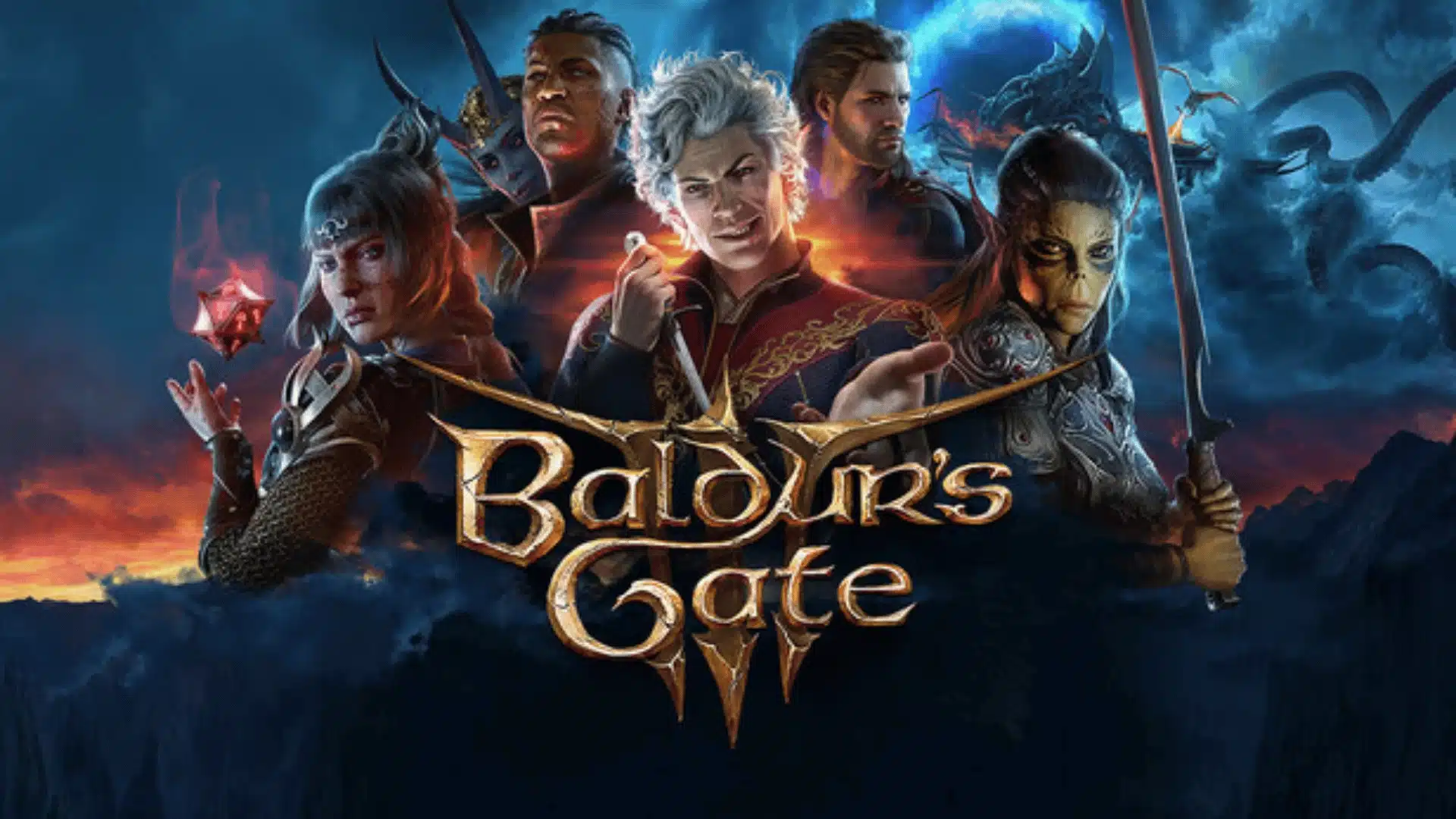
I still keep a tab open in my scores spreadsheet just for Baldur’s Gate 3, because it’s the rare review where I changed my own number twice after finishing it.
The scores get repeated everywhere. IGN gave it a 10/10. PC Gamer scored it 97/100. Those numbers get quoted constantly, but they don’t explain what it actually feels like once you’re inside the game.
Larian Studios didn’t rush this one out. The game spent roughly three years in early access before the full release landed on August 3, 2023.
When it finally arrived, the praise was loud and deserved, but so were the critiques that came with it.
I’ve put well over 150 hours into three separate playthroughs since launch, and this review is built on that time, not a weekend with a review code.
I’m looking beyond the scores to explain how the game actually plays, what it does exceptionally well, where it falls short, and who gets the most out of it.
What Is Baldur’s Gate 3?
Baldur’s Gate 3 is a turn-based CRPG made by Larian Studios, fully released in August 2023, and it’s probably the closest a video game has come to feeling like a real tabletop Dungeons & Dragons session.
It runs on the Dungeons & Dragons 5th Edition ruleset, but that’s not the thing that carries the experience.
What actually stands out is how the game reacts to what you do.
Every decision feeds back into the world around you. NPCs keep track of your actions, and even small things can come back later in ways you don’t expect.
A door you skipped early on might matter much later; groups shift depending on what you’ve done, and dialogue paths open and close as a result.
Nothing really resets between moments; it all just keeps stacking. A lot of RPGs claim player choice matters. BG3 is built so that choice is the structure itself.
The D&D system sets the limits of what can happen, but the real identity of the game comes from how those limits get pushed, tested, or ignored.
How Does the Core Gameplay Actually Work?
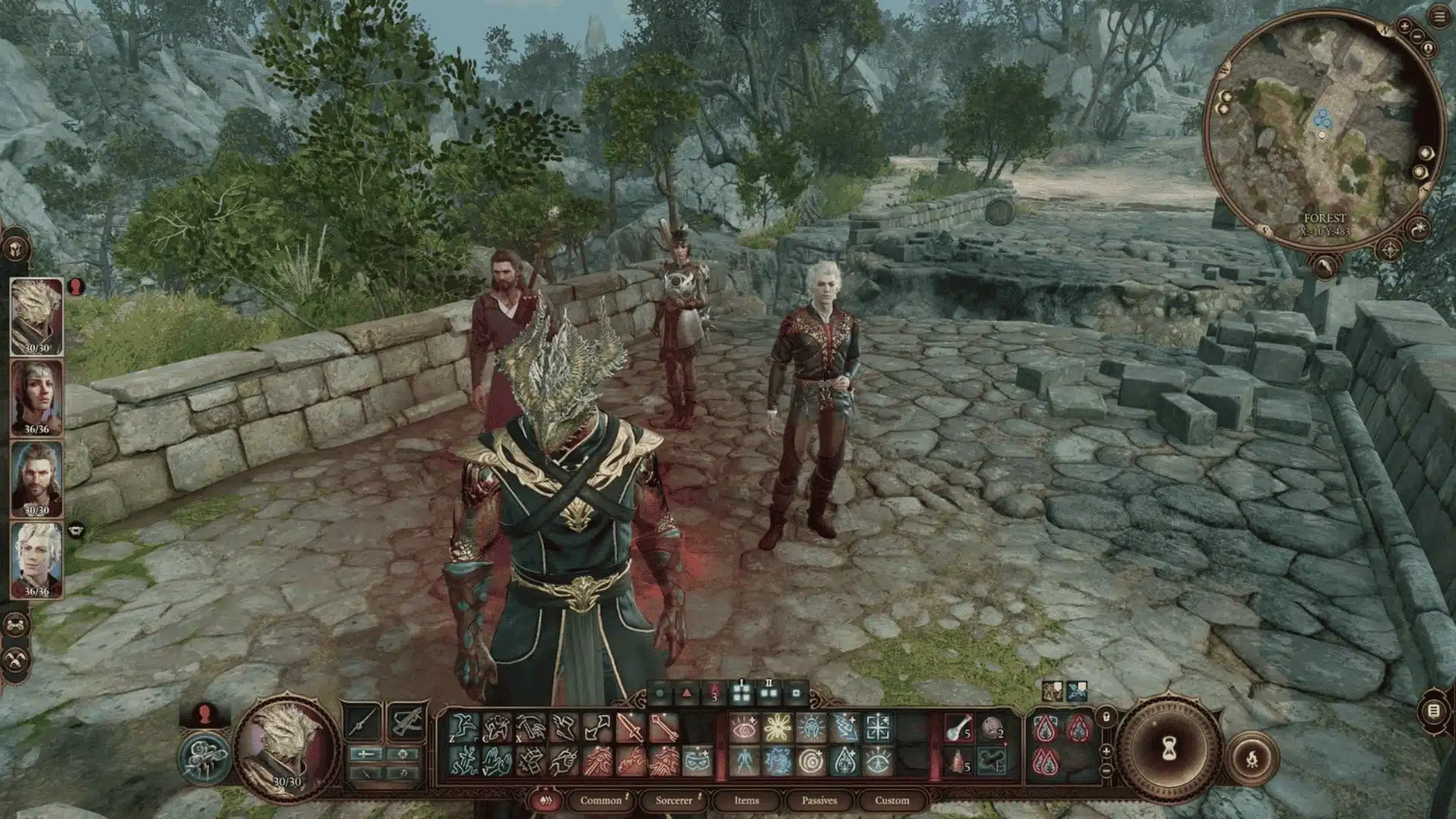
The three systems you’ll spend most of your time in- combat, environmental interaction, and dialogue- look separate on the surface, but they all work together under the same underlying logic.
Once that clicks, the way you approach everything changes.
1. Turn-Based Combat and the D&D Action Economy
Every character gets an action, a bonus action, and movement on their turn. That’s it. The way you spend those three resources, and the order you use them in, decides whether a fight feels tough or manageable.
It’s about sequencing, not just hitting the highest damage number. I lost more early fights to bad sequencing than to bad builds.
Use a bonus action to reposition before committing your main action. Hold a reaction for the exact right moment. Turns are short, but the decisions inside them aren’t.
2. Environmental Interaction
The battlefield is not just background. It’s a tool. Oil spills can be ignited. Ledges can send enemies straight off the map. A well-timed chandelier drop can end a fight early.
This isn’t decoration. It’s basically a second combat system layered on top of the main mechanics.
Players who ignore the environment end up fighting harder versions of the same encounters compared to players who actually read the space.
3. Skill Checks and Dialogue
Dialogue uses the same structure as combat: a 20-sided roll against a difficulty number, modified by your stats.
That means your build carries into conversations too. High Charisma opens persuasion paths. High Wisdom picks up details others miss. Strength can sometimes shut an argument down instantly.
The same stats that make you strong in a fight can also shape how conversations play out. Build choices are not just combat decisions; they decide what kind of story you end up experiencing.
How Good is the Writing, and are the Companions Worth Caring About?
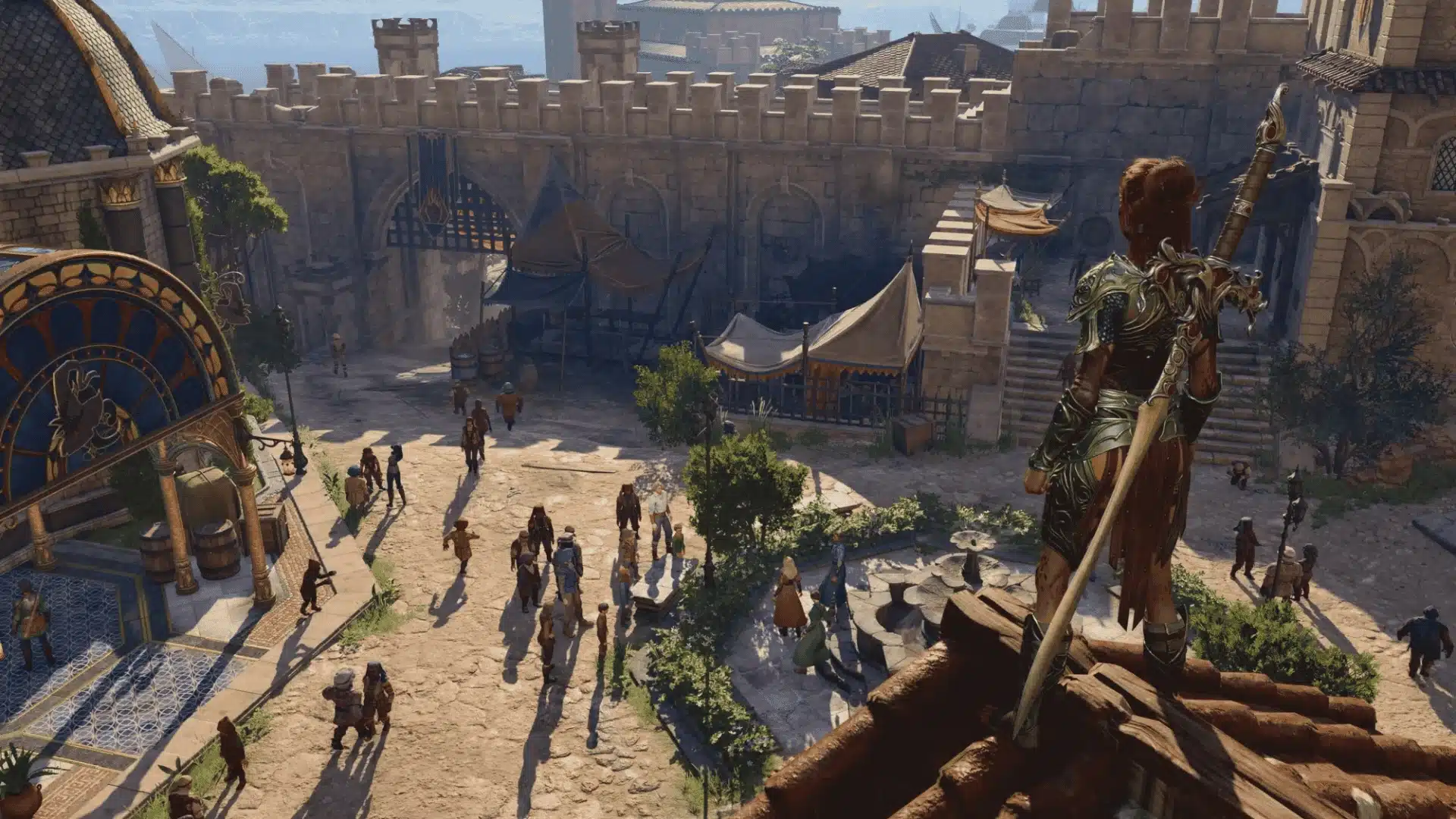
The short answer is yes, but the reason is quite unique. It’s not just that the companions are well-written. It’s that the writing is built into the systems, so the two things never feel separate.
Every companion tracks your decisions through an approval system that reacts to the small moments as much as the big ones.
Astarion notices if you let him feed on enemies instead of stopping him. Shadowheart reacts differently depending on how you handle her secrets about the Nightsong.
Karlach’s arc shifts based on how much you push her toward a cure versus accepting her fate.
How Companion Approval Reacts To Choices
- How you treat a stranger with nothing to offer you.
- Whether you keep a promise or not, breaking it would be easier.
- What do you do when the game gives you power and no one’s watching?
None of these choices announce themselves as tests, which is exactly why they land.
That approval feeds directly into personal questlines, unlocking companion-specific scenes and dialogue that never surface if you rush the main plot.
Engage with those quests, and you get some of the most memorable character work in any RPG.
Rush past them, chasing the mainplot, and the arcs feel unfinished, not because they’re incomplete, but because you skipped the groundwork they needed.
The themes are heavier than the premise suggests. These aren’t companions defined by their fantasy roles. They’re defined by what they’re carrying.
Core Themes in Companion Writing
- Questions of bodily autonomy and what it means to lose control of yourself
- Identity built on lies, or on trauma, or on a version of yourself you’re trying to escape
- What survival actually costs, and whether the price was worth paying
What holds it together is that none of it feels like it was written for your benefit. The companions have their own positions, and they won’t hesitate to push back when they disagree with your choices.
Some will leave if you go too far in the wrong direction. That friction is the point. A companion who agrees with everything isn’t a character.
Wyll walked out on my Dark Urge run halfway through Act 2, and it was one of the few times a game has actually made me feel judged.
What Are BG3’s Actual Weaknesses?
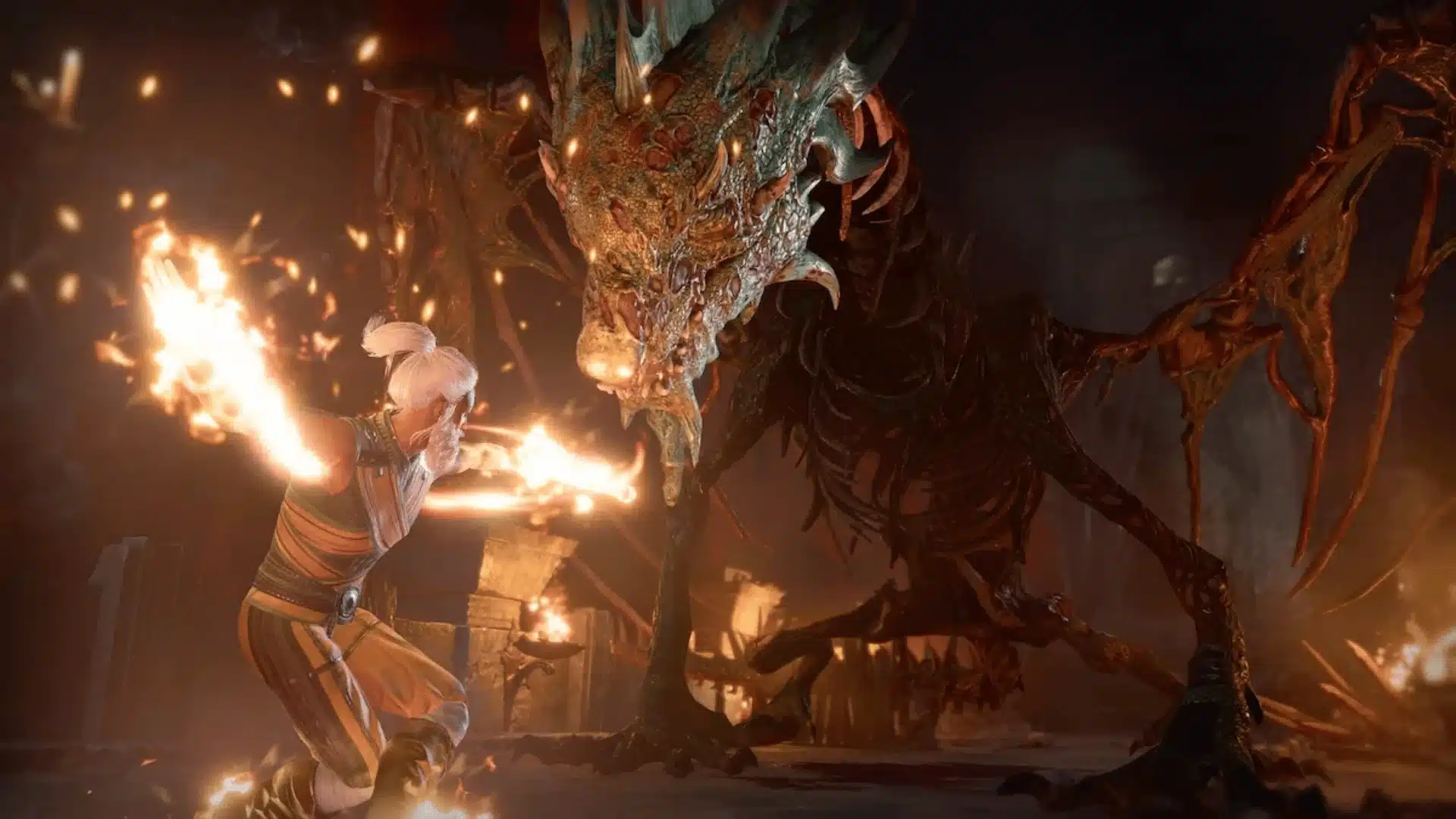
BG3 has two real weaknesses. Both are worth knowing before you start.
Act 3 Loses Focus
Acts 1 and 2 are tightly constructed. Each has a clear geographic scope, a central tension, and a sense of momentum. Act 3 feels much more sprawling and less focused.
It’s dense, and it pulls you in too many directions at once.
The quests are still good, but the sheer volume becomes the issue. Everything arrives at the same time, and the game doesn’t give you a clean thread to follow through it.
Players who finished Acts 1 and 2 feeling carried by the story often describe Act 3 as something they pushed through rather than experienced.
The act also shows more rough edges than the first two. Dialogue triggers misfire more often, and some quest options that worked earlier quietly stop appearing.
If Act 3 is also where your frame rate takes a hit, a quick pass on your PC settings helps more than you’d expect.
None of it breaks the experience, but it adds to the sense that Act 3 didn’t get the same polish pass as Acts 1 and 2.
The Start is Harder than It Needs to Be
Character creation asks you to make consequential decisions before you understand what they mean. Class, subclass, ability score distribution.
These choices shape your entire playthrough, and the game explains them poorly.
Most new players either freeze, make uninformed choices, or restart multiple times trying to optimize something they don’t yet understand.
I restarted my first campaign twice before I understood what a multiclass actually cost me later on.
Who Should Play Baldur’s Gate 3 and Is It Worth It?
Yes, but the cleaner answer depends on what you’re bringing to it.
If you came from a heavily narrative-driven action game like a samurai epic built on tone and consequence, the shift to turn-based combat is the biggest adjustment.
| Player Type | What to Expect | Verdict |
|---|---|---|
| CRPG veteran (Dragon Age, Divinity, Pillars) | Deeper systems, better writing, and a more reactive world than anything in the genre before it | Jump in |
| Action RPG player (Elden Ring, Witcher 3) | Slower and more deliberate decisions matter more than execution | Know the shift before you commit |
| Early Access dropout | The full release is a different product. The ending exists. Act 3 is more stable. | Come back |
| First-time CRPG player | One of the better entry points in the genre, if you let the story be messy | Play, don’t optimize |
Fans of large, systemic open worlds like a sprawling alien frontier built for exploration will feel more at home with how much BG3 rewards wandering off the main path.
No matter which row you fall into, the table only tells you where to start.
What you actually take from BG3 still comes down to how much you’re willing to sit with its choices instead of rushing past them.
Conclusion
A Baldur’s Gate 3 review should not only explain why the game scores so high. It should show why the world, companions, choices, and combat keep players thinking long after a session ends.
The game can feel heavy at first, and Act 3 does not move as cleanly as the earlier parts. Still, its best moments come from letting your choices stand, even when they lead somewhere messy.
I would start on Balanced, avoid overthinking the perfect build, and let Act 1 teach you how the game works.
Which class would you choose for your first run? Tell us, share with us in the comments below.
Frequently Asked Questions
Is Baldur’s Gate 3 beginner-friendly?
The first few hours are steep, especially character creation and early combat. But the game doesn’t punish imperfect builds; it accommodates them. Pick a straightforward class like Fighter or Paladin, set difficulty to Balanced, and expect Act 1 to function as a long tutorial. The systems click within ten to fifteen hours.
How long does Baldur’s Gate 3 take to complete?
A focused main-story run takes roughly 75 to 100 hours. Players who engage in companion quests and optional content consistently report 120 to 150 hours for a first playthrough. A second run with a different class plays substantially differently; the game is designed for it.
Is Baldur’s Gate 3 better than Elden Ring?
They’re not really comparable. Elden Ring is built around reflex-based combat and environmental storytelling. BG3 is built around narrative choice and systemic depth. The better question is which kind of experience you want: if you want an authored story and reactive characters, BG3. If you want mechanical mastery and open-world exploration, Elden Ring.
Does Baldur’s Gate 3 have an ending?
Yes, and not just one. The full release includes a complete third act with multiple distinct endings shaped by decisions made across all three acts. Companion resolutions also vary based on approval and quest completion. What you get at the end is a composite of everything you did, not a fixed conclusion.