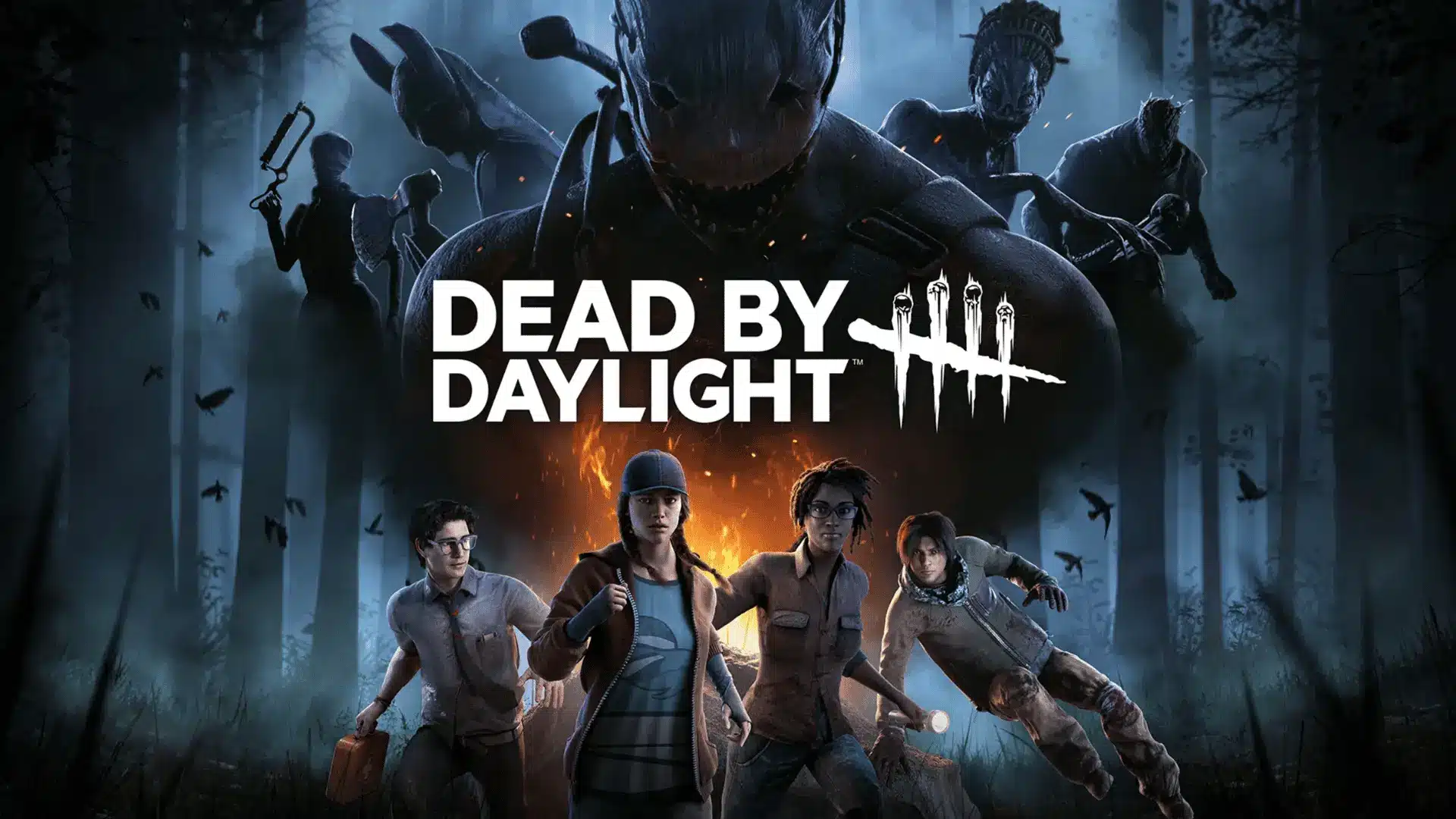
Dead by Daylight looks simple from the outside. One killer hunts four survivors, and everyone either escapes or dies.
But that is not the full picture. A good Dead by Daylight review needs to explain why each match feels tense, even when the rules stay the same.
The real strength comes from pressure, timing, map knowledge, perks, and the way players react when plans fall apart.
It can feel harsh for beginners, but that rough start hides a smart multiplayer game with long-term depth.
Here is what Dead by Daylight really is, why many players misread it, and what you should know before starting.
What Dead by Daylight Actually is and Why It Gets Misread?
Dead by Daylight is a 1v4 asymmetric multiplayer game, developed and published by Behaviour Interactive since its PC launch on June 14, 2016.
It reached to other platforms by 2020, and was once available on mobile devices until March 20, 2025.
The base game carries a suggested retail price of $19.99 on Steam, though it regularly drops to somewhere between $6.99 and $12 during seasonal sales, and individual DLC chapters typically run $4.99 to $11.99 each.
One player hunts, four try to escape; that’s the core of it. The horror is real, but it’s wrapping.
What actually drives the game is a stealth-and-pressure system in which survivors complete objectives while a faster, more powerful killer closes in.
There isn’t a traditional story to follow, either.
A supernatural force called the Entity pulls characters from separate worlds into an endless cycle of trials with no ending to reach, and that premise alone is why licensed killers from completely different franchises coexist without feeling random or forced.
For where it lands against the rest of the genre, our best horror games ranked list breaks down how it compares.
How the Core Loop Actually Works, and Why It Produces What It Does

Every Dead by Daylight review that skips the Bloodweb misses half of what makes progression interesting, but the loop itself starts simpler than that.
I went in expecting a straightforward horror game. What I found was two completely different experiences depending on which side you played on: different cameras, different movement, and entirely different information.
Survivors can’t fight; they delay, evade, and complete objectives.
The killer is faster but can’t cover the whole map. That gap between the two sides is where every tense moment in the game lives.
1. The Part Most People Don’t Notice
The scoring system is what actually makes this game work, and I missed it completely for the first few hours.
Every action earns blood points: repairing, evading, healing, rescuing, getting chased, all of it scoring independently.
The Lightbringer badge is what made it click for me. Keep the killer occupied, and you earn points for every generator your teammates complete during that chase. The game credited me for a sacrifice I didn’t even know I was making.
That’s why Dead by Daylight works better with strangers than most multiplayer games I’ve played. The cooperation isn’t organized; it’s built into the reward structure. You just play, and the teamwork follows.
2. Surviving
Surviving in Dead by Daylight isn’t about speed or strength. It took me longer than I’d like to admit to stop running and start actually reading what the game was telling me.
- Scratch marks: Show up every time you sprint, and the killer follows that trail throughout the chase.
- Third-person camera: Lets you watch the killer through gaps without moving or exposing your position.
- Skill checks: Appear mid-repair without warning; and one missed check sparks the generator and reveals your location.
- Pallets: Stun the killer mid-chase; knowing when to drop them is the actual skill, not how many you use.
Those two constraints, survivors who can’t fight and a killer who can’t be everywhere, create every moment of tension Dead by Daylight is built on.
Dead by Daylight is rated M for Mature, with the ESRB citing blood and gore, intense violence, and strong language. Violence includes hooks, blood trails, and chainsaw kills stylized horror, not photorealistic gore. Not appropriate for younger players.
3. Killing
Playing killer sounds like the easier side; you’re faster, you have a unique power, and there’s only one of you to control. Four survivors across a large map will quickly correct that assumption.
- Positioning info: Scratch marks and audio cues reveal survivor positions, but chasing one too long costs generators.
- Terror radius: Warns survivors of proximity; experienced players use that heartbeat to bait mistakes.
- Unique powers and perks: Bear traps, harpoons, flashlight blinds, and madness all change how a match plays out.
The role is about reading four targets at once and deciding where the pressure matters; once that clicks, the numbers become the best part.
4. Degrees of Success
Dead by Daylight doesn’t hand you a clean win or loss. The result almost always lands somewhere in the middle, and that changes everything about how a match feels.
Most matches fall between the two extremes. Blood points reflect how you actually played, not just the outcome. A well-played losing match scores better than a passive winning one.
That non-binary structure is what keeps matches from feeling wasted, and once you start measuring your own play rather than the result, the progression system starts to make a lot more sense.
If you want a survival horror pick that trades the asymmetric format for solo dread, our Dying Light 2 review covers a very different kind of tension.
The Roster: Licensed Characters, Original Killers, and How They Fit?

Dead by Daylight mixes original characters with licensed icons from Resident Evil, Halloween, Alien, and Silent Hill, held together by a supernatural lore system called the Entity.
The Roster Logic and How Licensed Killers Actually Play?
The Entity pulls killers and survivors from different worlds into its trials; that’s why Nicholas Cage, the Xenomorph, and Michael Myers exist in the same game without feeling random.
Each licensed killer plays differently because the power design pulls from the source material. Myers stalks. Ghostface surveils.
The Xenomorph crawls through tunnels. These aren’t reskins; the license shapes the mechanic.
Licensed Survivors and How the Roster Keeps Growing
Licensed survivors like Leon Kennedy and Jill Valentine come with unique perks, but level them far enough and those perks transfer to any other survivor you own.
After that transfer, the character becomes a cosmetic. The mechanical value moves out completely. What you’re left with is the look, nothing more.
DLC chapters arrive regularly, each adding a killer, a survivor, and sometimes a map. That structure has kept the roster growing for 10 years without earlier content feeling irrelevant.
Perks, Progression, and the Blood Point System
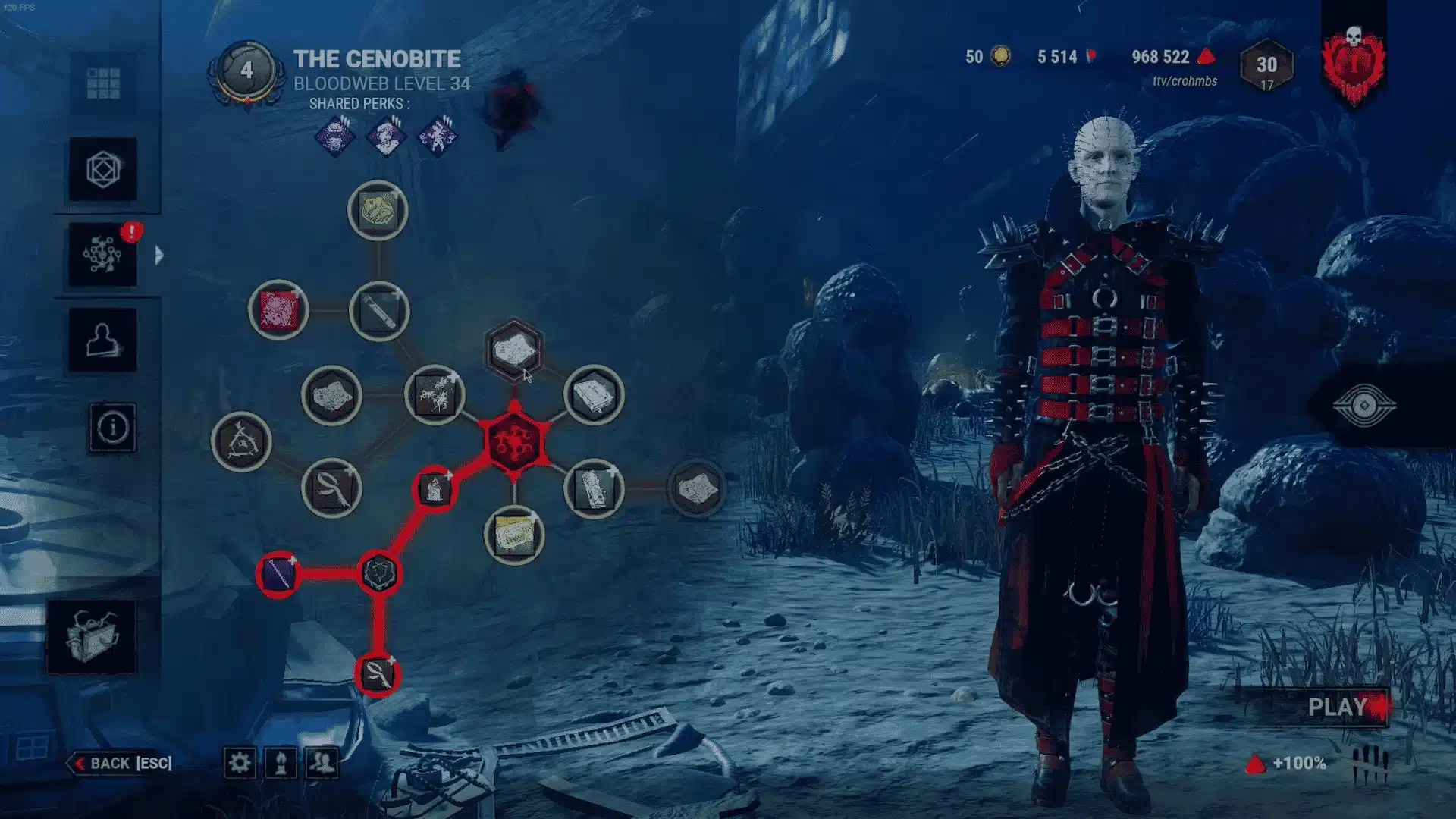
This is the part most Dead by Daylight review roundups gloss over, because it only makes sense once you’ve actually cleared a few webs.
Dead by Daylight’s progression runs through the Bloodweb, a procedural unlock tree for each character. Spend blood points earned in matches to acquire perks, items, and offerings.
Advance a character far enough, and their unique perks become available to everyone else you own.
1. How Does the Bloodweb Work?
The Bloodweb is a randomized unlock tree, not a straight progression path. It resets every time you clear it, and understanding how it works early saves a lot of frustration later.
- Earn blood points: Every action in a match contributes, from chases to repairs to rescues.
- Spend in the Bloodweb: Each character has their own tree of perks, items, add-ons, and offerings.
- Move deliberately: The Entity consumes unclaimed nodes, closing off paths if you spend too slowly.
- Clear the web: Level up, and a new randomized tree generates in its place.
- Prestige at level 50: The character, resetting, but their teachable perks unlock for the rest of your roster
The randomized structure means you won’t always get what you want from a given web. Some runs feel efficient. Others feel like the game is working against you.
That’s not a bug; it’s how the system is designed to slow progression without making it feel arbitrary.
2. Teachable Perks and Build Identity
This is the system that gives Dead by Daylight much of its long-term depth, and it works differently depending on whether you’re playing as a survivor or a killer.
- Survivors are effectively built, not characters. Once you unlock teachable perks from multiple survivors, you can mix and match them freely across your entire roster.
- The character you play as a survivor doesn’t change how you play. Two survivors with identical perk loadouts are mechanically indistinguishable. Once the perks transfer, what remains is cosmetic.
- Killers work differently. Their unique powers don’t transfer; the Trapper will always be the Trapper. But killers can adopt perks from other killers to shape how they apply pressure.
- Build identity comes from perk combinations. A survivor running stealth-focused perks plays a completely different game from one built around healing or generator speed.
I didn’t appreciate how deep this ran until I started mixing perks across characters. The same survivor felt like a different role depending on the loadout. That flexibility is what keeps the game interesting well past the first fifty hours.
3. Paid Characters and Perk Accessibility
This is where the pay-to-win question usually comes up, and the honest answer is more specific than the reputation suggests.
| Category | Base Game Characters | DLC Characters |
|---|---|---|
| Perks available | Strong, viable options across multiple playstyles | Additional perks, mostly situational or playstyle-specific |
| Mechanical advantage | Sufficient for competitive play | No single perk is considered universally mandatory |
| Cost | Included at purchase | Bought individually or in chapters |
| Perk transfer | Available after leveling | Available after leveling |
Some high-value perks are tied to DLC purchases. That’s real, but no single perk is universally mandatory. Strong, viable options exist across base game characters without spending anything extra.
For new players, the grind is front-loaded, and the perk pool feels thin for the first twenty to thirty hours. That’s a progression curve, not a paywall.
Why the Game Feels Unbalanced at First: New Player Friction and Matchmaking?

Dead by Daylight is genuinely hard for new players, not because the design is broken, but because the early experience compounds on itself in ways that aren’t immediately obvious.
Most Dead by Daylight review threads treat this as a balance flaw instead of what it actually is: a progression curve that front-loads its worst hours on purpose.
Here’s how that cascade actually works:
- A narrow perk pool means weaker loadouts entering every match from the start.
- Weaker loadouts produce shorter chases as killer and faster downs as survivor.
- Shorter chases mean fewer scored actions per match and fewer blood points earned.
- Fewer blood points slow down Bloodweb progression, keeping the perk pool weak.
- The cycle repeats; each match feeds back into the next until the pool grows enough to break it.
The link between match performance and progression speed is something I felt before I understood it. Worse matches meant fewer blood points, slower unlocks, and worse matches again. It compounds quietly.
Having an experienced friend alongside early on would have changed things significantly for me.
Map knowledge and perk direction in the first few hours is worth more than anything the Bloodweb gives you in that window.
The community toxicity is real and worth knowing about going in. Losing a match is fine.
Losing and then getting harassed in post-game chat is a different experience, and there’s no in-game answer to it.
Live Service, Longevity, and What Ten Years of Updates Mean
Dead by Daylight is still actively maintained by Behaviour Interactive; new chapters are released regularly, the player base remains stable, and cross-play connects PC, console, and Switch into the same pool.
On console specifically, it still holds its own among today’s PS5 multiplayer games for sheer replay value.
A ten-year-old live service game isn’t coasting. Here’s what’s actually keeping it moving:
- New chapters arrive regularly, each adding a killer, a survivor, sometimes a map, though releases occasionally introduce balance problems that take patches to resolve.
- Cross-play keeps the matchmaking pool healthy regardless of platform: PC, console, and Switch all feed the same queue.
- The base game stays functional without DLC, though you’ll encounter DLC killers and survivors in matchmaking, and the meta drifts further from your available options over time.
- Cosmetic pricing draws consistent community criticism. It doesn’t affect gameplay, but you should know that before you browse the in-game store.
The base game provides access to the full loop and enough characters to work out whether Dead by Daylight is for you before spending anything extra on chapters.
For a game that’s been running nine years, that entry point is reasonable. What the live service model doesn’t guarantee is stability from patch to patch. The core design holds up.
The balance around the edges shifts constantly, and if you’re coming in during a rough patch cycle, that’s worth separating from your assessment of the game itself.
Conclusion
This Dead by Daylight review comes down to whether you can push past the rough first hours.
The game can feel harsh, slow, and confusing before perks, maps, and chase logic start to make sense. Once they do, the design becomes much clearer.
Survivors win by reading danger, killers win by creating pressure, and both sides keep learning from small mistakes. The licensed roster helps bring people in, but the match flow is what keeps them playing.
Start with the base game before buying DLC, learn one role at a time, and give the systems room to click.
Would you play survivor or killer first? Tell us in the comments below.
Frequently Asked Questions
Is Dead by Daylight Worth It as a New Player?
The first 20 to 30 hours are genuinely difficult, since a thin perk pool leads to shorter chases, fewer blood points, and slower progression. Most players who push through that window find the game far more rewarding once perks stack up across characters. An experienced friend early on makes that stretch noticeably shorter.
Do a Lot of People Still Play Dead by Daylight?
Yes. Ten years after launch, the player base remains active across PC and consoles, sustained by regular chapter releases and cross platform play between PC, console, and Switch. Behaviour Interactive keeps adding licensed killers and survivors regularly, which continues to pull both returning players and curious newcomers into the same matchmaking pool.
Is Dead by Daylight Okay for Kids?
No. Dead by Daylight is rated M for Mature 17 plus by the ESRB for blood, gore, and intense violence. Stylized horror effects like hooks, blood trails, and unsettling character designs make it unsuitable for younger players, even though the violence is stylized rather than photorealistic. Parents should treat it as an adult title.
Is Dead by Daylight Pay to Win?
Not exactly. Some strong perks sit behind DLC character purchases, but no single perk is a mandatory win condition, and every perk eventually transfers to your full roster once leveled. The base game includes enough viable builds to compete without spending anything extra, though new players may feel the perk pool thin at first.