
Many games earn high review scores, but that doesn’t always tell the full story. A God of War Ragnarok review should look beyond the numbers and explain what truly makes the game memorable.
I found a sequel that builds on almost everything the 2018 game did well, while also making a few choices that won’t work for everyone.
From its emotional story and satisfying combat to its pacing and puzzle design, there’s a lot to talk about. Knowing both its strengths and weaknesses makes it much easier to decide if it’s the right game for you.
What is God of War Ragnarök and What Does It Deliver?
God of War Ragnarök is a 2022 action-adventure sequel developed by Santa Monica Studio. It picks up where the 2018 reboot left off, continuing Kratos and Atreus’s Norse journey.
The 2018 game rebuilt the franchise from the ground up. Ragnarök inherited that foundation, the tone, the relationship, the world, and set out to close the story it started.
That’s a harder job than it sounds. Ending a beloved arc means every payoff gets measured against what came before.
It launched to near-universal praise from critics. But a quieter debate followed; some players felt the game’s ambition to do more worked against it in places.
Both reactions make sense. Understanding why means looking at what the game actually tries to do.
Why the Story Works and Where it Strains?
God of War Ragnarök’s story succeeds because it builds emotional stakes from a believable relationship under pressure. But that same ambition creates tonal cracks some players can’t look past.
The story earns its praise, but the reasons are worth unpacking, as are the moments when it strains.
What Makes Kratos and Atreus Compelling as Characters?
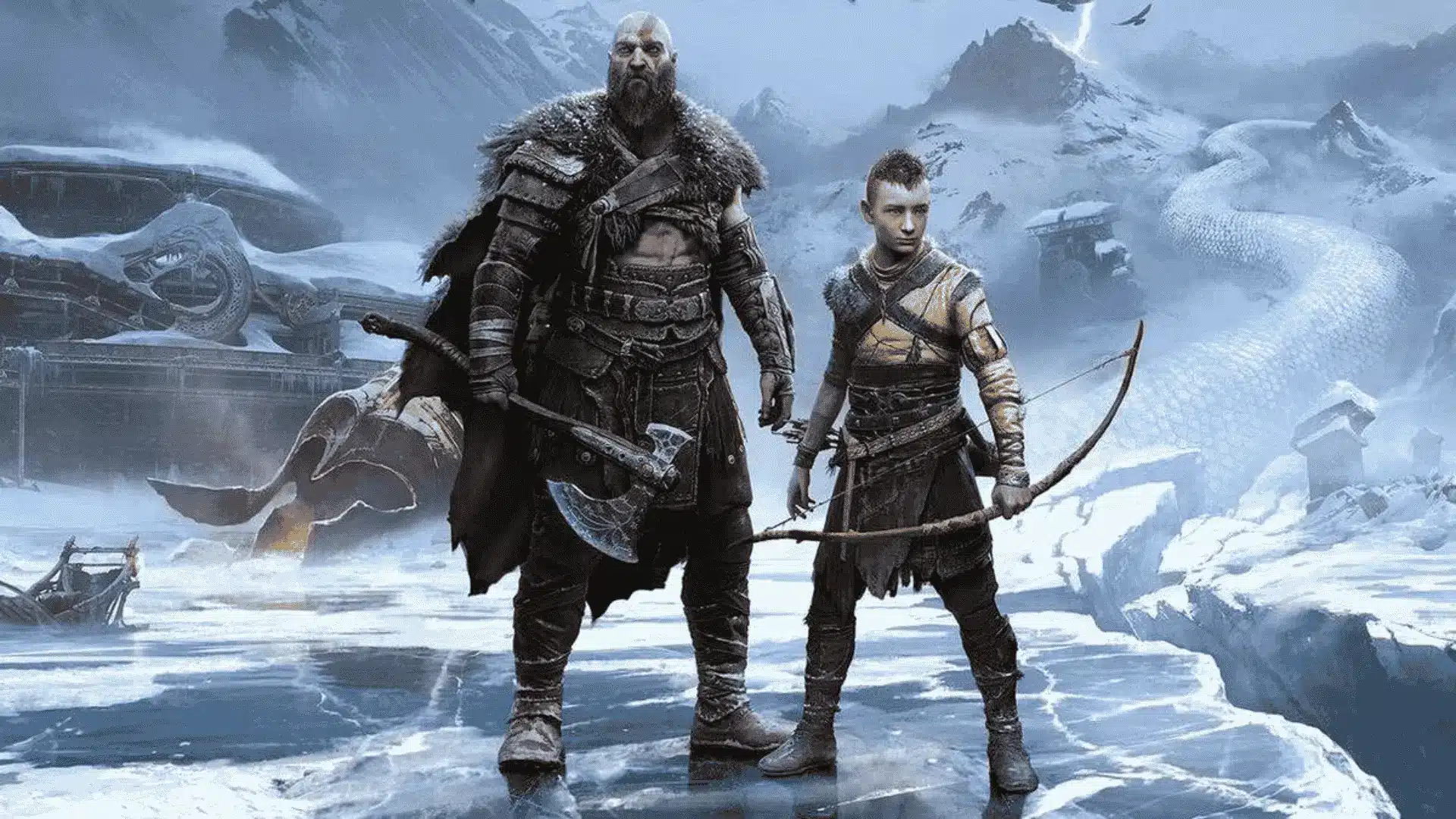
The writing gives both characters something real to lose. Their goals pull in opposite directions, and the game doesn’t resolve that tension cheaply.
Here’s what the writing actually does well:
- Conflicting motivations: Kratos wants to protect Atreus. Atreus wants to find himself. That friction drives every major scene.
- Performance over exposition: Christopher Judge communicates more through silence than most actors do with dialogue. The writing trusts that.
- Earned growth: Atreus’s choices start to exact a cost by mid-game. His arc doesn’t feel scripted; it feels lived.
What I noticed replaying earlier scenes is how much it lands without words. A hesitation, a look, the story knows when to step back.
What are the Tone Fractures and Why Do They Matter?

The game sometimes works against itself, and there’s a pattern worth naming.
Some players call it “Marvelization”, and it’s a fair description of specific writing choices:
- Emotional over-signaling: Characters narrate feelings that the scene already shows. The music swells to tell you how to feel.
- Poorly timed levity: Jokes land right after heavy moments, breaking the tension the story spent time building.
- Accessible over austere: The tone stays warm and readable, even when the themes – grief, fate, and legacy – ask for more weight.
The issue isn’t that the game is too fun. It’s that it’s carrying serious themes while keeping everything emotionally legible.
The strain shows up in specific places. Long companion-led traversal sequences fill the silence that the story actually needed. Mid-game political exposition slows the pace without adding emotional weight.
If the 2018 game’s restraint is what drew you in, parts of Ragnarök may feel like a different register. If you appreciate quieter storytelling, my Ghost of Tsushima review looks at a game that takes a more restrained approach.
How the Combat System Evolves and What It Doesn’t Change?
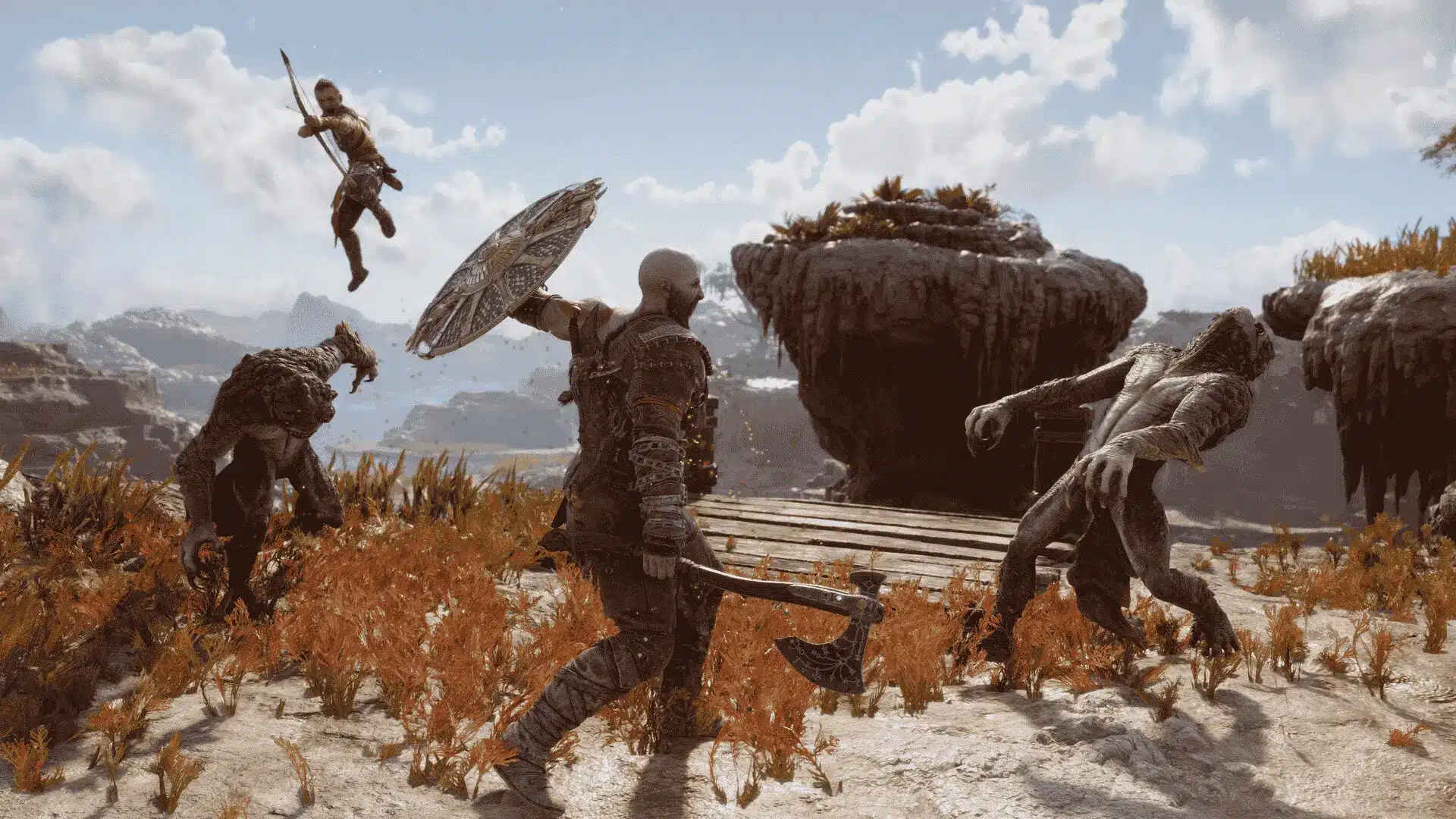
God of War Ragnarök’s combat expands on its predecessor rather than replacing it. Everything new layers onto what already worked, and that’s exactly the point.
Most sequels reset your gear to justify the journey; Ragnarök doesn’t. Keeping the Leviathan Axe and Blades of Chaos from the start is a design statement, refinement over reinvention.
What’s genuinely new and why it matters:
- Draupnir Spear: Fills a mid-range gap left by the 2018 game. Changes how you approach grouped enemies and armored targets.
- Environmental attacks: Walls, ledges, and objects become part of the fight. Encounters feel less arena-bound because of it.
- Expanded runic abilities: More options per weapon mean more ways to build rhythm mid-fight. You stop feeling like you’ve seen every combination early on.
- Enemy variety: New realms introduce new enemy types that push you to switch weapons rather than default to one.
These aren’t cosmetic additions. They shift how combat flows without touching what made the original system work.
The “familiar gameplay” criticism comes up often. It’s technically accurate, but familiarity isn’t a flaw when the foundation is already excellent.
What I found is that the additions don’t need to be loud to matter. Each fight feels slightly more open, slightly more expressive than before. Reinventing the system would’ve been the riskier call, and probably the wrong one.
Ragnarök retains the precision and weight of the 2018 combat. It just gives you more ways to use it.
The Puzzle Problem: Why Hand-Holding Undermines Immersion?
The hand-holding criticism in God of War Ragnarök isn’t about difficulty; it’s about timing. Companions deliver solutions before you’ve had a real chance to engage, and that breaks something specific.
Puzzle-solving works because of a loop: you observe, you attempt, you figure it out. The payoff lives in that last step.
When a companion skips you to the answer, the loop never completes. What I kept noticing is that it doesn’t feel like help; it feels like the game doesn’t trust you.
Here’s what makes this more frustrating than a simple design flaw:
- The puzzles themselves are well-built; the problem isn’t weak design; it’s that the hints arrive too early.
- Not a difficulty issue; experienced and casual players report the same complaint, and the hints fire regardless of how long you’ve been stuck.
- The earned feeling disappears. Solving a puzzle after a companion hint doesn’t feel like progress; it feels like watching someone else solve it.
- It’s fixable, too. A hint delay setting or toggle would address this entirely, which separates it from deeper structural issues like pacing.
The frustrating part is how avoidable this is. The puzzles deserve to be experienced properly. Most players never got the chance.
The Nine Realms: World Design that Rewards Exploration
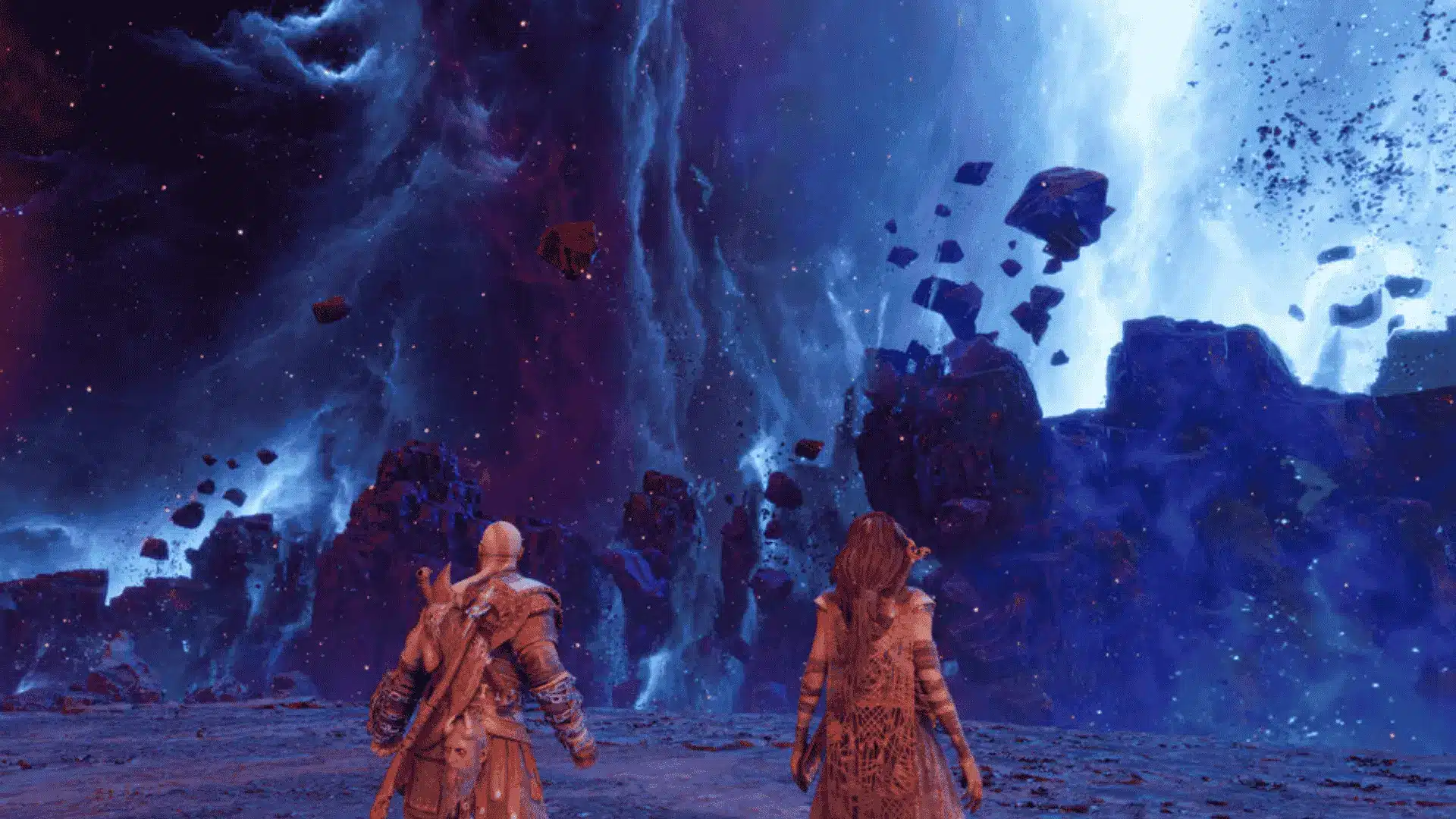
If the hand-holding undercuts trust in the puzzles, the Nine Realms are where that trust gets rebuilt. Each realm has a distinct identity in visuals, tone, and the enemies that inhabit it, and none of it feels reused.
This isn’t cosmetic diversity. Each realm has its own logic, enemy behaviors, traversal rules, and atmosphere. You’re not moving through reskinned versions of the same space.
What makes the world feel dense rather than just large is how the side content is weighted. Most open-world games fill optional quests with mechanical rewards. Ragnarök ties them to the story context instead.
That distinction matters. When a side quest adds something to a character or relationship you already care about, it stops feeling optional. I found myself completing them not for the upgrades, but because they actually added something.
The world rewards curiosity in a way that feels intentional rather than padded.
That said, the density has a cost. The main narrative already runs long, and the sheer volume of content compounds the pacing strain mentioned earlier.
More isn’t always better when the story underneath is already stretched. Some players will find the world’s richness energizing. Others will feel it slows the momentum at the wrong moments.
Both reactions are reasonable. The world is genuinely well-built, but it doesn’t always know when to step back.
Is God of War Ragnarök Worth Playing?
God of War Ragnarök is worth playing for almost anyone who completed the 2018 game. But there’s one honest caveat worth stating clearly.
If you valued the 2018 game’s restraint, its silence, its weight, Ragnarök’s ambition to do more, feel more, and say more won’t land the same way. That’s a tradeoff, not a flaw.
The 94Metacritic score reflects a genuine achievement. What it doesn’t tell you is what kind of player the game is built for. This is how to interpret it honestly:
- For narrative-first players: Ragnarök delivers substantially. The story closes its arc, performances are exceptional, and the emotional moments mostly land.
- For players chasing mechanical novelty: The return is modest. Combat is better, but it’s recognizably the same system with additions rather than a reinvention.
- For PC players: The 2024 PC port launched with stutters, crashes, and inconsistent frame rates for some players. Worth factoring in before you commit, and worth checking the current patch notes since Santa Monica has continued to push fixes.
The score tells you the game is excellent. It doesn’t tell you whether it matches what you’re looking for. I’d recommend it without hesitation to most players.
Just go in knowing what it prioritizes and what it trades to get there.
Wrapping Up
A God of War Ragnarok review is most useful when it looks at both the highs and the lows instead of focusing only on praise. I think Ragnarök delivers an emotional story, exciting combat, and a rich world that rewards players who enjoy side content.
At the same time, its pacing, early puzzle hints, and tonal shifts may not appeal to everyone. Even with those tradeoffs, it stands as one of the strongest action games of its generation.
Have you played God of War Ragnarök? Share your thoughts in the comments; I’d love to hear your opinion.
Frequently Asked Questions
Is God of War Ragnarök good for someone who hasn’t played the 2018 title?
It’s playable, but less rewarding. The sequel assumes familiarity with the characters, stakes, and combat. Starting in 2018 is worth it.
How long does it take to beat God of War Ragnarök?
The main story runs 20–25 hours. Full completion, side quests, collectibles, and optional bosses typically extend to 50–60 hours.
Why do some players think God of War Ragnarök is worse than the 2018 game?
The 2018 game was tonally restrained. Ragnarök is quippier and more expressive. Players who valued that restraint often find this version overwhelming.
Does God of War Ragnarök have a good ending?
Most consider it a satisfying conclusion to the Norse arc. Some feel the final act rushes resolutions that earlier chapters earned slowly.