Every year, Madden arrives with a list of improvements and a familiar question: Is this actually different, or does it just look that way from the outside?
The Madden NFL 26 game review cycle has been louder than usual, and for once, the noise has some substance behind it.
The changes this year’s changes go deeper than a roster update or visual polish. Some of them affect how the game fundamentally plays.
Others didn’t get touched at all, and knowing which is which is what actually helps you decide whether Madden 26 is your year to buy back in.
Madden NFL 26: Release Date, Platforms, and Price
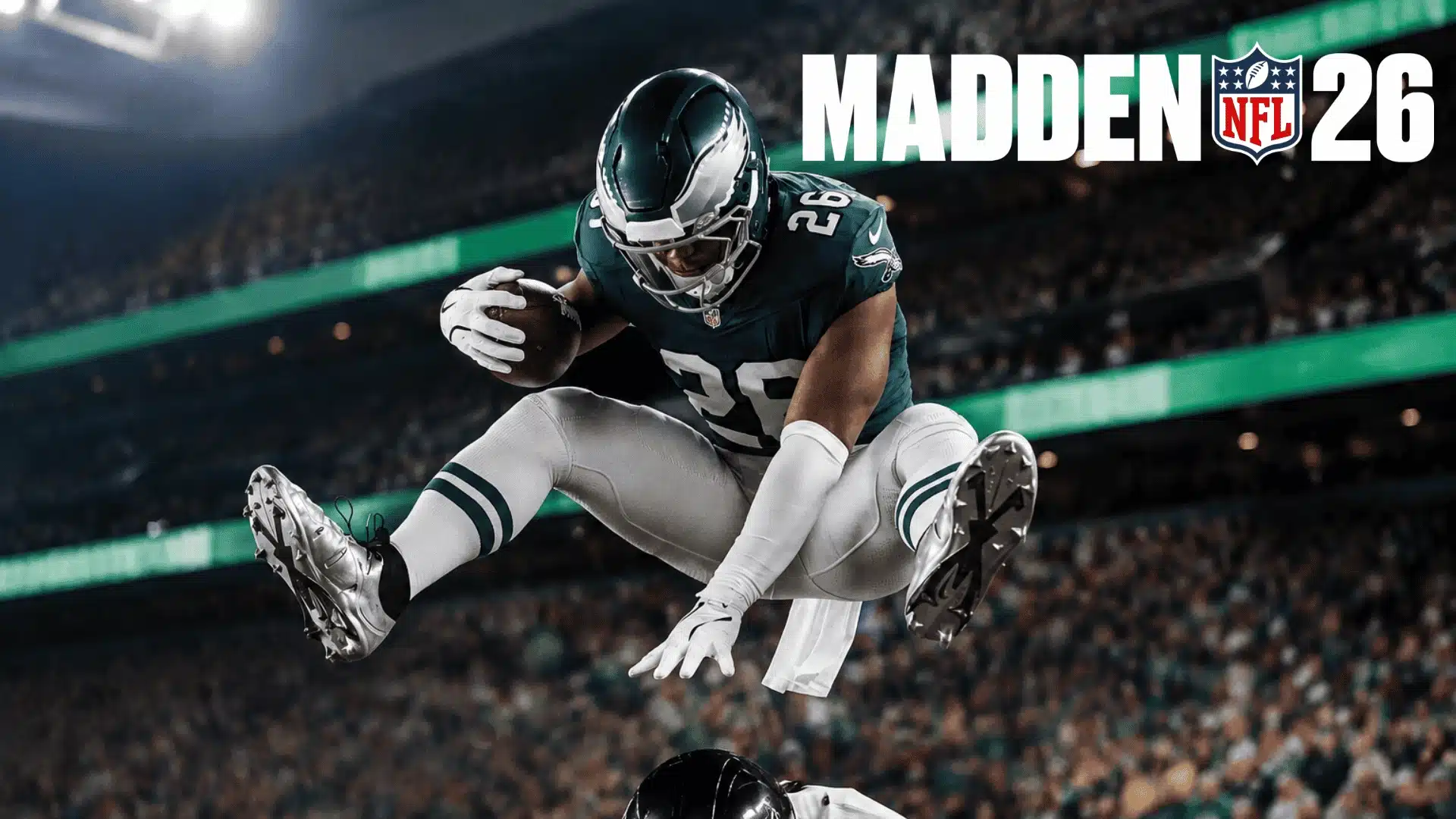
Madden NFL 26 is the annual NFL simulation from EA Orlando, published by EA Sports, with Philadelphia Eagles running back Saquon Barkley as the cover athlete. It launched on August 14, 2025.
The game is available on PlayStation 5, Xbox Series X|S, PC, and Nintendo Switch 2. That Switch 2 release marks the series’ first return to a Nintendo platform since Madden NFL 13 on Wii U.
There’s no version for PS4, Xbox One, or the original Switch this year, so anyone still on last-generation hardware is left out.
Two editions are available. The Standard Edition runs $69.99 at EA’s official store, and the Deluxe Edition runs $99.99, adding seven days of early access and 4,600 Madden Points for Ultimate Team.
A year past launch, street prices have dropped well below MSRP.
Retailers like Walmart’s Madden NFL 26 listings currently show the game running roughly $25 to $35 across PS5, Xbox Series X, and Switch 2, depending on the retailer and any active sale.
What Has Actually Changed in Madden NFL 26, and What Hasn’t?
Madden NFL 26 is drawing some of the strongest reviews the franchise has seen in years, with real improvements in on-field physics and Franchise mode.
The two things that didn’t get fixed, Ultimate Team monetization and legacy animation bugs, are still there. The on-field changes only work because they happened together.
It’s the same test fans put every annual sports franchise through, and the same tension between on-field gains and monetization critique showed up in our Black Ops 7 review this year too.
Speed tuning makes players accelerate and change direction faster, while the physics overhaul makes weight and momentum matter at contact.
Together, they make the game feel grounded in a way recent Maddens haven’t.
QB DNA is the most-talked-about new mechanic, giving quarterbacks unique throwing animations, pocket tendencies, and decision-making patterns tied to how they actually play.
Animations still glitch, load times are still long, and Ultimate Team is still built around aggressive monetization. If those were dealbreakers before, they still are.
How the On-Field Game Plays Differently?
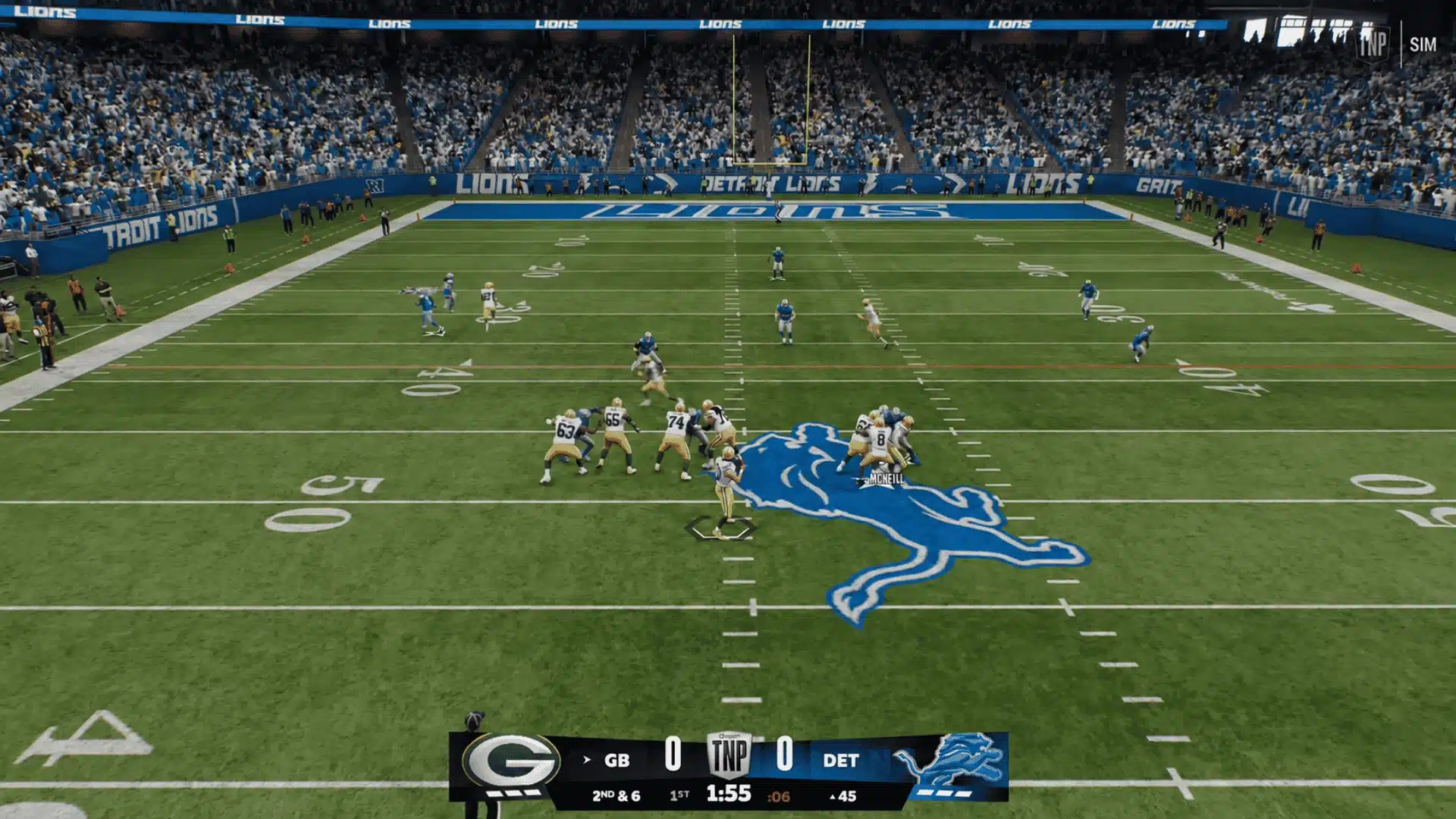
The biggest complaint about recent Maddens was that the game felt disconnected from the physics of real football, big hits didn’t feel heavy, and fast receivers didn’t feel elusive.
Madden 26 addresses both, not perfectly, but noticeably enough that it changes how the game actually plays out.
Speed Tuning and What It Changes at the Line of Scrimmage
Speed tuning changes how acceleration and deceleration interact with contact at the line of scrimmage; heavy defensive linemen now plant and redirect rather than bounce off blockers.
A 320-pound d-lineman against a lighter guard plays out differently than it used to, and you feel the weight gap in the result. For skill players, cuts feel earned.
A receiver breaking off a route has to decelerate before he changes direction, and that small window is where defensive backs can close. It’s a subtle shift, but it makes individual matchups feel more honest.
In more than a decade of covering Madden’s yearly cycle, few single changes have done more for how the game actually feels than this one.
Speed tuning is already shaping which builds show up in the competitive Madden tournament scene, and that’s usually a good sign a mechanic runs deeper than a highlight reel.
QB DNA: What It Means for How the Position Actually Plays
Previous Maddens gave quarterbacks different ratings; Madden 26 gives them different behaviors. Mahomes moves in the pocket differently from Burrow; their release points and tendencies under pressure differ.
For offline Franchise players, that changes how you scheme defensively; a scrambler forces different pre-snap decisions than a pocket passer, and you can no longer apply the same approach to everyone.
Now you have to actually study your opponent, and while some quarterbacks still feel more generic than others, the gap between elite signal-callers and the rest is real.
What Franchise Mode Actually Delivers Now?
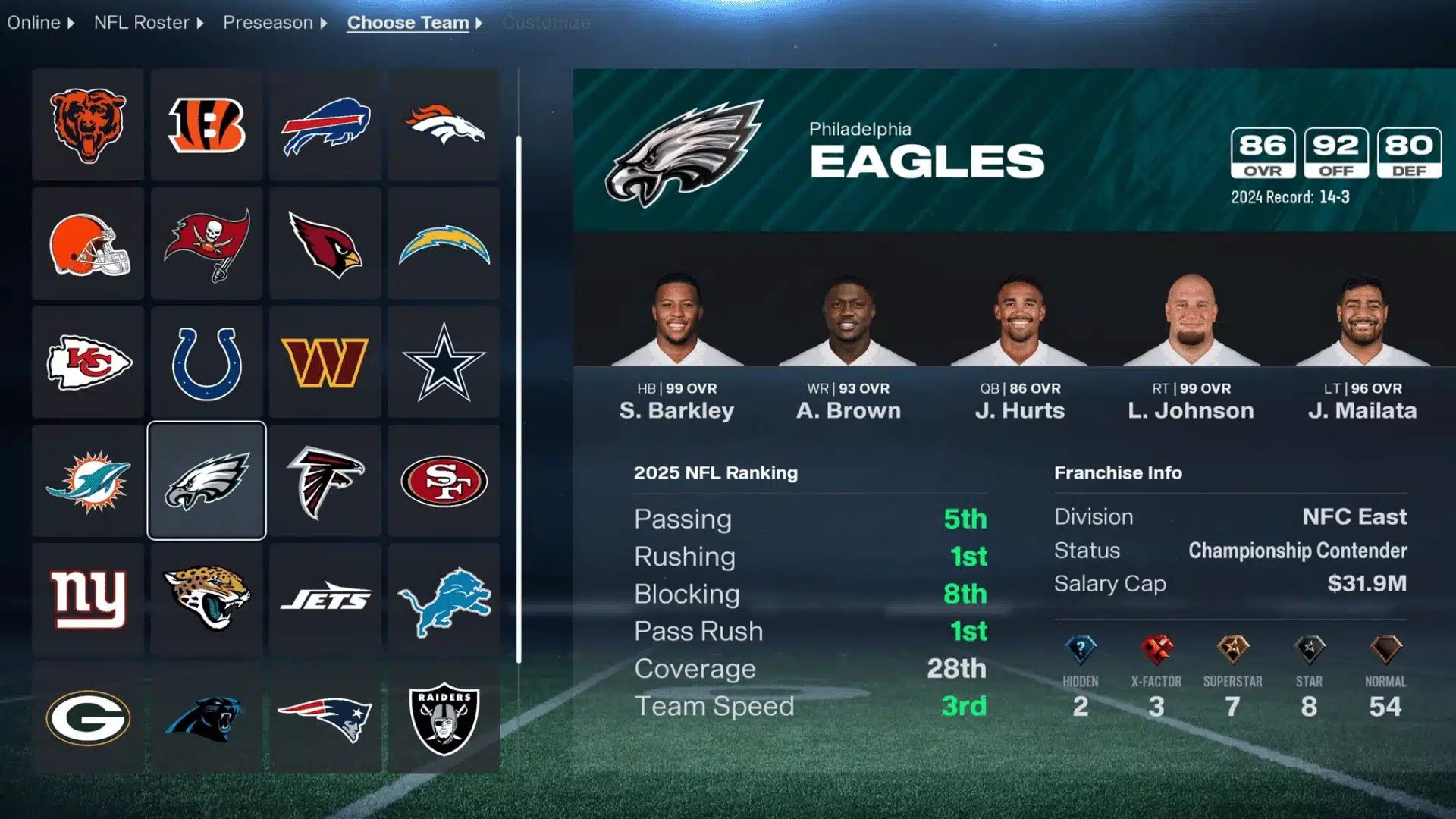
Franchise mode is the strongest reason to buy Madden 26. The Wear & Tear system, borrowed from EA’s College Football series, is the mechanic responsible for most of that improvement.
It works alongside coaching archetypes and weekly tactics in ways that take a few hours to fully appreciate.
I spent most of my testing hours in Franchise mode, and the difference showed up in ways a box score never captures, like actually hesitating before running my starting back a fourth straight week.
1. The Wear & Tear System: What It Forces You to Manage
Wear & Tear isn’t a fatigue meter; previous Maddens tracked single-game tiredness, but this system tracks cumulative physical stress across an entire season.
A running back who carries the ball 20 times a game becomes increasingly injury-prone by week 10, which means you’re making real roster decisions about workload management long before the playoffs arrive.
Bye weeks become genuine planning windows, and depth players matter in a way they haven’t before, because running your starters into the ground will cost you later.
2. Coaching Archetypes and Weekly Tactics: How They Work Together
Wear & Tear tells you when a player is running out of gas. Coaching archetypes tell you what your staff can actually do about it.
If your defensive coordinator is built around zone coverage, your weekly tactical options reflect that constraint and close off approaches that don’t fit.
You’re working within a coaching identity that shapes what’s available, rather than just picking plays freely, and that limitation is what makes the system worth engaging with.
3. Superstar Mode: What It Offers and Where It Stops
Superstar Mode features RPG-style career chapters and a relationship system called Sphere of Influence, which tracks your standing with coaches and teammates across your career.
The decisions feel lighter than in Franchise. Skipping a press conference or snubbing a teammate’s text rarely changes anything beyond a brief relationship tick, and the consequences feel less meaningful as a result, even though the mode is more engaging than it’s been in recent years.
It’s worth playing if you want a player-focused experience, but it doesn’t come close to the strategic depth that Franchise offers.
Presentation and Atmosphere: Immersive in Spots, Inconsistent Overall
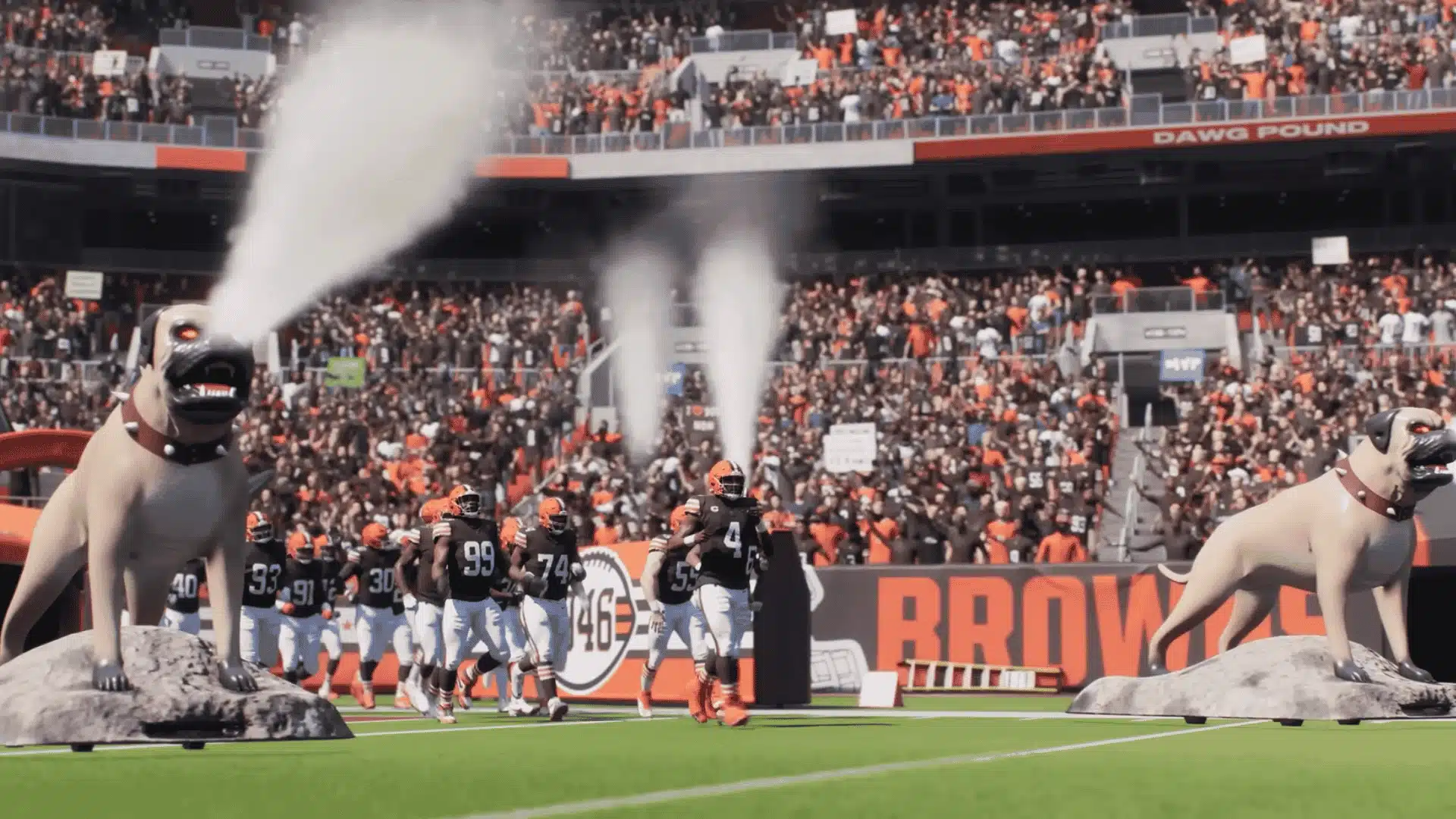
Madden 26 has three broadcast packages tailored to Thursday, Sunday, and Monday night games, and they land well the first time you see them.
By the third game in a sitting, though, they fade into background noise and stop feeling special. The most meaningful addition is Scott Hanson’s halftime show.
Unlike previous canned packages, it pulls real data and reflects what’s actually happening across the league, which makes the Sunday experience feel genuinely connected to the NFL.
Team-specific traditions like stadium light shows and crowd chants give home games a personality they didn’t have before.
They’re small details, but they’re the kind that make the game feel lived-in rather than generic. Where it falls apart is the UI, and that’s not a minor complaint.
Slow menus affect how often you engage with the modes you want, and that friction is easy to underestimate until you’re sitting through it repeatedly.
Weather is one of the more noticeable additions this year, and it’s not just visual.
Heavy snow and rain affect footing and ball security on the field, not just the look of the stadium. A back trying to cut in a snowstorm doesn’t get the same traction he would on a dry field, and that changes how you call plays in bad-weather games.
It’s a small system, but it’s one of the more honest touches in the presentation overhaul.
Ultimate Team, Monetization, and Who This Game Is For
Whether Madden 26 is worth buying depends almost entirely on which mode you plan to play, and the answer differs significantly across three types of players.
Ultimate Team is built around aggressive monetization, and its menu structure affects everyone, not just players who engage with it.
Navigating away from it means pushing through screens clearly designed to pull you back in, even if you never intend to spend money.
Here’s how the purchase decision breaks down by player type:
- Annual Franchise player: the clearest buy. Wear & Tear, coaching archetypes, and QB DNA directly benefit this player, and the improvements justify the upgrade.
- Lapsed player returning after three or more years: also a strong buy, because the game feels meaningfully different and Franchise mode depth will feel genuinely new.
- Casual player who plays two or three games a week: worth it for the on-field and presentation upgrades, but UI frustrations and monetization pressure land harder for someone not deep in the systems.
The game EA built around Franchise mode and on-field physics is the best Madden in years. The game built around Ultimate Team is the same one it’s always been.
Should You Buy Madden NFL 26?
Madden 26 is the best entry in the franchise in years, but that’s most true for Franchise players and lapsed returners.
- On-field physics, speed tuning, QB DNA, and a deeper Franchise mode make this the strongest Madden in over a decade.
- Animation glitches, long load times, and aggressive Ultimate Team monetization are all still there.
- The presentation upgrades, broadcast packages, team traditions, and Scott Hanson’s halftime show make individual games feel closer to the real thing than ever.
- Franchise players and lapsed returners will find this is the one worth coming back for, and the changes will feel meaningful from the first session.
- Ultimate Team players will find the on-field game is better, but the experience built around the mode hasn’t changed.
The improvements are real, but so are the problems EA chose not to fix. Knowing which side of that line matters most to you is the only review that counts.
Conclusion
This Madden NFL 26 game review comes down to knowing what kind of player you are.
If Franchise mode is your main reason to play, the Wear and Tear system, QB DNA, coaching changes, and improved on-field feel make this the strongest Madden in years.
If Ultimate Team is where you spend most of your time, the better football does not erase the same old push toward spending.
That split matters more than any review score. Madden 26 is not a full reset, but it finally improves the parts offline players have been asking about for years.
Check the current price, compare it with your main mode, and tell us if Madden 26 feels worth buying to you.
Frequently Asked Questions
Is Madden NFL 26 Worth Buying if You Skipped the Last Two or Three Years?
Yes, with one clear caveat. The Wear and Tear system, QB DNA, and the Franchise mode coaching overhaul will all feel genuinely new to a player who has been away for a few seasons. Ultimate Team monetization remains just as aggressive as before, but Franchise mode alone justifies picking this Madden NFL 26 game review’s recommendation to buy back in.
Is Madden NFL 26 Better Than Madden 25?
In most areas, yes. Franchise mode runs deeper, on-field physics feel more weight-appropriate at contact, and the broadcast presentation is meaningfully improved with new team traditions. The core complaints carry over too: animation inconsistencies, occasional long load times, and Ultimate Team’s menu structure built around monetization are all still present, just less prominent than in recent years.
What Is the Wear & Tear System in Madden 26?
Wear and Tear tracks cumulative physical stress across an entire season, not just single-game fatigue like older Maddens did. Players who absorb heavy workloads become more injury-prone over time, which forces roster rotation and rest decisions week to week rather than only near the playoffs. It was introduced in EA’s College Football series before reaching Madden.
Does Madden NFL 26 Have a Good Career Mode?
Superstar Mode includes RPG-style career chapters and a relationship system called Sphere of Influence that tracks your standing with coaches and teammates throughout your career. It’s more engaging than in recent years, but still shallower than Franchise mode, making it a solid secondary option rather than a standalone reason to buy Madden NFL 26.