The first time I joined a Mario Kart tournament, I expected serious competition, complicated rules, and experienced players.
Instead, I found that tournaments can be as simple as a few friends racing at home or as organized as large online events with brackets and rankings. That experience changed how I looked at competitive Mario Kart.
Picking the right format, understanding the rules, and knowing where to find events makes the whole experience much more enjoyable.
From casual races to organized leagues, there is a tournament style for almost every player. A little preparation goes a long way before the first race begins.
Mario Kart Tournament Types: Which One Is Right for You?
Mario Kart tournaments generally fall into three categories: casual local events, online community tournaments, and organized competitive leagues.
I originally thought every tournament meant formal brackets and rankings, but that’s only one option.
Casual events at homes, libraries, or schools are easy to join and often need nothing more than a Nintendo Switch and a few players. Mario Kart 8 Deluxe also lets players create or join online tournaments using community codes.
For more structured competition, communities like MKCentral host leagues and tournaments, while NASEF organizes school-based seasons for eligible students and educators.
The best choice depends on how competitive, organized, and time-intensive you want your experience to be.
Similar planning principles also apply in other competitive games, including the Madden tournament, where organizers decide on formats, brackets, and match settings before play begins.
How to Find and Join a Mario Kart Tournament
The fastest way to find a Mario Kart tournament is to pick your platform first. In-game search, Discord, MKCentral, NASEF, and local events each offer a different level of commitment.
When I first went looking, I assumed the game would be the main hub, but it isn’t. Many of the most active scheduled tournaments are organized through Discord and community sites, while the races themselves take place using Nintendo’s online services.
1. Using Mario Kart 8 Deluxe’s Built-In Tournament Mode
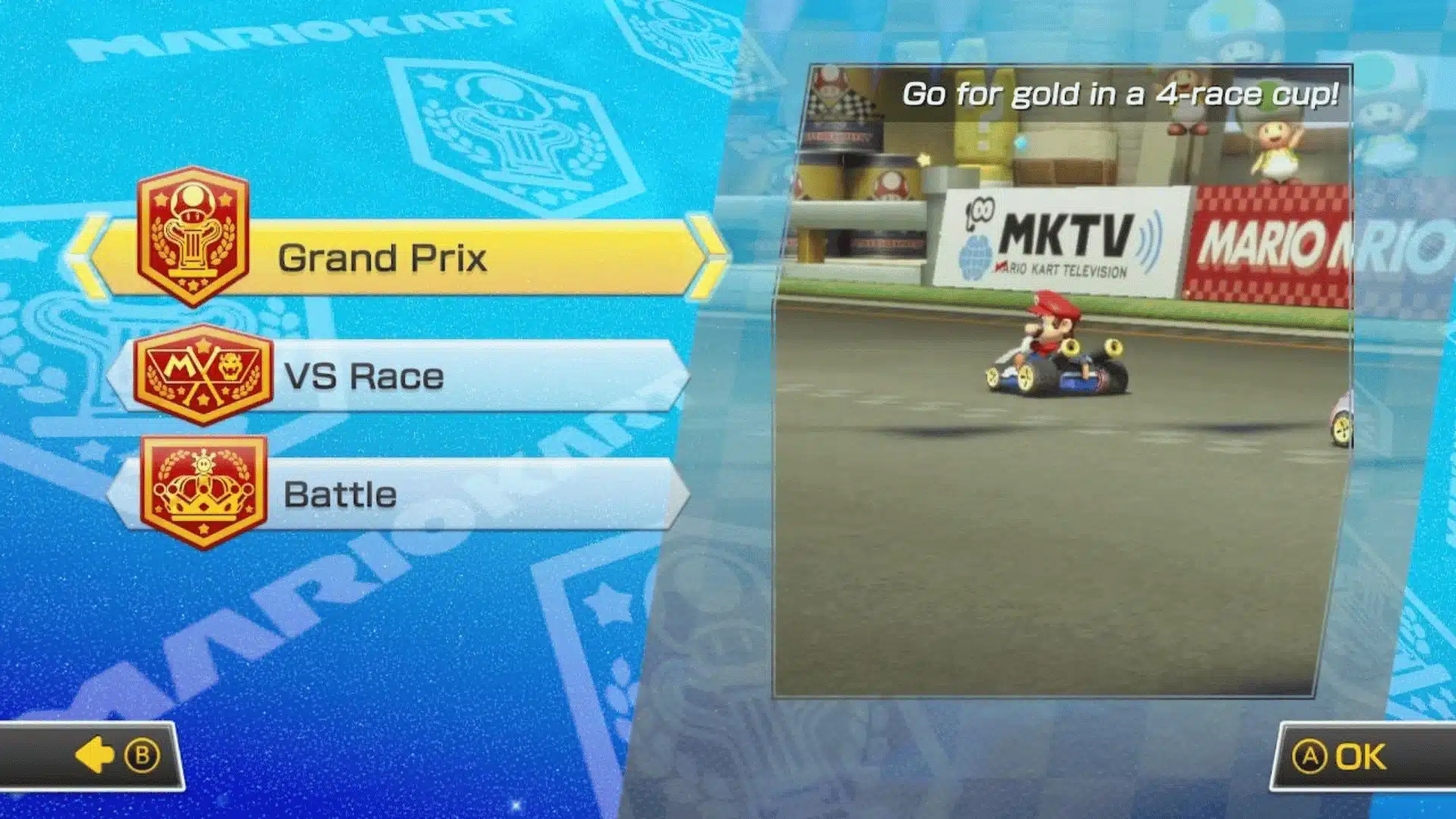
Mario Kart 8 Deluxe’s online servers are still active as of 2026, with a solid pool of community-created lobbies. I used it constantly early on because it required nothing except opening the game.
The in-game menu keeps this part simple once you know where to look. Here’s how it works, from opening the app to filtering results:
- Select Online Play → Tournaments to browse or search active lobbies
- Enter a community code if you got one from Discord or a forum post
- Filter by region, rule type, or race count to narrow results
- The same menu lets you create a private tournament, useful for friend groups
The in-game system is fine for casual pickup races. The moment you want an actual bracket with structured rounds, you need to step outside the game entirely.
2. Finding Tournaments Through Discord and MKCentral
I spent longer than I should have clicking through dead Discord servers. The tournament infrastructure for Mario Kart lives in these communities, and a live server versus an abandoned one isn’t always obvious.
A dead server wastes your time before you even sign up. Here’s what I check before trusting one:
- Posts in announcement or match channels within the last 7 days
- A pinned schedule showing upcoming events, not past ones
- A results or standings channel with recent entries
- Member count in the hundreds at minimum
These four checks take five minutes and save you from wasted signups. MKCentral is a step up structurally, but some of its team leagues aren’t open to solo signups. I found that out after registering.
If you’re joining an MKCentral team league, you’ll need to find or form a team through the Recruiting section.
3. Joining NASEF or School-Based Competitions
I didn’t come across NASEF until a friend who taught high school mentioned it. It runs on a time trial format, not head-to-head racing. It’s you against the clock.
Registration works differently here than in most tournaments you’ve seen. A few things worth knowing before you try:
- Eligibility is limited to students and school-affiliated educators
- Seasons run in defined multi-week windows, so timing your entry matters
- No team is required, which makes it genuinely accessible for individual players
- School coaches or club advisors can register a whole program at once
If you’re a student and haven’t looked at this one, check the current season dates on the NASEF site. The barrier to entry is lower than in most competitive formats.
4. Finding Local In-Person Events
I almost missed the local scene entirely because I was only looking online. Then I found a library tournament two miles away that had been running quarterly for two years.
Local tournaments rarely show up in a general search. Here are the places that have actually worked for me:
- Eventbrite and Meetup were searched with “Mario Kart tournament” plus a city name
- Local library event calendars, which run gaming tournaments far more often than you’d expect
- University student union boards, especially around semester start, when clubs are actively recruiting
- Facebook Events and regional Discord servers, where local organizers tend to post first
One thing I got wrong early was showing up to events I hadn’t confirmed were still happening. Now I only trust listings with an update within the last two weeks and a clear RSVP. Once you find the right community, you stop having to search.
The next events just show up in the same place the last one did. That first find is the hardest part.
How to Structure a Mario Kart Tournament
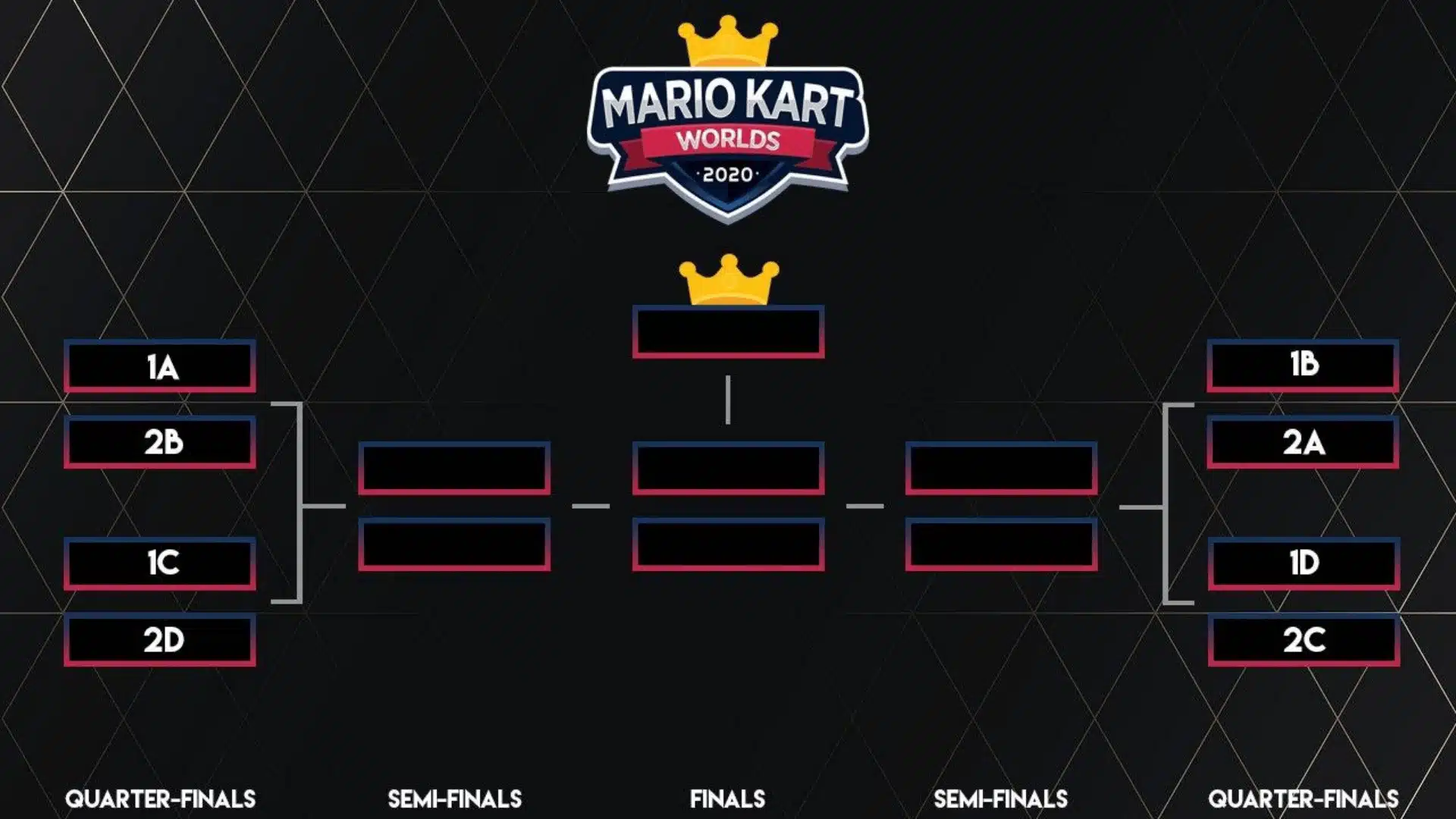
To structure a Mario Kart tournament, start with the player count. Set the lobby size from that, then build your bracket around advancement. The bracket is always the last decision, never the first.
Player count determines lobby size, and lobby size shapes round count. Round count determines how many players advance, which in turn determines your bracket size and format.
Every fairness problem I have seen came from skipping a step somewhere in that chain. Prize pools exist at the MKCentral level, but NASEF stays prize-free.
1. Choosing Your Format: Group Stage, Swiss, or Single Elimination
The format question is about player count and available time, nothing else. I picked single elimination at my first event because it felt familiar. It was the wrong call for that group size.
Three formats cover almost every player count and time budget. Here’s how each one works and when to use it:
- Single elimination works cleanly with player counts that are powers of two: 8, 16, 32. One loss ends your run, keeping the schedule tight. Best for shorter events but unforgiving in casual settings.
- The group stage-to-finals format works better for 12 to 24 players. Run 4-player group lobbies, advance the top one or two per group, then move into elimination rounds. Every player gets more than one race before elimination.
- The Swiss format is best for odd player counts or when you want everyone to play the same number of rounds. No one is eliminated early, but it’s the most complex to manage live without a dedicated tracker.
Getting the format decision right before the event starts matters most. It determines whether your bracket feels fair or generates complaints from round one.
2. Setting Up Lobbies and Advancement Rules
Points translate into advancement decisions, and that part trips up many first-time hosts. I assumed everyone knew how Mario Kart scoring worked. They didn’t, and unclear rules at the start created disputes at the finish line.
Points scale down by finishing position. Standard scoring per race looks like this:
- 1st: 15 points
- 2nd: 12 points
- 3rd: 10 points
- 4th: 9 points, continuing down to 1 point for last place
For group-stage lobbies, I run three races per group and add up the total points across all races. The top one or two players by cumulative score advance to the next round.
A few decisions need to be locked in before anyone starts racing. Otherwise, disputes creep in fast:
- How many races per group lobby (three is the minimum for a fair points sample)
- How many players advance per group (one keeps brackets tight; two gives more players a path)
- What is the tiebreaker if two players finish level on points (I use a single sudden-death race)
Lock these three in writing, and share them with players ahead of time.
150cc is the standard competitive speed class in Mario Kart 8 Deluxe and is also commonly used in organized Mario Kart World events. It works well for casual events too, without the added chaos of 200cc.
3. Using the Nintendo Tournament Bracket Generator
Nintendo’s bracket generator handles the visual structure once your player count and format are locked. I use it for every in-person event now.
A printed bracket on the wall immediately removes most mid-event confusion.
How to use it without the mistake I made:
- Go to the Nintendo Tournament Bracket Generator through Play Nintendo
- Input your confirmed player count first, not an estimated or hoped-for number
- Select the bracket type only after verifying that the lobby size and advancement ratio are already decided
- Choose single or double elimination based on the confirmed player count and your time budget
- Generate the bracket, then print it or share the link with all players before the event
I once generated a 16-player bracket before confirming attendance. Two no-shows created unplanned byes mid-event. Confirm your headcount the day before, then generate the bracket, not earlier.
Double elimination gives players a second chance but roughly doubles your total time requirement. Build that into your schedule before committing to the format.
4. Failure Points and How to Prevent Them
Most events don’t fall apart during races. They fall apart in the gaps between rounds, the disputed calls, the no-shows.
Nearly all of it is preventable if you name the rule before it becomes a problem.
- Uneven lobbies happen when the player count isn’t divisible by four. Ten players means one group of two with a structurally easier path. Fix it by capping registration, using Swiss format, or pre-stating a bye-round rule.
- No-shows need a pre-stated ruling before the event starts. CPU fill keeps lobbies full, but skews point totals. An empty seat is cleaner for scoring but makes a three-player lobby feel noticeably thin.
- Tiebreaker disputes are entirely preventable. State your tiebreaker rule before the event, not after a tie happens. A single sudden-death race is the simplest and most widely accepted method among players.
- Disconnects in online formats will happen at some point. Decide in advance whether a mid-race disconnect means last place or a re-race. I use last place after lap one, re-race within the first thirty seconds.
The structure decisions feel tedious before the event starts. During the event, that’s the only thing standing between a smooth bracket and a long group chat argument.
How to Host an In-Person Mario Kart Tournament

To host an in-person Mario Kart tournament, you need real equipment and a plan. One Switch and one TV per four-player lobby, plus a printed bracket and manual scorekeeping, cover it.
The game handles racing. Everything else is on you.
That last part caught me off guard the first time. There is no in-person multi-lobby tournament mode in Mario Kart 8 Deluxe or Mario Kart World.
Round progression, scorekeeping, and bracket updates all happen manually.
1. Equipment and Space Requirements
Most hosting problems trace back to equipment decisions made too late. By the time players arrive, your setup is fixed.
Getting this right beforehand is the only way to avoid scrambling mid-event.
- 8-player event needs 2 Switch units, 2 TVs, and 4 controllers per lobby
- 24-player event needs 6 Switch units, 6 TVs, and a dedicated scorekeeper
- Both Mario Kart 8 Deluxe and Mario Kart World support local wireless across multiple Switch units
I keep lobby screens facing inward so players aren’t distracted by other lobbies. For finals, I flip one screen outward so spectators can follow along comfortably.
2. Pre-Event Preparation
The events I’ve seen stall the hardest are the ones where the host shows up with nothing printed. Check-in turns chaotic, seeding gets decided on the spot, and the first round starts late.
- Print the bracket from the Nintendo Tournament Bracket Generator with player names already filled in
- Prepare a check-in sheet with every registered player’s name and a confirmation checkbox
- Decide your seeding method before anyone arrives, not during check-in
- Random draw suits casual events, skill-based seeding suits competitive groups, and first-come placement suits open registration
I send players a short message the night before covering speed class, item settings, course selection, and the tiebreaker rule. Players who know the rules before arriving cause far fewer disputes.
3. Running the Event on the Day
The gap between rounds is where live events lose momentum. Races finish, players look around, nobody knows where to go next, and five minutes disappear before the next round begins.
- Check-in happens thirty minutes before the start, and no-shows are handled by the stated start time
- Late arrivals after round one begins take the pre-stated no-show ruling without exception
- Set a fixed transition window between rounds. I use eight minutes, and announce it aloud
- Post updated bracket results visibly after each round so players self-navigate to their next lobby
For an 8-player event, I track everything myself. For 24 players, I assign one dedicated scorekeeper and two lobby reporters. Trying to do it solo at scale is where I’ve made the most errors.
4. Finals Format
The final round should feel different from everything before it. I once ran finals exactly like group stages, and it landed completely flat.
Five races, cumulative points, and one shared screen change that entirely.
- Race count: five races minimum, cumulative points decide the winner
- Screen setup: single shared screen for all spectators if space allows
- Tiebreaker: pre-stated sudden-death race, same rule applied throughout the event
- Recognition: verbal announcement, printed certificate, or small trophy works well
Announce finalists by name before race one starts. Equipment, transitions, and scorekeeping determine whether the event runs smoothly or stalls halfway through.
Mario Kart Tournament Rules and Settings
Most Mario Kart tournaments use 150cc because it offers a balanced mix of speed and control, making it the standard for competitive play.
Casual events may opt for 200 cc for a faster, more chaotic experience. Before the tournament begins, decide on item settings, course selection, and game mode to avoid confusion.
Some competitive communities use standard items, while others limit certain items or apply custom rules depending on the event.
Random course selection is generally the fairest option, while preset rotations create consistency across matches.
Free-for-All is the simplest format for most tournaments, though team play works well for organized leagues. Always share the rules with players before racing begins.
Conclusion
A Mario Kart tournament can be as relaxed or as competitive as you want it to be, but good planning always makes the event run better.
I have learned that choosing the right format, setting clear rules, and keeping players informed prevents most problems before the first race starts.
With the right setup, hosting or joining a tournament becomes much easier and more enjoyable for everyone involved.
Every event is also a chance to improve and make the next one even smoother. Have you hosted or played in a Mario Kart tournament before? Share your experience or favorite tournament tips in the comments below.
Frequently Asked Questions
Are There Mario Kart Tournaments for Money?
Prize pools exist at the MKCentral competitive level, and community organizers sometimes add their own entry-fee pools on top of them. NASEF and Nintendo-official events stay prize-free across the board. MKCentral remains the real starting point if prize money is the goal.
What Is the Best Mario Kart Game for a Tournament?
Mario Kart 8 Deluxe remains the most widely supported tournament title as of 2026, with an established MKCentral ruleset and a large player base. For mixed hardware availability, MK8DX is the safer default.
How Many Players Do You Need for a Mario Kart Tournament?
Eight players are the functional minimum using a single-elimination bracket. Sixteen is the clean standard size. For larger events, 24 to 32 players work well with a proper group stage.
Can You Host a Mario Kart Tournament Without Multiple TVs?
Not practically for simultaneous play. One Switch and one TV per four-player group is the standard requirement. Sequential play on one TV works but significantly extends event time.