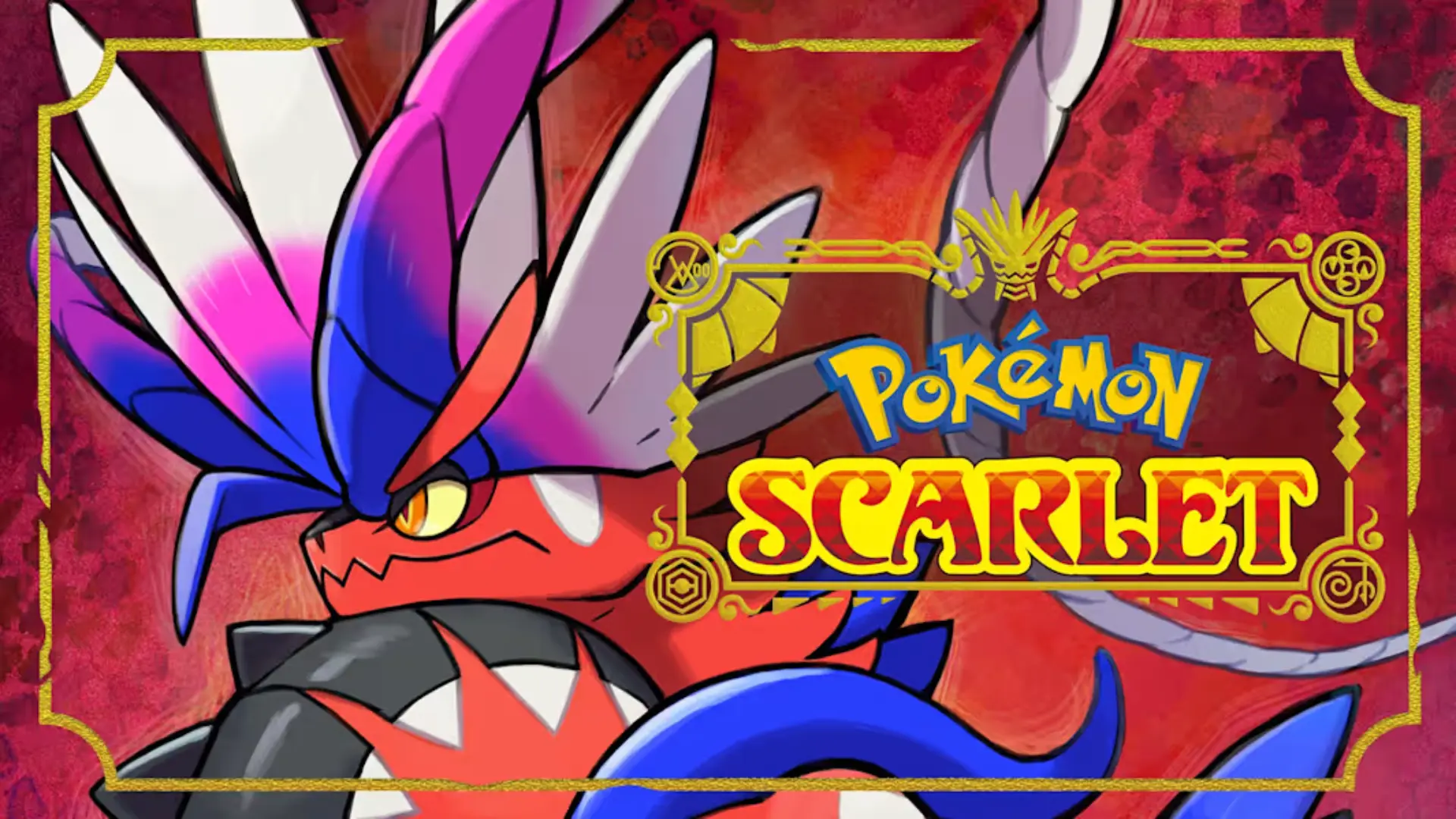
A Pokémon game with a fully open world sounded like a dream for longtime fans, but Pokémon Scarlet arrived with big ideas and equally big debates.
I was excited to see if the freedom lived up to the promise or if the technical problems overshadowed everything else. After spending time in Paldea, I found a game that gets many things right while also showing clear flaws.
In this Pokémon Scarlet review, I cover the open world, story, gameplay, performance, and whether it is still worth playing in 2026.
What Kind of Game is Pokémon Scarlet?
Pokémon Scarlet is an open-world RPG set in the Spanish-inspired Paldea region. Its central design decision, letting you tackle gyms, story bosses, and villain bases in any order, is what separates it from every mainline Pokémon game before it.
This isn’t just a bigger map with the same linear path underneath. I went in expecting the usual badge-to-badge structure and found something genuinely different.
Three-story paths run simultaneously. You choose which to pursue, in what order, at your own pace.
That freedom is the whole game. It’s also why the praise and the criticism both hit as hard as they do.
Does the Open World Actually Work?
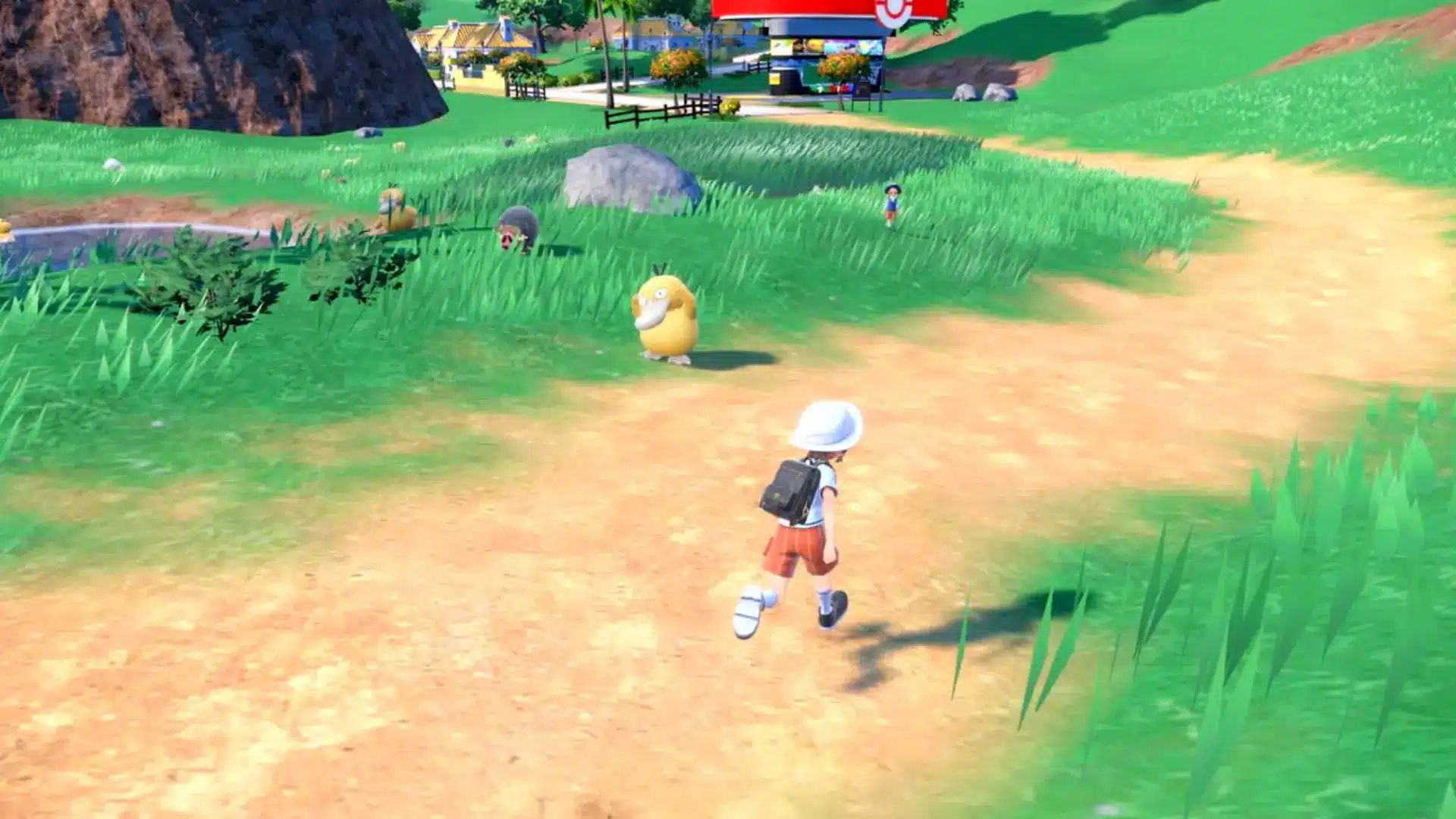
The Paldea region gives you genuine freedom from the start. Your legendary Pokémon mount is your primary traversal tool, and its abilities become available as you clear Path of Legends bosses, meaning exploration expands the more you play.
It’s not just open for the sake of it. The systems underneath actually support the freedom.
How Do the Three Paths Shape Your Playthrough?
The three paths, Victory Road (gyms), Starfall Street (Team Star bases), and Path of Legends (Titan Pokémon), run at the same time. You’re never locked into one.
What I didn’t expect was how they regulate each other. Clearing a Titan grants a new traversal ability that opens up areas where gym leaders or Star bases are located.
Your team level naturally rises across all three, since Titan battles and Team Star bases hand out experience on par with gym fights. So even if you skip gyms for a while, you’re not falling behind; you’re just approaching the same challenge from a different angle.
What Traversal Actually Feels Like?
Early on, your mount can run and dash. That’s it. It feels limited, and intentionally so.
As you beat the Titans, you gain access to swimming, climbing, and gliding. Each one genuinely changes where you can go.
I noticed the map opening up in stages rather than all at once. That progression curve gives the open world a rhythm closer to that of a Metroidvania than to a typical Pokémon game.
The “Let’s Go” feature adds to this. Sending your lead Pokémon out to auto-battle means wild encounters don’t break exploration flow. Grinding becomes a background task, not a roadblock.
How Bad are the Technical Problems?
On the original Switch hardware, Pokémon Scarlet runs at a noticeably lower frame rate in towns, raids, and other areas with high Pokémon density. This isn’t an occasional dip; it’s a recurring condition throughout the game.
I kept track of where it hit hardest. The pattern was pretty consistent.
Where performance breaks down:
- Open fields: Frame rate is inconsistent but manageable. You’ll notice stutters, but they don’t stop you from playing.
- Towns and cities: This is where it gets disruptive. Buildings are mostly empty facades, and the frame rate still struggles, even with less to render.
- Tera Raids: With four players and their Pokémon rendering on screen at once, these put the hardware under the hardest strain. Slowdown here is frequent and hard to ignore.
- 4-player co-op: Lag and desync compound the base issues. It’s a separate problem, not just the single-player experience multiplied.
These aren’t edge cases. They show up regularly enough to be part of the normal experience. Visuals follow the same pattern. Pokémon and character models look sharp and well-designed.
The world around them doesn’t have flat textures, low draw distance, and constant pop-in, which create a persistent mismatch that’s hard to unsee once you notice it.
Does the Switch 2 Version Fix it?
The Switch 2 version of Pokémon Scarlet runs at a mostly stable 60 fps with a sharper 1080p resolution. It’s a significant improvement over the original release, but it doesn’t change the game underneath.
I’ve seen a lot of people treat the patch as a full fix. It isn’t.
What the Switch 2 upgrade improves:
- Frame rate: Mostly stable at 60 fps, replacing the constant stuttering. This alone makes the game feel substantially better to play.
- Resolution: 1080p output is noticeably cleaner. Character and Pokémon models benefit the most.
- Textures and draw distance: Slightly improved, but don’t expect a visual overhaul. The gap between world quality and character quality still exists.
What it doesn’t fix:
- Town interiors are still empty facades
- Open-world areas still feel sparse and underpopulated
- Multiplayer desync and lag remain present
The performance case against buying is much weaker on Switch 2. But the structural limitations, the things that were design decisions, not technical failures, are still there.
Is the Story Worth Playing Through?
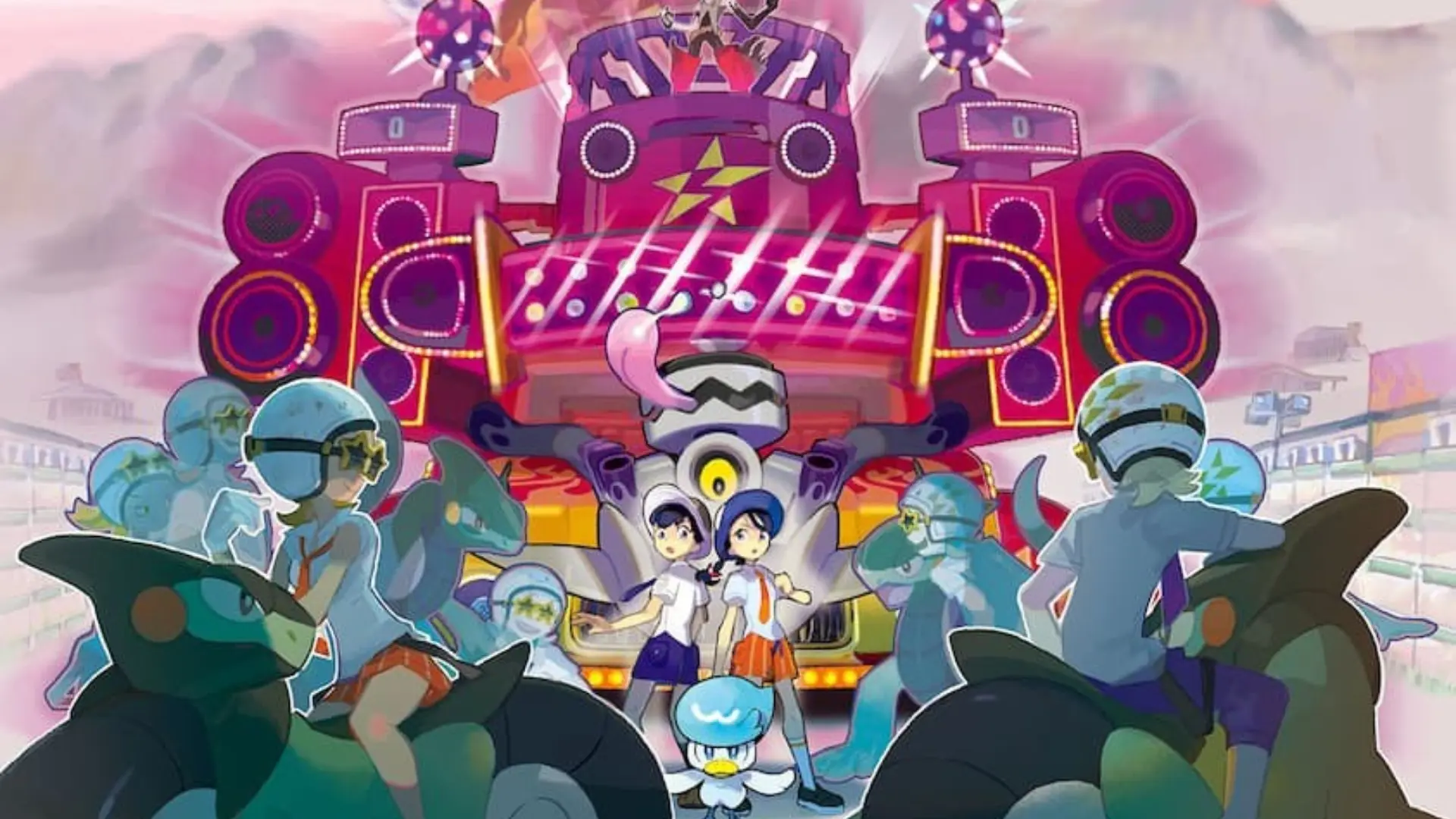
Pokémon Scarlet’s story is split across three independent campaigns that converge in a final act. If you enjoy that style of Pokémon RPG, the Pokémon Unbound covers a much harder fan-made adventure worth trying afterward.
That convergence leads to one of the strongest endings in the mainline series. I didn’t expect to care about the story going in. Most Pokémon narratives don’t ask much of you.
Each path carries a distinct theme. One is about ambition, one about belonging, one about friendship. They feel separate, until they don’t.
The final act pulls all three together in a way that recontextualizes everything that came before. Nothing about it is telegraphed early, which makes it land harder than you’d expect.
The Academy setting helps. Recurring characters show up across all three paths, and they have actual arcs, not just roles. It gives the world a sense of continuity that feels closer to a JRPG than to a traditional Pokémon game.
Should You Buy Pokémon Scarlet in 2026?
Whether Pokémon Scarlet is worth buying in 2026 depends almost entirely on which hardware you’re playing on and how much visual and performance polish matters to you.
The game hasn’t changed. The context around it has.
| Buy If | Skip If |
|---|---|
| You’re on Switch 2, and performance was your main hesitation | You’re on the original Switch, and frame rate drops break immersion |
| You want a Pokémon game with a story that actually pays off | You came from Legends: Arceus expecting a dense open world |
| You’re fine with a large world built around structured progression | You want towns with functional interiors and a lived-in feel |
| You enjoy turn-based battles with real strategic depth (Terastallization) | Visual polish and world quality are non-negotiable for you |
The gap between what Scarlet attempts and what it delivers is real. Knowing which side of it you land on makes the decision straightforward.
Conclusion
After finishing my Pokemon Scarlet review, I can say the game delivers one of the freshest ideas the series has seen, even if its technical issues hold it back on older hardware.
The open world, memorable story, and fun battles make it easy to enjoy, while the performance problems are hard to ignore on the original Switch.
If you’re playing on Switch 2, the experience is much smoother and easier to recommend. Have you played Pokémon Scarlet? Share your thoughts or tell me if you agree with this review in the comments below.
Frequently Asked Questions
Is Pokémon Scarlet or Violet better?
Both are identical in gameplay and story. The difference is exclusive Pokémon and aesthetic, past-themed for Scarlet, future-themed for Violet.
How does Pokémon Scarlet compare to Legends: Arceus?
Arceus has a denser, more purposeful world. Scarlet has a stronger story and larger map but feels less refined in exploration.
What is Terastallization, and does it matter for casual players?
It lets Pokémon temporarily change type mid-battle. Casual players can use it simply; competitive players plan combinations in advance for strategic advantage.
Is the multiplayer worth using?
Tera Raids are the best use of co-op. Open-world multiplayer adds lag and glitches, more stable on Switch 2 than on the original hardware.