
Spending 60 hours on an RPG sounds easy until you realize the ending, grind, or combat may not fit you.
Metaphor ReFantazio review scores are strong, but high ratings do not always answer the question that matters most.
You need to know how the Archetype system, battles, calendar, bonds, story, and pacing feel across the full run.
This review looks at what makes the game special, where it starts to slip, and who should actually play it. If you are deciding before buying, the real answer depends on what kind of JRPG experience you enjoy.
Before judging the score, let us first look at what Metaphor: ReFantazio actually is.
What is Metaphor: ReFantazio?
Metaphor: ReFantazio is a fantasy JRPG from Atlus, developed by Studio Zero under the direction of Katsura Hashino, best known for Persona 5.
Although it shares familiar ideas with Persona and Shin Megami Tensei, it has no story or world connection to either series.
Instead, it introduces the Kingdom of Euchronia, a new fantasy setting shaped by political conflict and a royal election.
Like Persona, it combines time management, turn-based combat, and relationship-building, but these systems are more closely tied to the main story.
Nearly every activity contributes to your campaign, making gameplay progression and the narrative feel closely connected throughout the experience.
Quick Definition: What is the Archetype system?
Archetypes are Metaphor’s version of a class or job system. Every party member has one, and it sets their stats, abilities, and battle role.
Unlike a typical job system, abilities you gain while leveling one Archetype can be carried into a different one later, so builds stack instead of resetting.
Metaphor ReFantazio Review: How the Story and World Actually Work

The story starts with a kingdom that’s already falling apart. The king is dead, a mysterious death curse is spreading across the land, and the only way to stop it is to put the right person on the throne.
In your eyes, that person is the cursed prince. Sounds simple enough, except there’s a pretty big problem. The throne isn’t inherited.
It’s decided through a kingdom-wide election, and popularity is what matters most.
To make things harder, your character belongs to the Elda tribe, a group that faces open discrimination throughout the world.
In some places, people don’t trust you. In others, they don’t even want you there.
And that’s not just background lore the game throws at you and forgets about. It directly affects how the story unfolds and why you’re doing what you’re doing.
Where the Story Starts to Slip?
For much of the game, the story does an excellent job of building momentum.
The middle portion is easily the strongest. Characters get meaningful development, major plot threads connect in satisfying ways, and the game’s main antagonist, Louis, feels like a genuine threat.
He isn’t evil just because the story needs a villain. He has clear goals, strong convictions, and enough presence to make every encounter memorable.
The problem is that the final stretch doesn’t maintain that same level of quality. Several storylines that spend dozens of hours building toward important payoffs get wrapped up surprisingly quickly.
A few receive satisfying conclusions, but others feel compressed compared to the amount of setup they received earlier in the game.
The ending isn’t likely to ruin the experience, but the strongest parts of the story happen during the playthrough itself rather than the final destination.
The Archetype System: How Class Customization Actually Works
The Archetype system is basically Metaphor’s version of a job system. Every party member has an Archetype that determines their abilities, stats, strengths, and overall role in combat.
If you want a character to become a healer, a damage dealer, or a frontline tank, this is where those decisions happen.
At first glance, it seems pretty straightforward. Pick a class, level it up, and swap to another one when something better becomes available.
The deeper you get into the game, though, the more you realize that’s not how the system is meant to be used.
Why Does Inheritance Matter so Much?
The real strength of the Archetype system comes from inheritance. As you rank up an Archetype, you’ll eventually gain access to abilities that can be carried over into other classes.
Once earned, those abilities stay with the character rather than being tied to the Archetype itself. That opens up a lot of room for customization.
For example, you might spend time leveling a Mage to gain a powerful offensive spell.
Later, you can switch that same character into a much tougher Archetype and still bring that spell with you. You get the survivability of one class and the utility or damage of another.
Most of the meaningful build decisions come from exactly that kind of long-view thinking.
Instead of asking which Archetype is strongest right now, you’re constantly thinking about what skills will still be useful 10-20 hours later.
Sometimes you’ll level a class not because you want to use it, but because one specific inherited ability is going to make a future build much stronger. Early in the game, you can mostly get away with ignoring that.
Once you reach the middle chapters, it becomes much harder to do.
The Mistake Most Players Make
Many players treat Archetypes like equipment. They enter a new dungeon, look at what works best, switch into the strongest available class, and move on.
On paper, that sounds logical. The problem is that you’re only thinking about immediate power, not long-term progression.
Eventually, the game starts expecting more from your party.
Boss fights become more demanding, enemy mechanics become more specialized, and having access to a wider range of inherited abilities starts making a noticeable difference.
I keep a spreadsheet for pretty much every RPG I review, and this is the one game in the last few years where mine actually mattered mid-playthrough.
Players who focused on only a handful of Archetypes often find they’re missing important tools and end up going back to grind classes they ignored earlier.
The game never really warns you about this. It lets you make the mistake first and deal with the consequences later.
Combat: Real-Time Encounters and Press-Turn Strategy

One of the first things you’ll notice about Metaphor’s combat is that it doesn’t immediately throw you into a turn-based battle every time you see an enemy.
The game actually has two combat layers, and understanding how they work together makes a huge difference throughout the entire experience.
Clearing Enemies in the Overworld
When you’re exploring dungeons, weaker enemies can be defeated before combat even starts. If you’re strong enough, you can hit them with your weapon on the map, and they’re gone.
No battle transition, no spending MP, and no sitting through a fight you’ve already outgrown. It sounds like a small quality-of-life feature, but it has a much bigger impact than you’d expect.
In many JRPGs built around long dungeon crawls, backtracking through earlier areas means fighting enemies that no longer pose a threat.
Metaphor largely avoids that problem. Once your party becomes stronger, moving through dungeons feels much faster because you’re only stopping for encounters that actually matter.
As a result, exploration stays enjoyable for much longer. You’re spending less time clearing trash mobs and more time focusing on meaningful fights, treasure, and objectives.
Not every enemy can be handled this way, though. Stronger opponents will pull you into the game’s turn-based combat system as soon as you engage them.
The good news is that getting the first hit in the overworld still matters. If you strike first, your party enters the battle with an advantage, giving you more control from the opening turn.
Why Does the Press-Turn System Feel So Good?
Once combat starts, Metaphor uses Atlus’ classic Press-Turn system, which originally became popular through the Shin Megami Tensei series. The basic idea is simple.
Hit an enemy’s weakness, and you earn extra actions. Attack with the elements they’re resistant to, miss an attack, or make the wrong decision, and you lose actions instead.
That might not sound unusual if you’ve played Persona before, but the feeling is very different in practice; Persona tends to reward you for finding weaknesses.
Metaphor rewards you and punishes you. Every decision affects the flow of battle, and mistakes can immediately swing a fight against you.
Use the wrong spell at the wrong time, and suddenly half your turn is gone.
That constant risk is what makes the combat so engaging. You’re not just cycling through abilities because they’re your strongest options.
You’re paying attention to enemy weaknesses, tracking resistances, and thinking ahead before committing to an action.
When you win, it feels like you earned it. When you make a mistake, the game lets you know right away.
Calendar, Bonds, and Time Pressure

If you’ve played Persona before, the calendar system in Metaphor will look familiar at first. Each day gives you a limited amount of time, and you have to decide how you want to spend it.
You can head into dungeons, work on side quests, travel to new locations, or spend time with companions to strengthen your relationships with them.
The difference is that in Metaphor, those relationship choices have much bigger consequences than they do in Persona.
Why Bonds Matter More Than You Think?
A lot of RPGs treat companion relationships as extra content. They’re nice to have, but you can ignore them and still access most of the important gameplay systems. Metaphor doesn’t really work that way.
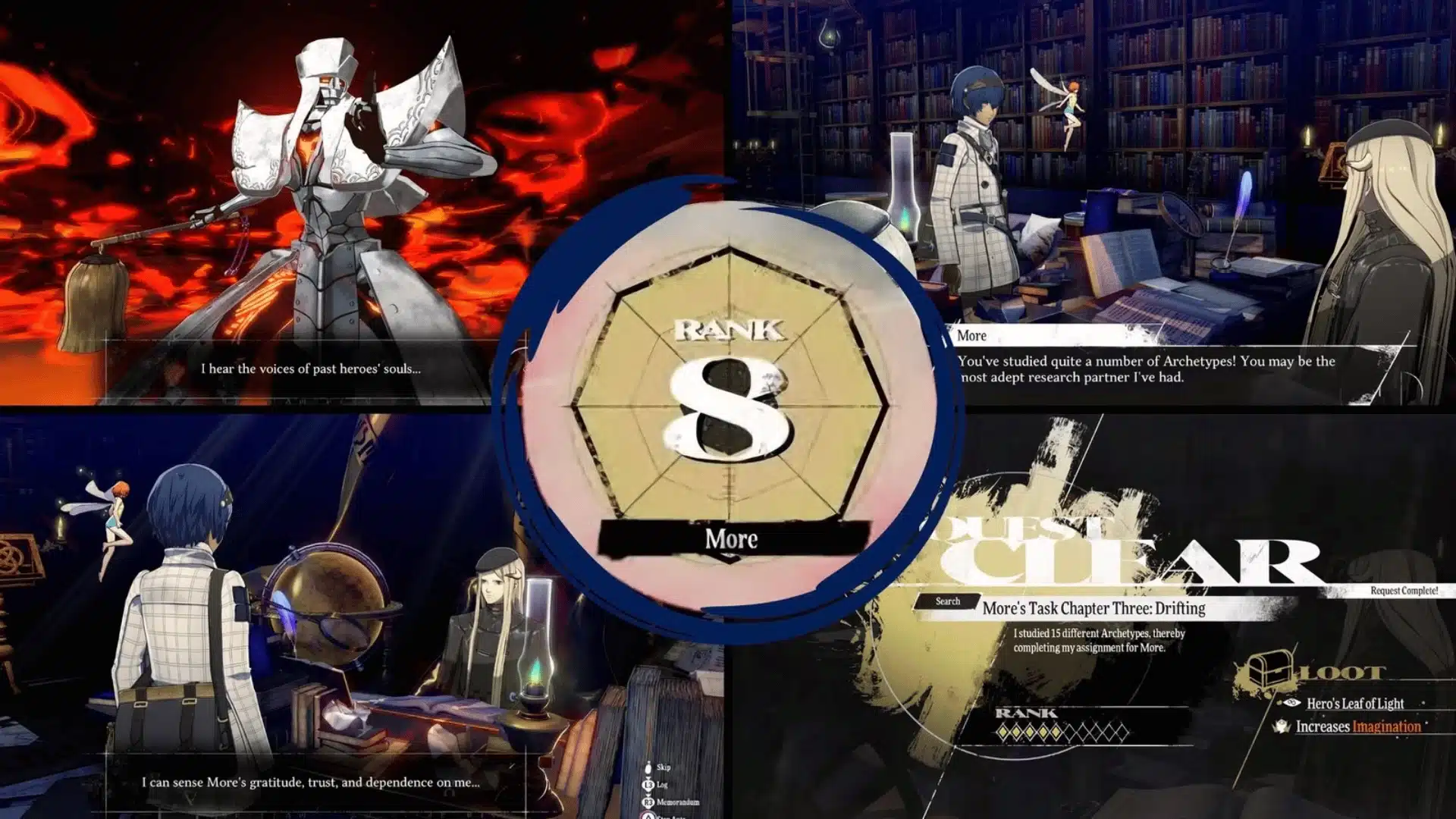
As you increase your bond ranks with companions, you gain access to stronger Archetypes and more advanced class paths.
Those gains don’t just benefit a single character. They expand the options available to your entire party. In practice, the bond system isn’t separate from character progression. It is character progression.
Every bond rank expands your party’s customization options, making companion relationships a core part of the build rather than optional side content.
Neglecting bonds for too long can leave you with fewer Archetypes and less flexibility once the difficulty ramps up.
The Trap Persona Veterans Fall Into
From what I’ve seen across 200+ reviewed titles, this is where Persona veterans stumble most often. Clear the main dungeon early, then spend the remaining days on social activities.
That approach works well in Persona, but I found it much less effective here. Every day has an opportunity cost, so choosing one activity always means giving up another.
Spending too much time grinding or revisiting completed areas can delay bond events that open up new Archetypes and progression options.
I found that treating relationships as a core part of progression, rather than optional side content, gives you much more flexibility in the later chapters.
What Doesn’t Work: Honest Criticism
Metaphor: ReFantazio excels at many things. The world is interesting, the combat stays engaging for most of the runtime, and the Archetype system gives you plenty of room to experiment with different builds. That said, it’s not a flawless game.
If you’re thinking about putting 60, 70, or even 100 hours into it, there are a few weaknesses worth knowing about before you start.
Side Dungeons Start to Feel Repetitive
The biggest gameplay issue comes from the optional dungeons.
Early on, they’re a nice excuse to earn rewards, level Archetypes, and spend extra time with the combat system. The problem is that the further you get into the game, the more familiar they begin to feel.
You’ll start noticing repeated layouts, similar room structures, and enemy groups that don’t change as much as you’d probably like. The rewards are usually useful, but not always useful enough to justify the amount of time some of these dungeons ask from you.
This becomes more noticeable because Metaphor already expects you to spend time leveling Archetypes across multiple characters. When a side dungeon feels repetitive, that extra grind becomes harder to ignore.
It’s never bad enough to ruin the experience, but there were definitely points where I was more focused on reaching the reward at the end than actually enjoying the dungeon itself.
If dungeon variety is something you care about, this is probably the game’s weakest area.
Games built around procedurally varied runs solve this differently, but Metaphor’s hand-built dungeons weren’t designed to be replayed this often.
The Ending Doesn’t Reach the Same High Point
The other major criticism involves the final act.
For most of the game, the story is paced extremely well. New plot developments build naturally on previous events, character arcs receive meaningful attention, and the political themes remain central to everything that’s happening.
The ending still delivers important moments, but it doesn’t maintain the same level of consistency.
The emotional beats are present, and several scenes genuinely land, but the final act struggles with something slightly different from pure pacing: it shifts the story’s weight.
The political complexity and moral ambiguity that defined the earlier chapters give way to a more straightforward resolution, and the game loses some of its distinctive texture in the process.
The ending feels less like the world the player spent dozens of hours in.
This tonal drift, rather than speed alone, is what leaves many players with a sense of mild deflation rather than satisfaction.
It’s also one of the most consistent criticisms across both reviews and player responses, not an outlier take, but a widely shared reaction to how the game chooses to close.
PC Players May Notice Technical Issues
If you’re playing on PC, there are a few technical issues worth mentioning.
The game generally runs well, but some areas can show inconsistent texture quality and occasional visual artifacts. Certain environments look noticeably sharper than others, and there are moments where assets don’t appear as polished as the surrounding areas.
Increasing the rendering scale can improve image quality, but it comes with a performance cost that mid-range systems may struggle to handle.
It’s not a game-breaking problem, and many players will barely notice it. Still, if you’re buying the PC version specifically, it’s something worth keeping in mind before making your decision.
Console players generally have a more consistent experience in this area.
Who Should Play Metaphor: ReFantazio?
The score won’t tell you this; 94 on Metacritic tells you critics liked it. It doesn’t tell you whether you will. Here’s a clearer way to think about it.
| Player Type | What Transfers | What to Adjust For |
|---|---|---|
| Persona veterans | Calendar, bonds, and weakness-based combat will all feel familiar | Higher difficulty ceiling, heavier tone, combat that punishes mistakes more severely |
| SMT players | The press-turn combat structure is immediately recognizable | Social systems are lighter than mainline SMT; the experience is less brutal overall |
| JRPG players new to Atlus | Strong story and world-building are accessible entry points | Time management has real consequences; it can’t be ignored or treated as optional |
| Players who bounced off Persona’s setting | Same core systems, completely different context | The fantasy political setting is earnest and heavy; it leans into its themes rather than away from them. |
One thing cuts across all four: Metaphor rewards players who engage with its systems on their own terms.
If you approach the calendar as a chore, the bonds as filler, or the Archetype system as something to figure out later, the game will make you feel that.
If you treat them as the point, it’s one of the best JRPGs in years, and its closest recent company on that front tends to be games that also ask for real-time investment before they pay off.
Conclusion
A Metaphor ReFantazio review should not only tell you that the game is great, but also explain why the time commitment matters.
You should know whether its calendar pressure, Archetype planning, harder combat, and heavy political story match the way you enjoy RPGs.
I would recommend it most to players who like systems that connect, choices that matter, and battles that punish lazy moves.
The weak final stretch and repeated side dungeons are real issues, but they do not erase the stronger journey.
If that tradeoff sounds fair, this is still one of the most rewarding Atlus games to try.
Would you start Metaphor: ReFantazio after Persona 5? Tell us, share with us in the comments below.
Frequently Asked Questions
Is Metaphor: ReFantazio a grindy game?
It can be, but the grind is structural rather than random. Evolving Archetypes to unlock inherited abilities requires deliberate farming, especially if you spread classes too thin early. Players who plan builds from the start find it manageable. Those who improvise often hit a mid-game wall, which means replaying content they’ve already cleared.
How does Metaphor: ReFantazio compare to Persona 5?
They share the same calendar structure and social bond system.
But Metaphor replaces the high-school setting with a fantasy political power struggle, and Persona 5’s fusion chain with the Archetype inheritance system.
Combat is more demanding; exploiting weaknesses is mandatory, not a boon. The tone is very heavy, and the narrative stakes are broad. Persona 5 is more stylistically playful. Metaphor is more ambitious.
Does Metaphor: ReFantazio have a good ending?
The midgame is widely praised for its pacing and emotional weight. The final act is consistently criticized across press and community reviews for resolving major plot threads too quickly. Players who prioritize the journey over the conclusion tend to rate it highly. Those who need a fully satisfying narrative closure may feel let down.
How long is Metaphor: ReFantazio?
A main-story playthrough typically runs 60–70 hours. Completionist runs targeting all Archetype unlocks, bond maxes, and side content push past 90 hours. The calendar system means some content is locked to repeat playthroughs by design; a single run won’t see everything.