
I expected Hades to be another difficult roguelite that would punish every mistake. Instead, I found a game that rewards persistence with meaningful progress, memorable characters, and fast, satisfying combat. That surprised me more than anything else.
If you’re searching for a Hades Switch review, you’re probably wondering if the Nintendo Switch version lives up to its reputation or if there are compromises worth knowing first.
After spending plenty of time with it in both handheld and docked modes, I saw firsthand what it does well, where it falls short, and why it remains one of the platform’s standout action games.
What Is Hades on Nintendo Switch?
Hades is a roguelite action game developed by Supergiant Games in which you play as Zagreus, the son of Hades, as he fights to escape the Underworld through repeated runs.
I expected the constant deaths to feel punishing, but the game quickly proved otherwise. Every failed escape lets you keep permanent upgrades, unlock new story events, and become stronger for future attempts, so each run feels meaningful.
Unlike traditional roguelikes that often reset all progress, Hades rewards persistence with lasting progression.
The Nintendo Switch version includes the complete game, featuring all six Infernal Arms, the full story, and every major gameplay feature available on PC and other consoles.
Combat, Weapons, and Why Runs Feel Different Every Time?
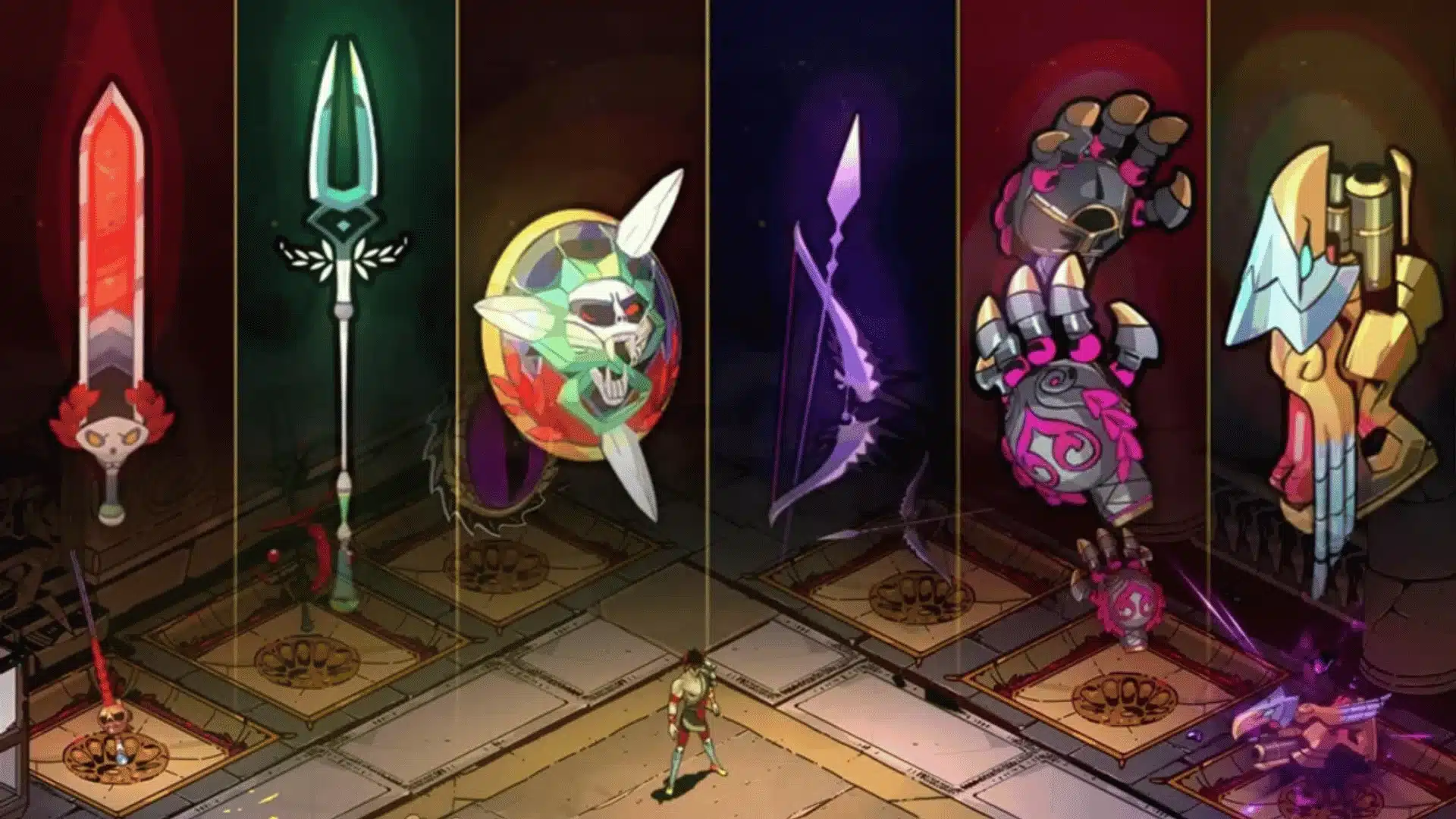
Hades’ combat is fast and direct. You pick a weapon, collect god abilities called boons, and shape a build over each run. The two systems together are what create real variety.
It took me a while to see that. Early runs felt random to me.
The Six Infernal Arms
Each weapon changes how you move and fight, not just how much damage you deal. Here’s what you’re working with:
- Stygian Blade: A sword built for close range, with a reliable dash-strike combo.
- Heart-Seeking Bow: Ranged and timing-dependent. Charged shots hit significantly harder.
- Eternal Spear: Mid-range with a spin attack. Works well if you prefer to keep your distance.
- Shield of Chaos: Blocks hits and throws. The most defensive option available.
- Twin Fists of Malphon: Fast, short-range, aggressive. You’re always in the fight.
- Adamant Rail: A gun with ammo management. Plays nothing like the other five.
Unlocking weapon aspects via Titan Blood adds another layer. Each weapon has alternate forms that shift how it fundamentally works.
How Do Boons and Build Synergies Actually Work?
Boons are ability upgrades offered by Olympian gods mid-run. Each god has a distinct style. Poseidon adds knockback and impact damage, Athena adds deflect, and Ares applies a damage-over-time effect.
You assign boons to your attack, special, dash, and cast. That’s where every build starts taking shape.
What I didn’t know for a long time was that Duo Boons exist. They only appear when you already hold qualifying boons from two specific gods at once.
Building toward a Duo becomes a running goal once you know it’s possible. Before that, you’re just picking whatever looks good.
Legendary Boons sit above that. They are rare, high-power variants within a single god’s pool. I stumbled into my first one by accident around run fifteen.
The Mirror of Night handles permanent upgrades between runs. It’s a separate progression layer that quietly compounds the longer you play.
Story, Characters, and How Death Drives the Narrative?
Hades has a full story, and it’s told entirely through repeated runs, not through cutscenes or loading-screen text. That surprised me more than anything else about the game.
Most roguelikes treat narrative as decoration. This one builds it into the loop itself.
Here’s what I didn’t understand at first: every NPC conversation in the House of Hades is state-tracked. The game knows how many times you’ve spoken to Thanatos, which story beats you’ve hit with Megaera, and where each relationship stands.
That means dying on run 5 gives you different dialogue than dying on run 25. The system tracks multiple narrative threads at once and surfaces the right one each time you return.
The practical result is that dying never stalls the story. You’re not being punished. You’re being moved forward through it. That’s a design decision, not a marketing line.
The Cast and Voice Acting
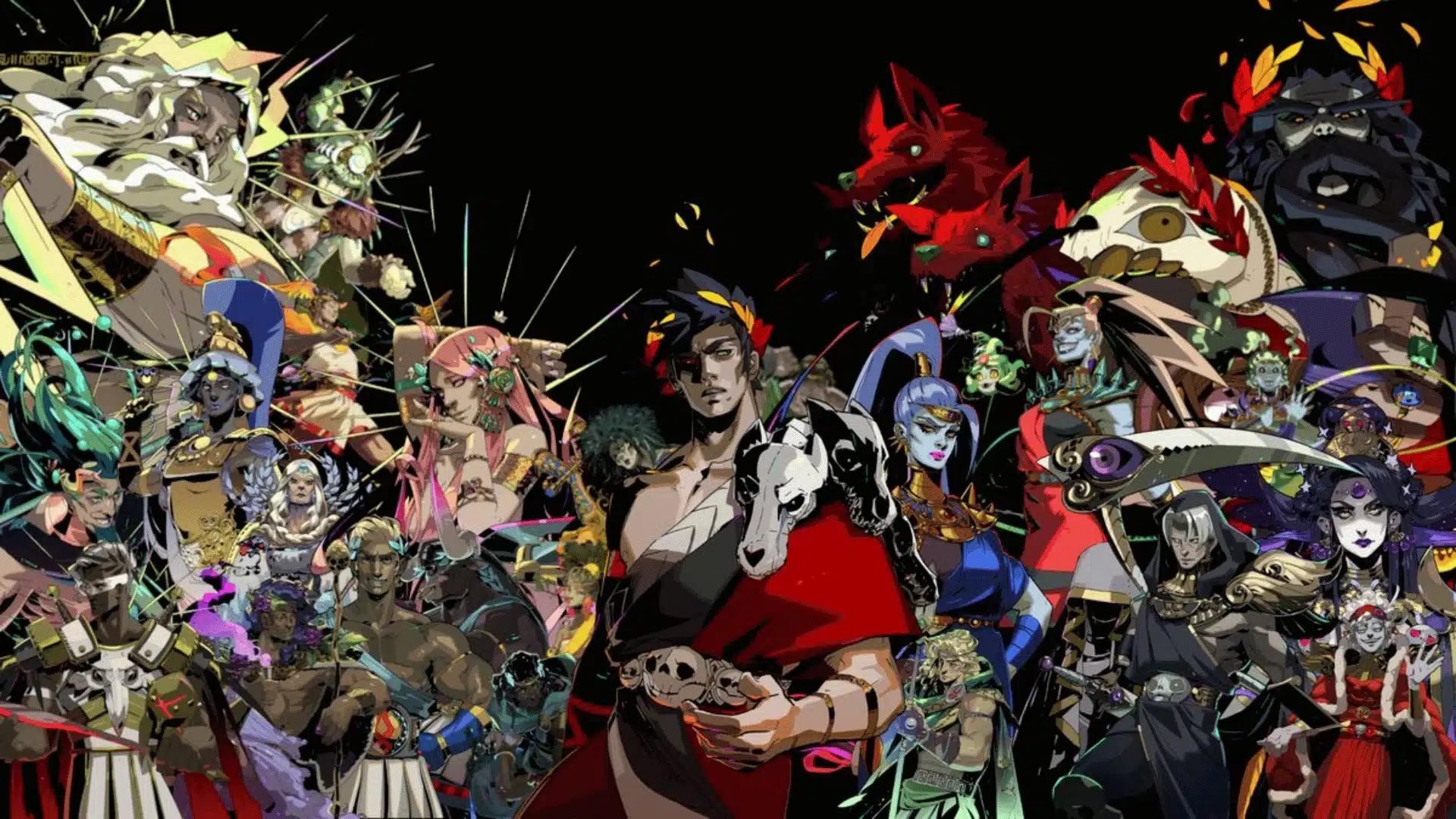
Every character in this game is fully voiced. No text boxes, no skipped lines. The cast includes:
- Hades: Cold, authoritative, and more layered than he first appears.
- Nyx: The night goddess who raised Zagreus. Calm, knowing, always present.
- Thanatos: Death personified, and one of Zagreus’s closest companions.
- Megaera: The first boss you fight repeatedly. Her arc is one of the better ones.
- Achilles: The legendary warrior, now a guard in the Underworld. Surprisingly warm.
Romance paths exist for several characters. Zagreus can pursue relationships with both male and female characters, and the representation is written into the main story, not hidden in side content.
The voice work makes the cast feel real. I kept dying just to get back and hear what came next.
How Does the Story Unfold Across Runs?
The story doesn’t end with one successful escape. Reaching the surface for the first time is a milestone, but the full ending requires multiple successful runs with story scenes playing out between them.
What kept me invested was how natural it felt. Each return to the House of Hades brought something new. A conversation I hadn’t seen, a relationship that had shifted, a detail that recontextualized something earlier.
The zones you fight through, Tartarus, Asphodel, and Elysium, also carry their own lore. It builds gradually, never dumped all at once.
I went in expecting thin world-building. What I found was a story that genuinely needed the roguelite format to be told the way it is.
The narrative here isn’t a bonus. It’s the reason many players keep running even after they’ve cleared the game.
Performance on Nintendo Switch: What You Actually Get?
Hades delivers an excellent experience on Nintendo Switch, targeting 60 fps in both handheld and docked modes while remaining smooth throughout most of the gameplay.
Although occasional minor frame drops can occur during especially busy combat, they are uncommon and rarely affect the overall experience.
The game runs at 720p in handheld mode and up to 1080p when docked, though the docked image appears softer than on more powerful consoles.
Text can also feel small on the base Switch screen, but adjustable text size helps improve readability. Overall, Hades is a polished, feature-complete port that feels perfectly suited to both handheld and docked play.
Difficulty, God Mode, and Who Hades Is Actually For?
Hades is not too hard for beginners, and that’s by design, not accident. The game has a built-in system that quietly adjusts the challenge the more you struggle.
I turned God Mode on around run eight. I didn’t think of it as giving up.
1. How God Mode Actually Works, Step by Step
God Mode is an optional accessibility feature that helps reduce the difficulty without changing Hades’ core gameplay or story progression.
Instead of making the game easy right away, it gradually increases your chances of survival as you continue playing.
- Starting Bonus: Turning on God Mode immediately grants 20% damage resistance, reducing the damage Zagreus takes from enemies.
- Gradual Increase: Each time you die while God Mode is enabled, your damage resistance increases by 2%, up to a maximum of 80%.
- Designed for Accessibility: The feature helps players learn enemy patterns and boss fight mechanics while preserving the game’s combat, progression, and overall challenge.
God Mode is not a cheat mode. It is an official accessibility option designed by Supergiant Games to let more players enjoy the story and complete the game at their own pace.
2. Hell Mode Sits at the Opposite End of the Spectrum
Hell Mode is intended for players who want a tougher experience from the start. Instead of adding permadeath, it permanently locks the save file into a harder difficulty by enabling the Personal Liability condition from the Pact of Punishment.
Players cannot disable Hell Mode on that save, making every escape attempt more demanding while keeping the same progression systems and story.
3. What Makes This Unusual for the Genre Is the Range It Covers
Hades supports different playstyles without compromising its core design. New players can rely on God Mode and permanent upgrades from the Mirror of Night, while experienced players can choose Hell Mode for a greater challenge.
If you enjoy roguelite progression but prefer more management-focused gameplay, Cult of the Lamb follows a similar loop while adding village-building mechanics between combat runs.
Is Hades Still Worth It on Switch in 2026? (vs. Hades II)
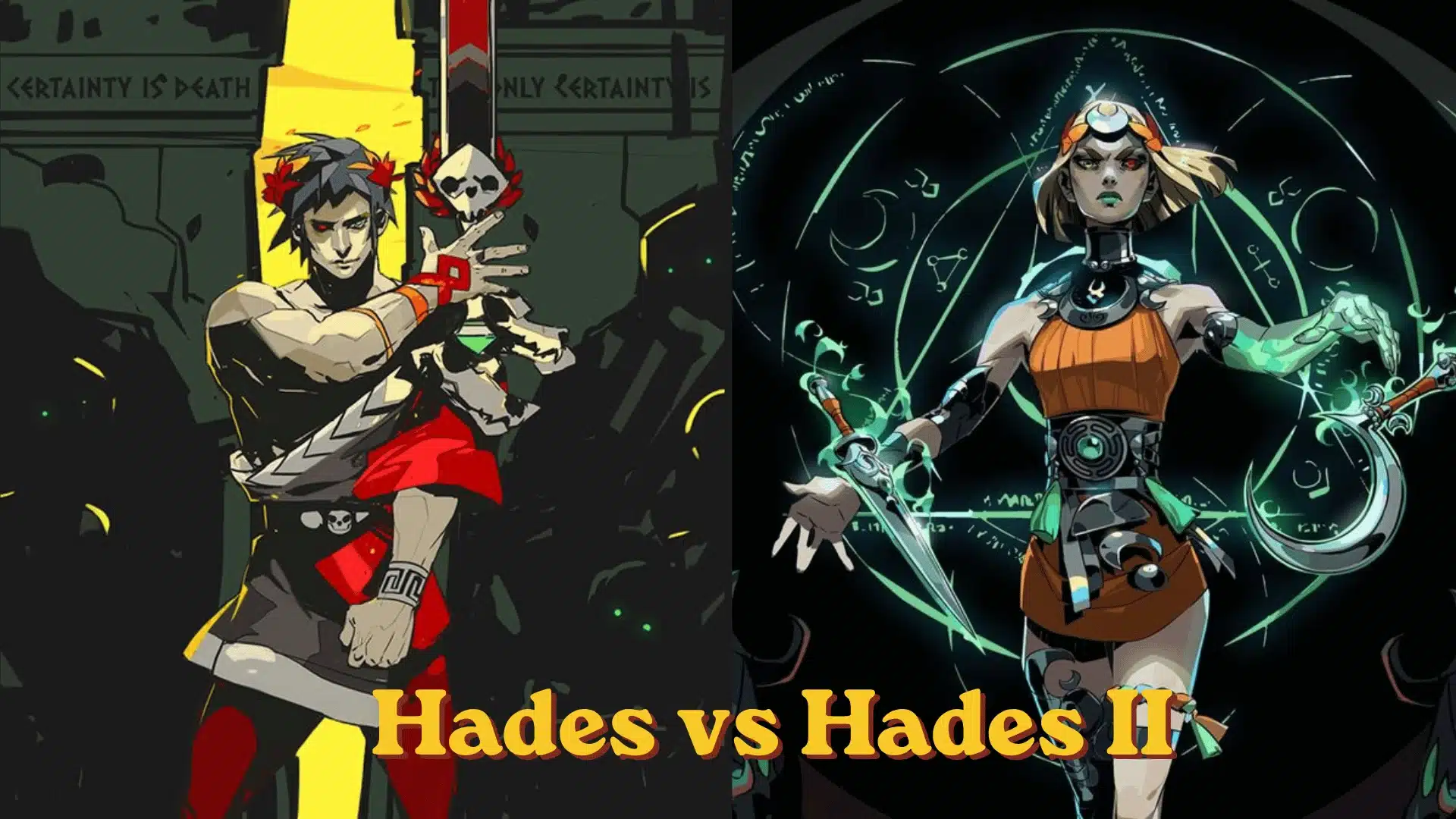
Yes. The original Hades remains well worth playing on Nintendo Switch in 2026. While Hades II introduces a new protagonist, Melinoë, and expands the world with new regions, characters, and mechanics, it does not replace Zagreus’s story.
Both games are designed as standalone experiences, so you can enjoy either without playing the other first, although starting with the original provides better narrative context.
Hades II launched on the original Nintendo Switch and Switch 2 in September 2025, but the first game remains a polished, complete experience that’s often discounted and among the platform’s best action roguelites.
Should You Buy Hades on Nintendo Switch?
Yes. Hades is one of the best games available on Nintendo Switch and remains an easy recommendation in 2026.
It delivers satisfying combat, meaningful progression, memorable characters, and excellent replay value without compromising performance on Nintendo’s hardware.
If you’re new to roguelites or already enjoy the genre, the game offers enough accessibility and depth to suit a variety of playstyles. The Switch version is feature-complete, runs smoothly, and fits handheld gaming exceptionally well.
It holds a 93 Metacritic score on Nintendo Switch, reflecting widespread critical acclaim. Unless small handheld text is a major concern, Hades continues to justify its reputation.
Conclusion
After spending many hours with it, I understand why Hades continues to earn so much praise.
Its rewarding combat, lasting progression, memorable story, and reliable Switch performance come together to create an experience that’s easy to recommend.
Minor issues like small handheld text do little to take away from what the game offers.
If you’re thinking about adding Hades to your library, it’s still a worthwhile choice in 2026. Have you played Hades on Switch, or are you planning to? Share your thoughts and experiences in the comments below!
Frequently Asked Questions
Does Hades Have a Story, or Is It Just Repeated Runs?
Hades has a full narrative following Zagreus’ escape from the Underworld. The story advances with each run through state-tracked NPC conversations, including failed attempts.
Is the Original Hades Still Worth It Now That Hades II Is Out?
Yes. Hades II follows a different protagonist and tells a separate story. The original remains complete, self-contained, and regularly discounted.
What Is God Mode in Hades and Should I Use It?
God Mode starts at 20% damage reduction and permanently increases by 2% each death. Supergiant built it as an intended accessibility feature, not a cheat.