Game night stalls fast when only two people show up, and a Mahjong set sits untouched on the table.
I taught myself this game with nobody else in the house who played, so I hit this exact wall early: no group, no easy way in.
Learning how to play mahjong with 2 players changed that completely. A lot of players assume the game needs four seats to work, but that is not accurate.
With two racks each, a shared draw pile, and a few adjusted rules, two people can run a full, strategic match. Here is where that confusion usually starts.
Can You Play Mahjong with Just 2 People?
Yes, two people can play mahjong. The version you want is called Siamese Mahjong, and it is a complete game with its own rules, not a shortcut or a workaround.
The thing that makes it different is that each player runs two hands at the same time.
You have to finish both hands together in one move to win. That one rule changes how the whole game feels. There is no wall building and no Charleston either.
That actually makes it faster to get going than the four-player version most people are used to.
What You Need Before You Start?
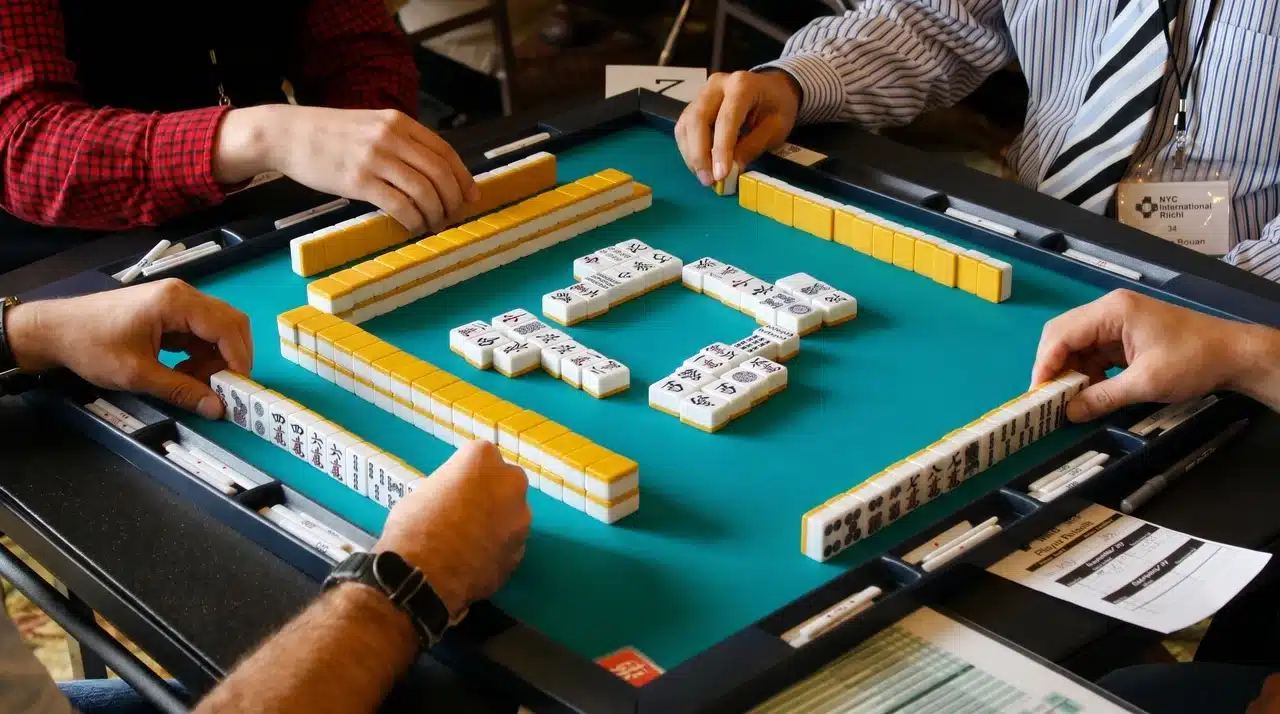
Gather these before your first round:
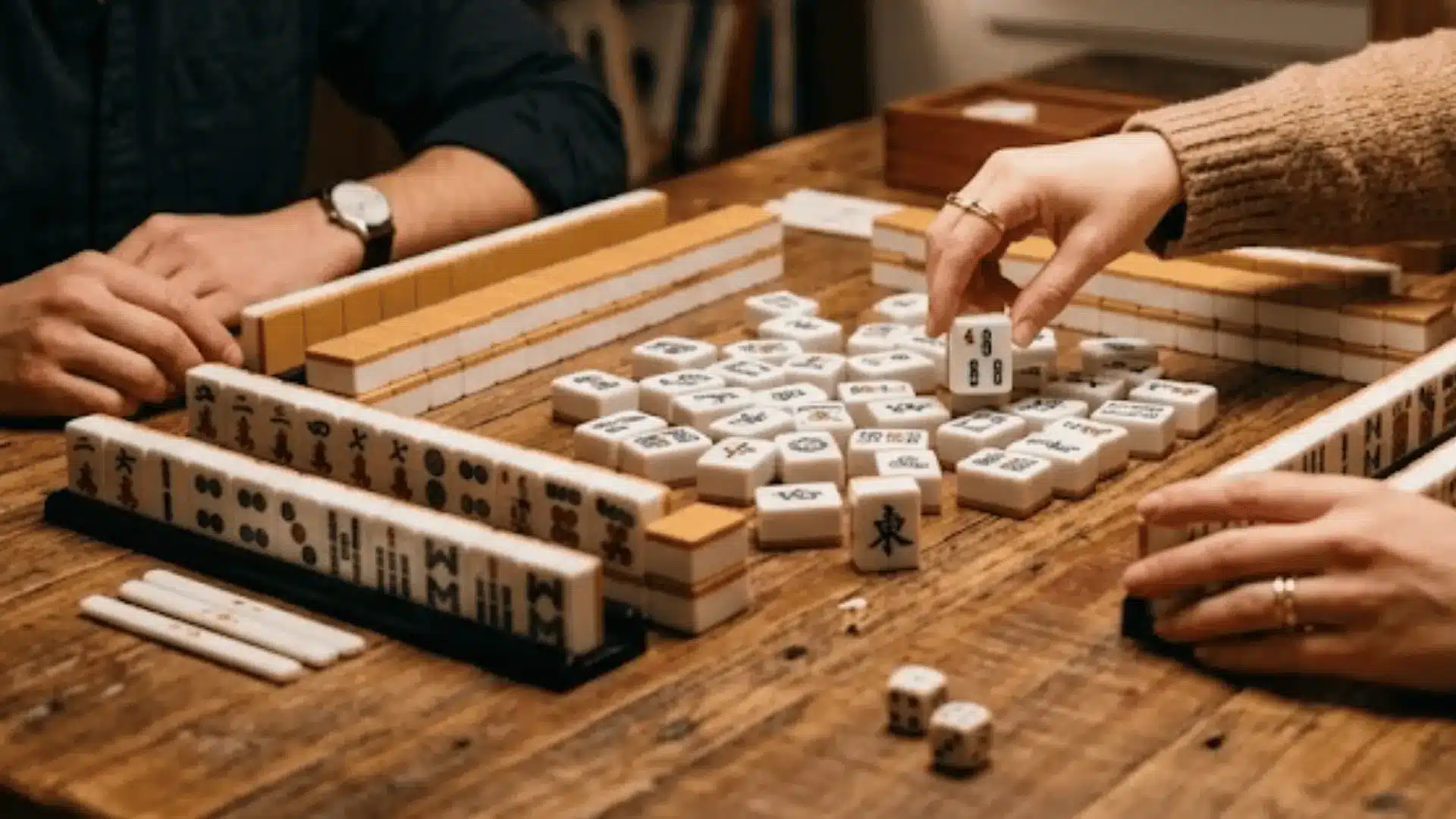
- Two racks per player: place them one behind the other, not side by side, so your two hands stay physically separated.
- All 152 tiles from a standard American (NMJL-style) set, jokers included: turn them face down in the center of the table. Nobody builds walls in this version.
- A dealer: He/she is chosen to draw first and discard first, since there is no rolling of dice to set turn order here.
Some Mahjong sets contain 144 tiles, while others run to 152 or more once bonus tiles are added. Siamese Mahjong is played with the 152-tile American set, so check your box count before you start.
The center pile replaces the wall system and keeps the game balanced for two people. That is the entire setup: just two players, four racks, and a pile of tiles in the middle.
How to Deal with the Tiles?
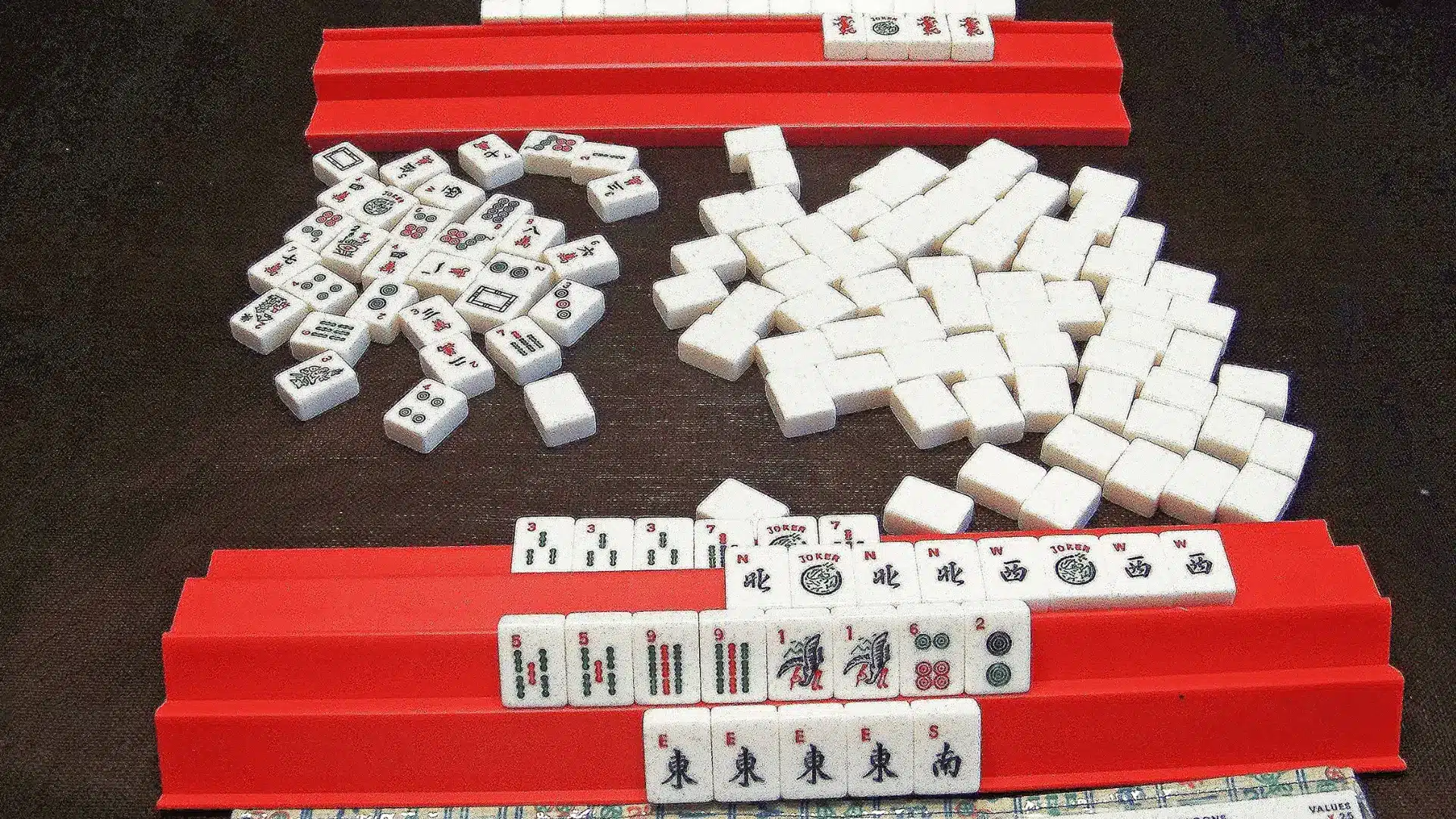
Dealing follows a short, fixed sequence:
- Turn all 152 tiles face down in the center pile. Siamese Mahjong has no wall to build.
- The dealer draws 28 tiles and splits them across two racks, commonly 14 per rack, though the split is entirely a strategic choice.
- The other player draws 27 tiles and arranges them across their own two racks.
- The dealer discards the first tile face up to open the round.
Both players draw one tile at a time from the face-down center stock. Nobody passes tiles or exchanges hands with the other player.
How you distribute your 28 tiles between your two racks is completely up to you.
This initial split is already a strategic decision, so it’s worth thinking carefully instead of placing tiles randomly.
How Do Turns Work in Siamese Mahjong?
Every turn follows a simple cycle. You draw one tile from the center stock, then discard one tile face-up into the center.
1. Drawing and Throwing Away a Tile
You draw from the face-down pile in the center, look at what you got, and decide what to throw. The tile you discard goes face-up into the center, where your opponent can see it.
2. Grabbing Your Opponent’s Discarded Tile
When your opponent discards a tile you need, you can call it before taking it. You must decide which of your two racks the tile will belong to before placing it.
Once a tile is placed into a declared or exposed set on a rack, it is locked in that position for the rest of the game.
Calling a tile makes that part of your hand visible, and exposed sets remain fixed on that rack.
3. Moving Tiles Between Your Two Racks
Tiles not yet placed in a set are completely free to move. Any time it is your turn, you can shift these unplaced tiles between your two racks however you like.
This is the part of the game that rewards a math brain more than a lucky one.
I sort my unplaced tiles the way I would sort variables in an equation, grouping by what each one could still become rather than what it already is, and that habit alone has saved more hands than any single lucky draw.
The simple rule is: unplaced tiles can move freely, but exposed sets remain fixed.
How to Win? (and One Move You Should Know About)
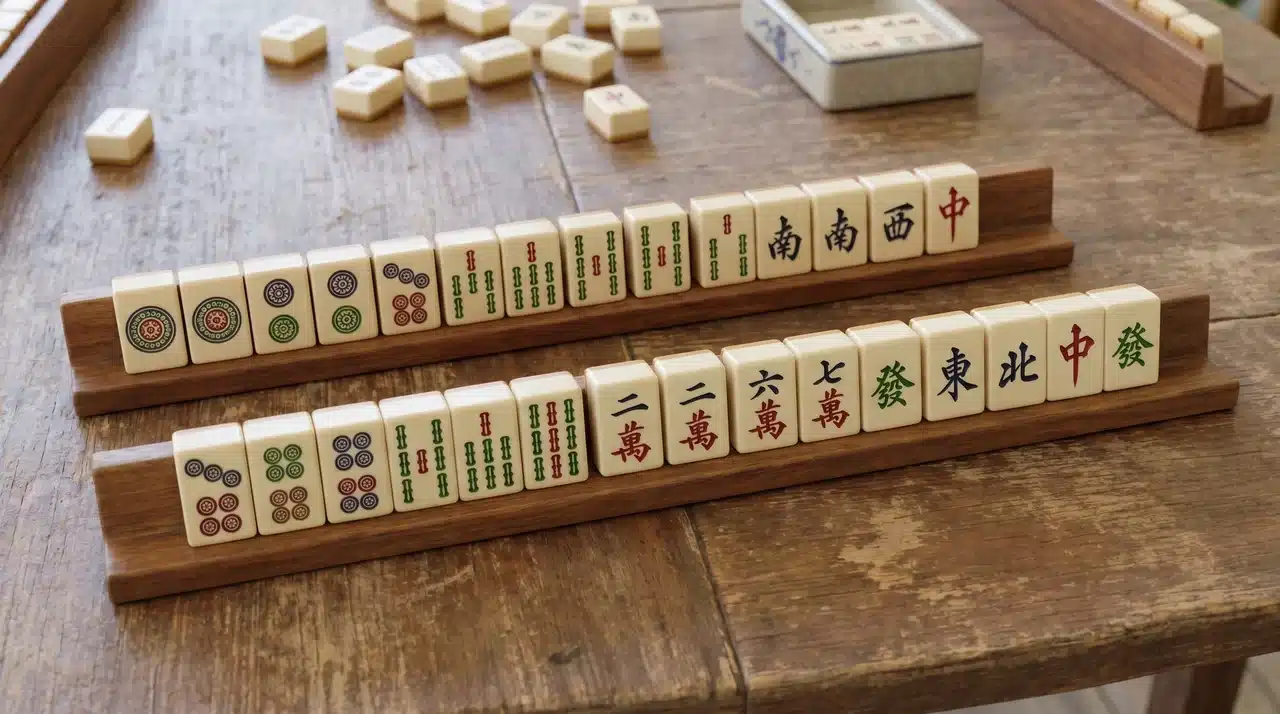
Winning means finishing with both hands at the exact same time and calling Mahjong on them together.
One finished hand is not enough. You need both, called together, in the same moment. There is one mid-game move that confuses nearly every new player the first time they see it.
Calling Mahjong on Just One Hand
You can call Mahjong on a single completed hand without winning the game. It sounds strange, but it serves a specific purpose.
When you do this, the jokers showing on that rack get locked in place. Your opponent cannot steal them. The game keeps going, and you carry on building your second hand.
It is a protection move, not a win. The game only ends when you finish your second hand and call Mahjong on both at the same time.
When This Move Actually Makes Sense
Using it too early costs you more than it gives you. The moment you call Mahjong on one hand, your opponent can see exactly what you have built on that rack.
You have shown your cards on one side, and you still need to finish the other. That information remains visible to your opponent for the rest of the game.
The move earns its value when you are close to finishing your second hand, and you genuinely believe your opponent is about to take an exposed joker before you get there.
In that situation, locking the rack buys you the time you need without giving much away that your opponent could not already guess.
How Playing Mahjong With 2 Players Differs From the Four-Player Game?
If you have played the four-player game before, a few things will feel missing when you sit down to play Siamese. That is not an accident.
Three specific things were removed because they either need four players to work or slow down a two-person game for no good reason.
- Wall building: it needs four players to properly anchor each side, so with two people it falls apart structurally, and the center pile replaces it entirely.
- The Charleston: a pre-game tile-passing ritual that balances hands across four players. With two racks each, you already have enough built-in flexibility.
- Chow calls: claiming a discarded tile to complete a number run. These are dropped in most American and Siamese variants because the format does not need them to stay competitive.
Taking these out does not make the game smaller. The strategic core, hand-building, reading your opponent’s discards, and managing your jokers, stays fully intact.
If you are looking for other ways to fill a two-person game night, our roundup of the best games for two-player nights covers options beyond Mahjong.
Note: if you are using the NMJL card, look at your specific card year. Some hands play out differently when you are building toward two simultaneous wins at once. A quick check before you start saves confusion mid-game.
Conclusion
Learning how to play Mahjong with 2 players is mostly about changing how you think about the table. You do not need four people for the game to feel smart, tense, or complete.
Siamese Mahjong keeps the core challenge alive by making each player manage two hands, track discards, protect jokers, and plan both wins at the same time.
The setup is simpler, but the decisions can feel even sharper because every tile has more weight. Once the rules click, two players can turn a quiet night into a real match.
Set up two racks each, try one slow practice round, and tell us which rule confused you most at first.
Frequently Asked Questions
How Many People Do You Need to Play Mahjong?
Traditional mahjong is built for four players, and that remains the standard version of the game. With two people, Siamese Mahjong covers the full experience using two racks per player instead of four separate seats. Three-player variants exist too, with their own adjustments, but four-player and two-player Siamese are the most common ways to play.
How Do You Set Up Mahjong for 2 Players?
Each player places two racks in front of them, one behind the other, keeping both hands separated. All 152 tiles from a standard American set go face down in the center, since Siamese Mahjong skips wall building entirely. The dealer draws 28 tiles across both racks, the other player draws 27, and the dealer discards first to start play.
Can You Grab a Discarded Tile for Either of Your Racks?
Yes, but the rack has to be chosen before the tile is picked up. Once a called tile becomes part of an exposed set, it locks onto that rack for the rest of the game and cannot move again. Tiles not yet placed into a set can shift between your two racks on any turn.
What Does It Mean to Call Mahjong on Just One Hand?
It does not end the game or count as a win. Calling Mahjong on one hand locks the jokers showing on that rack so your opponent cannot swap them out, while play continues toward the second hand. The game only ends once both hands are finished and called together in the same move.