
Palworld vs Pokemon sounds like a simple comparison until you actually play both games. They both let you catch creatures, build a team, and find favorites, but the way they use those ideas is very different.
Pokemon gives you turn-based battles, trading, collecting, and a clear path through gyms or story goals.
Palworld gives you survival, base building, crafting, guns, and Pals that work as much as they fight.
You will see how both games play, where the legal debate stands, and which one fits your style better. Before choosing a side, let us first look at what both games really are.
What Palworld and Pokémon Actually Are?
Pokemon runs on a tight RPG structure. You travel between towns, beat gym leaders, and build a six-creature team for the champion fight.
The latest mainline entries still follow that same core loop. Palworld drops that structure entirely.
You gather resources, build a base, arm yourself, and put Pals to work farming, mining, and fighting alongside you.
Some Pals share colors or shapes with familiar Pokemon, and that visual overlap fuels most of the comparisons online. Once you start playing, the systems pull apart fast.
Pokemon Legends: Z-A added real-time movement, and handheld Switch fans have already spent hours testing how that shift feels, but Palworld still hands you far more freedom with aiming, building, and open-world survival.
How Does Palworld Play?
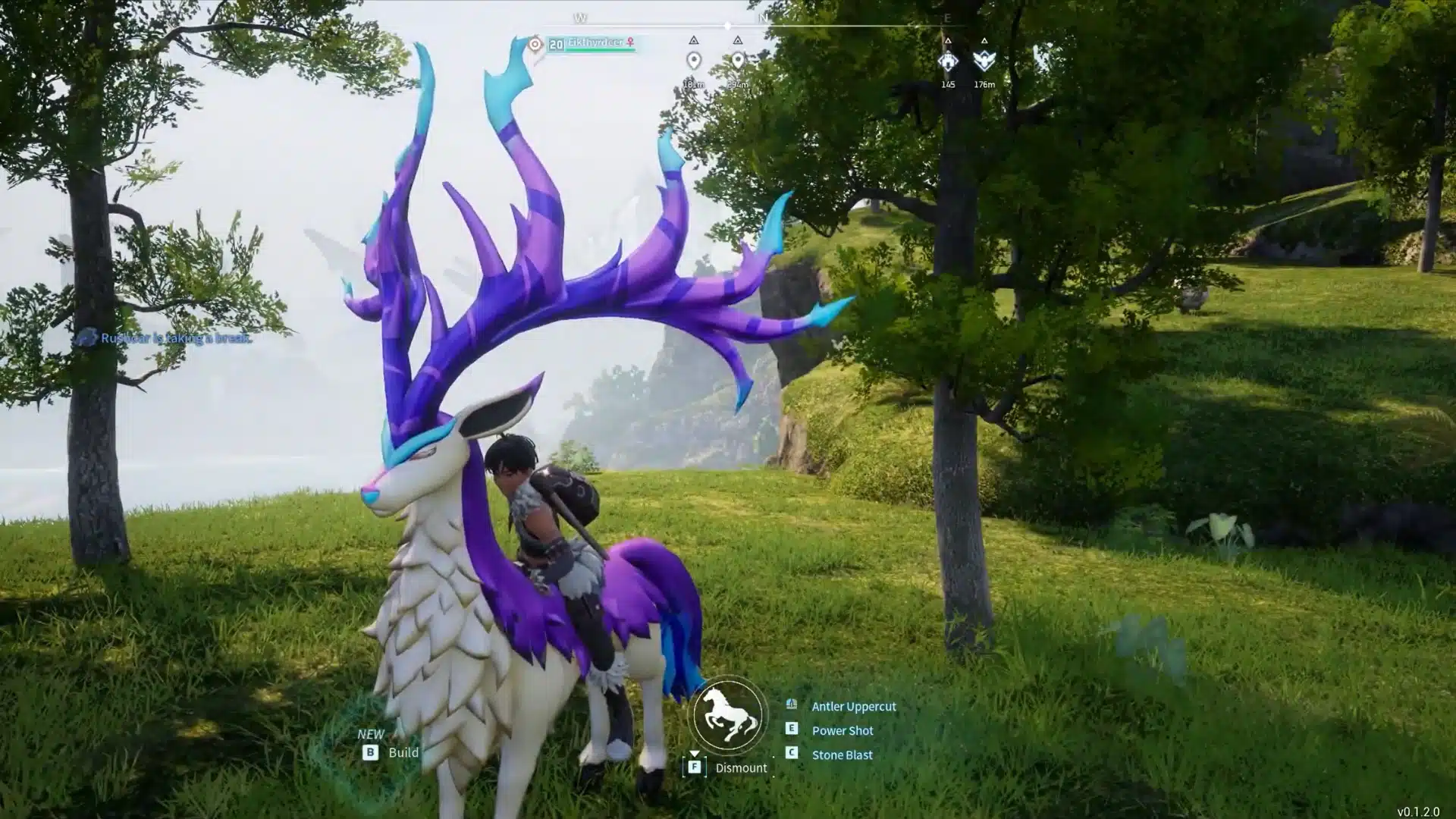
Palworld treats your Pals like a workforce, not just a battle team. You assign them to logging, mining, cooking, and defense while you handle base upkeep and combat with actual firearms.
Hunger, shelter, and gear all matter here. Skip base management for a day, and you will feel it.
That survival layer is the real hook. I’ve watched newer players fixate on the Pal designs and completely ignore the base-defense timer, which is exactly the mistake that gets a whole camp wiped overnight.
Progress also feels personal instead of scripted.
Two players can build wildly different bases from the same starting Pals, and that variety keeps the loop interesting well past the first 10 hours.
How Does Pokémon Play?
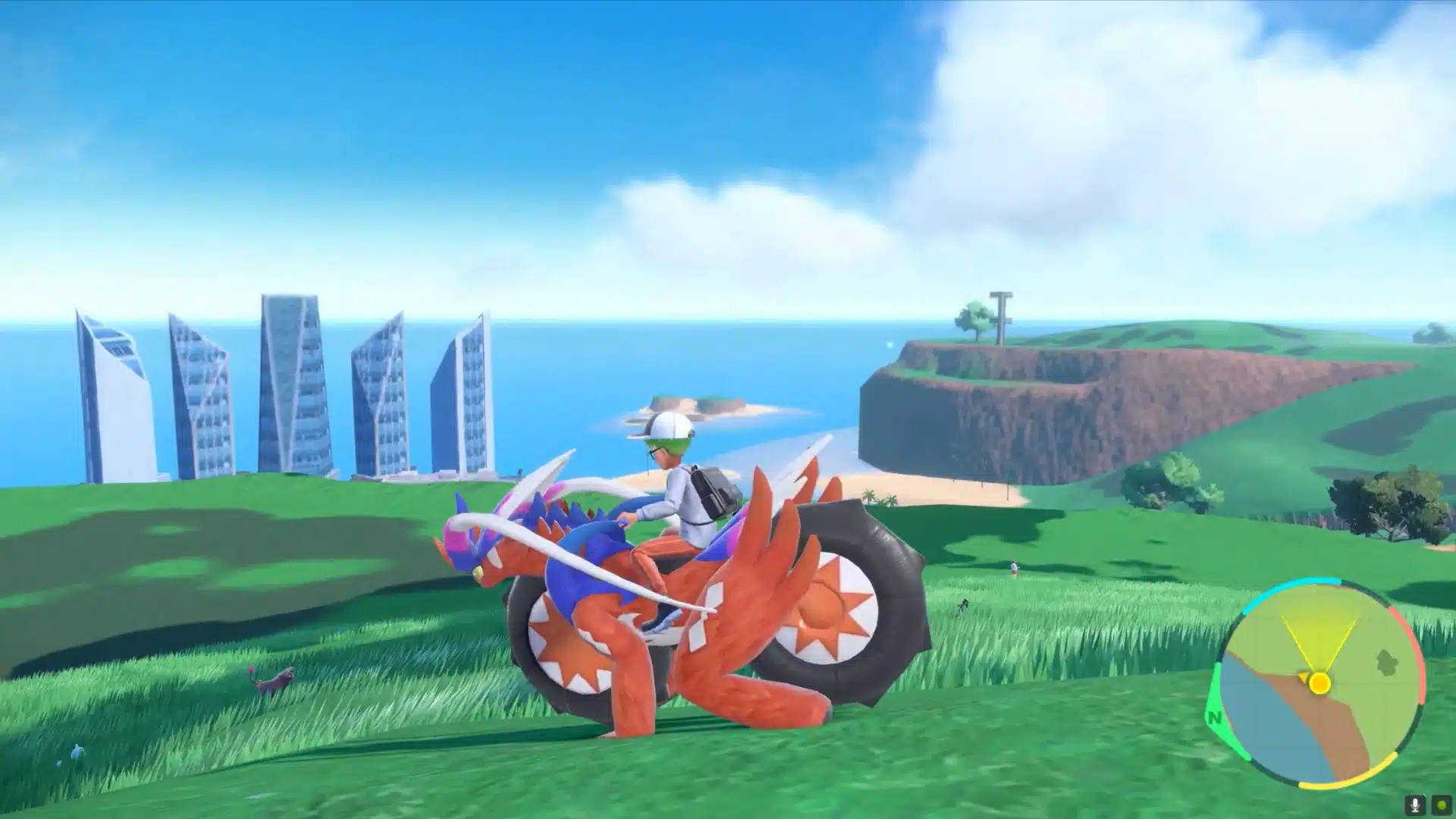
Pokemon keeps its focus narrow on purpose. You catch, train, and battle a roster of six Pokémon, then plan every fight around type matchups and move sets.
There is no hunger meter and no base to defend. The entire loop centers on turn-based decisions, so every battle rewards preparation over reflexes.
Trading and breeding add a social layer on top of that core loop. Anyone who has worked through a full breeding project knows how much planning sits behind a single competitive team.
Palworld has never tried to copy that layer, and it keeps longtime Pokemon players coming back between mainline releases.
Combat And Gameplay Differences
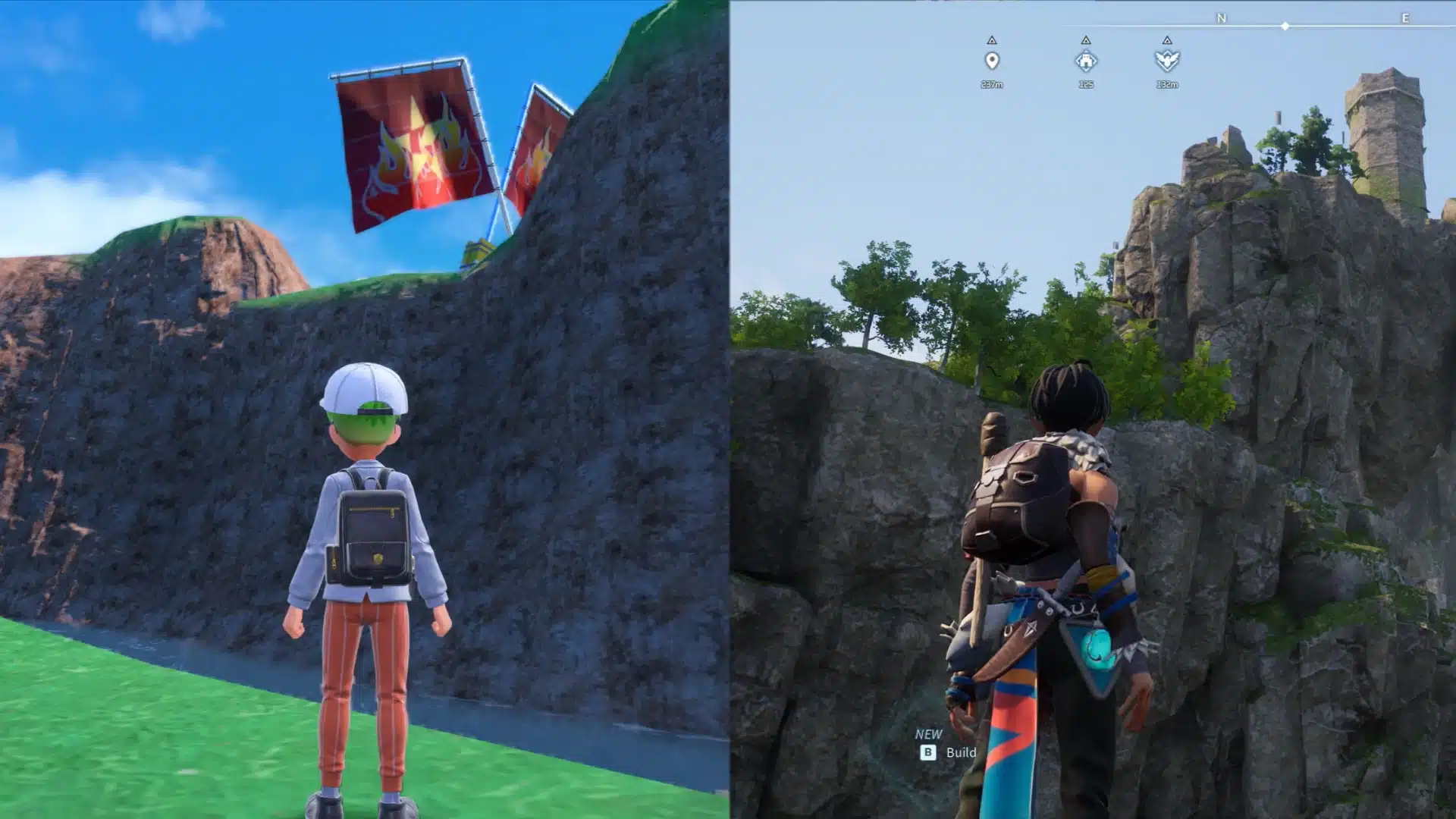
Combat is where Palworld vs. Pokémon stops being a fair fight to compare directly. Pokémon uses turn-based battles built around 18 types and 324 possible matchups.
That depth is why veteran players spend hours theorycrafting teams before a single Elite Four run.
Palworld uses real-time combat with nine elements and 81 matchups. You aim, dodge, and fire weapons while your Pals fight beside you, so reflexes matter as much as planning.
The simpler type chart makes Palworld easier to pick up, but it also means less long-term strategic depth once you know the basics.
Pokémon rewards patience and study. Palworld rewards quick thinking and better gear.
| Feature | Palworld | Pokémon |
|---|---|---|
| Core systems | Hunger, shelter, resource and workforce management | No survival or base systems |
| Combat style | Real-time, firearms, dodging | Turn-based, type-driven strategy |
| Creature roles | Fight, farm, mine, craft, transport | Mostly battle and support exploration |
| Type matchups | 9 elements, 81 combinations | 18 types, 324 combinations |
| Base building | Central to daily progression | Not part of mainline games |
| Platforms | PC, Xbox, PS5 | Nintendo Switch (mainline titles) |
I built my first Palworld base without checking a single guide, and I still landed on my feet within an hour. Try doing that cold in a Pokemon Nuzlocke, and you’ll lose your starter by the second gym.
Where the Palworld Vs. Pokémon Lawsuit Stands Now?
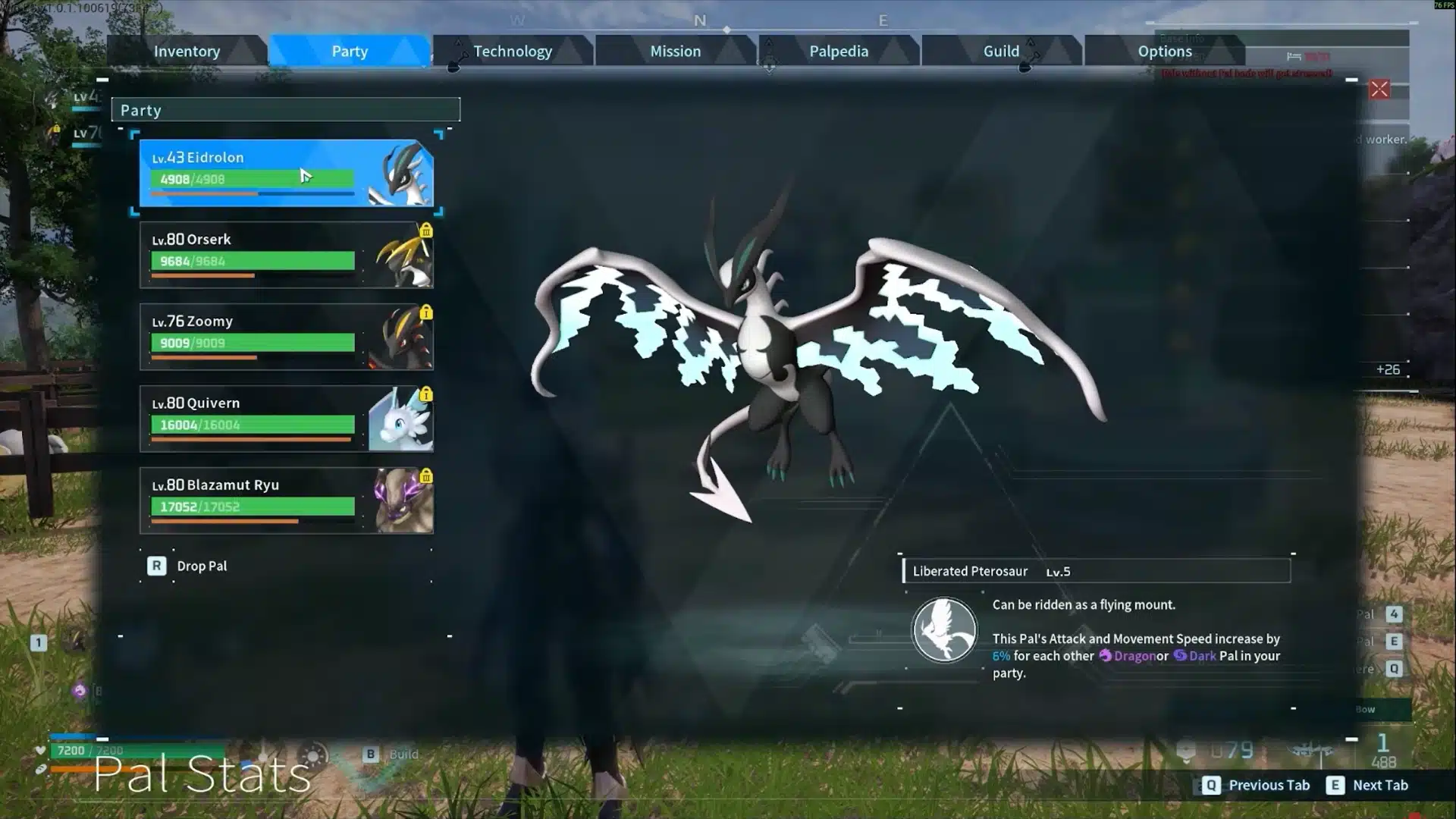
Nintendo and The Pokemon Company sued Pocketpair in September 2024 over patents tied to monster-catching mechanics, not character designs.
As of July 2026, the case is still active in Japan’s Tokyo District Court, and no injunction has ever blocked Palworld from sale on any platform.
Palworld shipped its full 1.0 release on July 10, 2026, unaffected by the ongoing case. Pocketpair already removed some contested mechanics, like summoning Pals from spheres, in earlier updates.
That change pushed Nintendo to narrow its claim to older, pre-patch versions of the game.
Legal analysts following the case now expect a limited outcome for Nintendo, with a maximum possible award estimated around 5,000,000 yen, or roughly $30,000.
A court hearing is set for October 1, 2026, with a decision expected November 9, 2026.
Palworld remains fully playable and purchasable right now. Nothing about this lawsuit currently restricts buying or downloading the game on Steam, Xbox, or PS5.
What Comes Next For Both Games?
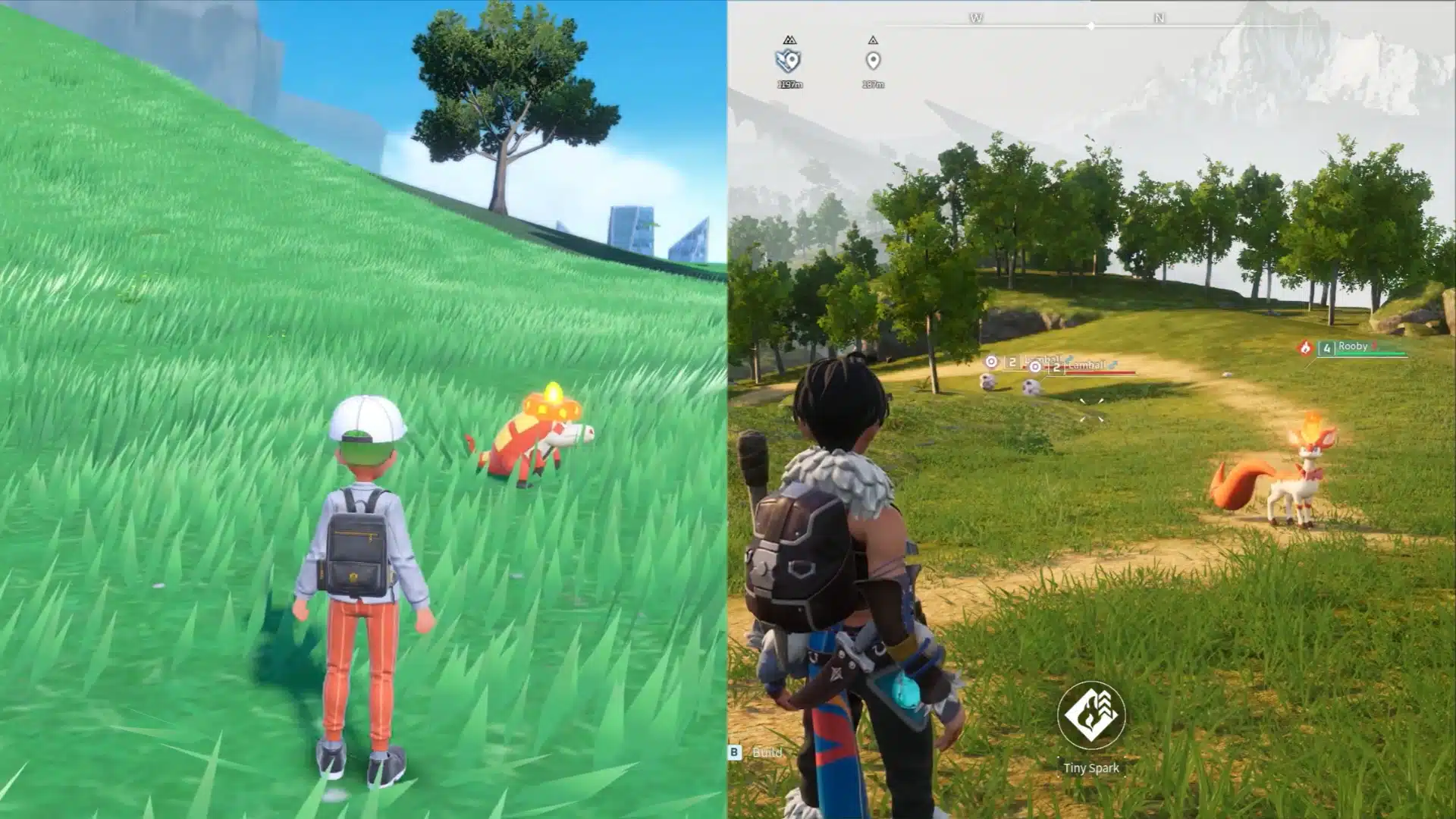
Pocketpair is not slowing down while the case plays out.
Palworld’s Full 1.0 launch built on months of patches, and the studio has kept shipping content updates throughout the legal dispute.
Pokémon is testing new ground too. Legends: Z-A proved the series is open to faster movement and more active combat, even inside its familiar team-building core.
Expect future entries to keep borrowing small pieces of that freedom without dropping the type-battle foundation that defines the franchise.
Both franchises are quietly influencing each other. Palworld may keep refining its creature systems, while Pokémon experiments with more open environments. Neither is becoming the other any time soon.
Which One Should You Actually Buy?
If you want a guided story with deep team-building strategy, buy Pokemon.
If you want survival crafting, base defense, and real-time combat with a team of working creatures, buy Palworld.
Budget matters too: Palworld is a one-time PC, Xbox, or PS5 purchase, while mainline Pokemon requires a Nintendo Switch and typically a higher up-front cost once you count the console.
Conclusion
Palworld vs Pokemon is not really about which game copied which idea. It is about what kind of loop you want to return to after the first few hours.
Pokemon is better for players who enjoy clear goals, turn-based strategy, collecting, trading, and team planning.
Palworld is better for players who want survival pressure, base building, crafting, real-time fights, and more freedom to create their own routine.
I would choose based on the daily play style you enjoy most, not only the creature designs. Pick Pokemon for structure, and pick Palworld for open survival play.
Which one fits your style better? Tell us; share with us in the comments below.
Frequently Asked Questions
Is Palworld a Pokemon clone?
No. The Pals resemble some Pokemon visually, but the core gameplay- survival crafting, real-time combat, and base automation- is a different genre entirely.
Can I play Palworld on Nintendo Switch?
No. Palworld runs on PC, Xbox, and PS5. Mainline Pokemon games remain Nintendo-exclusive.
Did Nintendo win the lawsuit against Pocketpair?
Not as of 2026. The case remains active in Japan’s Tokyo District Court, with no injunction granted against Palworld.
Is Palworld safe to buy while the lawsuit is ongoing?
Yes. The game is fully available on every platform it launched on, and no court order currently restricts its sale or use.