
Pokemon Legends: Arceus review scores only tell part of the story, because this game feels very different once you actually start playing.
It removes gyms, changes how catching works, and turns the Pokedex into the main reason to keep moving through Hisui.
The result is fresh, but not flawless. The world can look rough, and the story is not the main reason to stay.
What matters most is whether the research loop, real-time catching, battles, music, and exploration feel worth your time today.
Before deciding if it belongs in your Switch library, let us first look at what makes it different from a normal Pokemon game.
What is Pokémon Legends: Arceus, and How is it Different from a Normal Pokémon Game?
Pokemon Legends: Arceus, released in 2022, replaces the series’ gym-badge structure with a Pokedex research mission set in the feudal-era Hisui region. Catching Pokemon, not battling, is the primary goal.
In every mainline game before this, progression meant beating gym leaders in order.
Here, your job is to study and catalog wild Pokemon for the region’s first Pokedex. That single change reshapes everything.
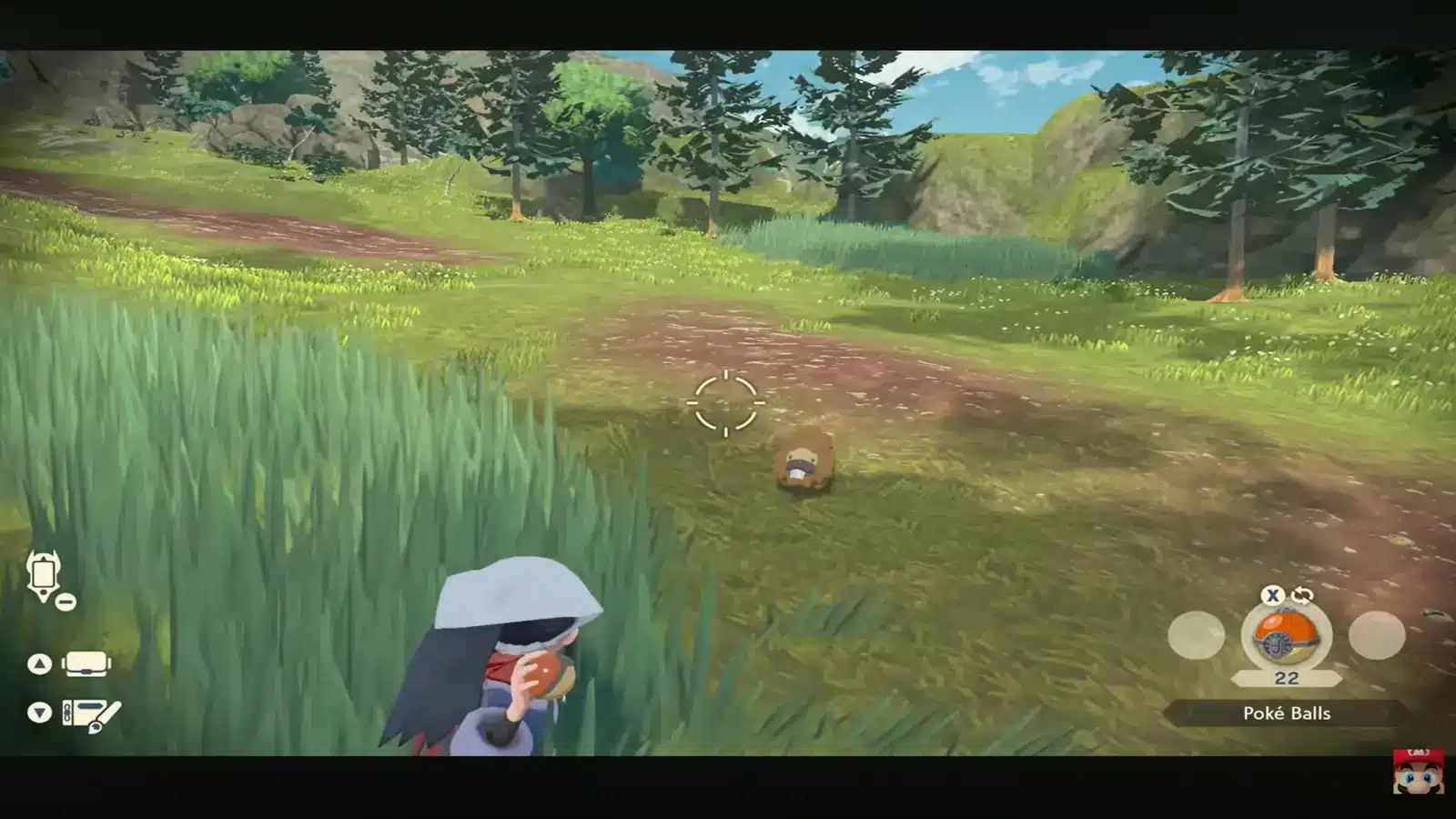
Wild Pokemon roam the overworld in real time. You can sneak up on them, toss a Poke Ball, and catch them without triggering a battle at all. No random encounters. No forced fight screens.
This isn’t a cosmetic shift. In my own runs, it changed how I moved through Hisui minute to minute, how much I planned each approach, and what I was actually working toward.
If you haven’t played Pokemon in years, don’t expect the familiar loop. This is a different game built around a different goal.
What Does the Gameplay Actually Do Differently?
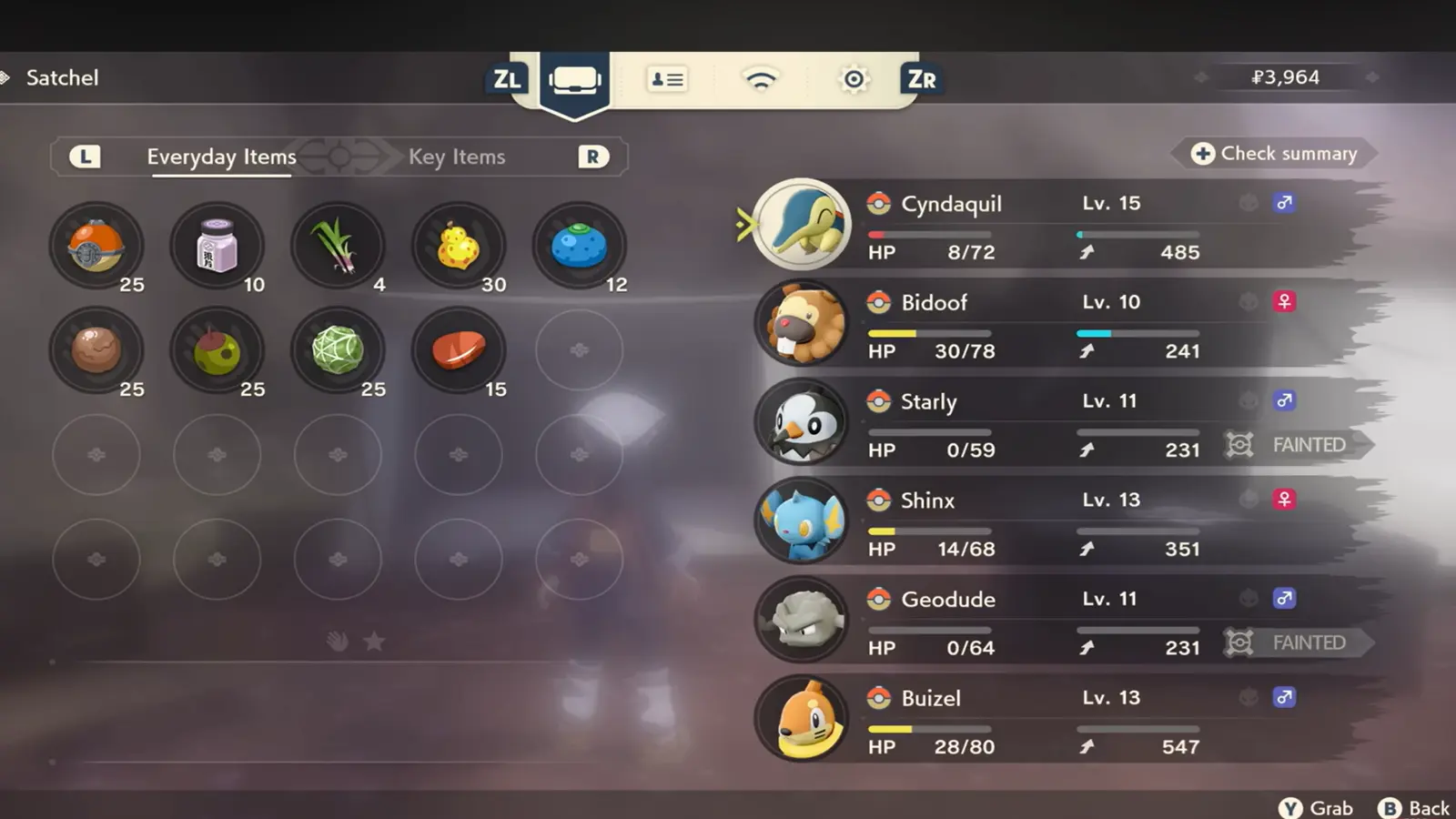
Pokemon Legends: Arceus introduces three interlocking systems: real-time catching, a dual battle-style mechanic, and research task progression.
Each one changes something. Together, they change everything.
Catching Without Battles
You see a Pokemon in the wild. You crouch, move slowly, and throw a Poke Ball directly at it. If your aim is good and the Pokemon isn’t alert, it’s caught. No battle screen. No turn sequence.
Tougher Pokemon resist this. You can bait them with food to drop their guard, or weaken them in battle first. But the default is always direct: sneak, aim, catch.
This changes your pacing completely. You’re no longer locked into a battle every time you want to add to your Pokedex. You move through the world differently because of it.
The Agile and Strong Style Battle System
When you do battle, every move now has two versions. Agile style hits faster but lands lighter. Strong style hits harder but moves slower. You choose before every action.
That choice carries real weight. Use Agile style, and you might get two turns before your opponent moves. Use Strong style, and you risk eating a hit you could have dodged.
It’s not just about power. It’s about reading the situation. A Pokémon about to use a damaging move? Go Agile, act twice, disrupt it.
Need a knockout before it heals? Go Strong and hit once for everything you’ve got. The trade-off changes with every encounter. That’s what makes it tactical rather than cosmetic.
How the Research Task Loop Ties It Together?
Every Pokemon in your Pokedex has a research task list. Catch five of the same species, see it use a specific move, or defeat it in battle. Each task you complete raises that Pokemon’s research level.
Fill the list and the entry is complete. Complete enough entries and your rank increases, which unlocks new areas.
This is what keeps the open world from feeling aimless. Catching isn’t just collecting. Battling isn’t just fighting. Every action feeds something.
You’re always making progress toward more than one goal at once. That loop is why the game held my attention across a full playthrough plus dozens of extra hours chasing Pokedex entries.
The world doesn’t give you much to look at. The task system gives you a reason to stay in it anyway.
What are the Noble Pokemon Boss Fights, and are They Worth the Hype?
Noble Pokemon fights are Pokemon Legends: Arceus’s answer to a traditional boss battle.
Five oversized, corrupted Pokemon block your path through Hisui, and each one triggers a real-time chase-and-calm encounter instead of a standard turn-based fight.
You dodge attacks in real time, throw balms to calm the Pokemon down, then finish with a short battle sequence.
It works the first time. By the fourth, the pattern is familiar. Some players find the rhythm satisfying. Others find it flat. These fights double as the game’s main story checkpoints.
Soothing all five Nobles completes the star-rank progression that carries you to the ending, so they’re unavoidable rather than optional.
How Does Exploration Feel, and How Big Is the World?
Pokemon Legends: Arceus isn’t one simple open map. It’s five separate zones, each loaded individually. Within each one, you roam freely.
Getting around feels good. You unlock rideable Pokemon for land, water, climbing, and gliding. The movement is smooth and satisfying.
The world itself is sparse. Terrain repeats. Villages are small tent clusters with reused NPCs. The land between Pokemon is mostly empty.
The traversal is well-built. The world it sits inside isn’t dense. Both things are true, and worth knowing before you buy.
Visuals, Performance, and What the Game Actually Looks Like
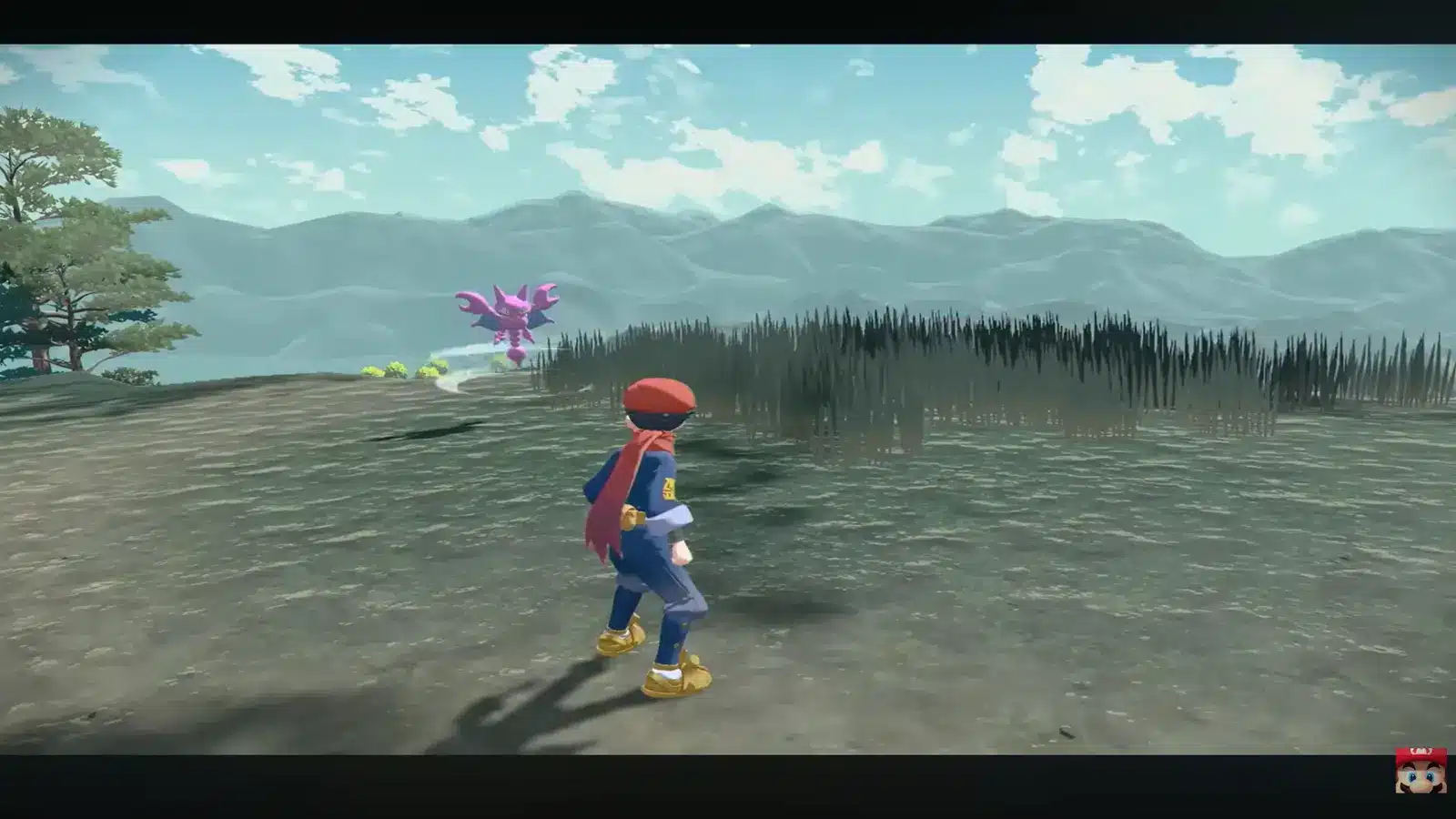
Pokemon Legends: Arceus has real visual problems: low-resolution textures, object pop-in, and reused NPC models. None of them are subtle.
The issues are environmental. Pokemon models and character animations look fine. It’s the world around them that falls apart.
How much it bothers you depends on how you play. Docked on a big TV, the resolution drops are hard to ignore, but in handheld, the smaller screen hides a lot, and most players who loved this game played it that way.
The visuals sit below what you’d expect from a 2022 release. Whether that’s a dealbreaker comes down to your setup, not just your standards.
For a complete walkthrough of the process, check out the trailer video by Nintendo.
Is the Story and Structure Worth Following?
Pokemon Legends: Arceus has a workable story. It gives you a reason to be in Hisui and context for the research mission. It doesn’t do much beyond that.
There are no strong character arcs. Dialogue is functional. The narrative builds toward a climax that lands adequately, not memorably.
The structure is honest about its priorities. This is a Pokedex completion game. The story exists to frame that, not to drive it.
If you’re coming for the narrative, you’ll finish mildly satisfied at best. If you’re coming for the catching loop, the story stays out of your way and lets you get on with it.
How Does Pokémon Legends: Arceus Compare to Scarlet & Violet and Legends Z-A?
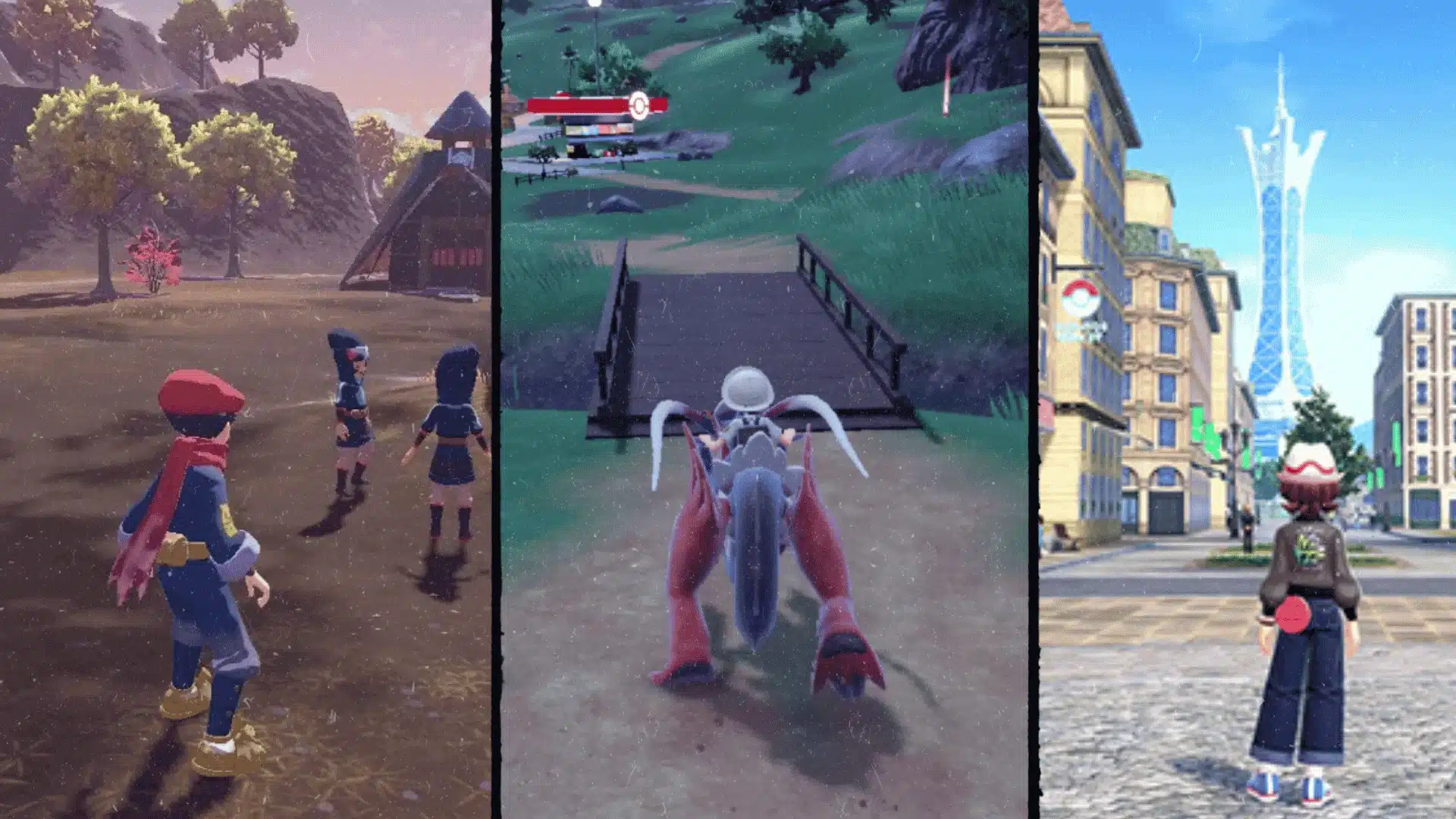
Between Arceus, Scarlet & Violet, and the newer Legends Z-A, the right choice depends on what you value most. The price gap between them now makes that decision easier than it used to be.
1. Arceus vs. Scarlet & Violet: Which Plays Better?
Arceus and Scarlet & Violet both released in 2022. Both tried open-world Pokemon. They landed very differently.
Arceus is the more polished game. The zone-based structure kept performance stable. The catching loop is tighter. The experience holds together from start to finish.
Scarlet & Violet launched in rough shape. Frame rate drops, visual glitches, and crashes were common. Some players lost save data. For a mainline release, that’s a hard thing to overlook.
That said, Scarlet & Violet has real advantages. The world is fully open with no zone loading. There are more Pokemon, a stronger story, faster battles, and an autobattle mechanic Arceus doesn’t have.
The call is straightforward.
- Want freedom and variety? Scarlet & Violet.
- Want a tighter, more stable experience? Arceus.
2. Sound Design: One Place Arceus Quietly Wins
Most reviews focus on what Arceus gets wrong visually. Few mention what it gets right aurally.
The soundtrack was composed by Go Ichinose and Hitomi Sato, the original Diamond and Pearl team, alongside Hiromitsu Maeba.
Their approach here is minimalist and reactive. Music shifts based on what you’re doing, not on a loop timer. It responds to the world rather than running over it.
In-battle tracks reimagine classic Sinnoh themes using traditional Japanese instrumentation. It fits the feudal Hisui setting in a way the visuals sometimes don’t.
Scarlet & Violet’s score is more conventional and energetic. Neither is weak. But Arceus’s soundtrack is the more distinctive of the two, and genuinely underrated.
3. What Does Each Game Cost Right Now?
Arceus launched at $60 and regularly dips to $43 to $50 on sale. It’s the best value of the three titles right now.
Scarlet & Violet also launched at $60 and has seen similar discounting, often bundled with DLC.
Legends Z-A launched at $59.99 on the original Switch and $69.99 for the Switch 2 Edition. Switch owners who bought the base version can upgrade for $9.99.
Should You Play Pokémon Legends: Arceus?
Pokemon Legends: Arceus is worth playing if the Pokedex research loop and real-time catching appeal to you more than visual fidelity or traditional gym progression.
It holds an 83 on Metacritic and 7/10 on IGN based on well over 100 critic reviews, which is a fair reflection of critic consensus.
Player sentiment tells a more divided story. Those who came for exploration and catching tend to rate it higher. Those who came for graphics or narrative tend to rate it lower.
Both reactions make sense.
Play it if:
- You want a Pokémon game built around catching and research, not badge collecting
- Open-world traversal with rideable Pokémon sounds appealing
- You play mostly in handheld and can tolerate uneven visuals
- You want the most mechanically distinct Pokémon game in years
Skip it if:
- Visual polish matters to you, and you play docked
- You’re looking for a strong story with memorable characters
- Traditional gym progression is what you enjoy most about the series
The game doesn’t try to be everything. It commits to one loop: research, catch, complete, and builds outward from there. If that loop sounds like your kind of game, it almost certainly is.
Conclusion
A Pokemon Legends: Arceus review comes down to how much you value new ideas over polish. The game looks rough in many places, and its story will not stay with every player.
Still, the catching loop, research tasks, ride Pokemon, and quieter soundtrack give it a clear identity that most Pokemon games do not have.
I would play it for the way it changes your daily rhythm, not for a perfect open world. If you enjoy filling the Pokedex and testing new systems, Hisui still feels worth visiting today.
Did Legends: Arceus feel like the right direction for Pokemon, or did you miss the classic gyms? Tell us, share with us in comments below.
Frequently Asked Questions
Is Pokémon Legends: Arceus worth buying Today?
Yes, particularly on sale. The catching and research loop holds up well. The graphics haven’t aged gracefully, but the gameplay design is durable. At a reduced price, it’s a strong pick for any Pokémon fan.
How long does it take to complete Pokémon Legends: Arceus?
The main story takes most players 25–30 hours. Full Pokédex completion and side requests push that to 60–80 hours. The research task structure rewards the time you put in, the more you engage, the longer it holds.
Is Pokémon Legends: Arceus better than Scarlet and Violet?
They solve different problems. Arceus is tighter, more stable, and more focused. Scarlet and Violet offer more Pokémon, a fuller open world, and a stronger story. Which is better depends on what you’re after, polish or breadth.
Do you need to have played other Pokémon games to enjoy Legends: Arceus?
No. The game introduces its systems from scratch. The research-focused structure is actually an easier entry point than mainline titles; you’re not expected to master battling. If anything, it’s one of the more newcomer-friendly games in the series.