Better cards will not fix a Hearthstone rank that has stalled.
I have tested that the hard way over years of climbing, and the real bottleneck sits before turn four, in the mulligan, in sequencing, and in how quietly frustration rewires your play.
Most Hearthstone tips and tricks lists stop at generic advice and skip the handful of repeatable habits that actually separate a stuck player from an improving one, and none of them depend on collection size.
Start with why most players stop improving in the first place.
Why Do Most Hearthstone Players Stop Improving?
The biggest reason experienced players stagnate isn’t their deck. I’ve seen it happen repeatedly that players keep fixing the wrong thing.
When you hit a wall, the instinct is to upgrade cards. But the gap between a good deck and a good player shows up in sequencing and the mulligan, not in the late game.
Hearthstone makes this harder to catch than other card games. There’s no physical reset between turns, no shuffling, no table talk. Frustration compounds quietly.
I’ve made tilted decisions mid-session without realizing it until three turns later.
You move on, the mistake sticks, and the next poor sequence feels like bad luck instead of the result of an earlier decision.
How the Mulligan Phase Actually Works
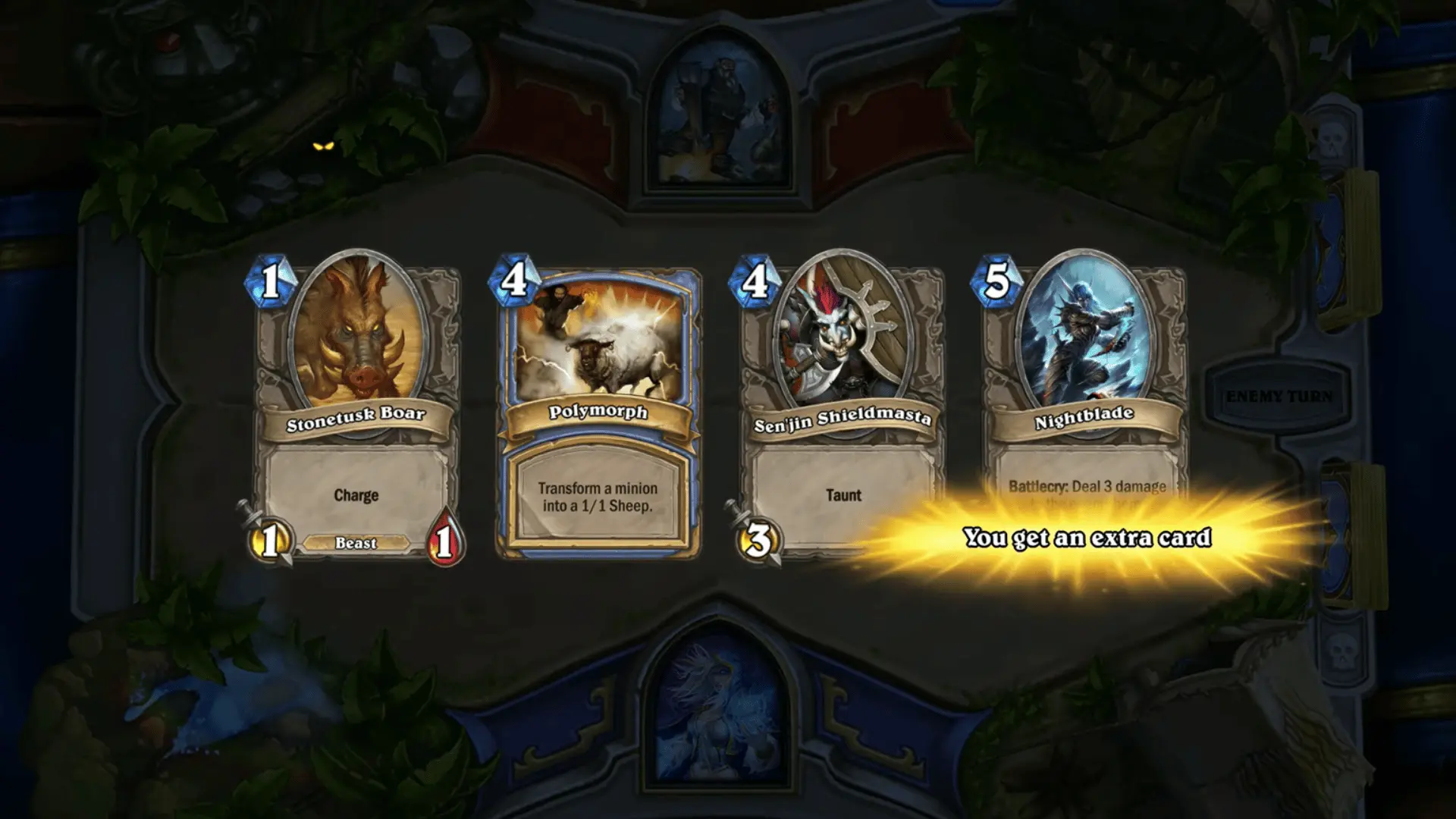
The mulligan is where you commit to a tempo line for the first four turns, not just where you keep your best cards.
That distinction matters more than most players realize. The cards you keep determine whether you can contest the board early.
Strong board presence in the first few turns tends to shape the rest of the match far more than whatever you draw after turn three.
The decision rule I follow is to keep cards that answer the board you expect, not the hand you want.
That means reading your opponent’s class and adjusting before you play a single card.
If you’re learning a new list and want more than gut feel, HSReplay’s mulligan data shows which cards actually get kept and won with across hundreds of thousands of games, broken down by matchup.
Going First vs. Going Second: What Changes
Going second gives you the coin, and in my experience, that changes which two-drop you keep entirely.
- Going first, you need a natural curve. You’re looking for cards you can play on-rate each turn, with no gaps. A two-drop you can’t play until turn three is a dead keep.
- Going second, the coin buys you a mana. A three-drop on turn two becomes viable. You’re not locked into matching their tempo; you can leapfrog it.
If you’re mulliganing the same way regardless of position, you’re leaving board control on the table before the game starts.
How to Sequence Your Plays Correctly?
Sequence by matching the order to your role: protect your own threats first when you’re the aggressor, and answer your opponent’s threats first when you’re the defender.
The order you execute plays matters as much as which plays you make.
Done wrong, you hand your opponent information, board presence, or tempo you can’t recover. I always clear board threats before adding to my hand or extending my board.
Deathrattle effects and reactive triggers change the board state in ways you can’t predict until they resolve. Playing into them blind loses you tempo you didn’t have to lose.
The distinction I think most players miss is that your correct sequence changes based on whether you’re the aggressor or the defender that turn.
As the aggressor, I protect my threats first. As the defender, I answer theirs before I develop the same cards, in a different order, for a different outcome.
Trading vs. Going Face: How to Decide
This decision comes down to math against the clock more than instinct or aggression.
If your opponent has a minion that trades up, meaning it kills something more expensive, remove it. Leaving it costs you more than the damage it hasn’t dealt yet.
I face when their board can’t punish me next turn, or when lethal is in range within two turns. Otherwise, the board comes first.
Resource Management: Mana, Cards, and Health
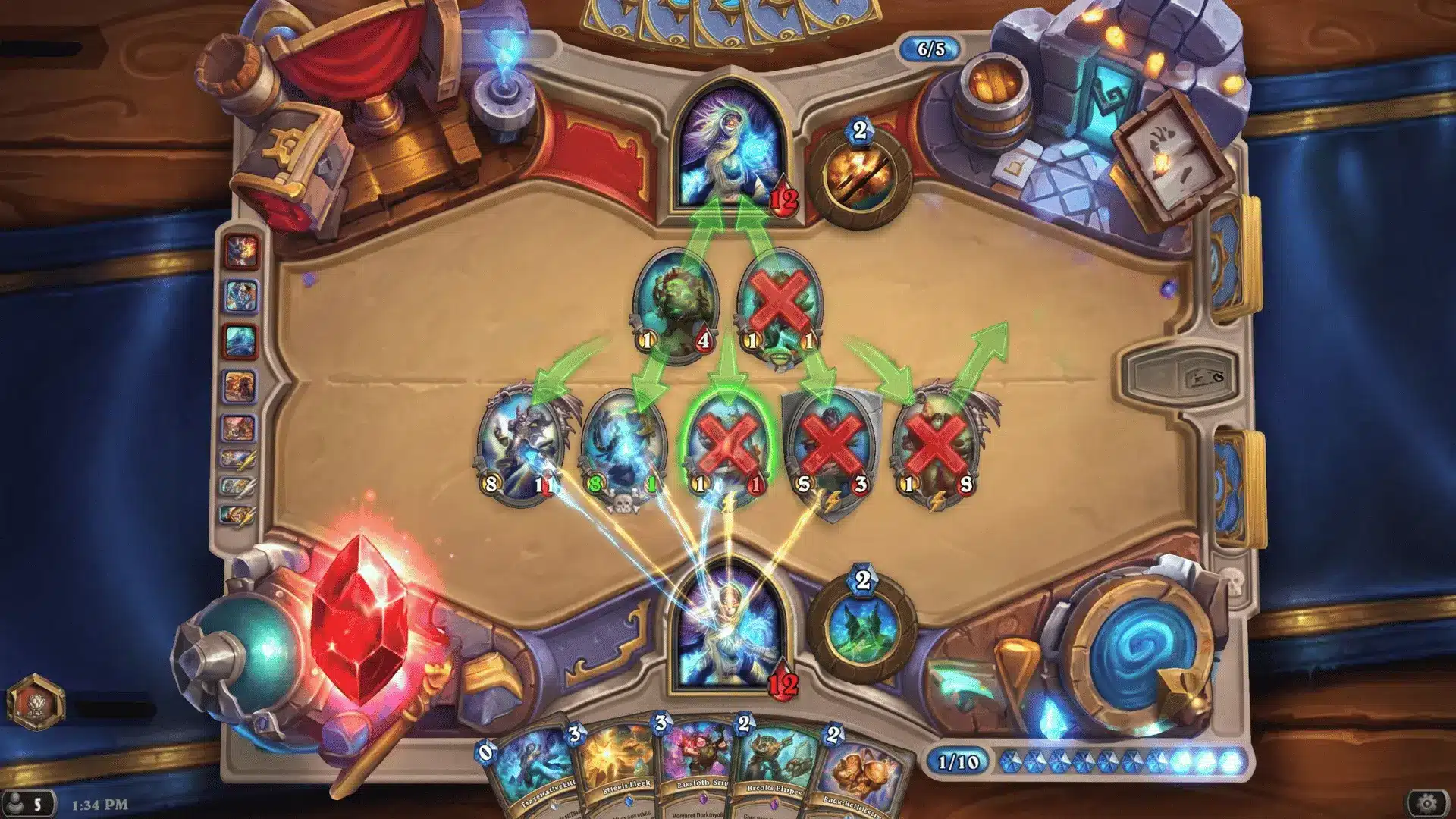
Three resources govern every game: mana, cards, and health. Each one can be spent strategically or burned accidentally.
- Most players track mana because it’s visible. I’ve been guilty of ignoring the other two; card disadvantage and health bleed are harder to see, so they go unmanaged.
- Card disadvantage compounds quietly. You trade two cards to answer one, do it twice, and suddenly you’re top-decking while your opponent holds four. You didn’t lose in one turn. You bled out over six.
- Health works the same way. Taking four damage to develop a threat that deals five back is a positive trade in the right matchup.
The condition that changes everything: the resource hierarchy flips by archetype.
Aggro decks need to preserve health late, when the hand is empty, and every point matters. Control decks need to preserve it early, before the board is stable.
Treat health as a passive stat, and you’ll lose games your deck was capable of winning. The damage you allow in turn three often decides turn nine.
Hearthstone Battlegrounds: How the Economy Works Differently
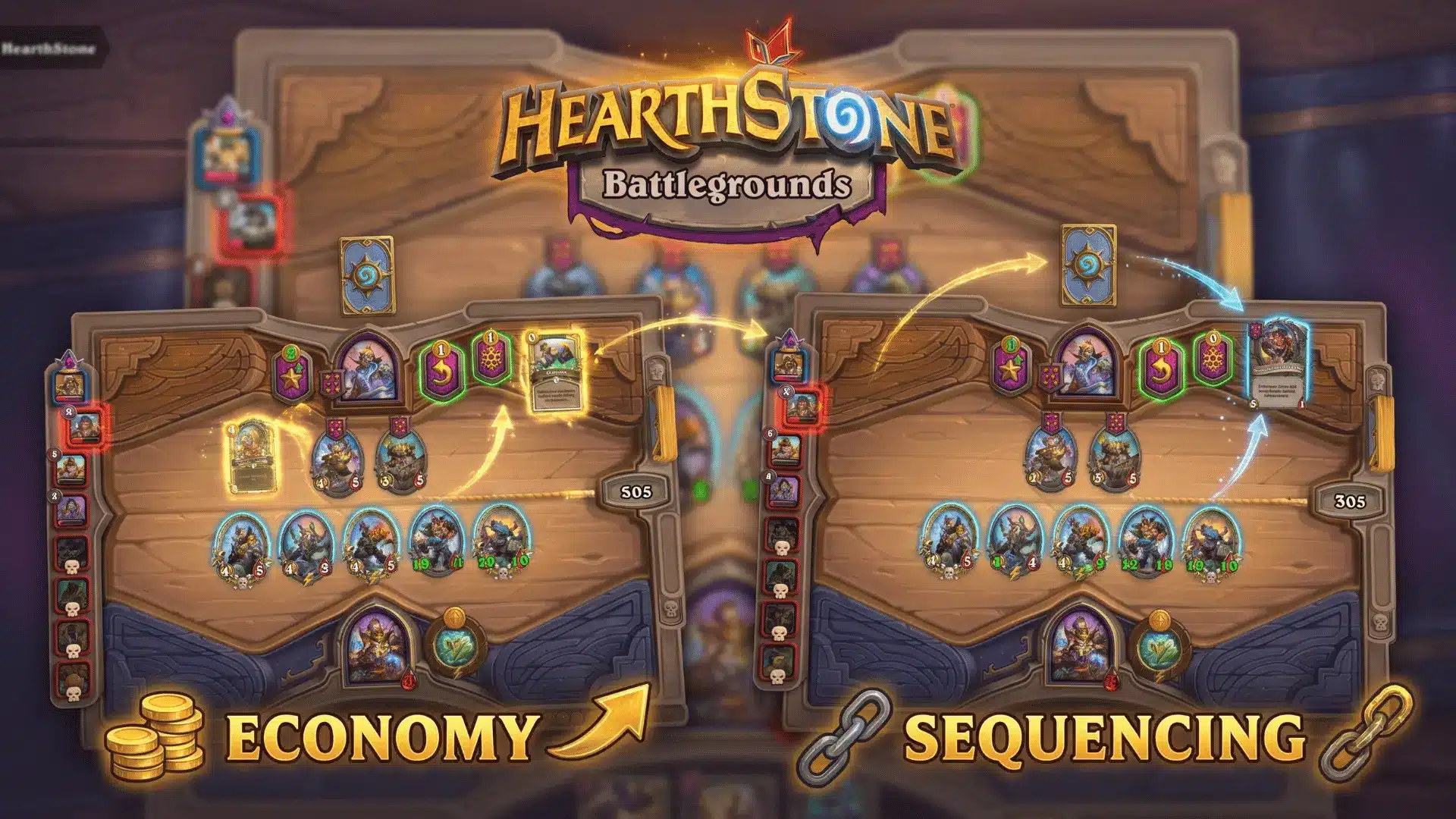
Battlegrounds operates on a shared gold economy rather than traditional hand management.
Success depends on timing, flexibility, and reading the market rather than conventional card advantage.
| Phase | Key Focus | Explanation |
|---|---|---|
| Turns 1–4 | Early Economy | Prioritize economy minions and upgrade timing over board strength. A weaker early board that banks an extra gold-earning minion by turn four can afford a double-buy on turn six that a tempo-focused board can’t. |
| Tribe Selection | Flexibility | Avoid committing to a tribe too early. Staying open preserves pivot options until the market signals the optimal direction. |
| Buff Application | Timing | Delay applying buffs until the last moments of recruitment. Early buffs reveal your strategy to opponents; late buffs keep your build hidden. |
| General Mindset | Engine Building | Think of early turns as setting up your resource engine. Focus on long-term growth rather than immediate combat success. |
Success in Battlegrounds comes from managing gold wisely, keeping options open, and knowing when to reveal your hand. Early patience pays off in late-game power.
When to Level Your Tavern vs. When to Freeze
Leveling buys access. Freezing buys efficiency.
If the current tier has an economy piece I need, I freeze and take it. If my board is stable and the next tier unlocks my build, I level.
The mistake I made early was leveling out of habit. Every gold spent on upgrades is gold not spent on development level when the next tier changes what’s possible, not before.
At Tavern Tier 3, this shows up constantly. Freezing a strong Tier 3 economy minion to guarantee it next turn usually beats leveling blind into Tier 4 and hoping the offer refreshes in your favor.
Practice Habits that Actually Build Skill
The difference between players who improve and players who simply log hours is reflection. Games without review build habits, but they rarely build lasting skill.
I once played two decks for an entire season, refusing to rotate.
Pattern recognition only develops when you run the same decision trees repeatedly. Rotating through five decks resets that process every time.
After each loss, I find the turn where the game became unwinnable.
Not to blame myself, but to locate the exact decision point. One turn usually tells me more than the whole match replay does.
Emotional discipline is a mechanical skill in Hearthstone, not a personality trait. When I’m tilted, I skip sequencing checks. I default to face damage when the board needs clearing.
The emotional state changes the decision process, not just the mood.
If you also grind Battlegrounds, how HearthssGaming organizes its Hearthstone guides is worth a look for the data-heavy side of the game, since it pairs well with the constructed habits above.
Conclusion
Tips and tricks from HearthssGaming matter most when they help you see the small choices that decide a match early.
A better deck can help, but cleaner mulligans, sharper sequencing, and smarter resource use will win more games over time.
Battlegrounds asks for a different mindset too, since gold timing and patience matter more than hand value.
The real lesson is simple: stop changing cards before you study your own turns. Pick one habit, test it across a few sessions, and review the moment each loss started to slip away.
Which Hearthstone habit are you trying to fix first? Tell us in the comments below.
Frequently Asked Questions
What Common Mistakes Keep Hearthstone Players From Improving Beyond a Skill Plateau?
Most stagnation comes from upgrading cards instead of fixing mulligan choices, sequencing errors, and quiet frustration that degrades play. Hearthstone hides these mistakes well: no shuffling, no table talk, no visible tell that a decision went wrong. Players blame variance for losses that actually trace back to a specific misplay three turns earlier.
How Should I Adjust My Mulligan Strategy When Going First Versus Going Second?
Going first, prioritize a natural mana curve so you have something to play every turn without gaps. Going second, the coin adds a mana, so a three-drop on turn two becomes playable and you can leapfrog your opponent’s tempo instead of matching it. Mulliganing the same way regardless of position gives away board control before the match even starts.
When Is It Correct to Trade Minions Versus Going Face in Hearthstone?
Trade when the opponent’s minion would deal more damage or generate more value than it costs you to remove, since leaving it up costs more than the damage it hasn’t dealt yet. Go face only when their board can’t punish you back next turn, or when lethal lands within two turns. Otherwise, clearing the board comes first.
How Can I Practice Hearthstone More Effectively to Improve Decision-Making?
Review every loss and find the exact turn the game became unwinnable instead of rewatching the whole match. Stick with one or two decks long enough to recognize repeating decision patterns, since rotating through five decks resets that learning every time. Notice when tilt changes your sequencing, since emotional discipline is a mechanical skill, not just a mindset.