Valorant map names can get confusing fast when some appear in ranked, and others seem to disappear for months. You may hear players talk about Bind, Pearl, or Fracture, then never see them in your own matches.
That happens because not all Valorant maps are always part of the same queue. Some are standard maps, some are Team Deathmatch arenas, and only seven standard maps stay in ranked at one time.
You will learn how many maps exist, which ones matter for competitive play, and why Riot rotates them in and out.
Before checking the full list, let us first clear up how many maps Valorant actually has.
How Many Maps Are in the Valorant?
If you’ve ever Googled “all The battleground maps” and gotten three different numbers from three different pages, you’re not going crazy because those pages are just counting different things.
The battleground actually has 19 playable maps (including the training map “The Range”) in total as of Season 2026 Act 4, and that number includes the standard plant-and-defuse maps, 5 Team Deathmatch arenas built purely for warm-up combat, and the practice range.
When people ask about “all Valorant maps,” they almost always mean the 13 standard maps the ones with spike sites, buy phases, and actual tactical structure.
And those are the maps that show up in Unrated, Competitive, and Premier, while the TDM arenas and the range sit in a completely separate category.
All Standard Valorant Maps: The Complete List
These are the maps that actually matter for your ranked grind, and knowing what makes each one unique before you queue is the kind of preparation that quietly separates good players from great ones.
1. Abyss
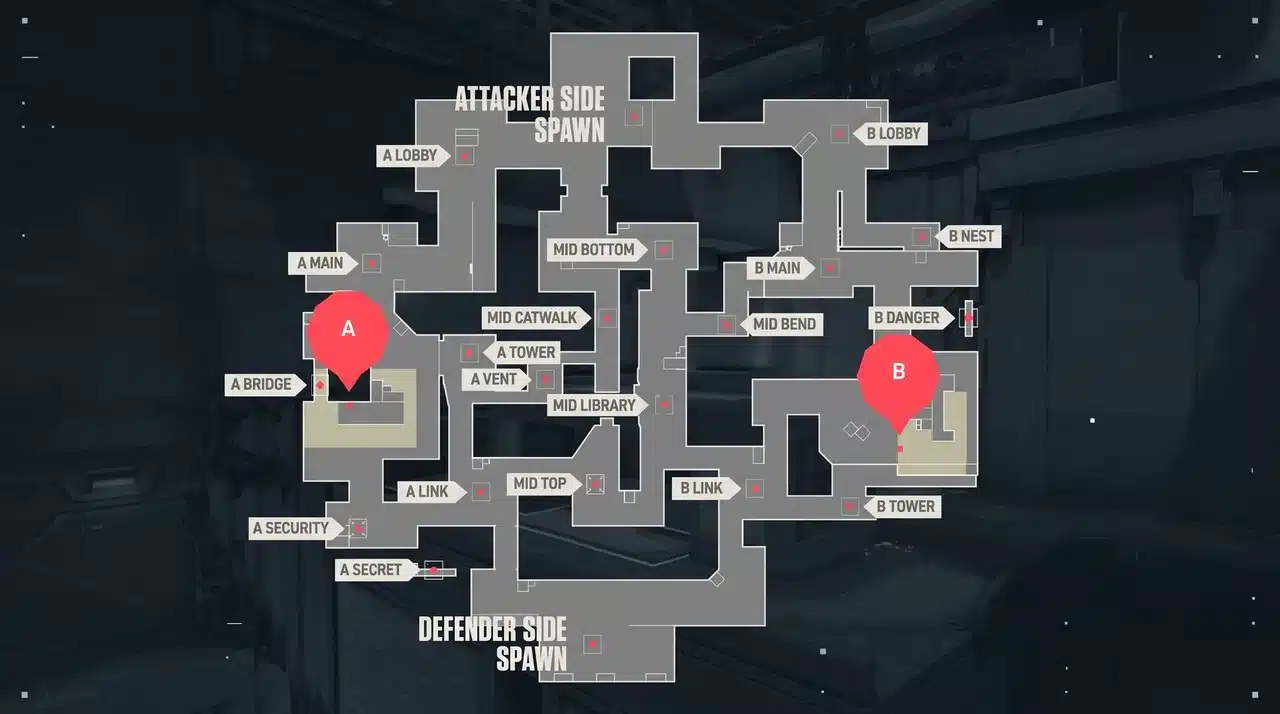
Gaze into Abyss, a clandestine base buried deep within an impenetrable and endless chasm where one wrong step sends you straight into the void below, and if you play it smart, those same edges become the deadliest traps you can set for your enemies.
2. Ascent
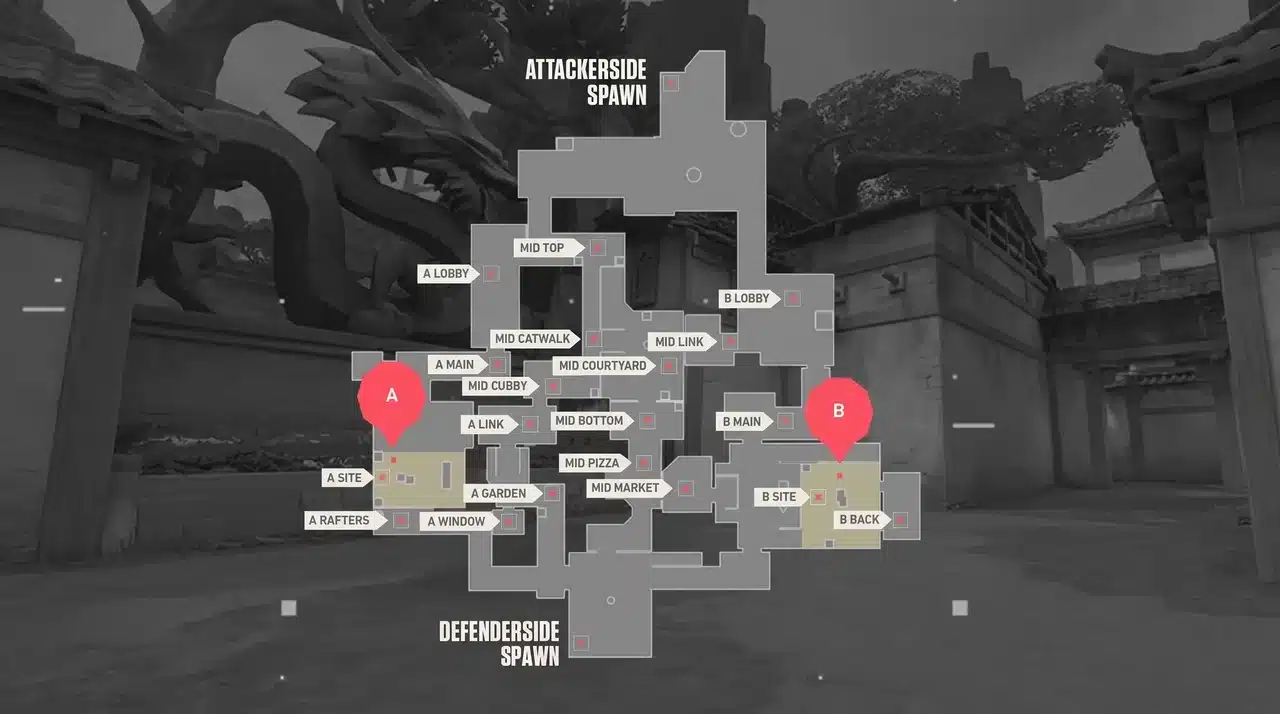
Welcome to the open streets of Venice, Italy, where every rooftop angle and mid-control battle feels like a chess match that never plays out the same way twice.
Learning this map well enough is basically the foundation of becoming a smarter Valorant player overall.
Understanding why that split exists matters more for building a solid foundation before you climb than most players think.
3. Bind
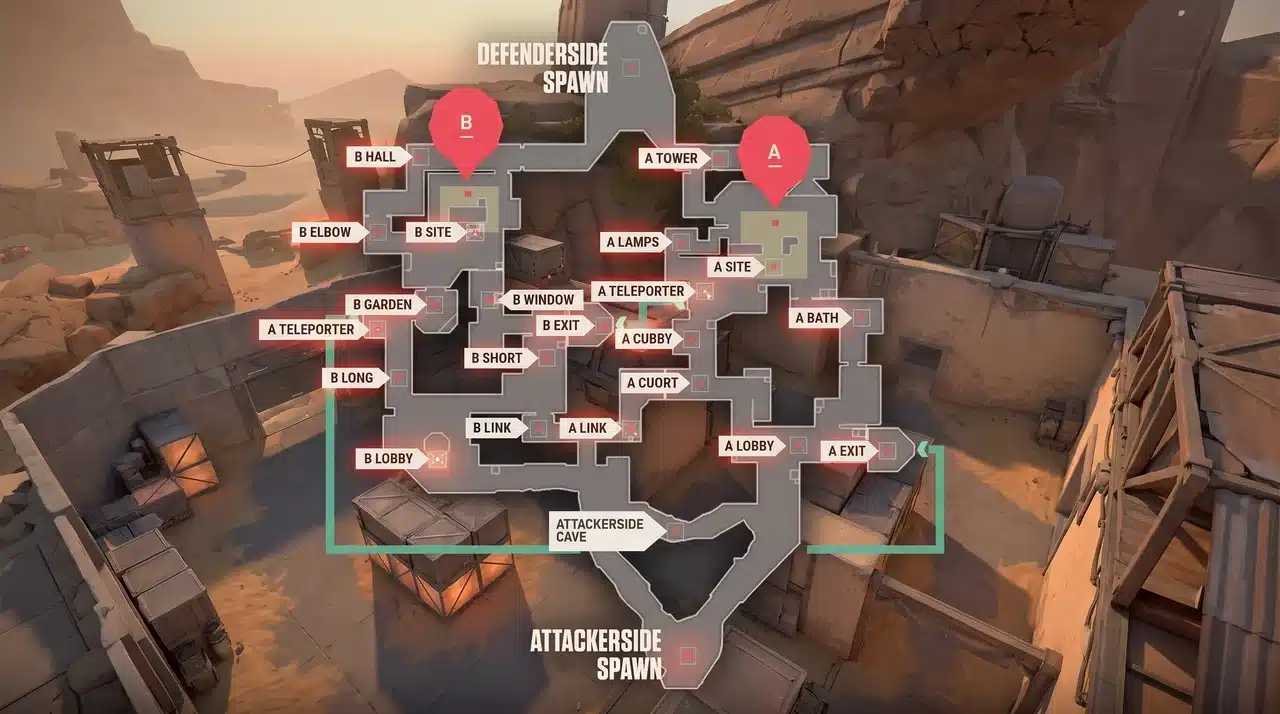
Forget the traditional three-lane structure you might be used to, because Bind swaps the middle area entirely for two one-way teleporters that let you zip across the map in seconds and completely flip the rotation game on its head when your enemies least expect it.
4. Breeze
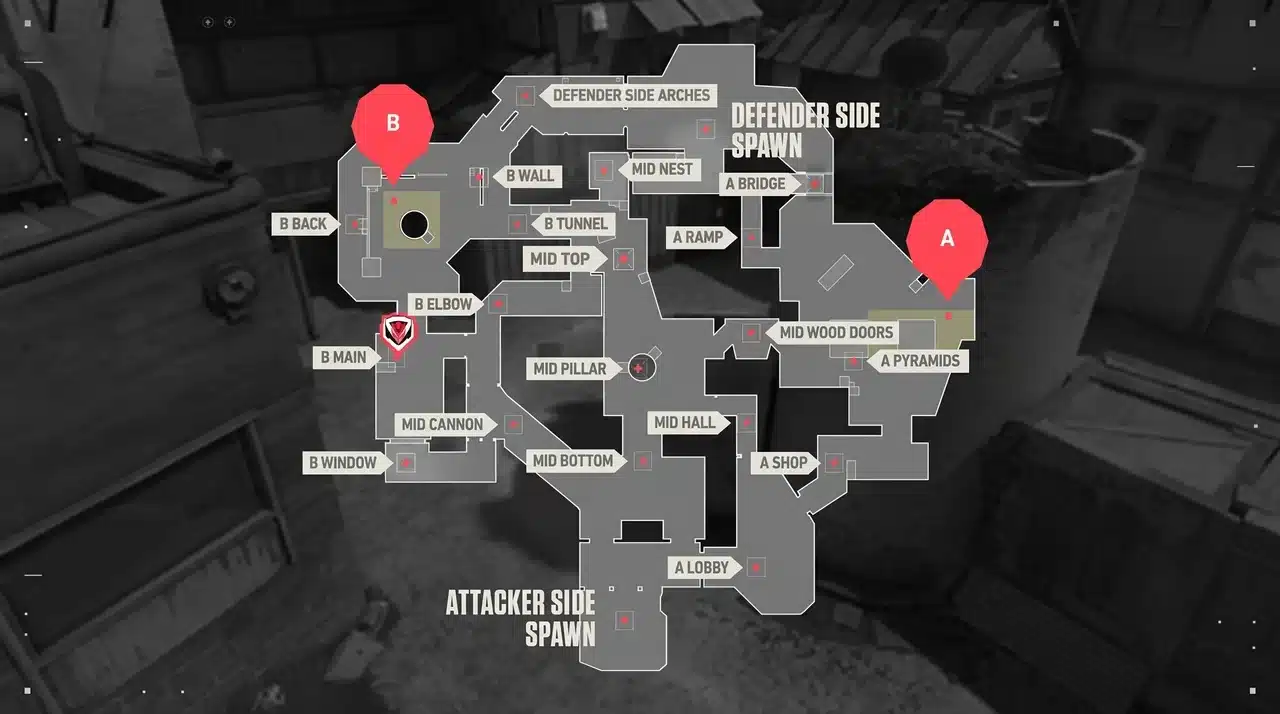
Sun-soaked ruins on a Caribbean island, with sightlines long enough that a good Operator player will ruin your day.
Every open area becomes a gamble between peeking first or getting deleted before your input even registers.
5. Corrode
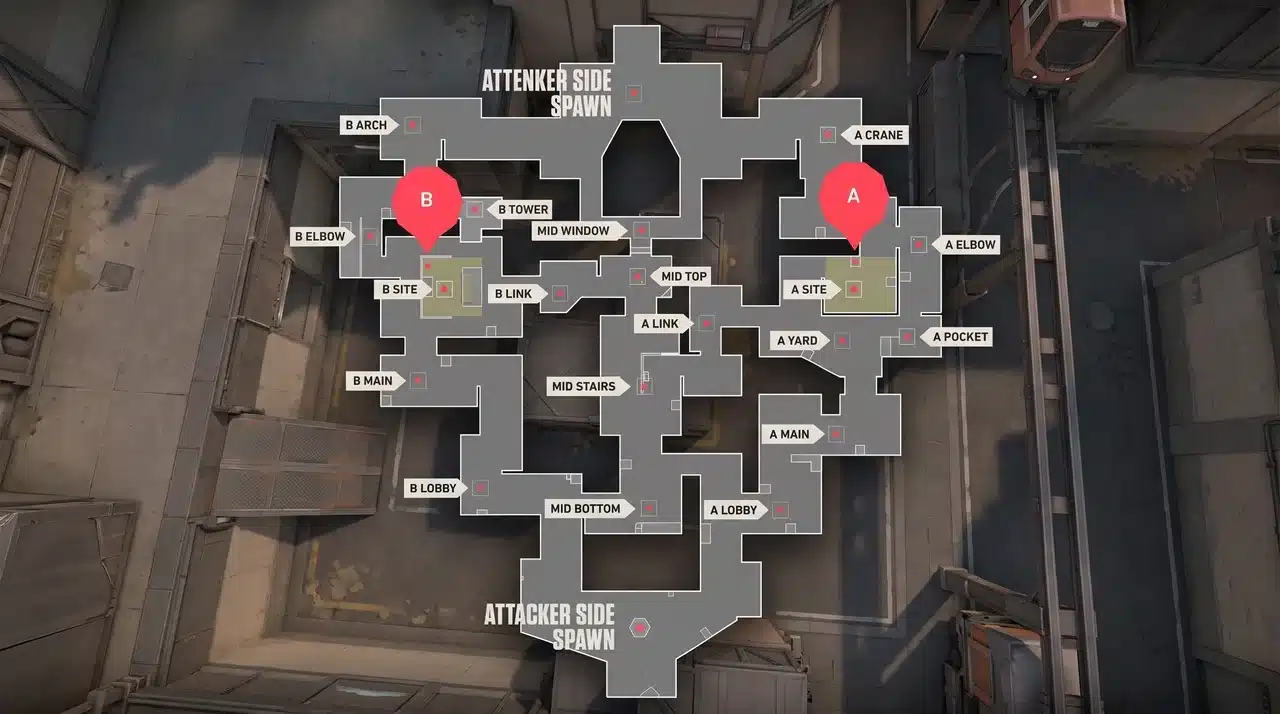
Set inside a radianite salt mining operation carved into the ruins of a French castle town, Corrode brings tight industrial corridors crashing into wide-open processing areas.
Reading which spaces your enemies want to control early in the round is the difference between winning and getting overrun completely.
6. Fracture

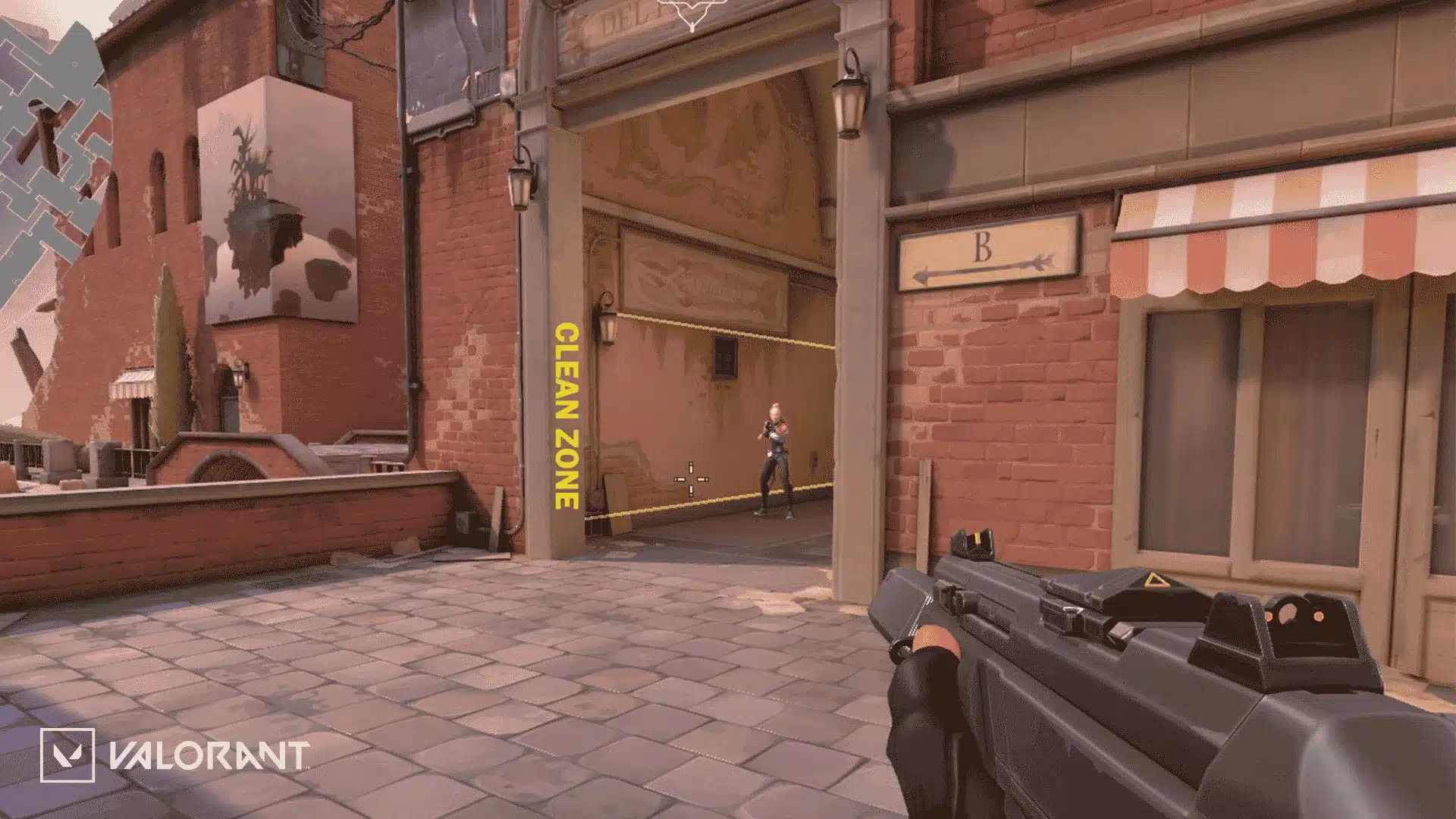
Picture a research facility split straight down the middle where attackers can push from two completely separate spawn points at the same time.
Defenders suddenly have to cover angles coming from directions that would never exist on any other map in the entire game.
7. Haven
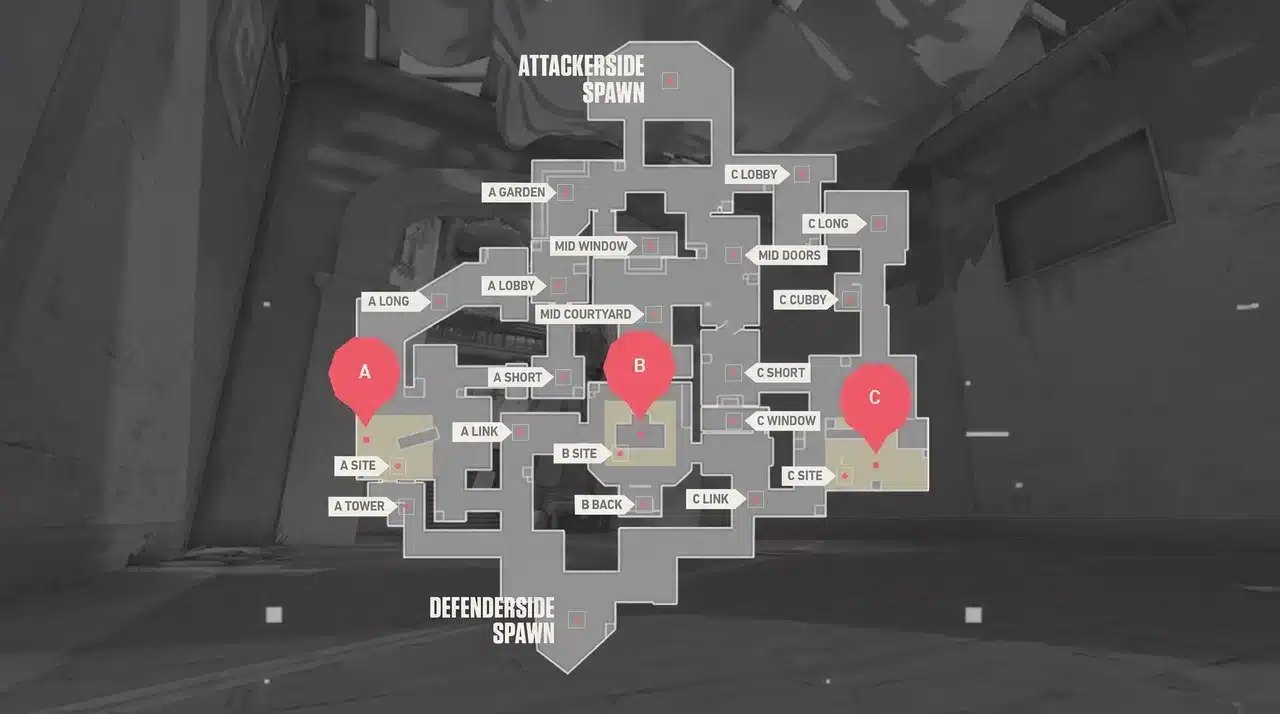
Haven earns its legendary status as the only three-site map in The Battleground outside of Lotus, forcing the defending team to stretch their resources thin across a C site, a B site, and an A site while attackers get to fake, rotate, and create chaos all around.
8. Icebox
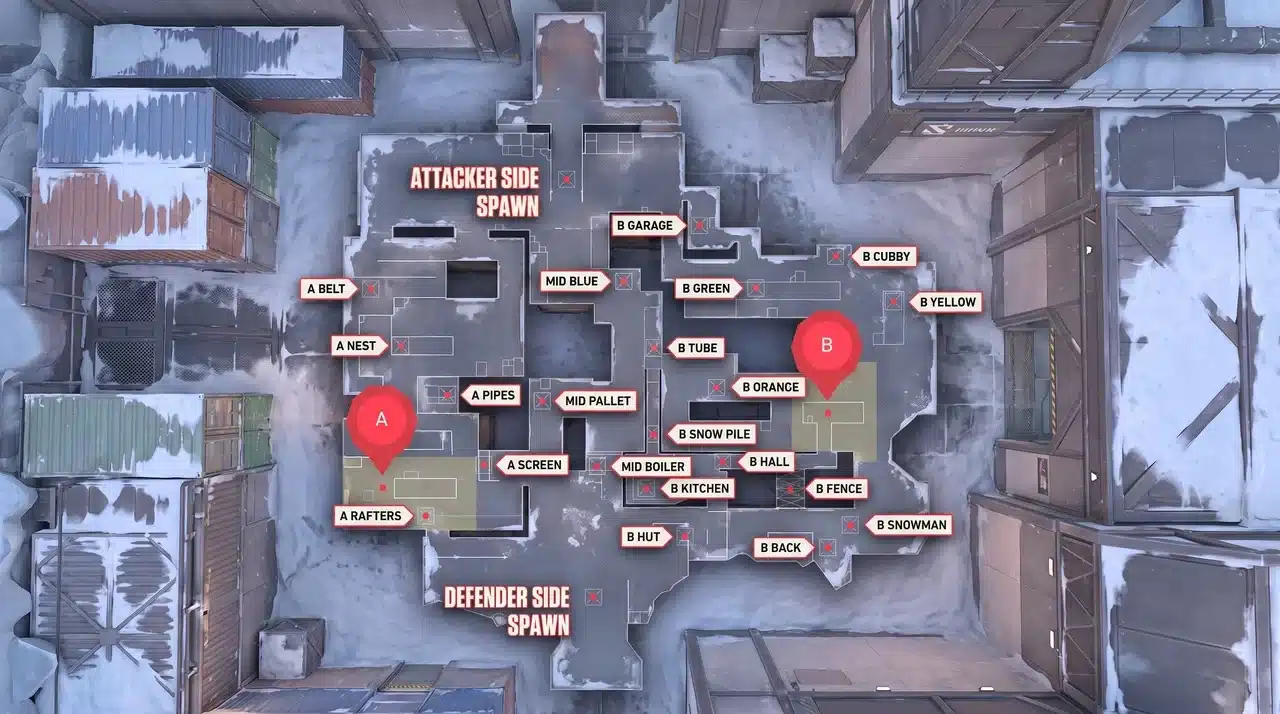
Drop into a frozen research outpost on a remote Russian island where vertical control matters just as much as horizontal positioning.
Ziplines give aggressive duelist players unexpected angles that slower setups will not see coming.
9. Lotus

Nestled in the Western Ghats of India, Lotus is the second three-site map in the game, and it brings rotating stone doors into the mix, meaning you can physically open or destroy pathways mid-round to cut off rotations and catch the enemy team completely out of position.
10. Pearl

Dive into an underwater city inspired by Lisbon, Portugal, where there are zero gimmicks, zero teleporters, and zero mechanical tricks to lean on, just pure tactical play across a clean three-lane layout that rewards teams who communicate well and punishes anyone who tries to freestyle without a real plan.
11. Split
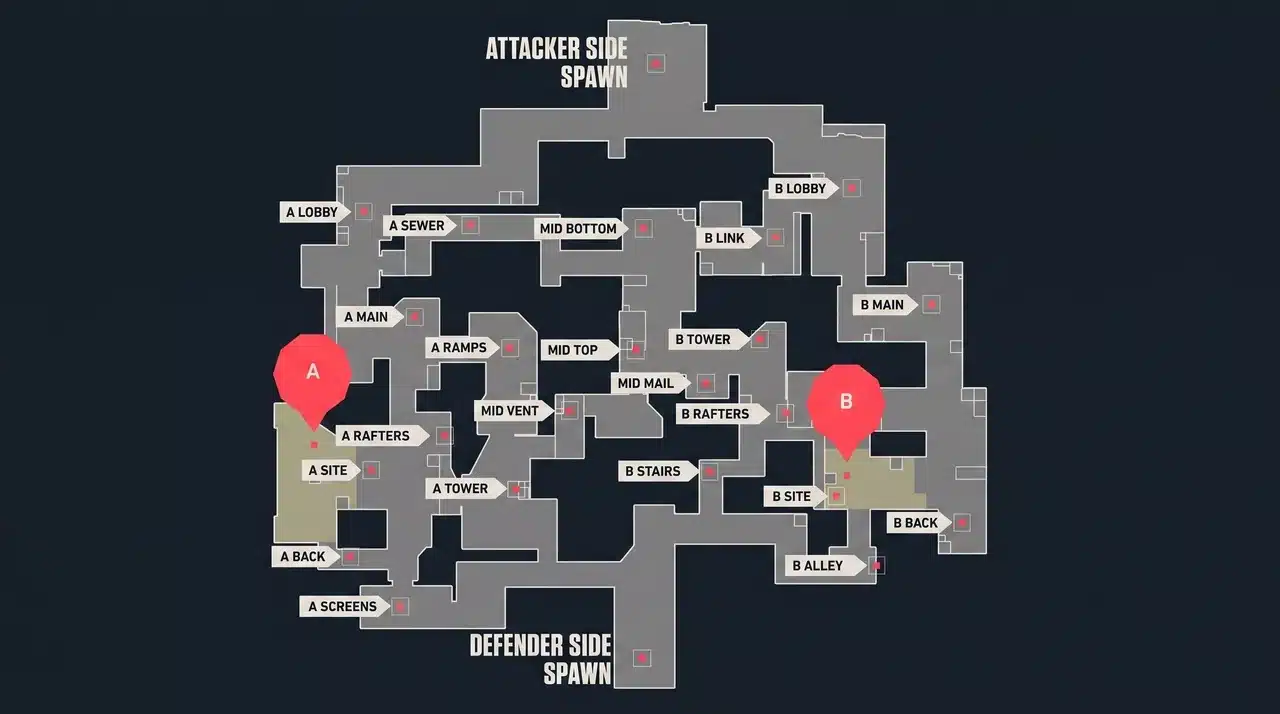
Split drops you into a divided Tokyo cityscape where vertical control and rope climbs define who wins the mid-game battle, and teams that lock down the high ground early tend to make every single push from the attacking side feel like running directly into a wall at full speed.
12. Summit

Summit is the newest map in the game, released on June 23, 2026, inside a former Radiant training academy in Zhangjiajie, China.
It runs on three lanes and two sites, and its destructible wall nodes let you permanently seal off sightlines mid-round.
Each wall node runs on its own 125 HP switch, so breaking one takes real utility or sustained fire, not a single lucky shot.
That single mechanic turns map control into something you build during the round instead of something you hold from the start.
13. Sunset
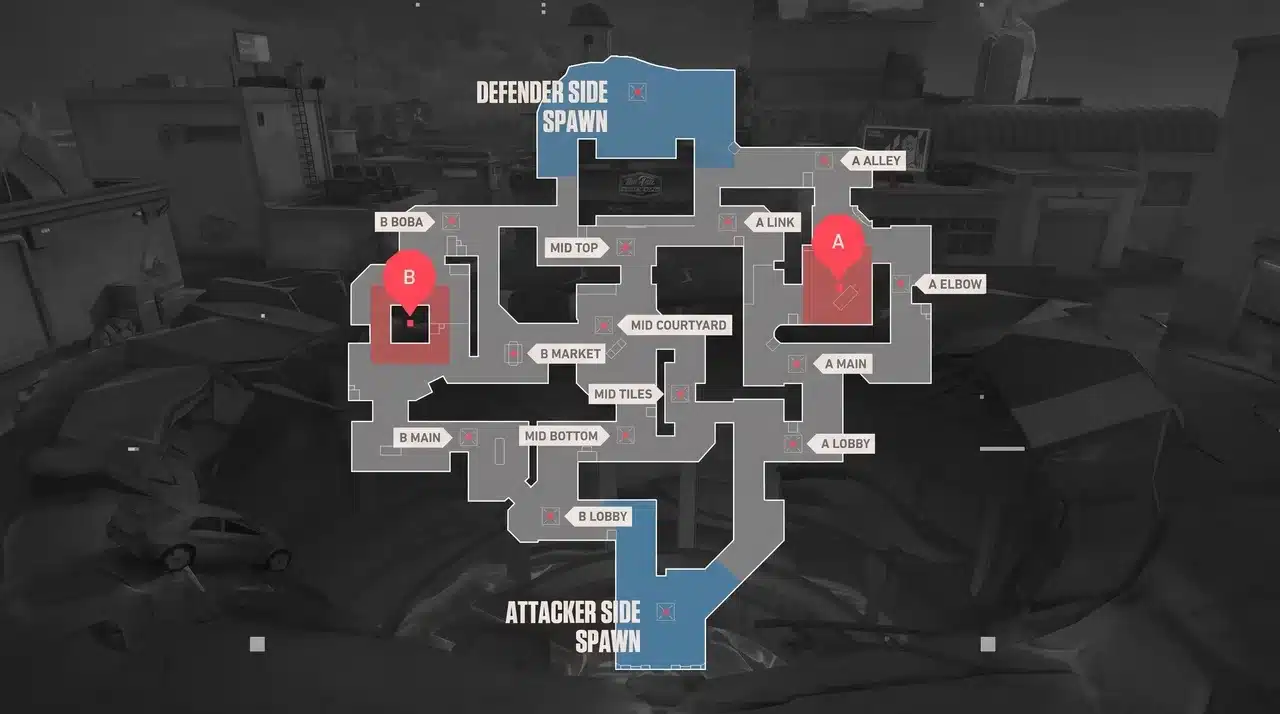
Roam through a sun-drenched slice of Los Angeles where the three-lane layout feels familiar on the surface, but the sightlines have a way of creating awkward, unpredictable angles that catch even experienced players off guard, especially around mid, where rounds can completely fall apart if your team loses control early.
The Team Deathmatch Maps of Valorant
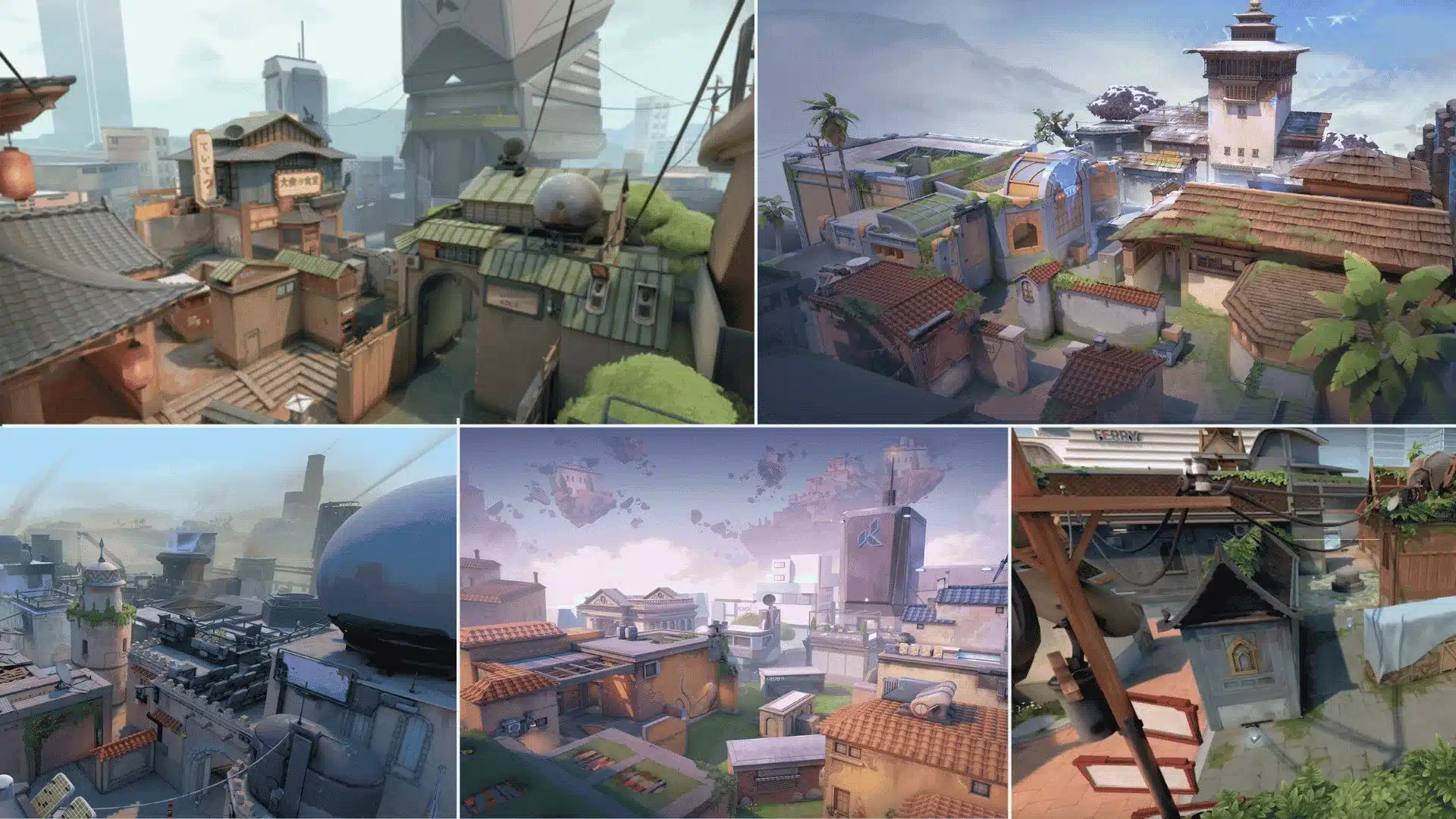
These arenas exist in their own separate world inside Valorant, purpose-built for fast-paced combat and aim training rather than anything you’d recognize from a ranked match.
- District: A compact urban street layout built for constant mid-range duels. It is the standard warm-up pick once your system is running at its best before a ranked session.
- Kasbah: A tight North African marketplace that rewards close-quarters gunfights and fast reaction time.
- Piazza: An open Italian town square with longer sightlines, better suited to warming up rifle tracking.
- Drift: A more open arena that gives aggressive players room to practice movement duels and wide angle holds.
- Glitch: A neon, unconventional layout that forces you to adapt your aim outside your usual comfort zone.
Unlike the 13 standard maps, none of these arenas carry real-world lore coordinates because they exist purely as simulated Max Bot training environments, which is exactly why they get left out whenever anyone counts the “real” The battleground maps.
Which Valorant Maps Are in the Current Competitive Rotation?
As of Season 2026 Act 4, which launched with Patch 13.00 on June 23, 2026, the seven maps in the competitive rotation are Ascent, Breeze, Haven, Lotus, Split, Summit, and Sunset.
These are the only maps you will see in Competitive, Premier, and Deathmatch matchmaking.
Fracture and Pearl rotated out when Act 4 began. Bind had already left the pool earlier, in Patch 12.08, when Ascent returned to Competitive.
None of these maps are gone for good. You can still queue into all three through Unrated and Custom games any time.
Summit’s launch came with a two-week window of reduced ranked rating loss, giving players room to learn the new layout before full competitive pressure kicked back in.
How Does the the Battleground Map Rotation Work?
Understanding the rotation system is what separates players who get caught off guard by pool changes from players who prepare for them ahead of time.
- The pool stays locked at seven maps. Riot has held exactly seven maps in competitive rotation since Patch 5.0 in June 2022. Seven maps allow clean ban sequences in both Bo3 and Bo5 pro formats without a map repeating. I studied mathematics before I got into writing about games, and the math behind that number still sticks with me: seven is the smallest pool where a Bo3 map-ban sequence never has to repeat a map for either side.
- Rotations happen every Act, not every patch. Since Season 2025’s v10.00 update, the pool refreshes on Act boundaries rather than Episode boundaries. That means changes land roughly every six to eight weeks instead of every few months.
- Riot weighs four factors before rotating a map. Player sentiment, how long a map has sat outside the pool, planned map updates, and whether the current pool has enough strategic variety all factor into what moves in and what moves out.
- Your in-match map is never fully random. The system checks each player’s last five matches, removes any map already played twice, then picks whichever remaining map the lobby has collectively seen least recently.
Conclusion
All Valorant maps are easier to understand once you separate the full map list from the ranked pool.
Valorant has standard maps, Team Deathmatch arenas, and training spaces, but only seven standard maps appear in competitive rotation at one time.
That is why some maps feel missing even though they are still playable elsewhere.
I would learn the current ranked pool first, then use Unrated or Custom games to stay sharp on maps waiting to return. This makes every rotation change feel less confusing and more useful for practice.
Which Valorant map do you want Riot to bring back next? Tell us in the comments below.
Frequently Asked Questions
How many maps does Valorant have in 2026?
The battleground has 13 standard plant-and-defuse maps as of Season 2026 Act 4, plus 5 Team Deathmatch arenas, a practice range, and Skirmish, but only 7 standard maps appear in competitive matchmaking at any time.
What maps got removed from Valorant’s competitive rotation?
Pearl, Fracture, and Bind rotated out at the start of Act 4, but none are permanently gone since all three remain fully playable in Unrated and Custom game modes right now.
What is the newest the battleground map in 2026?
Summit is the newest map, released June 24, 2026, with Patch 13.00, and it introduced destructible wall nodes that permanently seal sightlines mid-round, a mechanic no previous Valorant map has ever used before.
When does the the battleground map pool change next?
The pool updates every Act, which runs roughly every six to eight weeks, so monitoring the official Valorant patch notes or the The battleground Wiki rotation tracker will always give you the earliest confirmation of upcoming changes.